What’s going on?
Today is World Food Day and the theme this year is ‘water’, an absolutely essential input to grow food. But the impacts of climate change are going to complicate the picture: rainfall patterns are becoming more unpredictable, droughts more recurrent, whilst fields are going to require more water due to hotter temperatures. As nearly three-quarter of the world’s cropland depends on rain, we are heading for disaster.
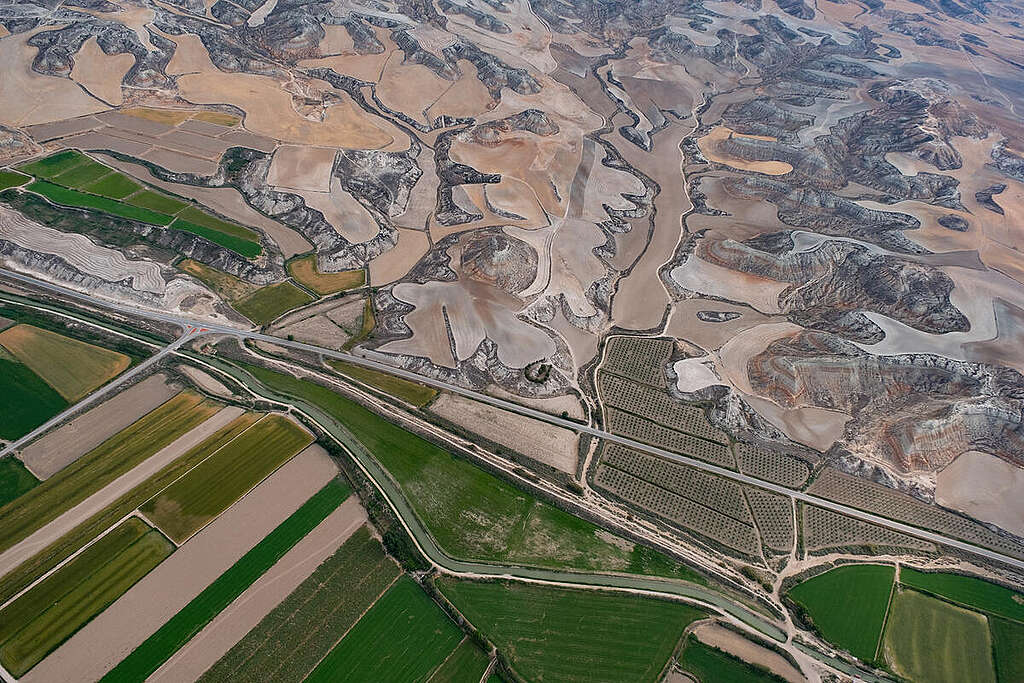
In an attempt to mitigate climate impacts, well-meaning water conservation and management policies, often adopted by international donors like the World Bank, promote the expansion of “sustainable irrigation” (meaning water efficient systems such as drip irrigation). But as modern irrigation uses water pumped from reservoirs (such as groundwater), this may come at a cost to people and the planet.
Why it matters
Agriculture is already by far the main driver of water scarcity globally, as 70% of the water that humans use goes to produce food, the majority through crop irrigation and feeding livestock. At present, a quarter of the world’s crops are irrigated, but already about one third of them face extremely high water stress, meaning that their freshwater usage is highly unsustainable. Water for irrigation usually comes from the same sources of water used for households and energy utilities. And as more crops would rely on water from rivers and groundwater, there is less water available for other purposes, such as drinking or sanitation.
In some parts of the world, when water stress is already high, it can create competition between water use for drinking and for irrigation. Such competition also entrenches gender inequity: women are responsible for water collection in eight out of ten households where there is no water on the premises. Travelling further to fetch water makes them more vulnerable to potential assaults and physical strain, and the time lost on the journey is time lost on closing the gender equity gap.
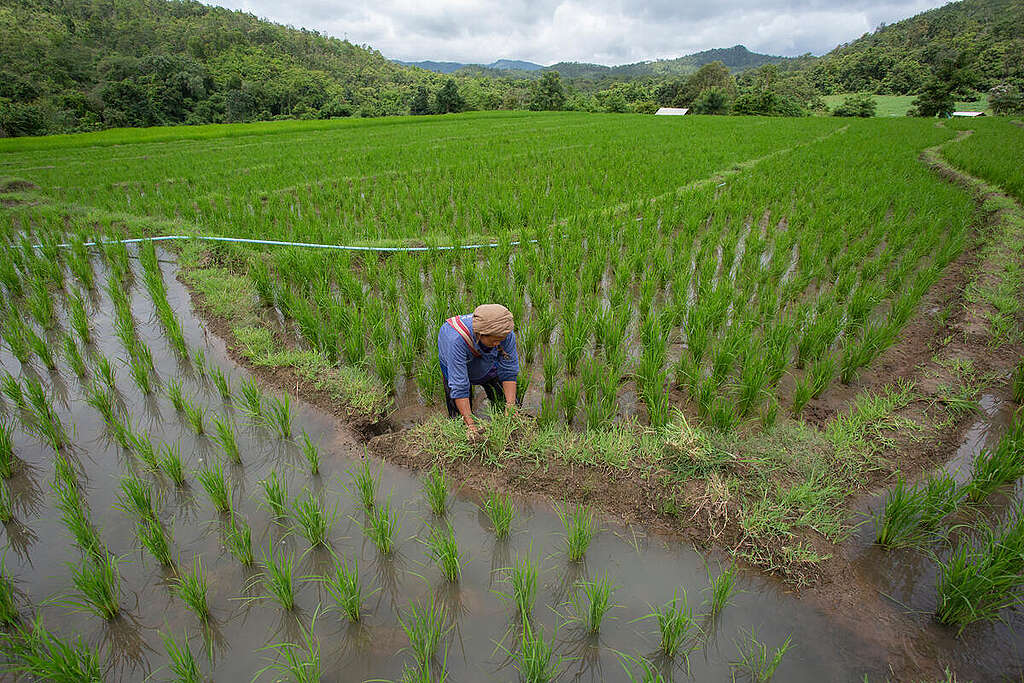
Even if we were to pour all the money in the world into making all irrigation systems across all croplands more efficient, it does not mean that they would become sustainable across the board. Why? Because focusing on efficiency has perverse effects and can actually lead to further consumption. In the energy sector for example, the public discourse focused for years on making combustible car engines more efficient, although evidence showed that this leads to an increase in fuel consumption. This is true in the context of water scarcity too: because water may be saved per hectare on a farm, it could encourage increased production, thereby increasing water use overall.
What we’re saying about it
The idea that we should focus on increasing water efficiency is based on the assumption that we should keep our global food system as it is, but just make it a bit more efficient (and more importantly more productive).
But this is like rearranging the deck chairs on the Titanic. Our global food system is a sinking ship: it is responsible for a third of total greenhouse gas emissions. Agriculture is the largest driver of deforestation and the greatest cause of the loss of wildlife. It is not only the main culprit for water scarcity globally; it is also a major cause of water pollution worldwide.
It’s right to be concerned about our diminishing water resources when thinking of the future of producing food. But rather than debating water efficiency techniques which would tinker around the edges of a much larger problem, we should be shifting the conversation towards systemic changes to who produces food and for whom.
Who should be producing food
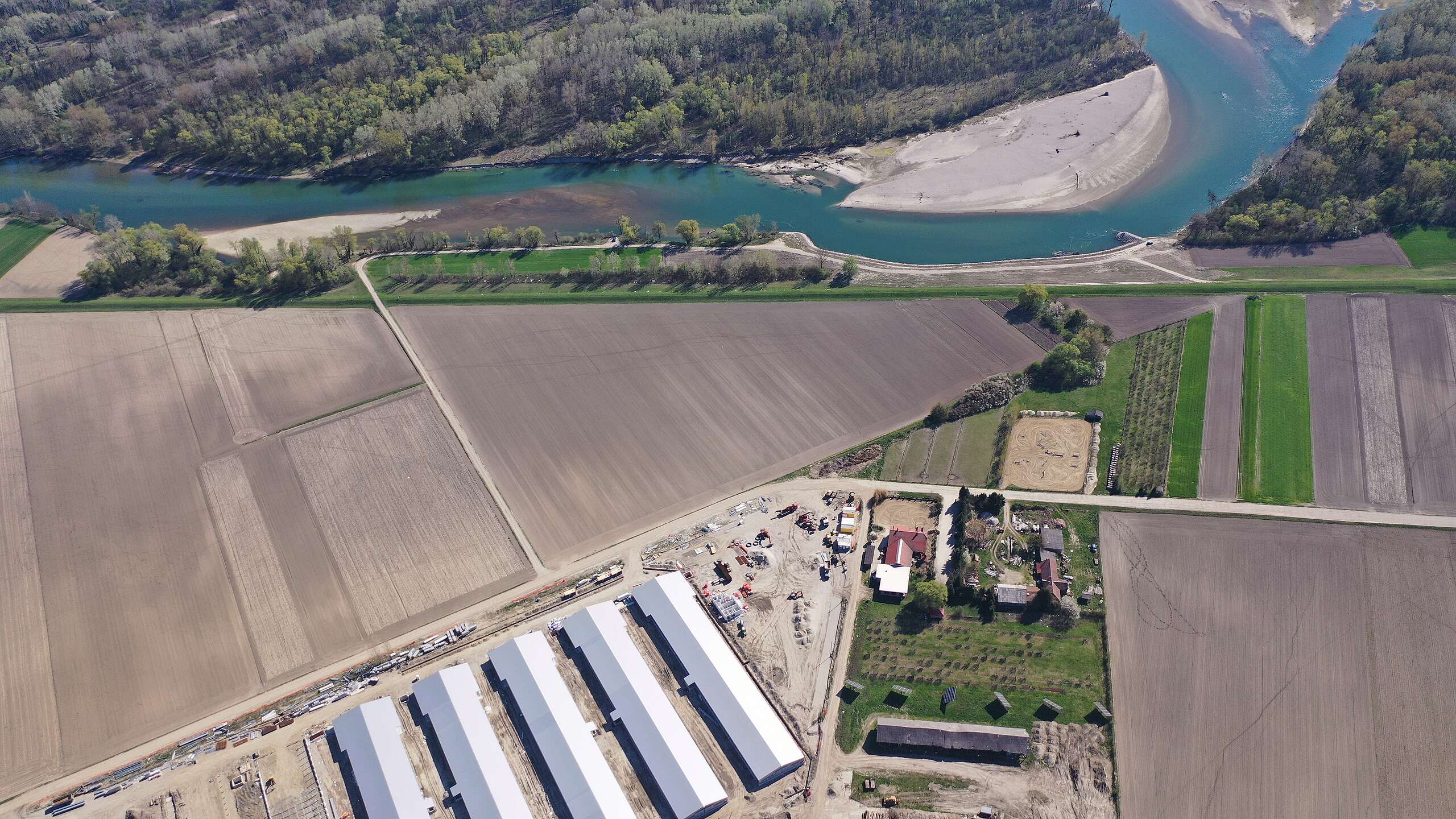
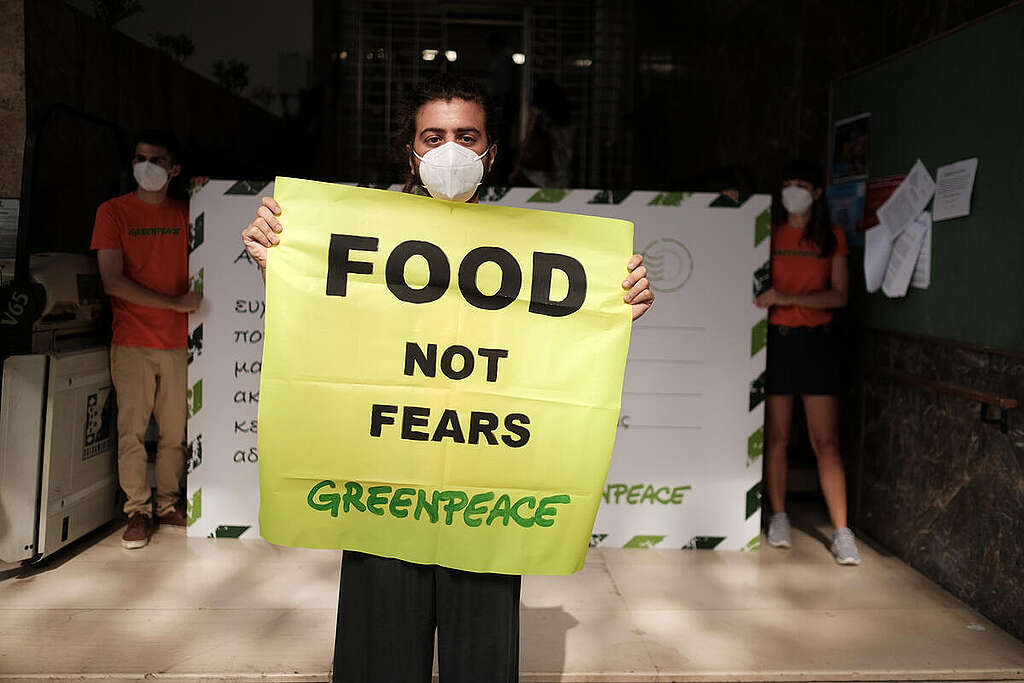
The current industrialised food system is concentrated in the hands of a few multinational agribusiness companies driven by profits over people. An alternative system is possible, one that is more collaborative, socially just, ecological, and where communities have control and power over how it’s shaped. A food system that prioritises food sovereignty is a food system governed by people who decide the agricultural systems they want for themselves.
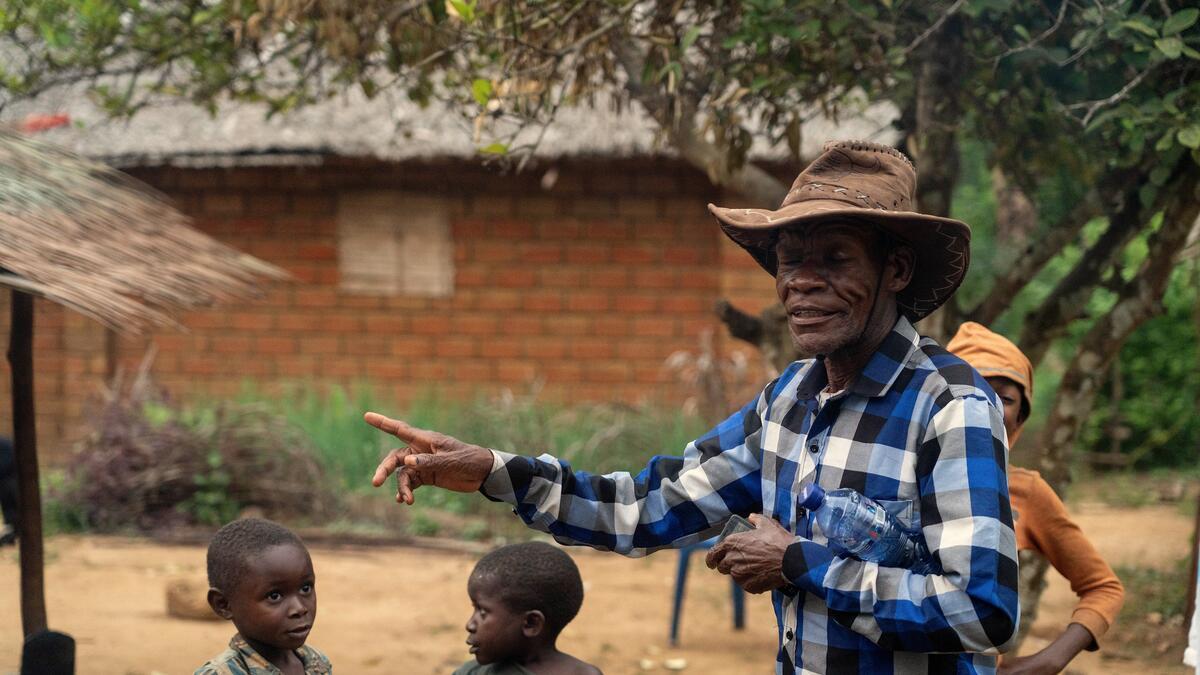
Indigenous Peoples, who manage natural resources on a quarter of the world’s land, have been managing and governing water since time immemorial and Indigenous knowledge has contributed tremendously to the development of sustainable water management practices. Leaving agriculture and the management of input (such as water) in the hands of local farming communities is the best way to ensure a better and fairer management of resources, based on the principles of stewardship, conservation and equity.
Who we should produce food for
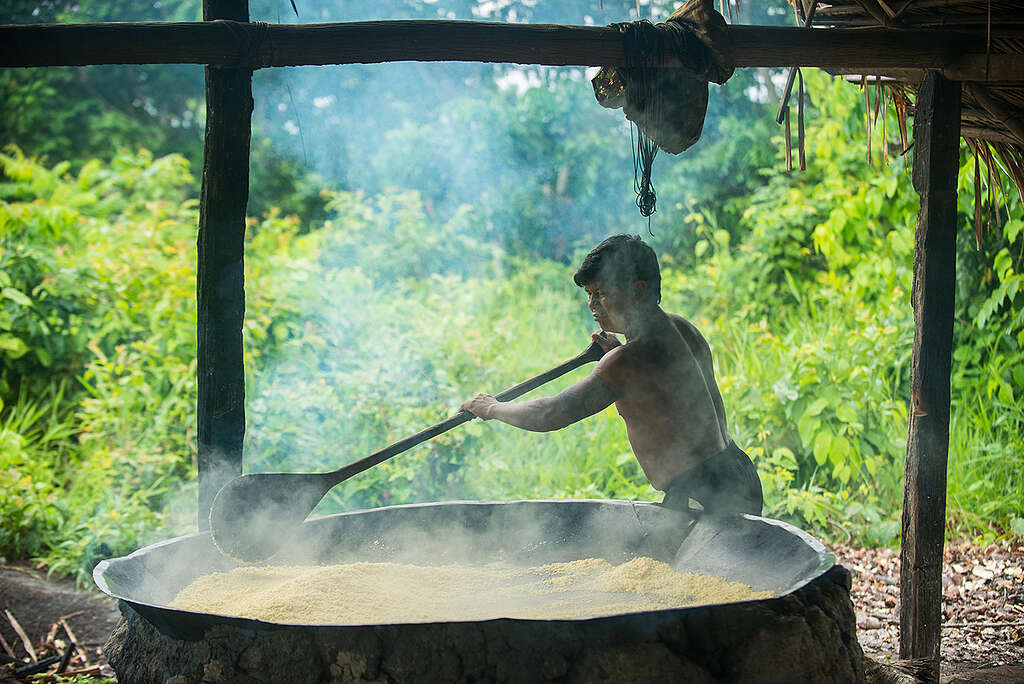
Agri-businesses and multinational corporations often defend their model, arguing that industrial agriculture as we know it “feeds the world” and will need to expand production in the face of a global growing population. Global population is indeed growing, but so is the percentage of people suffering from hunger: as many as 750 million people face hunger today, 20% more than just three years ago.
This is not because there isn’t enough food for everyone, but because it isn’t being used and distributed properly. Although globally, croplands are expanding and crop yields are increasing overall, the share of food crops destined for domestic direct consumption is not. This is because the competition for other uses is increasing.
Animal feed is a prime example of that. Greenpeace has estimated that 59% of the wheat produced in Europe goes to animal feed, mostly for livestock reared in intensive farms. Globally, 41% of total agricultural water use is for the production of livestock feed, while a fifth of freshwater used in agriculture is to produce animal feed, rather than food for people. From a food justice perspective, these are sobering figures. Animals are farmed for food, but they consume far more food than they actually produce (this is known as the Feed Conversion Ratio). This also means that the water footprint of intensively farmed animals, because of their reliance on feed, is much higher than that of grains.
What needs to happen now
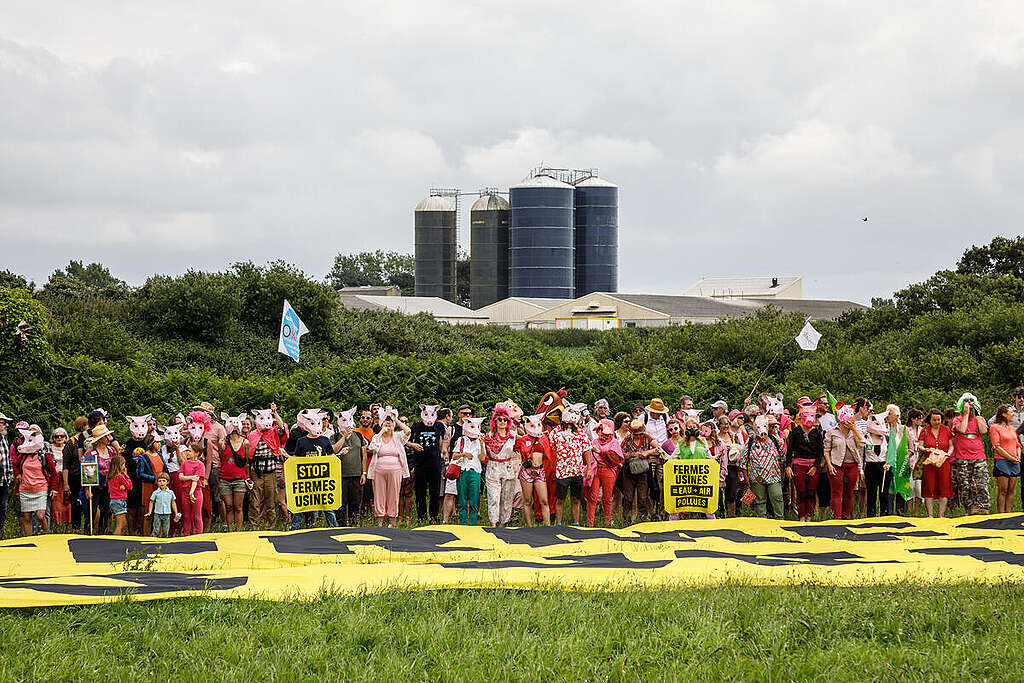
To transform our global food system positively so as to reduce its water footprint, policymakers have a lot on their plate. They need to shift subsidies to support small scale farmers in taking control of our food systems, rather than large scale agribusiness, and they need to prioritise food for people. In affluent countries, this means, among other things, implementing policies that will reduce meat production and shift diets that are high in meat and dairy towards plant-based food.
Beyond the realm of policymaking, the theme of World Food Day this year is prompting all of us as individuals to reflect on the water footprint of the food we eat. Reducing food waste and prioritising food with a lower water footprint, such as plant-based foods, are a good place to start. The food we harvest and eat should not be at the expense of the water we drink. Protecting nature and water resources from the devastating impact of industrial agriculture is a necessity for our survival.
Sophie Nodzenski is a Food and Agriculture Campaigner at Greenpeace International.