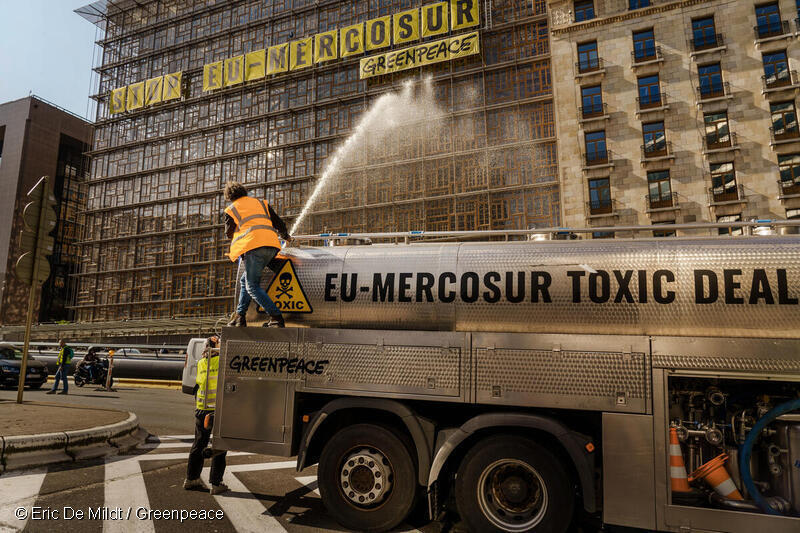
Brussels – European Commission president Ursula von der Leyen will travel to Paraguay next week to sign a deeply unpopular trade deal with the Mercosur bloc of four South American countries, according to several media reports.
The decision comes after a majority of EU countries reportedly voted to allow the Commission to sign the deal on the EU’s behalf, despite continuing opposition from several parliaments and governments throughout Europe.
In December 2025, the European Council failed to reach an agreement in favour of the trade agreement with Mercosur and withheld permission to sign the deal from von der Leyen. Italy was reportedly the reason for the need to postpone a Council decision in that December meeting but has now shifted its position.
Greenpeace EU campaigner Lis Cunha said: “Ursula von der Leyen will sign the agreement with Mercosur next week and act like this is a done deal when it’s anything but. MEPs still have to have their say on the overall agreement. Von der Leyen can attempt to project an air of confidence in Paraguay, but the simple truth is that this unpopular deal is a disaster for the Amazon rainforest and no progressive MEP that is committed to forest protection should ever support it.”
Greenpeace Brazil senior forest campaigner Romulo Batista said: “This is a harmful agreement which will compromise countries’ efforts to face the climate emergency and the just transition. It is regrettable that an agreement with such an economic, social, political and environmental impact on Brazilian society, the Amazon rainforest and other Mercosur countries was negotiated behind closed doors, without social participation or transparency. This agreement encourages the import into Latin America of highly polluting and health-damaging products like cars, plastics and pesticides from Europe, in exchange for commodities often sourced from deforested areas. The context is even worse now, in light of the new delay to the EU’s anti-deforestation law, the dismantling of Brazil’s environmental licensing processes and the attacks against the Amazon Soy Moratorium. Beyond the socio-environmental impacts, the EU-Mercosur trade agreement will significantly hinder industrialisation and the creation of skilled jobs in Brazil and across Mercosur.”
Waiting for EU-Mercosur
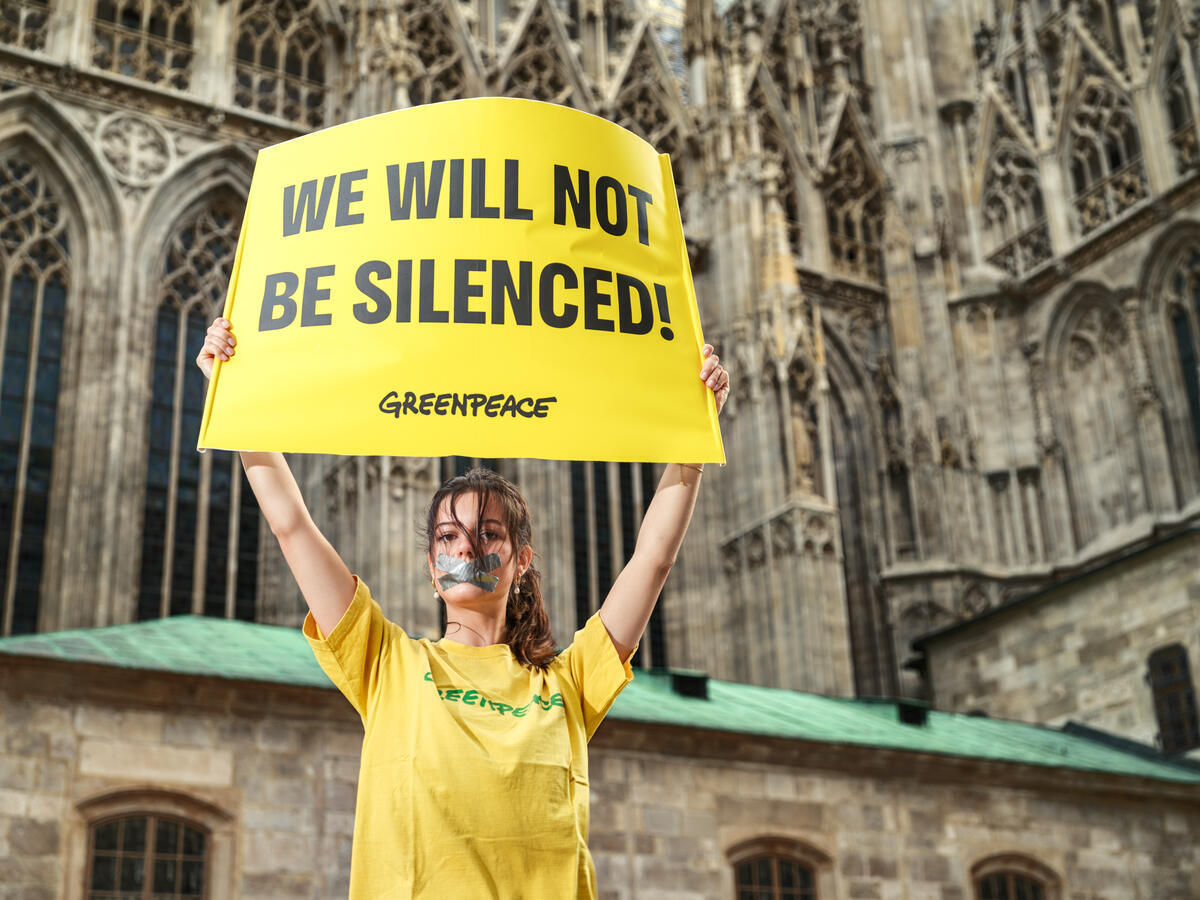
Over 25 years of secret negotiations, a wide range of global civil society groups have repeatedly voiced steadfast opposition and attempted to inform the public about the catastrophic impacts of a trade deal between the EU and Mercosur, a bloc of countries that includes Argentina, Brazil, Paraguay and Uruguay. The agreement’s adoption would be particularly harmful and controversial for the Amazon rainforest, at a time in which the EU’s anti-deforestation law has been repeatedly delayed and weakened.
Revelations have included that the deal will: jeopardise the EU Deforestation Regulation, breach EU climate laws, boost trade in plastics and undermine efforts to agree a Global Plastics Treaty, facilitate the entry of a toxic cocktail of banned pesticides into the EU, propel destructive agribusiness and destroy precious ecosystems in South America.
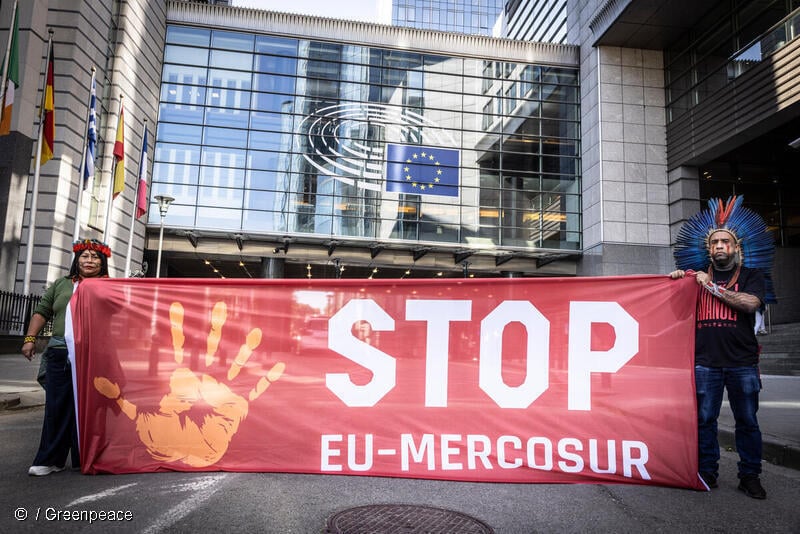
Trade unions, consumers, human rights groups and environmental organisations, economists, indigenous peoples, local municipalities and other civil society organisations have criticised the agreement, not to mention the more than 2 million EU citizens who have signed petitions opposing it.
Stop EU-Mercosur, an alliance of more than 450 organisations in Europe and South America, has compiled a comprehensive and multilingual list of resources on the many problems with this toxic deal.
Next steps
According to media reports, EU governments controversially decided to provisionally apply the trade agreement before the European Parliament gives its consent, breaking with long standing EU practice. Decisions on the provisional application of trade agreements are normally applied only after the EU Parliament has taken a position on the agreement. Despite today’s highly questionable decision, the provisional application of the EU-Mercosur deal still requires the approval of at least one Mercosur country.
However, before the trade agreement can fully enter into force, it must receive the consent of the European Parliament, which is not certain. In October 2025 the Parliament rejected a statement “welcoming” the EU-Mercosur deal. In November a large group of MEPs tabled a motion to seek the opinion of the European Court of Justice about whether the agreement is compatible with the EU Treaties. That motion was temporarily stopped by the intervention of European Parliament president Roberta Metsola, who controversially and despite the existence of a precedent claimed that the parliament cannot request an opinion from the ECJ at this point in the process.
The unpopular deal continues to face determined opposition in Europe, and no date has yet been set for national governments or MEPs to ratify it.
Contacts:
Greenpeace EU trade campaigner Lis Cunha: +32 (0)471 013 708, [email protected]
Greenpeace EU press desk: +32 (0)2 274 1911, [email protected]
For breaking news and comment on EU affairs: Bluesky
Greenpeace is an independent global campaigning network that acts to change attitudes and behaviour, to protect and conserve the environment and to promote peace. We do not accept donations from governments, the EU, businesses or political parties. Greenpeace has over three million supporters, and 26 independent national and regional organisations with offices in more than 55 countries.
EU Transparency Register: 9832909575-41