In many regions around the world, it’s that time of year again – fire season. But fire seasons are getting longer and more intense each year. Rising temperatures from our climate crisis dry out forests and other natural areas and make fires more likely. 

In addition to the dire implications for our planet as a whole, there are more personal impacts. People are losing their lives, their homes, their belongings, their livelihoods. Wildlife is being killed off, and the forests that we all depend on are being wiped out. This year, with the additional risk of COVID-19, people will face even higher health risk, as fires intensify and air pollution increases.

This year’s fires, similar to years past, come from different causes. In Brazil, the fires are no accident. They are being deliberately set by farmers and land grabbers to expand the land used for cattle ranching and industrial agriculture production, and are part of a practice that is made even worse by Bolsonaro’s anti-environmental agenda. Indigenous Peoples are most at risk, as their homes, livelihoods and health are threatened by the fires.
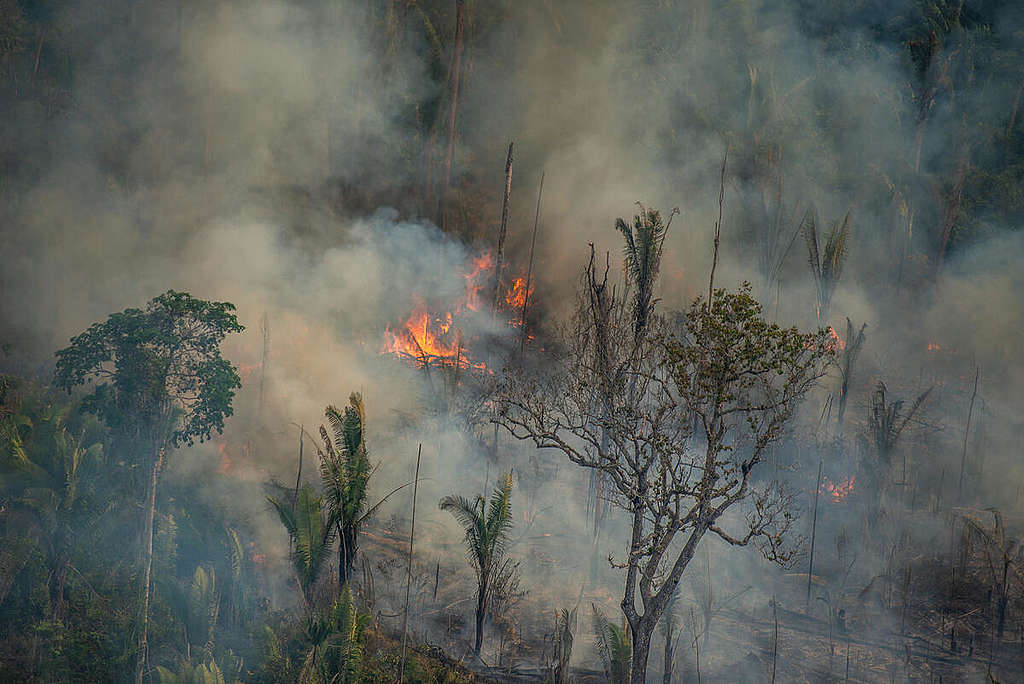
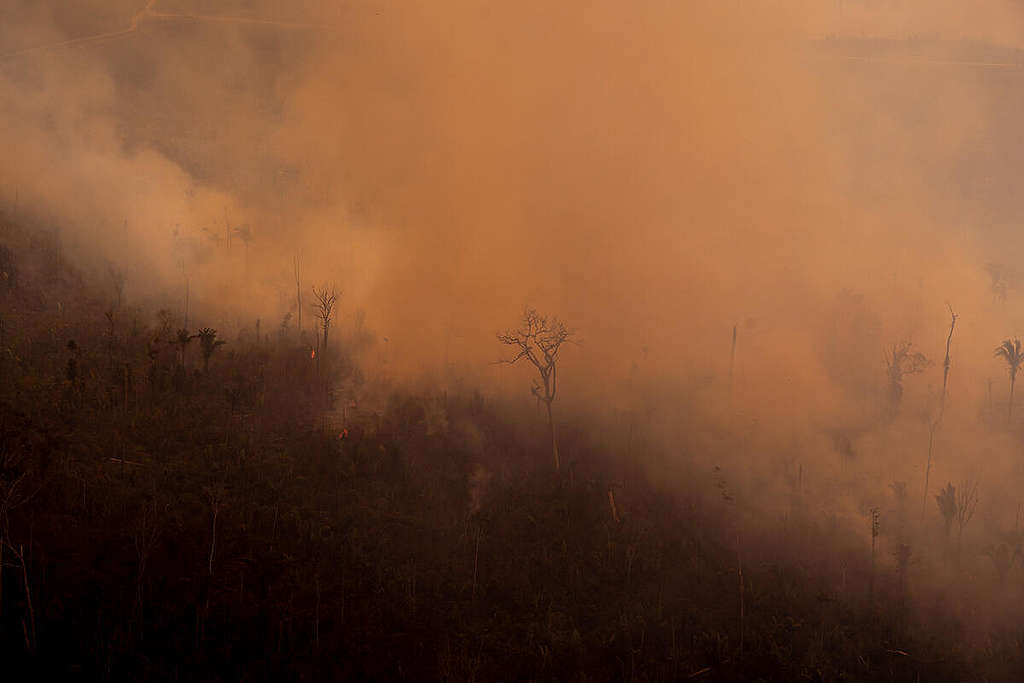
Fire in the Jaci-Paraná Extractive Reserve, in Porto Velho, Rondônia state.
One month after a presidential decree forbidding fires in the Amazon and Pantanal, Greenpeace flew over Amazonas and Rondônia states to verify how efficient the measure was. Even with the Fire Moratorium, we registered several live heat spots.
Every year, Greenpeace Brazil flies over the Amazon to monitor deforestation build up and forest fires. In August, 2020, flights were made over points with Deter (Real Time Deforestation Detection System) and fire warnings and Prodes (Brazilian Amazon Satellite Monitoring Project), made by Inpe (National Institute for Space Research), in Amazonas and Rondônia states.
Fire in the Jaci-Paraná Extractive Reserve, in Porto Velho, Rondônia state.
One month after a presidential decree forbidding fires in the Amazon and Pantanal, Greenpeace flew over Amazonas and Rondônia states to verify how efficient the measure was. Even with the Fire Moratorium, we registered several live heat spots.
Every year, Greenpeace Brazil flies over the Amazon to monitor deforestation build up and forest fires. In August, 2020, flights were made over points with Deter (Real Time Deforestation Detection System) and fire warnings and Prodes (Brazilian Amazon Satellite Monitoring Project), made by Inpe (National Institute for Space Research), in Amazonas and Rondônia states.

Argentina’s Paraná Delta is also on fire, threatening a vital ecosystem that is home to hundreds of species of plants and animals and helps regulate the climate. Like Brazil, these fires are mainly caused by farmers clearing the land for agriculture. However, the fires have been made worse by the strongest drought in 70 years and lack of rainfall. Fires are also now raging in Argentina’s Cordoba province, threatening homes and forcing evacuations. These are also intentional fires, based on the economic interests of the agricultural and real estate sectors. Coupled with the droughts, they are causing irreversible destruction.
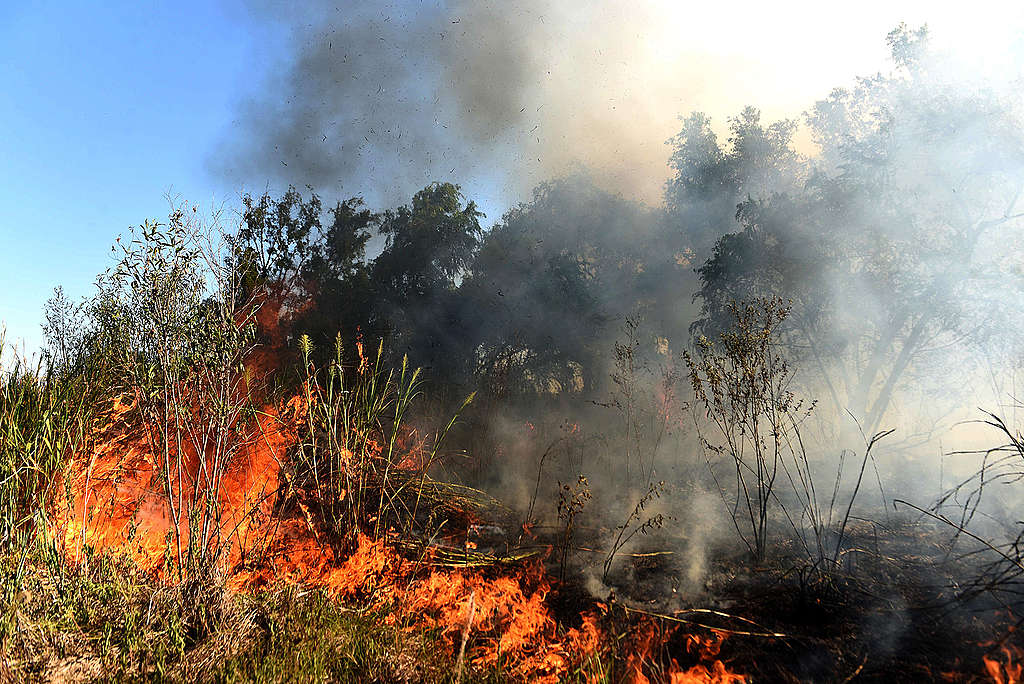
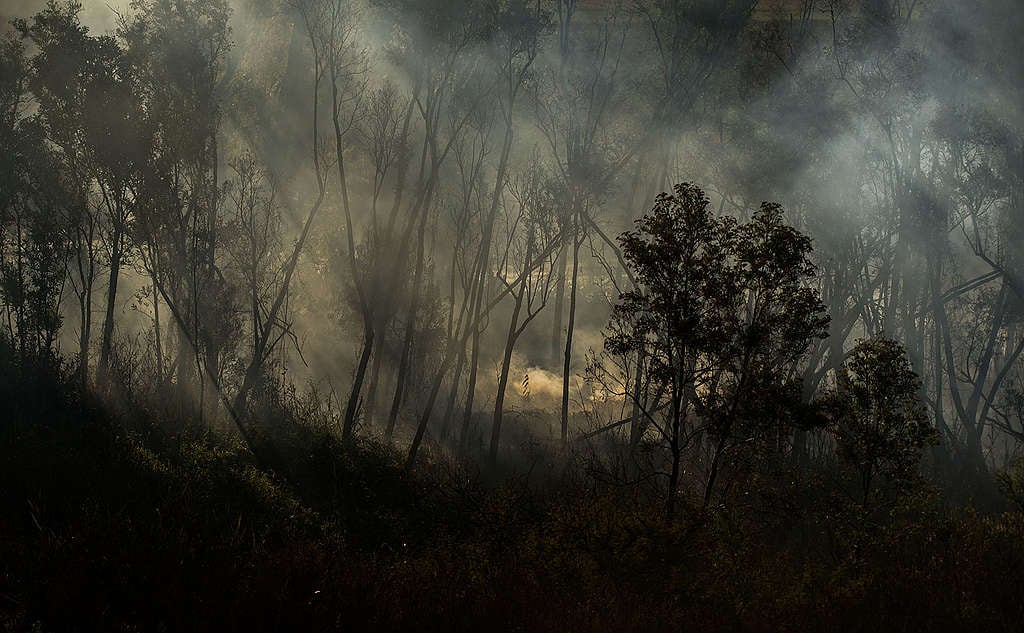
Fires burn in the Paraná Delta, Argentina. © Sebastian Suarez Meccia / Greenpeace

We are also seeing the state of California in the United States go up in flames, forcing hundreds of thousands to evacuate and leaving the state with the worst air quality in the world.

This wave of wildfires — sparked by a historic heatwave and lightning — includes blazes that already rank among the largest in state history. Smoke from the fires is spreading across the western US and the Pacific Ocean.

In 2020, the California fires are worsened by one crisis facing the region and worsening another:

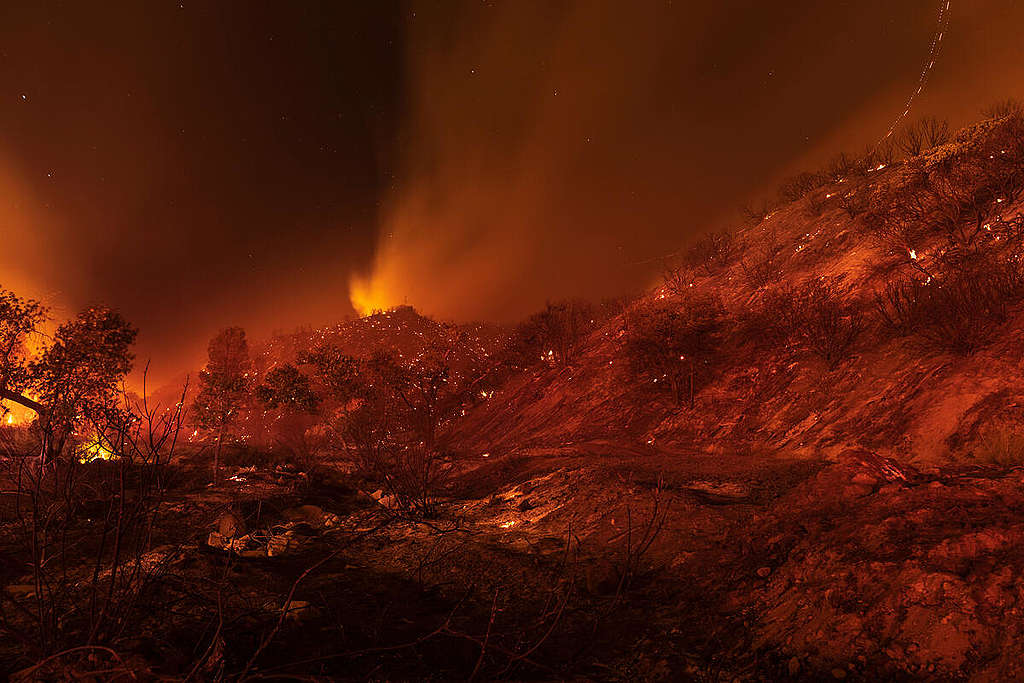
The landscape smolders, as emergency lights of a passing firetruck cast addition red light.  The Lake Fire consumes chaparral and forests on August 12, 2020 in Lake Hughes, California. The wildfire exploded to at least 10,000 acres in the first few hours with no containment and destroying several homes and out buildings in Pine Canyon. 
The Climate emergency is exacerbating the conditions that make fires more catastrophic. Hotter and drier conditions are extending the wildfire season and contributing to larger fires. 
 During the COVID-19 pandemic, unhealthy air is a serious public health emergency. Deadly air pollutants are exacerbated by dangerous smoke from these fires that threaten children, elderly populations, pregnant women, unhoused people, outdoor workers, and those with compromised immune systems and preexisting conditions.
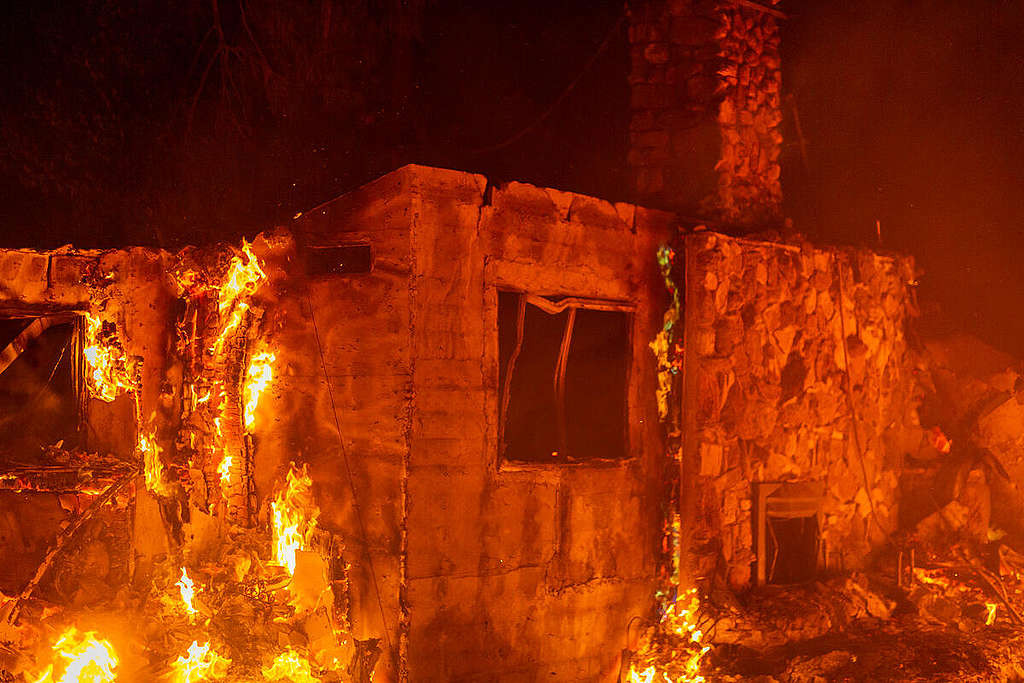
A home burns in Pine Canyon during the Lake Fire on August 12, 2020 in Lake Hughes, California. The wildfire exploded to at least 10,000 acres in the first few hours with no containment and destroying several homes and out buildings in Pine Canyon. 
The Climate emergency is exacerbating the conditions that make fires more catastrophic. Hotter and drier conditions are extending the wildfire season and contributing to larger fires. 
 During the COVID-19 pandemic, unhealthy air is a serious public health emergency. Deadly air pollutants are exacerbated by dangerous smoke from these fires that threaten children, elderly populations, pregnant women, unhoused people, outdoor workers, and those with compromised immune systems and preexisting conditions.

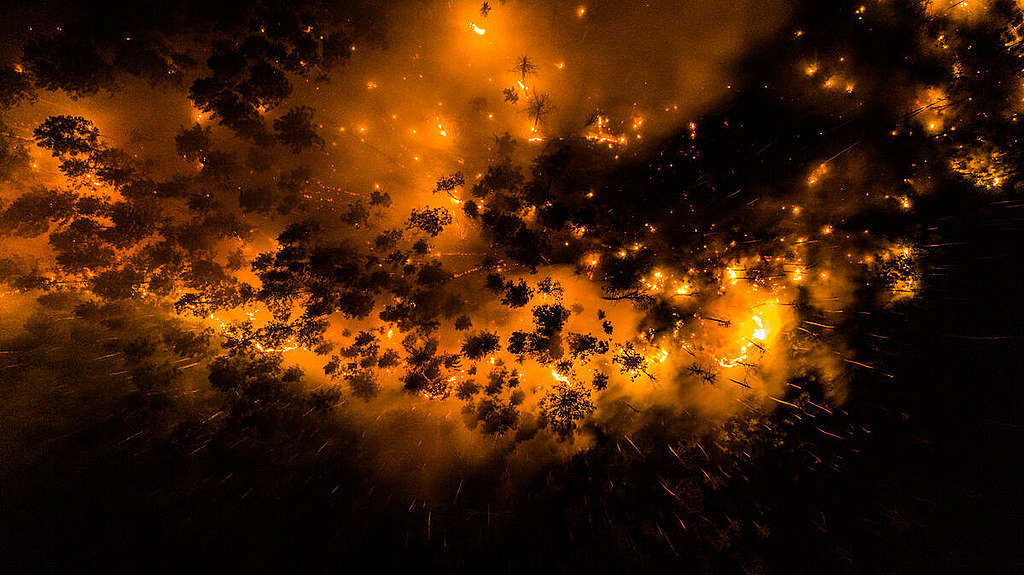
In Siberia, this summer has already brought extreme heat waves, oil spills caused by thawing permafrost, and raging forest fires. According to satellite monitoring data, the total area burnt by fires in Russia since the beginning of 2020 has overcome 22 million hectares. More than 14 million hectares of these territories suffered forest fires. Most of these fires are not being fought. Russian authorities have a legal consent not to do it as the economic consequences do not outweigh the resources needed to fight those fires.  
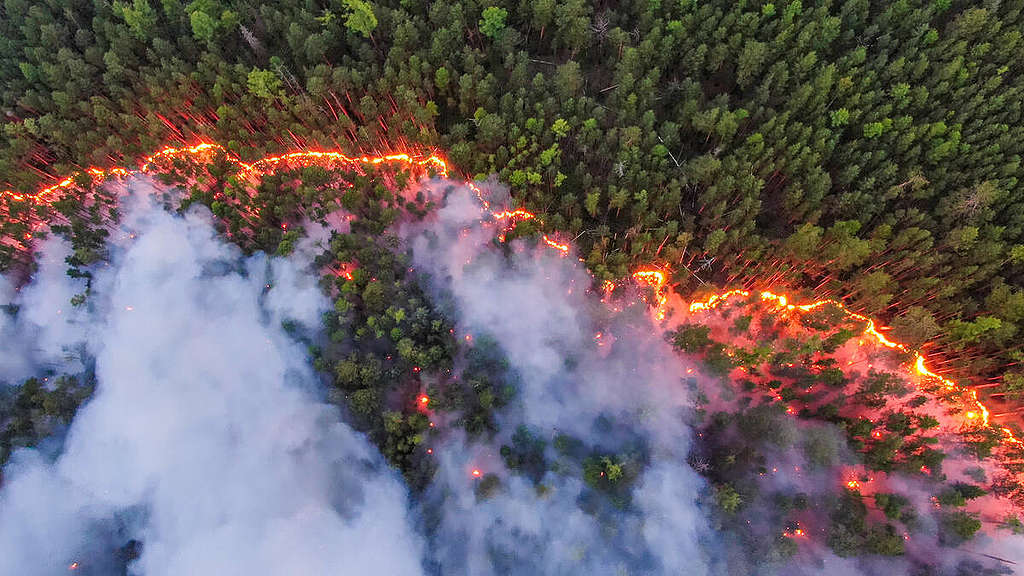
This summer Siberia is extremely suffering from various consequences of climate change: heat waves, oil spills caused by permafrost thawing and raging forest fires. Greenpeace Russia team has documented forest fires in the Krasnoyarsk region. It is a clear evidence of a climate emergency: the northern landscape is being transformed by heat and fire. While Russian authorities are failing to stop these fires, valuable for the planet taiga continues burning with the consequences to local people and big contribution to climate change.

In all these countries, local leaders must stand up and take bold action to protect the forests and their people, and as a global community, we must work together to find solutions to end the climate crisis.