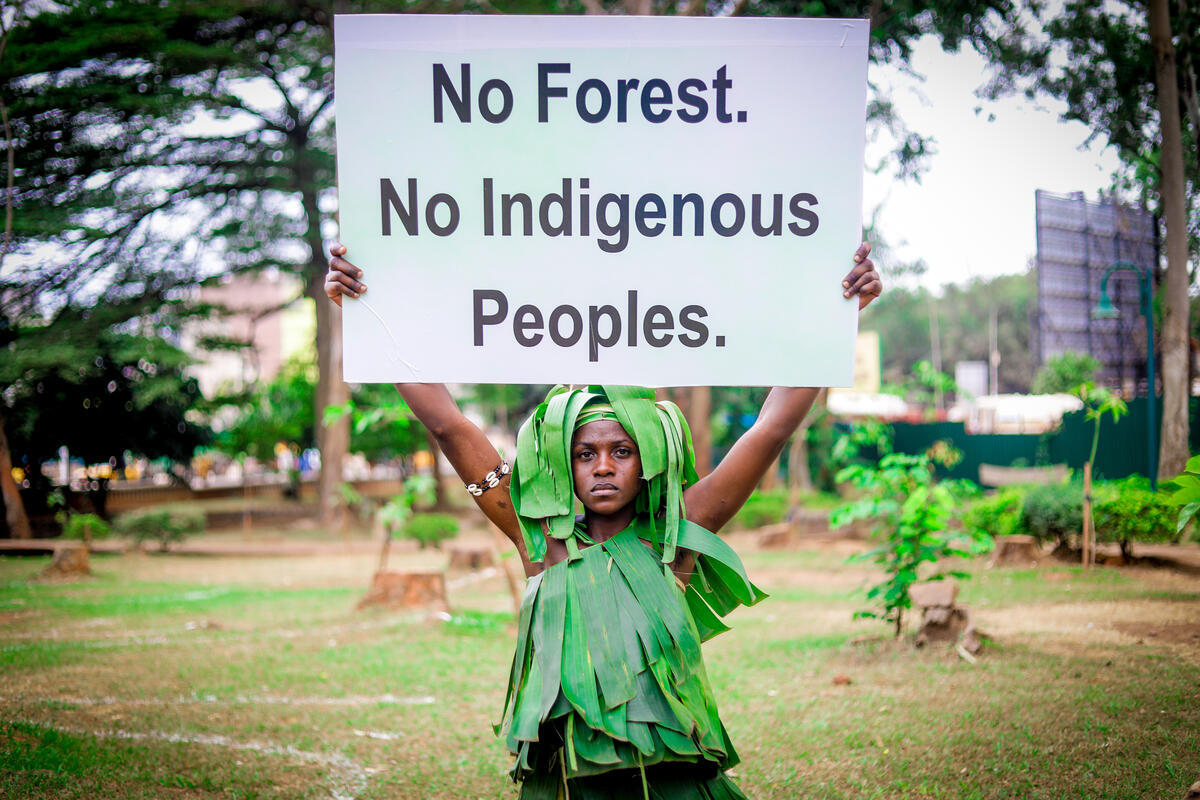
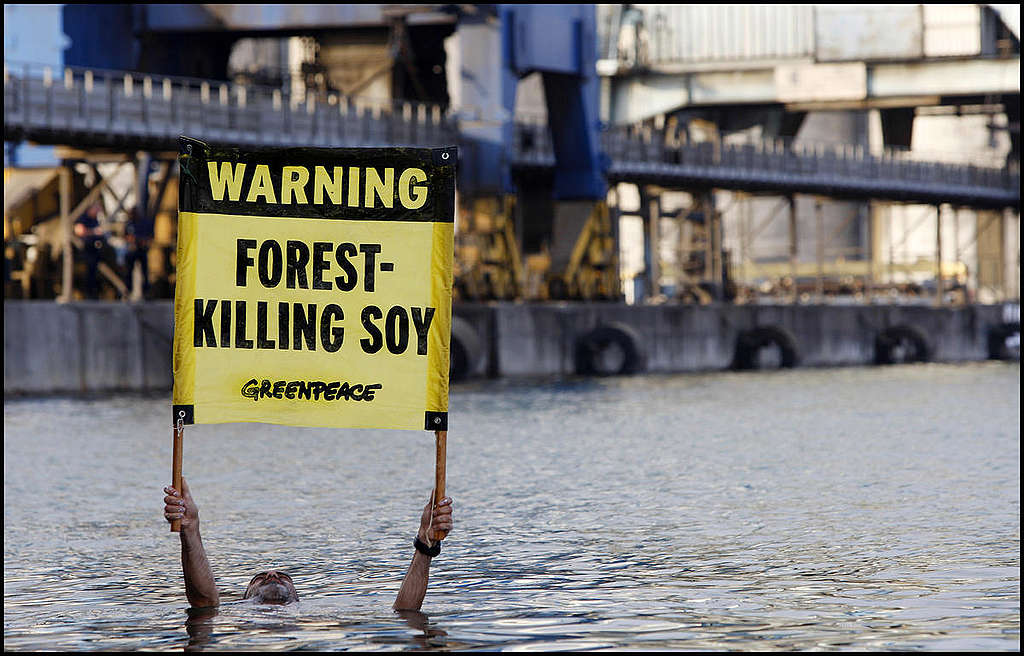
Today, Greenpeace volunteers from sixteen countries and Indigenous leaders from Brazil are taking part in a peaceful protest organised by Greenpeace Netherlands at the sea gate in IJmuiden, Amsterdam. Activists from all over Europe are blocking a mega-ship arriving with 60 million kilos of soya from Brazil, demanding a strong new EU ‘anti-deforestation’ law.
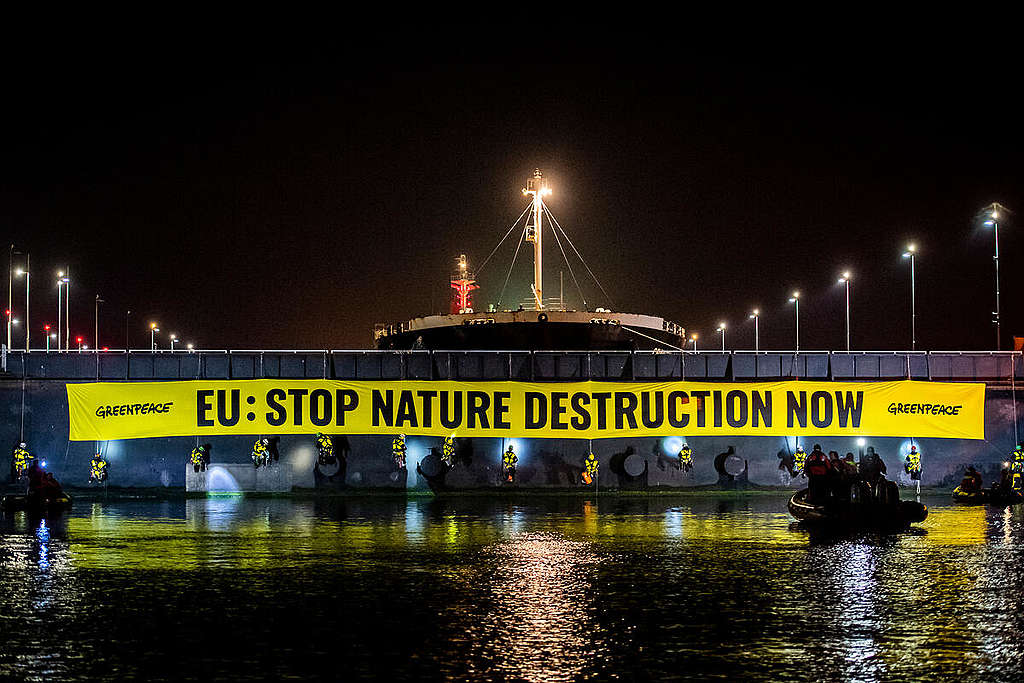
The Crimson Ace, symbol of a broken food system and of the EU’s complicity in global forest destruction
The Crimson Ace, a colossal 225-meter vessel, is the symbol of a broken system driving environmental destruction and human rights abuses. Most of the soy this ship is carrying will be used as animal feed (to produce meat, dairy, eggs, farmed fish), as it’s the case for almost all the soy imported to the EU (at least 85%).
Global soy production has more than doubled since 1997, driven by growing demand for animal feed, and the European Union is now the world’s second largest soy importer, with around 33 million tonnes of soy products sourced from abroad every year. According to calculations by Greenpeace France, the European Union mobilises 11,9 million hectares of soy abroad to satisfy its livestock farming needs, an amount of land equivalent to the size of Germany.
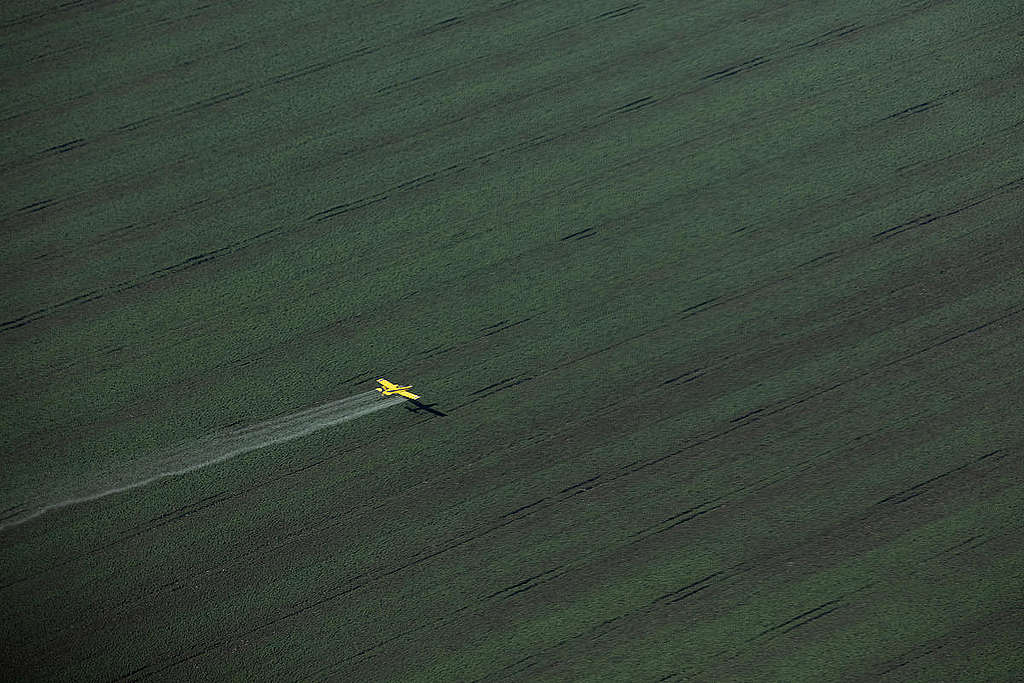
More than half of this soy is used to produce meat, meat that Europeans consume in amounts far exceeding dietary recommendations. Europeans consume around twice as much meat as the global average, and about three times as much dairy.
Pasture for livestock and cropland for soy production have been identified as the two main drivers of deforestation worldwide. Through their high consumption, the countries of the EU are responsible for 16% of tropical deforestation linked to internationally traded commodities like meat, palm oil or soy.
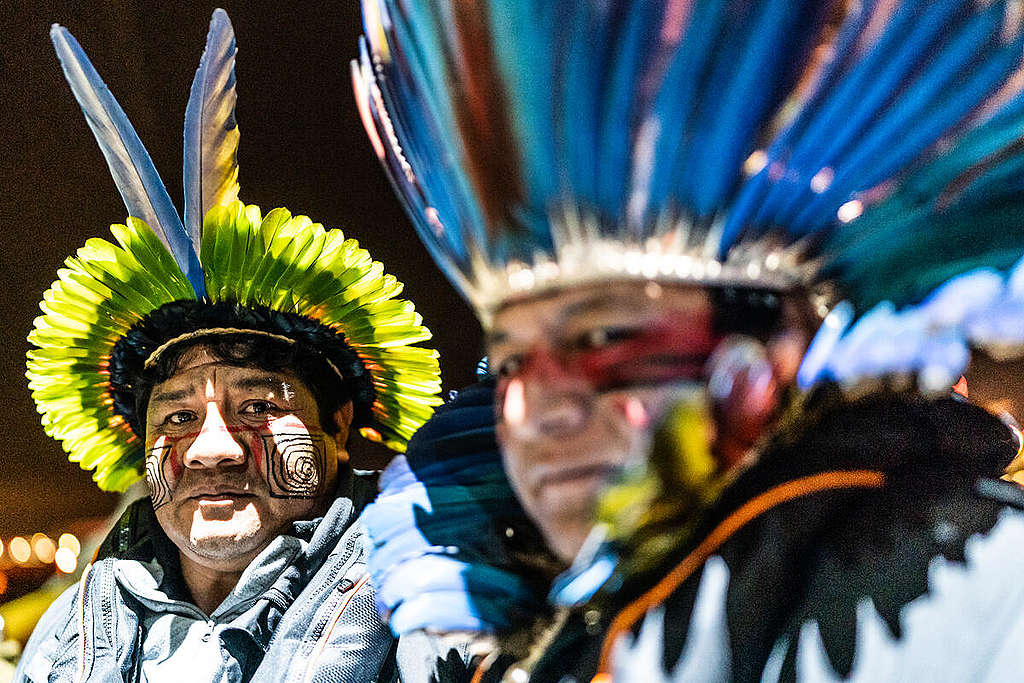
Indigenous Peoples evicted from their lands to make room for soy and cattle
Indigenous Peoples have the knowledge to live in harmony with the land and grow food ecologically, but instead of listening to them, companies and governments have been putting their rights, their land, and their lives at risk for generations.
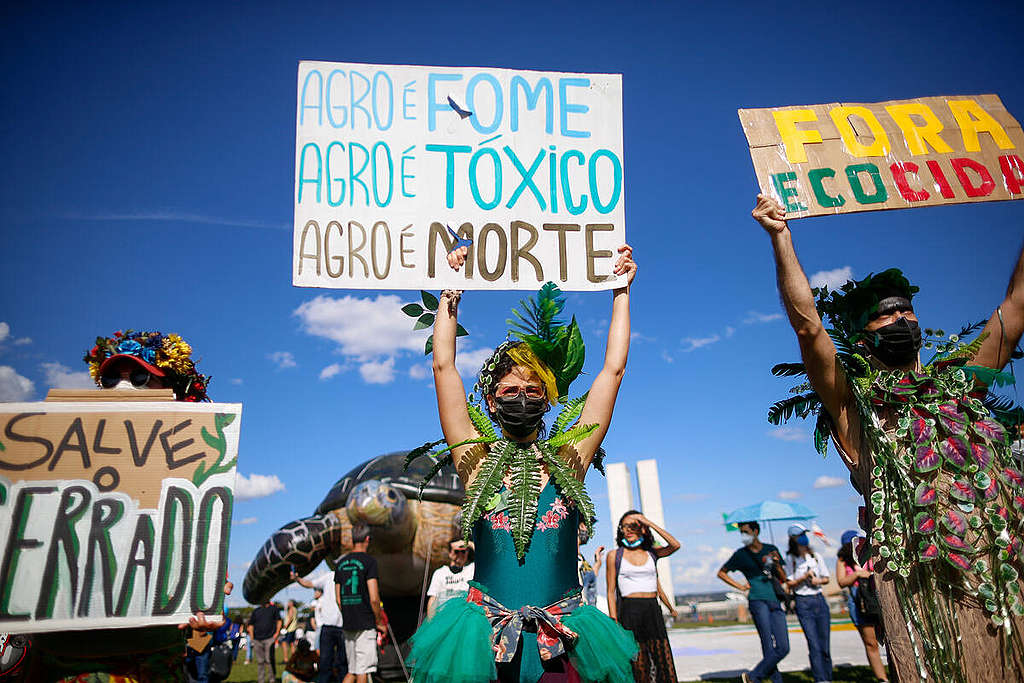
Ships like the Crimson Ace can contain soy coming from wrecked ecosystems, where Indigenous People and traditional communities face conflicts over their land, and other violations (such as violent eviction).
A mounting body of evidence suggests that the expansion of meat and soy pushes deforestation and threatens the survival of Indigenous Peoples in Brazil. Industrial animal farming in European countries is co-responsible for this race for suitable land for soy, which in return pushes the cattle deeper into the rainforest and invades protected areas and Indigenous lands.
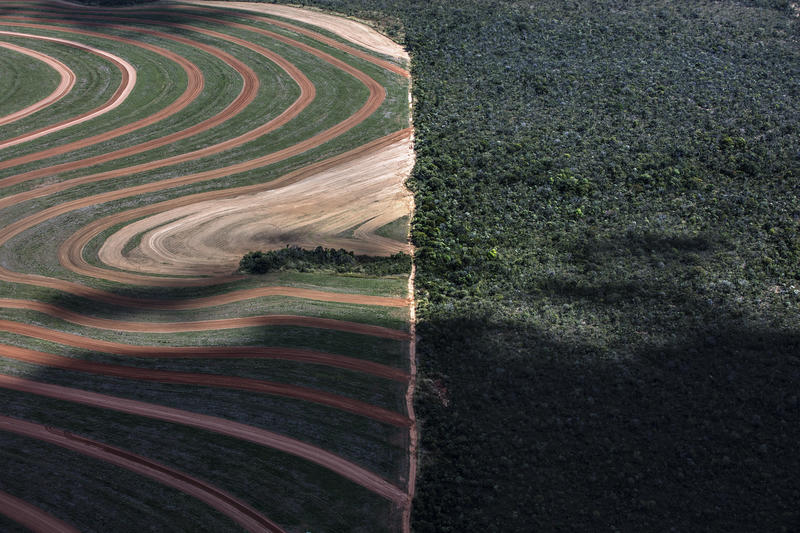
Massive ranches and monoculture plantations are eating up unique natural areas to produce meat and soy for animal feed. More than half of the natural vegetation of the Brazilian Cerrado, home to both Indigenous communities and unique species like the jaguar, has already been cleared for soy plantations and pasture lands.
A strong EU law to protect forests, people and nature is direly needed
Political leaders must pass, monitor and enforce laws to protect the world’s forests and ecosystems to guarantee Indigenous and community land rights, all of which are vital to save the Amazon rainforest and the world’s climate.
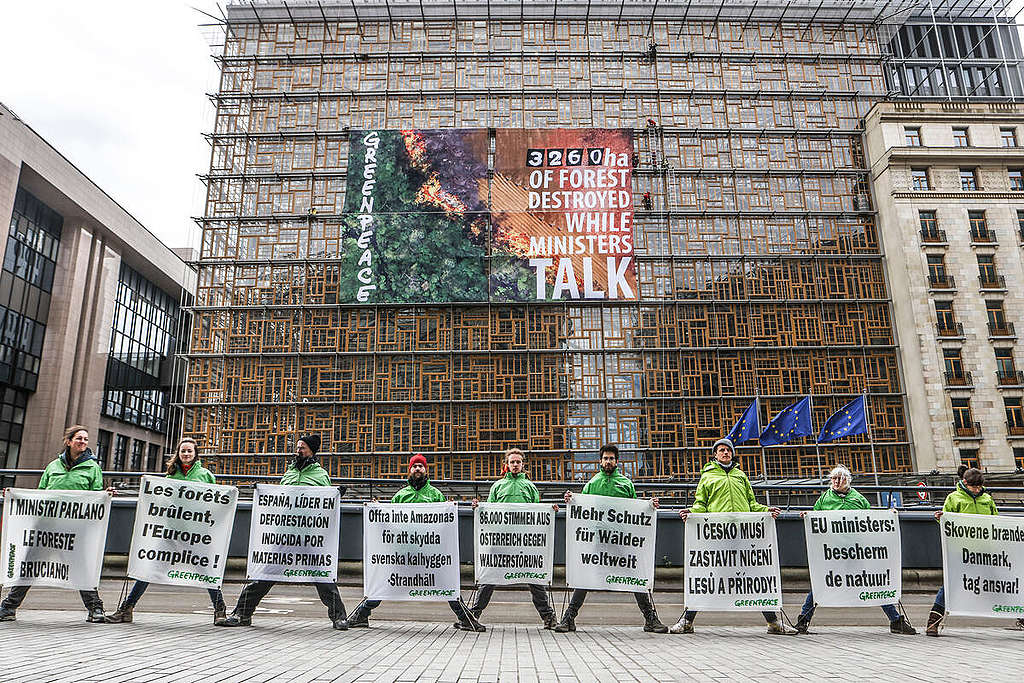
Right now, the French presidency of the European Council is leading negotiations with other European ministers on a new EU law that could protect precious ecosystems around the world. But the planned law is still full of crucial holes. For example, the bill only protects forests, and not other critically important natural areas such as the Brazilian Cerrado, while almost half of all Brazilian soy imports come from this nature reserve.
International human rights are also insufficiently enshrined, which means that Indigenous and local communities, who suffer from soy cultivation the most, often do not have their rights properly protected.
Many of the proposed rules in the draft law are also under attack by companies profiting from the ongoing destruction. They seem to be particularly reluctant to adopt transparency rules that would require companies to know where the crops for their products have been grown or their cows grazed.
A solid, watertight ‘anti-deforestation’ law for the EU would be an important part of the solution. But in the case of soy, we also need to talk about drastically reducing meat and dairy production and consumption.
To protect public health and nature, and to tackle the climate emergency, scientists are recommending a reduction of European meat and dairy consumption by at least 70 % by 2030. One of the most useful things everyone can do to take action on climate change right now is to eat drastically less meat and dairy and increase the amount of plant-based foods in our diet.
More than one million Europeans have already demanded strong political action. Join the movement and demand a strong EU law to protect forests, people and nature!
Sini Eräjää, is a forest and agriculture campaigner at Greenpeace European Unit.