Photos and videos are available in the Greenpeace Media Library
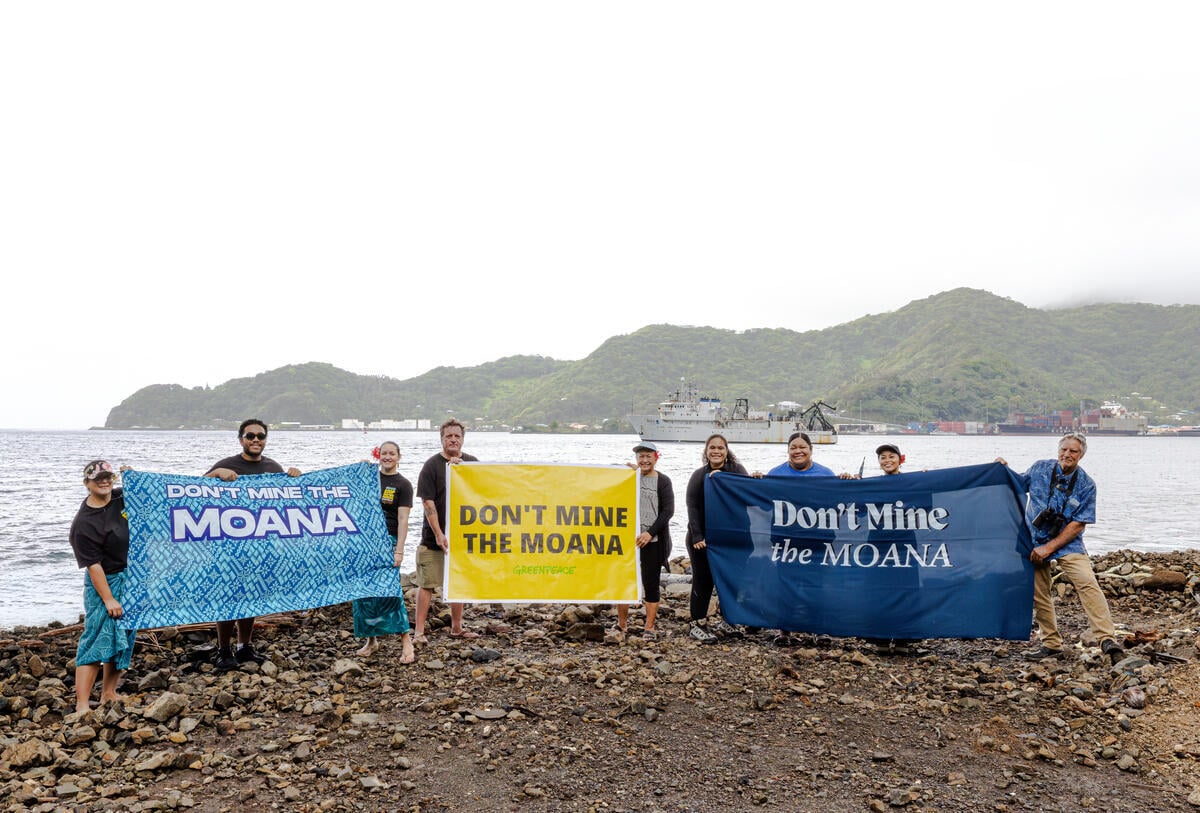
Pago Pago, American Samoa (Sept. 2, 2026) – American Samoan community leaders, accompanied by Greenpeace USA activists, peacefully confronted the National Oceanic and Atmospheric Administration (NOAA) research ship Okeanos Explorer in Pacific waters off Pago Pago Harbor. The activists held banners that read “Don’t Mine the Moana” in protest over concerns that the ship’s efforts to map seabed minerals off American Samoa and test whether radon can help locate mineral deposits could be used to advance the federal government’s deep sea mining agenda in the region.
The proposed Nov. 19 lease sale of approximately 31 million acres of the outer continental shelf in federal waters near the territory is moving forward despite American Samoa’s moratorium on seabed mineral exploration and extraction in its own waters and the joint opposition of its executive and legislative leaders and congressional delegate.
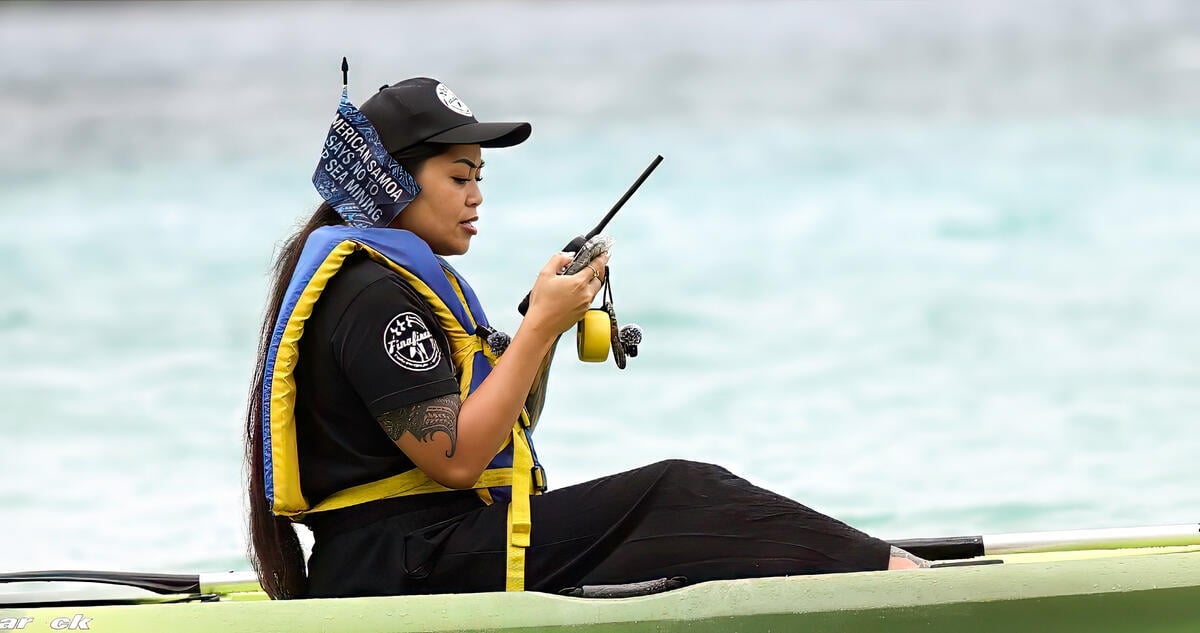
Sabrina Suluai-Mahuka, founder of American Samoa’s Finafinau Foundation, delivered a message of protest to the Okeanos Explorer by radio channel, stating: “American Samoa says no to deep-sea mining because the moana is so much more than a resource. It feeds us. It connects our islands. It carries our culture, our history, and our responsibility to those who come after us.
“Part of this expedition is focused on locating and understanding deep-sea mineral resources. At the same time, the federal government is moving toward leasing millions of acres of the seafloor around our islands for those very minerals. For us, those two things cannot simply be separated.
“The knowledge you help create can deepen humanity’s understanding of the ocean and strengthen the case for protecting it. But when that same knowledge is used to locate and characterize minerals for future extraction, we have every right to ask what purpose that science is ultimately serving. We stand in solidarity with communities from the Marianas to Hawaiʻi, California, Oregon, and Washington who have also said no to deep-sea mining and yes to protecting our shared ocean.”
The Okeanos Explorer responded, “We thank you for your message. And coming from Hawai’i and living in Hawai’i we understand the Moana. It is our purpose here to understand the oceans and what that entails from the ocean surface to the bottom of the ocean, and we are only here for research purposes only. It is to the politicians and the people who make the decisions to decide what they do with their oceans. We are only here for science as a whole. To better ourselves as a nation, to better ourselves as a community, and better ourselves as Ohana.”
Gov. Pulaali’i Nikolao Pula has warned that the untested extraction processes could harm the territory’s tuna-dependent economy. StarKist’s Pago Pago cannery — the last one left in American Samoa — employs roughly 2,450 workers and anchors an estimated 4,500 jobs territory-wide, in a territory of about 55,000 people. The territory’s stand echoes a broader regional wave: Fiji, Palau, Samoa, Tuvalu, Vanuatu, Kanaky (New Caledonia) and the Federated States of Micronesia have all called for moratoriums on seabed mining, and Māʻohi Nui (French Polynesia) and Hawaiʻi have banned it outright in their own waters.
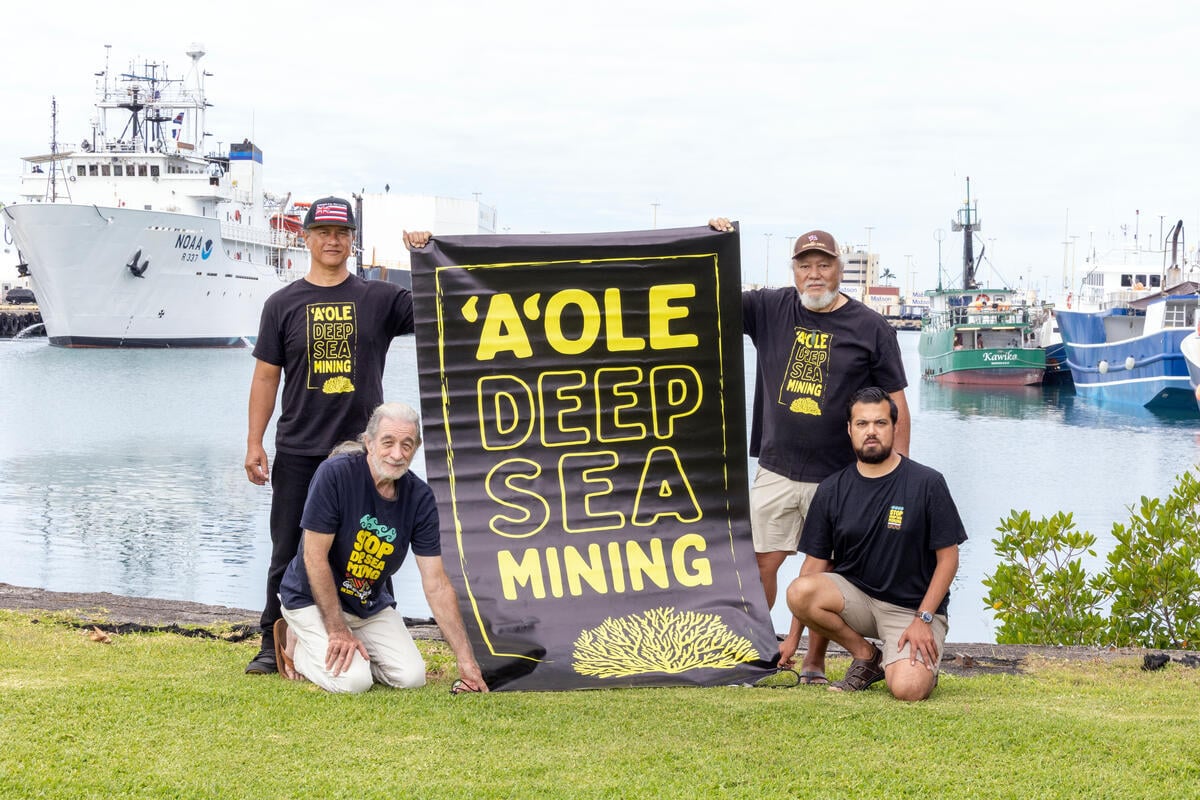
Opposition to the proposed lease sales reached the courts on Aug. 19, when environmental groups in American Samoa and Hawaii sued the U.S. government to halt the proposed sale, alleging that federal agencies failed to adequately assess the potential harm to marine ecosystems. The Okeanos Explorer expedition, which launched from Hawai’i earlier this year, was met with similar concern from native Hawaiians.
“We are being told to soften our concerns because this is ‘only exploration,’ but exploration for deep sea minerals still involves removing material from the seafloor, and it is being done for the purpose of determining whether and how commercial mining can move forward. Exploration is the front door to commercial mining. It is an unacceptable risk to our communities,” said Uisaina T. Collins, Finafinau board member.
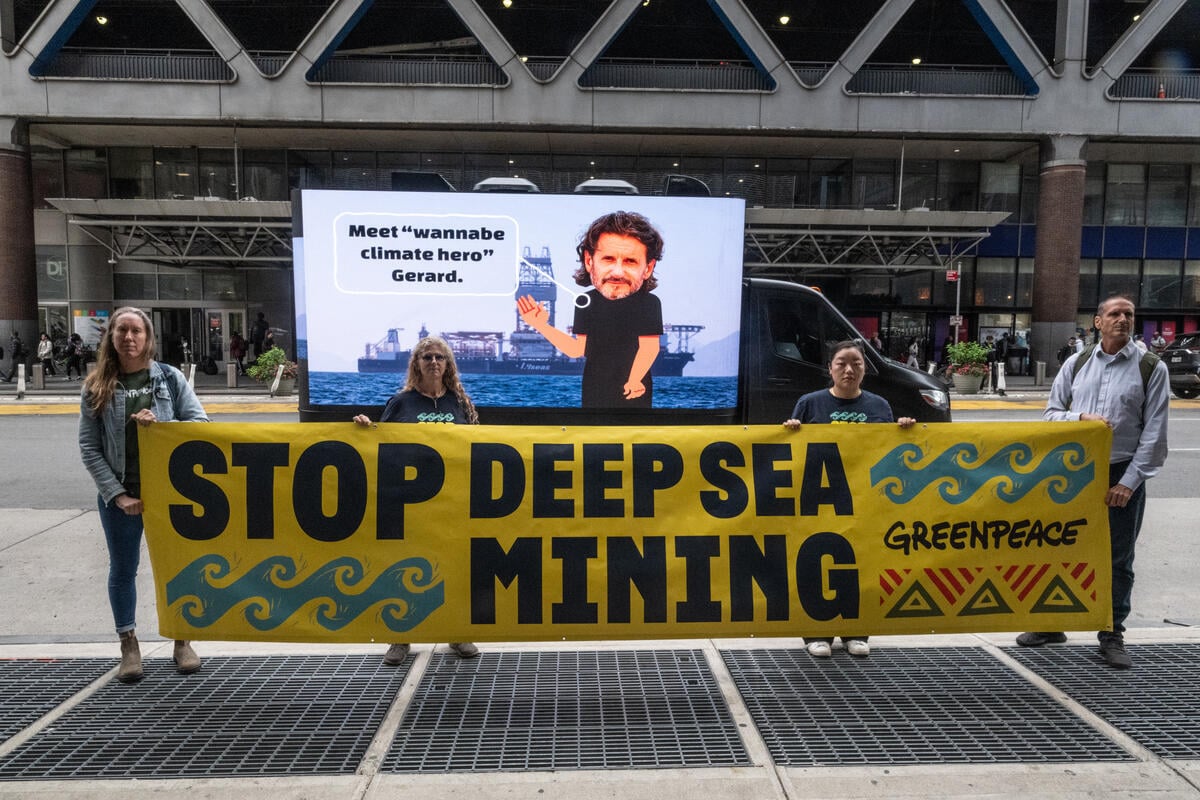
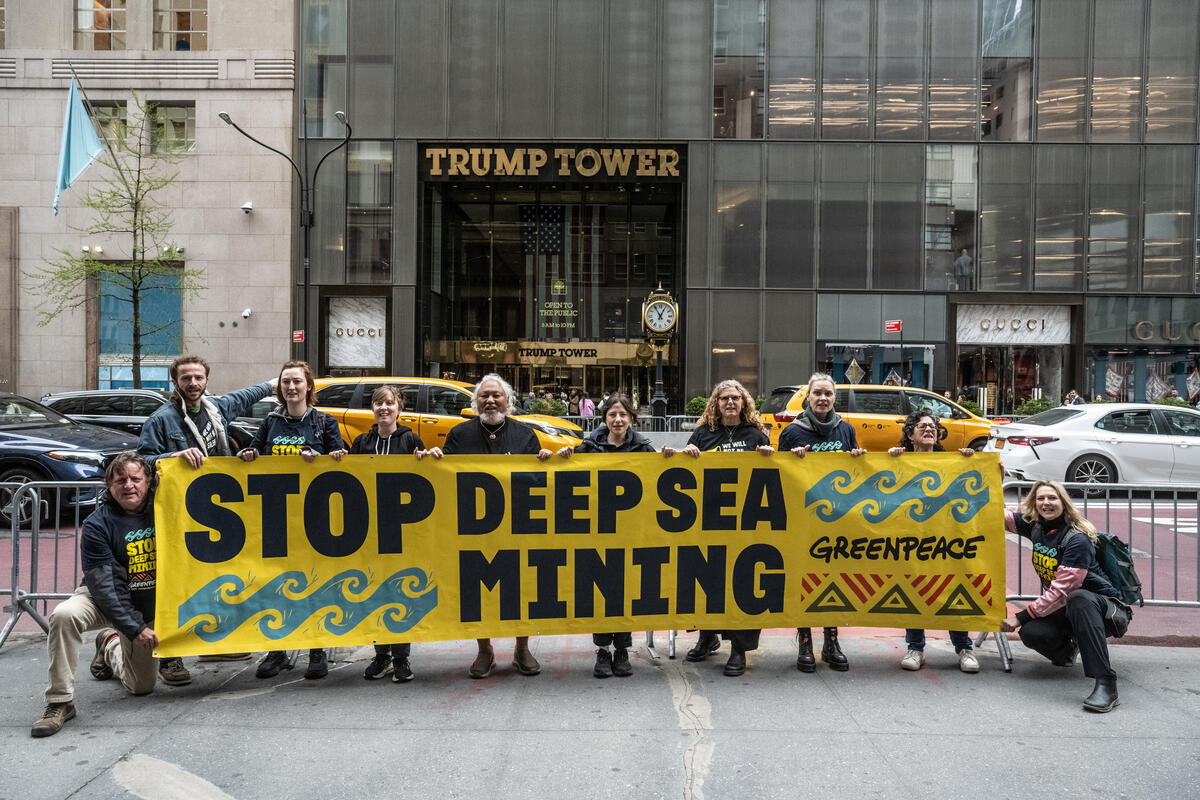
Arlo Hemphill, Greenpeace USA’s Deep Sea Mining Campaign Project Lead, said: “The U.S. has used the Pacific as a testing ground before, without permission, consultation or foresight of the consequences. Now, Washington wants the Pacific to pay the price again – this time for its misguided critical mineral agenda. How many more times must communities say no to deep sea mining before this Administration gets the message? People – not profit —should decide the future of the ocean.”
Contacts:
Tanya Brooks, Senior Communications Specialist at Greenpeace USA, [email protected], +1 703 342 9226
Greenpeace USA Press Desk: [email protected]
Greenpeace USA (Inc.) is part of a global network of independent campaigning organizations that use peaceful protest and creative communication to expose global environmental problems and promote solutions that are essential to a green and peaceful future. Greenpeace USA is committed to transforming the country’s unjust social, environmental, and economic systems from the ground up to address the climate crisis, advance racial justice, and build an economy that puts people first. Learn more at www.greenpeace.org/usa.