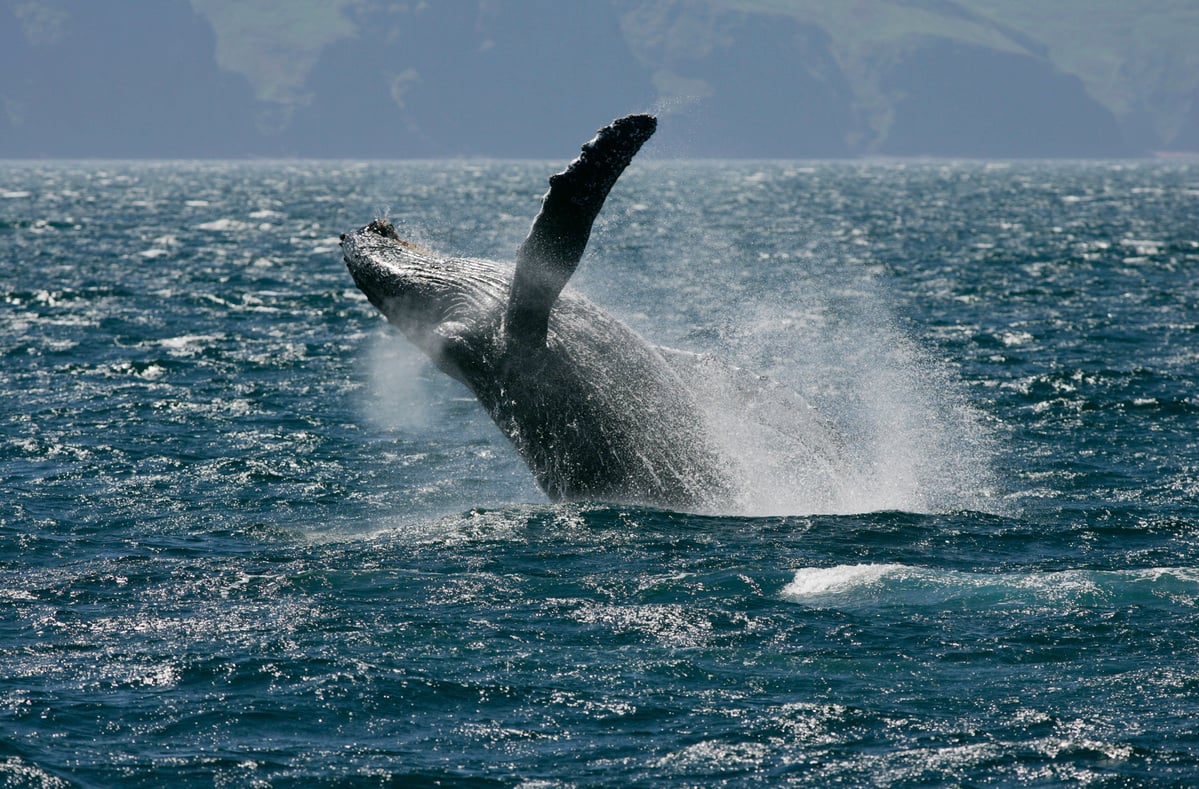
Landmark pact launches race to protect 30% of world’s oceans by 2030
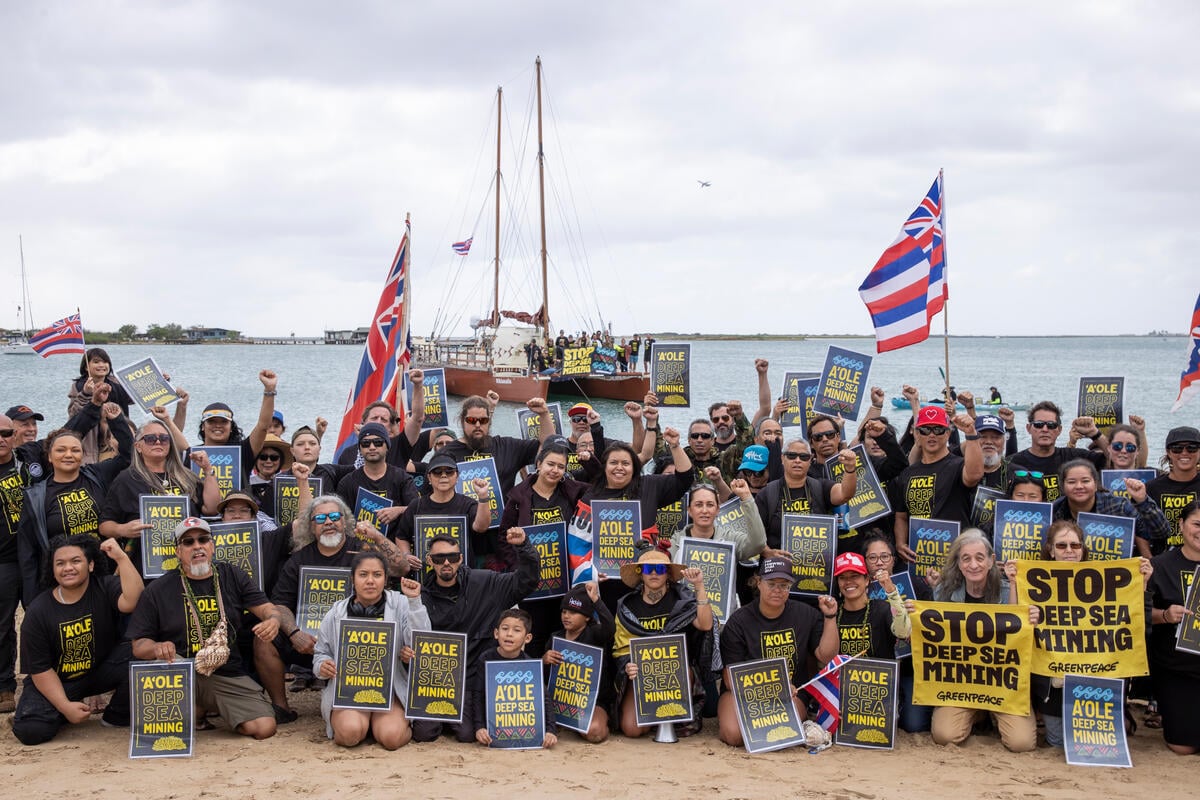
Images of the artworks can be found in the Greenpeace Media Library
Washington, DC (January 16, 2026)—The Global Ocean Treaty enters into force on January 17, launching a race to protect 30% of the world’s oceans by 2030 as artists and communities from 13 countries unveil large-scale public artworks celebrating the landmark agreement.
The global action, coordinated by Greenpeace International, includes Indigenous Peoples, activists, and local communities across five continents. Murals, sculptures, and kinetic installations inspired by ocean life are appearing in public spaces to celebrate the treaty and urge governments to move quickly to implement it.
John Hocevar, Greenpeace USA Ocean Campaign Director, said: “Multilateral collaboration that includes diverse voices and inclusive processes is essential to addressing global challenges. This moment shows what international cooperation can achieve; the next few months and years will show why it remains necessary.”
The treaty takes effect as the United States steps back from international environmental engagement while deregulating key pillars of protection. Since the start of President Donald Trump’s second term, the administration has withdrawn from the United Nations ocean and climate frameworks, advanced policies to pursue deep sea mining in U.S. Pacific and international waters despite mounting global opposition, dismantled key functions of the National Oceanic and Atmospheric Administration (NOAA), and issued proclamations rolling back protections that open the Pacific Islands Heritage Marine National Monument — long protected for its ecological and cultural value — to commercial fishing.
While the United States has not ratified the treaty, binding legal obligations will now apply to countries that have.
In the United States, Greenpeace USA is supporting a large-scale mural in Hawaiʻi by Kanaka Maoli (Native Hawaiian) artist Kaiʻili Kaulukukui. The project is being developed in collaboration with Kamehameha Schools and cultural leaders, including Solomon “Uncle Sol” Kahoʻohalahala, an ocean stewardship advocate with the Maui Nui Makai Network.
The mural draws from the Kumulipo, Hawaiʻi’s creation chant, to honor the genealogical connection between people and the oceans, and the kuleana — or responsibility — to protect them from coastal waters to the “high seas”.
Kahoʻohalahala said: “Pacific communities are on the front lines of growing ocean threats, from deep-sea mining to industrial fishing, which endanger fragile biodiversity, vital fisheries, and the cultural and economic foundations of island nations. The ocean is central to our creation and our survival. We welcome this treaty and urge governments to act quickly to ensure it protects the ocean for current and future generations.”
The Global Ocean Treaty is the most significant international environmental agreement since the Paris Climate Accord. It reached its 60th ratification in September 2025, triggering its entry into force.
Today, less than 1% of the High Seas — areas beyond national jurisdiction — is fully or highly protected. For the first time, the treaty provides a legal framework for establishing marine protected areas in international waters to address climate impacts, biodiversity loss, and food security.
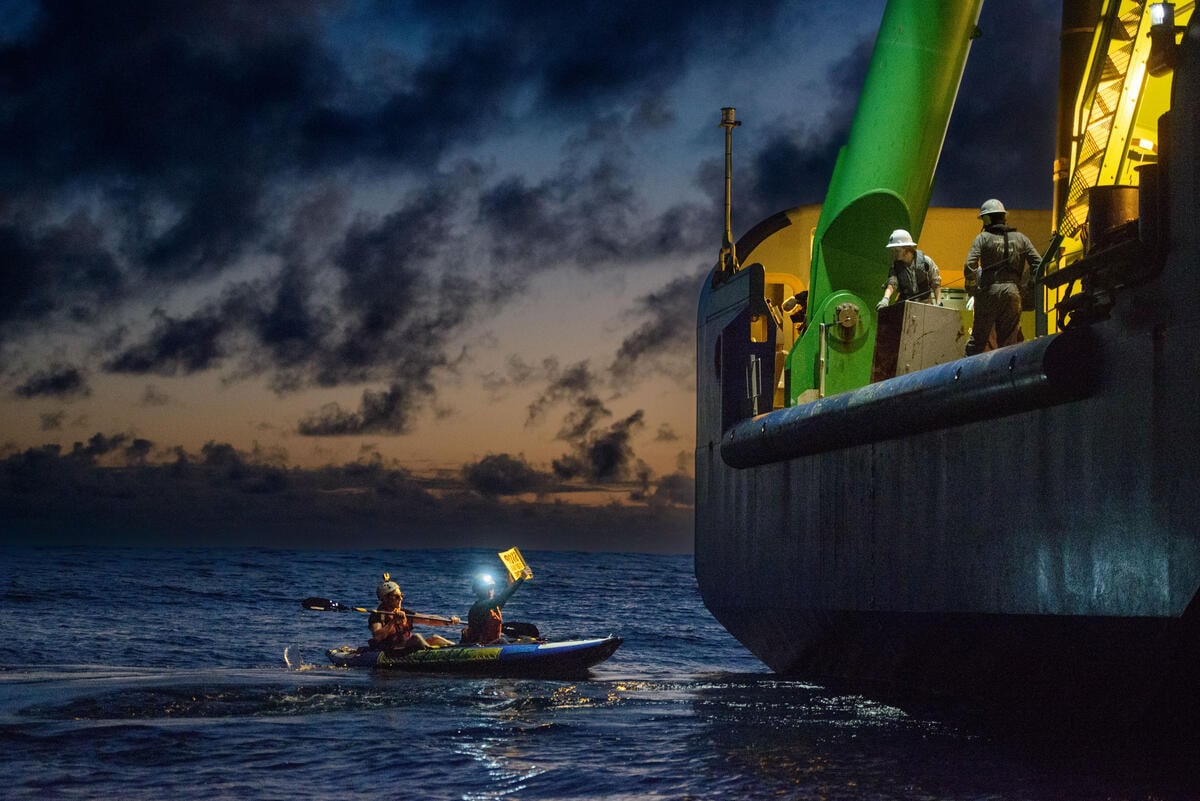
The treaty’s success now depends on rapid follow-through, including swift designation of the first high seas sanctuaries and limits on the power of industrial fisheries during the creation of the first sanctuary sites. The Greenpeace network is also calling on governments to advance ocean protection at home and abroad — including strong safeguards against deep sea mining, which scientists warn could cause irreversible damage to ocean ecosystems.
Closing the high seas protection gap, from under 1% to 30% in four years, will require governments to protect ocean areas larger than entire continents and to do so faster than any conservation effort in history.
At the 2025 United Nations General Assembly, 16 countries launched the Ocean Pioneers Coalition, a group of countries committing to strong ocean protection by ratifying the ocean treaty and committing to a moratorium on deep sea mining. Greenpeace is urging more governments to join the coalition and accelerate action to protect the oceans.
Notes to editors
- Greenpeace spokespeople are available for interview or further comment.
- Photographs of the murals will be available here from 14 January as the murals are finished, with a full library of pictures uploaded in the following days.
- A short history of the Ocean Treaty
- Biographies about the artists
- The full list of countries participating is: Slovenia, Austria, the Philippines, Mexico, Mauritius, Senegal, Germany, Australia, the UK, Japan, Canada, the Netherlands, and the USA.
Contact:
Tanya Brooks, Senior Communications Specialist at Greenpeace USA, [email protected]
Greenpeace USA Press Desk: [email protected]
Florri Burton, Global Media Lead, Oceans Are Life campaign, Greenpeace Nordic +447896523839, [email protected]
Greenpeace International Press Desk: +31 (0)20 718 2470 (available 24 hours), [email protected]