The company names might change, but the villain remains the same.
For more than 50 years, we have known that per- and polyfluoroalkyl substances, better known as PFAS, are highly toxic. You might’ve heard them called “forever chemicals” because not only can they cause irreversible damage to our collective health and environment, but they can also exist in our water, air, soil, food, and clothing for thousands of years.
Historically campaigns to rein in the use of these chemicals have been robust and largely successful. We laid out the health risks. We showed the science. And they listened.
Fifteen years ago, Greenpeace USA launched a campaign targeting big fast fashion companies – we demanded they stop polluting waterways with hazardous chemicals from clothing production.
80 companies took a pledge, and by 2020, all 80 had achieved significant progress in phasing out these chemicals from their supply chains. Progress! But not enough.
New forms of PFAS continue to pop up and are used in consumer goods and food packaging and for various industrial uses.
Today, we are tracking a recent surge in new PFAS demand – this time not through fast fashion – instead from the boom of new data center development fueling artificial intelligence.
How PFAS are entering the AI boom
You can find PFAS nearly top to bottom in data centers – from construction to AI chips, circuit boards, fire suppression equipment, and the coatings on the huge lengths of cable that connect the systems.
Now, the chemical industry is pushing hard to make PFAS integral to the functionality of data center cooling systems.
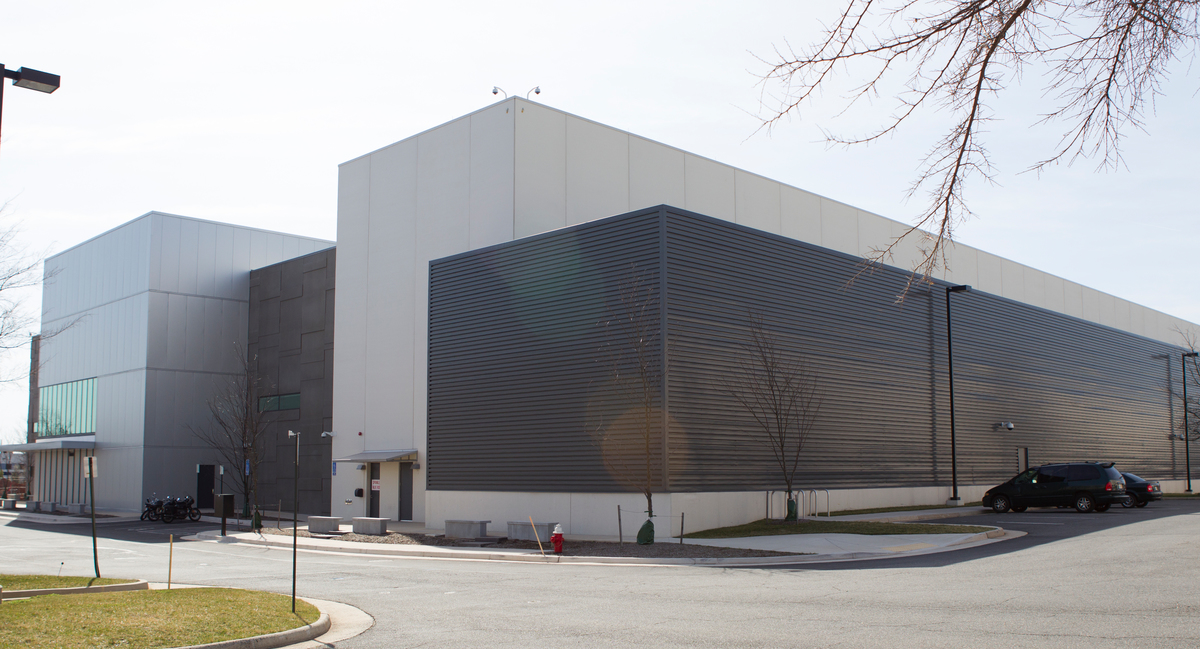
Those big, windowless buildings are packed with servers that get so hot they need constant cooling to keep from overheating and breaking down. Traditionally, data centers used large fans with air conditioners or chilled water loops to keep equipment cool.
However as the scale of data centers grows larger and larger, and are often in water scarce areas, much of the industry is coming to rely on immersion cooling. It’s a technique that places the electronic equipment inside of a tank filled with specialized chemical liquid that facilitates heat transfer. This cuts back on water use, but the specialized chemical liquids often contains PFAS.
Why should we be concerned?
PFAS contaminate our drinking water supplies, our farmlands, rivers, and wildlife. They have been linked to a range of health complications, including: high cholesterol, fertility issues, immune system disorders, kidney disease, birth defects, cancer and many more.
Today, PFAS can be found in nearly every American’s bloodstream and workers that handle or are exposed to these “forever chemicals” can potentially face increased risks of cancers, organ toxicity, higher vulnerabilities to infections, and reduced fertility.
The most concerning thing isn’t what we already know about PFAS — it’s what we don’t. Scientists are still trying to design ways to understand how they impact our health, while Big Tech companies are racing to produce and use more of them.
The chemical industry is betting big on AI
The AI boom came at a very convenient time for the chemical industry that makes PFAS. After decades of lawsuits, multi-billion dollar settlements over contaminated drinking water and pressure from regulators, the chemical industry has been looking for new ways to keep ‘forever chemicals’ in production – rapid AI expansion and data center build outs offered them just that.
The Chemours Company – a DuPont spinoff – is behind some of the most infamous and notorious PFAS contaminations in the world, and now is one of the leading chemical companies betting on AI by promoting the two phase immersion system as “a critical technology for sustainable data center cooling.”
But we know what this really is – the chemical industry is desperate for new customers and Big Tech is a big fish. However, both are pushing the “critical” nature of their unregulated development on Americans, while failing to commit to a truly sustainable and just buildout.
Cleaning up PFAS is expensive and the cost almost always ends up being paid by local water municipalities and ratepayers rather than the companies that made the chemicals in the first place.
For example, in a North Carolina community, ratepayers put up $46 million for a PFAS filtration facility to clean up the water supply with no help from the company responsible for polluting it.
If PFAS are built into the backbone of the AI economy, they will remain in our water, soil and bodies for generations to come.
We have to stop repeating history. Fifteen years after Greenpeace’s anti-PFAS fast fashion campaign, we’re still making some the same demands:
- Keep PFAS out of data centers.
- Commit to 24/7 renewable energy to power data centers, not more dirty polluting fossil fuels or toxic chemicals.
- Make polluters pay. These chemical and Big Tech companies must pay for the pollution they cause and the cleanup, not push it on to ratepayers.
We can’t afford to let the AI boom pave the way to our future – we must demand that people and the planet are put first.