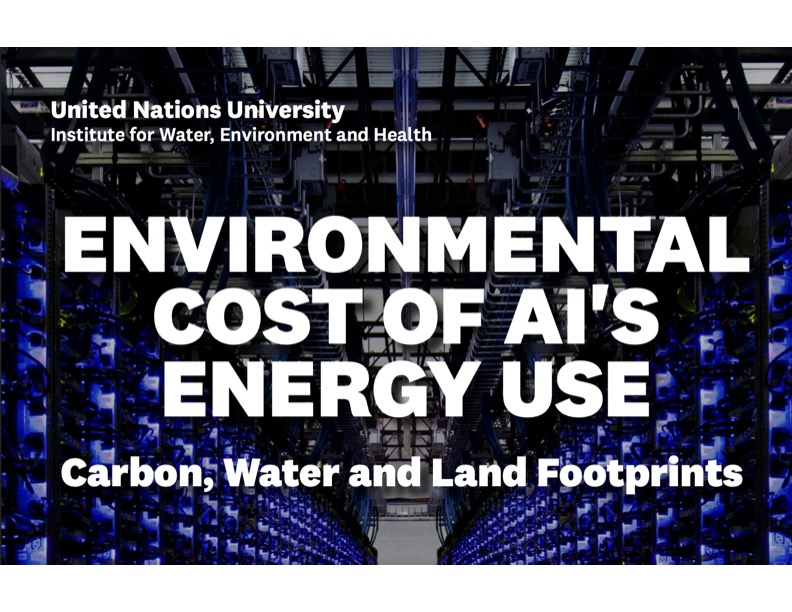
WASHINGTON, DC (June 3, 2026) – Today, the United Nations released “Environmental Cost of AI’s Energy Use,” a report exposing the deficiencies of environmental governance of AI systems given the stark environmental impacts and the unequal hardships posed on communities. The frenzied expansion of data centers alone has exploded the electricity demand of the industry – now estimated to rank 11th globally if the industry was considered an independent country.
Greenpeace USA Senior Research Specialist, Johanna Fornberg, PhD said: “The latest research from the UN proves that not only is the unchecked expansion of data centers a major climate problem, but it feeds a system that is increasingly unjust. Governance and accountability are essential for protecting communities worldwide from the consequences of technology that is built and distributed without the public interest at its core. Civil society needs to be involved in shaping how these systems are built before they become immutable. Protections are needed as quickly as possible to ensure that the most vulnerable communities do not bear the burdens of new advanced technologies.”
Big Tech has relied on fiscal and political power to steamroll regulators and communities in the pursuit of profits, and that behavior has now reached a tipping point. The expansion of technologies like generative AI, in particular, has led to dropped climate commitments, aggressive anti-regulation lobbies, and the evasion of public participation and consent. Now is the time to hold Big Tech accountable to protect communities and the planet from even more harm.
Contact: Madison Carter, Greenpeace USA National Press Secretary, [email protected], +1 703-554-4842
Greenpeace USA Press Desk: [email protected]
Greenpeace USA is part of a global network of independent campaigning organizations that use peaceful protest and creative communication to expose global environmental problems and promote solutions that are essential to a green and peaceful future. Greenpeace USA is committed to transforming the country’s unjust social, environmental, and economic systems from the ground up to address the climate crisis, advance racial justice, and build an economy that puts people first. Learn more at www.greenpeace.org/usa.