Images are available here.
WASHINGTON (June 12, 2026) —A California federal judge today conclusively denied the Bumble Bee tuna company’s request that the court reconsider its decision to allow a human trafficking case brought by Indonesian fishers to proceed. The court strongly rejected Bumble Bee’s argument that a federal anti-trafficking statute did not apply extraterritorially, finding that Congress had provided “a ‘clear, affirmative indication” that Plaintiffs’ claims under the Trafficking Victims’ Protection Reauthorization Act (TVPRA) could proceed even though they arose outside the United States. The caseremains one of only a few TVPRA supply chain cases to advance beyond the motion-to-dismiss stage.
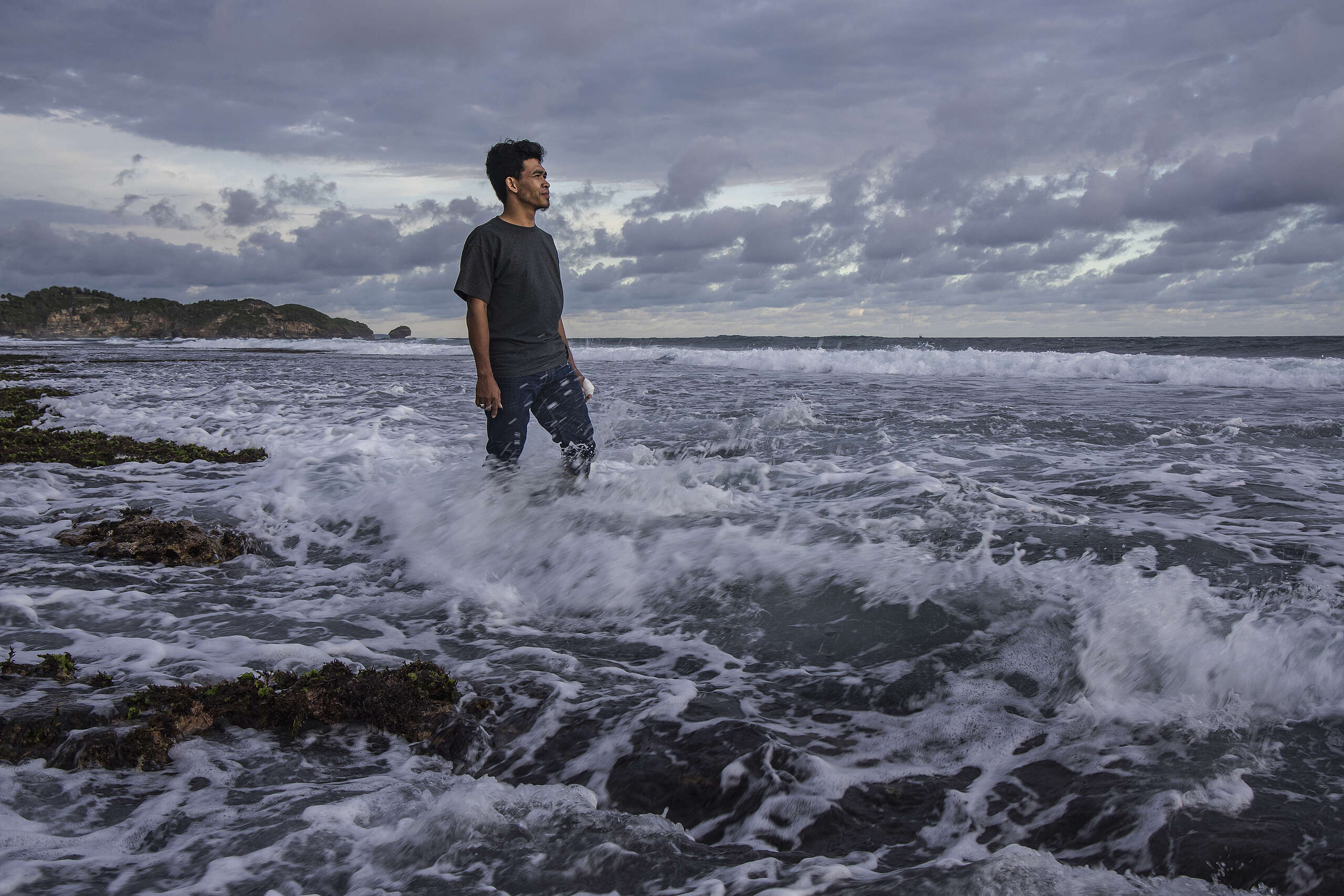
Syafi’i, a plaintiff in the case, said in November, after Bumble Bee’s first attempt to dismiss the case was denied: “I’m actually in tears. I am happy and overwhelmed. This gives me hope for justice for me and my fellow plaintiffs as we struggle for justice and change for the better. Our fight and sacrifice are not in vain in order to get justice for all of the fishers. I remain steadfast, strong, and enthusiastic.”
In the complaint filed against Bumble Bee in March 2025, the fishers allege they were subjected to forced labor while working aboard vessels linked to Bumble Bee’s “trusted network” of suppliers. The alleged abuses included physical violence, emotional abuse, untreated life-threatening and deformity-causing injuries, debt bondage, excessive working hours, withheld pay, and financial threats against family members to prevent them from escaping.
In a filing earlier this week, Bumble Bee denied both knowledge of forced labor issues in distant water fishing, an issue well-documented for over a decade, and — incredibly — suggested that the plaintiffs’ injuries were “actually” caused by the plaintiffs’ “own conduct.” Bumble Bee also claimed that the plaintiffs’ injuries were “speculative” and that any remedies provided to them — men who worked and suffered for months at sea–would be an unjust “windfall.”
Sari Heidenreich, Senior Human Rights Advisor, Global Fisheries, Greenpeace USA, said: “These men have lived with the consequences of the abuse they suffered every day since they worked on ships they say were part of Bumble Bee’s ‘trusted network’ of suppliers. The content of Bumble Bee’s recent filing, arguing that the men did not endure forced labor and caused their own injuries, shows just how far this company is willing to go to avoid accountability. Today’s ruling ensures these fishers can continue their pursuit of justice.”
“The allegations in this case are serious, and they are not going away. Bumble Bee must answer for its role in a supply chain where forced labor and horrific abuse are endemic.”
In November, the court denied Bumble Bee’s initial motion to dismiss, allowing the case to proceed. Bumble Bee subsequently asked the court to reconsider that decision and, alternatively, to permit an immediate appeal to a higher court. Today, Chief Judge Cynthia Bashant denied both requests, finding that the plaintiffs have alleged sufficient facts for the case to proceed. The ruling strongly affirms that the TVPRA, the primary U.S. law used to combat human trafficking, applies to abuses that occur outside the United States, including aboard the fishing vessels on which the plaintiffs worked.
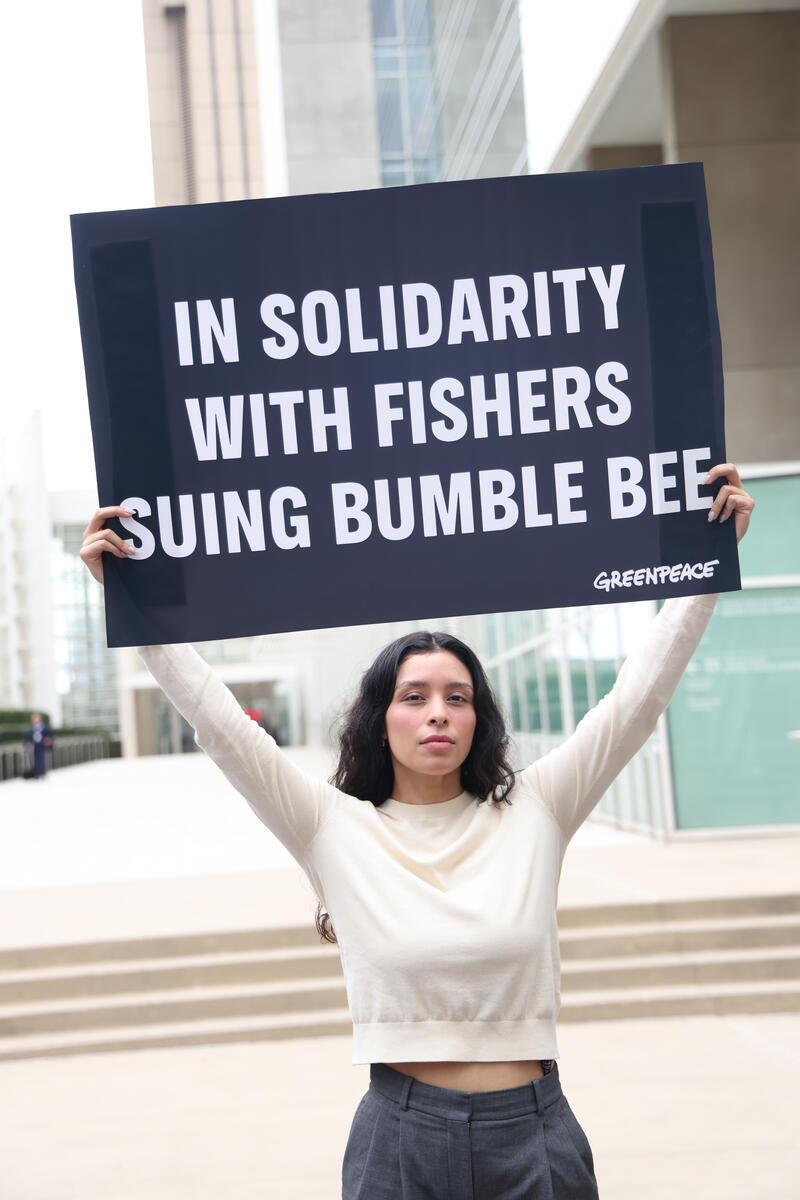
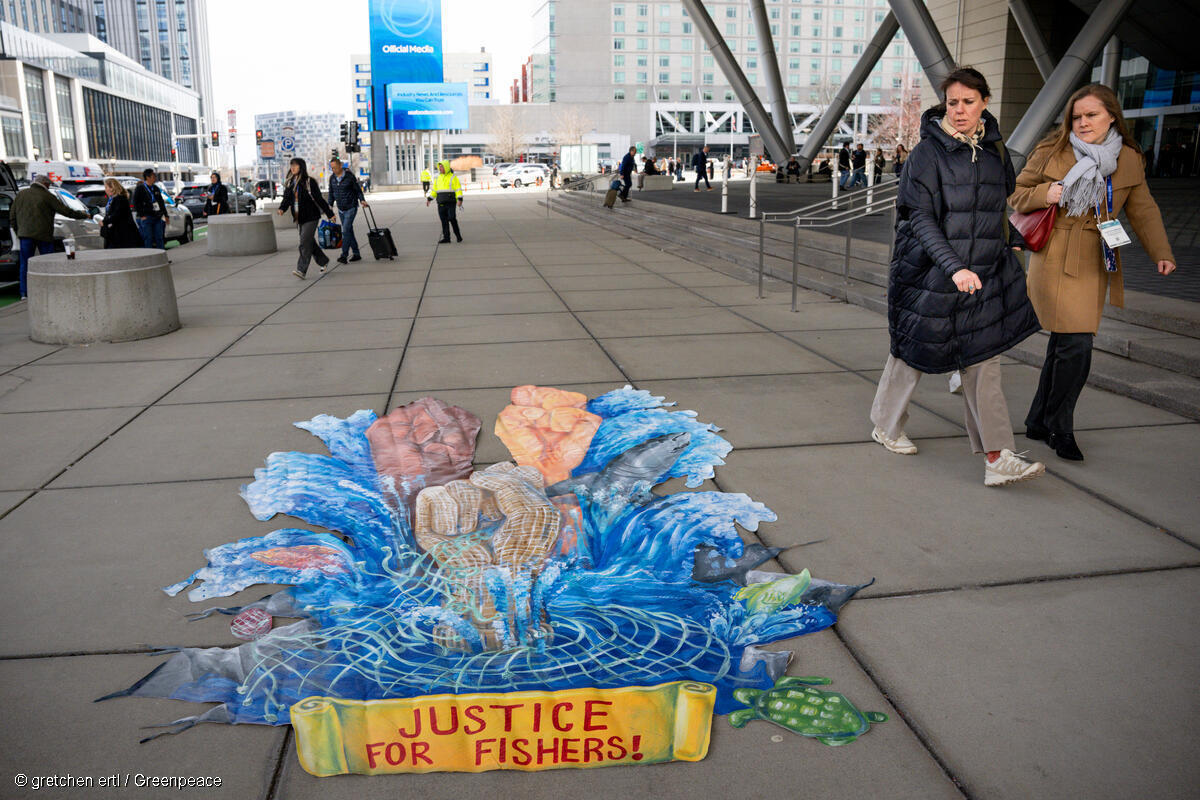
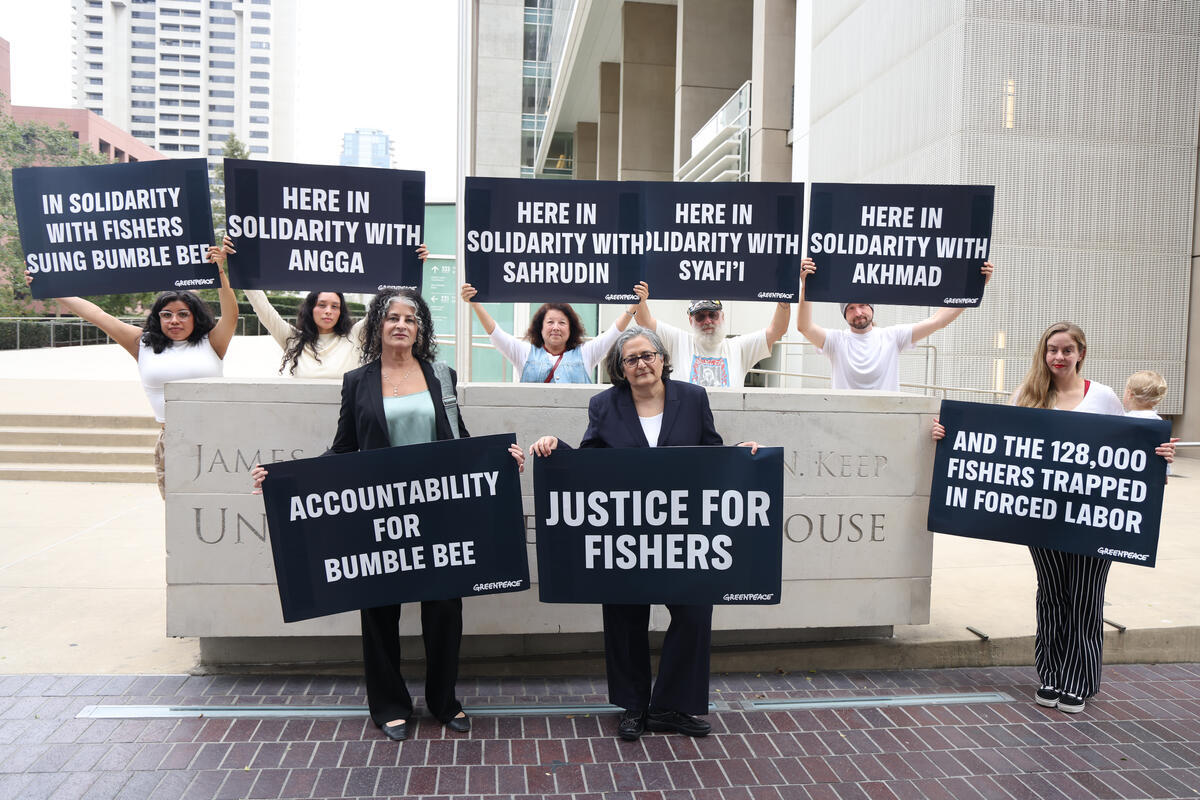
Greenpeace USA activists gathered outside the courthouse last week in solidarity with the plaintiffs and the estimated 128,000 fishers trapped in forced labor worldwide as the judge met with both parties to consider the motion. Signs featuring plaintiffs’ allegations and calls for accountability highlighted the human cost of labor abuses in global seafood supply chains, as Agnieszka Fryszman of Cohen Milstein Sellers & Toll, the plaintiffs’ lead attorney, argued the issues in court.
Heidenreich continued: “Bumble Bee and the rest of Big Seafood know how to address the risk of abuse in their supply chains: guarantee access to communication, limit time at sea, and strengthen transparency and oversight. The allegations in this case are a stark reminder of why those safeguards are necessary and what can happen when workers are isolated at sea without them.
“The tide is turning. Worker protections are not optional, and companies can no longer treat them as an afterthought. A seafood industry free from forced labor is not only possible — it is the standard workers, communities, and consumers expect.”
The continued progress of the case reflects a broader shift toward greater accountability for labor abuses in seafood supply chains. Recent developments include criminal charges in Taiwan against a vessel captain and others for the death and trafficking of workers, and a civil case challenging government-backed discrimination in the fisheries industry.
The Greenpeace network’s Beyond Seafood Campaign has called for concerted action by all stakeholders and governments across the seafood supply chain to end isolation at sea, a key factor enabling labor abuse and overexploitation of the oceans. Investigations and supply chain research from Greenpeace fisheries campaigns were used by the litigants’ attorneys to support this complaint.
The lawsuit, Akhmad v. Bumble Bee Foods LLC, No. 3:25-cv-00583, filed in March 2025 in U.S. federal court in San Diego, California, is currently before Chief Judge Cynthia Bashant. The law firms of Cohen Milstein Sellers & Toll PLLC and Schonbrun Seplow Harris Hoffman & Zeldes LLP are leading the representation of the plaintiffs in the suit.
Contacts:
Tanya Brooks, Senior Communications Specialist at Greenpeace USA, [email protected], +1 703 342 9226
Greenpeace USA Press Desk: [email protected]
Greenpeace USA (Inc.) is part of a global network of independent campaigning organizations that use peaceful protest and creative communication to expose global environmental problems and promote solutions that are essential to a green and peaceful future. Greenpeace USA is committed to transforming the country’s unjust social, environmental, and economic systems from the ground up to address the climate crisis, advance racial justice, and build an economy that puts people first. Learn more at www.greenpeace.org/usa.