• Skip to Navigation
  • Skip to Content
  • Skip to Footer
Greenpeace
  • Issues we work on
    • Climate and Energy
    • Biodiversity
    • Social and Economic Systems
  • Get involved
    • Resistance Hub
    • Polluters Pay Pact
    • End the age of plastic
    • Stop Deep Sea Mining
    • Respect the Amazon
  • News and Stories
    • Stories
    • Press centre
    • Publications
    • Podcasts
  • About us
    • Work with us
    • Find a Local Organisation
    • Our History & Successes
    • Dutch Anti-SLAPP Lawsuit
    • Donate today
    • Leave a legacy
    • Fundraising principles
  • Issues we work on
  • Get involved
  • News and Stories
  • About us
Greenpeace
  • Home
  • Issues we work on
    • Climate and Energy
    • Biodiversity
    • Social and Economic Systems
  • Get involved
    • Resistance Hub
    • Polluters Pay Pact
    • End the age of plastic
    • Stop Deep Sea Mining
    • Respect the Amazon
  • News and Stories
    • Stories
    • Press centre
    • Publications
    • Podcasts
  • About us
    • Work with us
    • Find a Local Organisation
    • Our History & Successes
    • Dutch Anti-SLAPP Lawsuit
  • Donate
    • Donate today
    • Leave a legacy
    • Fundraising principles
  • Oceans Life Under Water GPUK
    Podcasts
    Oceans ArcticSunrise

    Antarctica

    Hannah Stitfall is joined by scientist Lucy Woodall, who led the first expedition to find Shackleton's ship Endurance, and Antarctic historian John Dudeney.

    Oceans: Life Under Water
    11 Mar 2024
    26 min read
  • Evacuation of the Marshallese People from the Rongelap Atoll to Mejatto. © Greenpeace / Fernando Pereira
    Stories
    Nuclear Health RainbowWarrior

    More powerful than Hiroshima: how the largest ever US nuclear weapons test built a nation of leaders in the Marshall Islands

    Like the resilient people of the Marshall Islands who refuse to give up, Greenpeace stands in genuine and deep solidarity by elevating the voices and stories of the communities impacted by the testing of nuclear weapons  and the dangers it imposes.

    Shiva Gounden and Shaun Burnie
    28 Feb 2025
    2 min read
  • SY Witness in the Argentine sea. © Osvaldo Tesoro / Greenpeace
    Stories
    Oceans Oil Witness Amazon

    Inside the effort to protect the Amazon coast from oil spills

    Expedition launched by Greenpeace Brazil promotes scientific research about coastal and marine currents in the region, targeted by the oil industry.

    Diego Gonzaga
    27 Feb 2024
    3 min read
  • Stories
    Plastics Climate

    Plastic’s role in the triple planetary crisis

    The world is facing a triple planetary crisis: climate change, pollution and biodiversity loss — a trifecta of injustice. While these crises have different dimensions that often overlap, one thing is common in them all — plastic.

    Gerance Mutwol
    27 Feb 2024
    5 min read
  • Tove Maria Ryding: Untangling the Global Tax Web SystemShift
    Podcasts
    SystemShift

    Tove Maria Ryding: Untangling the Global Tax Web

    Tove Maria Ryding from the European Network on Debt and Development (Eurodad) joins us for a thought-provoking discussion on the crucial need for a UN tax convention.

    SystemShift
    23 Feb 2024
    34 min read
  • Activists Protest Equinor's Oil Expansion in Oslo. © Rasmus Törnqvist / Greenpeace
    Stories
    Climate Oil COP29

    Their profits are our loss

    2023 was the hottest year on record, and while international oil companies raked in astronomical profits this year, extreme weather events ravaged the planet.

    Abdoulaye Diallo
    23 Feb 2024
    4 min read
  • Stories
    Climate

    Demanding reparations: voices from the People’s Health Tribunal against Shell and TotalEnergies

    Communities from South Africa, Nigeria, Mozambique, and Uganda united to testify against Shell and TotalEnergies.

    Tatiana Garavito, Rhiannon Mihranian Osborne & Lisa Göldner
    15 Feb 2024
    4 min read
  • Actors Luise Befort (L) and Fabian Grischkat participate in a protest at the Brandenburg Gate in Berlin. Greenpeace's activists are protesting at the start of Berlin Fashion Week with a roughly 3.5 meter high and 12 meter wide mountain of textile waste against the Fast Fashion industry. A banner reading "FAST FASHION – KLEIDER MACHEN MÜLL" (Fast Fashion - Clothes Make Waste) warns of the impacts of the Fast Fashion industry. The textiles for the clothing mountain were attached to a support structure and come from the Kantamanto Market in Accra, the largest second-hand market in Ghana. Schauspielerin Luise Befort (l) und Schauspieler Fabian Grischkat beteiligen sich an einer Demonstration vor dem Brandenburger Tor in Berlin. Greenpeace-Aktivist:innen protestieren zum Auftakt der Berliner Fashion Week mit einem etwa 3,5 Meter hohen und 12 Meter breiten Berg aus Textilabfällen gegen die Fast Fashion-Industrie. Ein Banner mit der Aufschrift "Fast Fashion – Kleider machen Müll" warnt vor den Auswirkungen der Fast-Fashion-Industrie. Die Textilien für den Kleiderberg wurden auf einer Trägerkonstruktion befestigt und stammen vom Kantamanto-Markt in Accra, dem größten Second-Hand-Markt Ghanas.
    Stories
    Consumption

    Return to sender: Why Africa doesn’t need any more of your clothes

    For several years now, my country Ghana has been dealing with a silent plague: second-hand clothes.

    Sam Quashie-Idun
    12 Feb 2024
    7 min read
  • Amanda Janoo Wellbeing Revolution SystemShift
    Podcasts
    SystemShift

    Amanda Janoo: A Wellbeing Revolution

    Amanda Janoo, Economics and Policy Lead at the Wellbeing Economy Alliance, looks at how we can reshape economic models to align with both ecological preservation and human flourishing.

    SystemShift
    9 Feb 2024
    35 min read
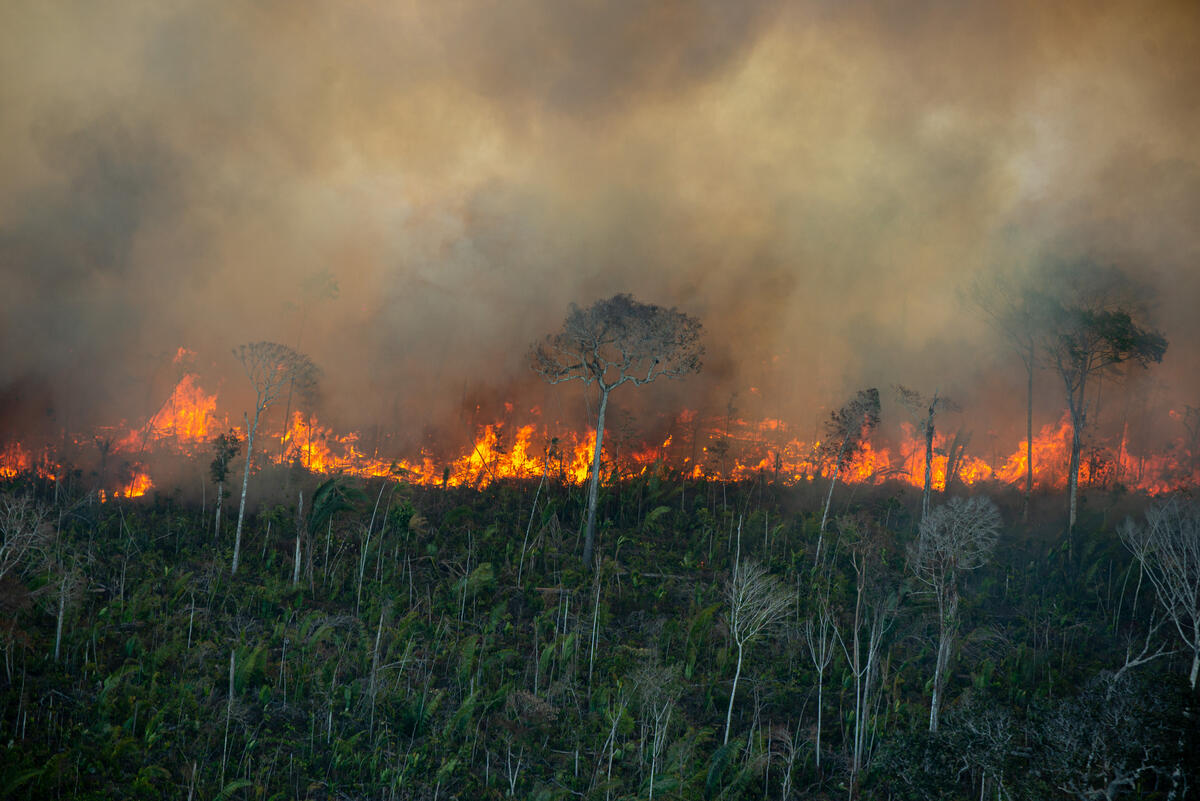
  • Fire and Deforestation in Porto Velho in the Amazon in Brazil
    Press Releases
    ExtremeWeather Climate

    Global heating exceeds 1.5°C threshold for 12 months – Greenpeace reaction

    Greenpeace reaction to Copernicus ClimateChange Service EU climate service data which has shown that for the first time global warming has likely exceeded a global average of 1.5°C above the pre-industrial baseline across an entire year, from February 2023 to January 2024.

    Greenpeace International
    8 Feb 2024
    1 min read
Prev
1 … 142 143 144 145 146 … 261
Next
  • Greenpeace International
  • A
    • Africa
      • English •
      • Français
    • Aotearoa
    • Argentina
    • Australia
    • Austria
  • B
    • Belgium
      • Français •
      • Nederlands
    • Brazil
    • Bulgaria
  • C
    • Canada
      • English •
      • Français
    • Chile
    • Colombia
    • Croatia
    • Czech Republic
  • D
    • Denmark
  • E
    • East Asia
      • 中文简体 •
      • 繁體 •
      • 正體 •
      • 한국어 •
      • English
    • European Union
  • F
    • Finland
    • France
  • G
    • Germany
    • Greece
  • H
    • Hungary
  • I
    • India
      • English •
      • Hindi
    • Indonesia
    • Israel
    • Italy
  • J
    • Japan
  • L
    • Luxembourg
      • Deutsch •
      • Français
  • M
    • Malaysia
    • Mexico
    • Middle East and North Africa
      • العربية •
      • English •
      • Français
  • N
    • Netherlands
    • Norway
  • P
    • Peru
    • Philippines
    • Poland
    • Portugal
  • R
    • Romania
  • S
    • Slovakia
    • Slovenia
    • South Asia
    • Southeast Asia
    • Spain
      • Español •
      • Català •
      • Euskara •
      • Galego
    • Sweden
    • Switzerland
      • Deutsch •
      • Français
  • T
    • Thailand
    • Turkey
  • U
    • UK
    • Ukraine
    • USA
Follow us
  • Instagram
  • Threads
  • Facebook
  • TikTok
  • Bluesky
  • Mastodon
  • Linkedin
  • Youtube
  • RSS
  • Github
  • About us
  • Contact us
  • Work with us
  • Our values
  • Press centre
  • Community Policy
  • Copyright
  • Privacy and cookies
  • Search the archive
  • Terms
Greenpeace International 2025 Unless otherwise stated, the copy of the website is licensed under a CC-BY International License

Manage your cookies preferences

Please select which cookies you are willing to store.

Necessary Cookies (required) Always enabled

These cookies are required for technical reasons so that you can visit our website and use the functions we offer. These cookies are used to recognise you between successive visits and thus provide you with a better experience, storing your consent preferences and the last Greenpeace.org website visited.

We use tracking and analysis tools to ensure continuous optimisation and demand-oriented design of our website. These cookies will allow us to collect statistical and anonymised data, such as how visitors use our website or which pages are accessed most frequently, to ultimately improve Greenpeace.org and provide you with a better experience of our website.

In addition to the Performance cookies mentioned above, we may also place in your browser cookies from third-party services (e.g. Facebook or Google) to track the effectiveness of our online marketing strategies and to deliver adverts more relevant to you and your interests. These cookies may also be used to serve advertising to you after you have left our site (retargeting cookies).

We use cookies to enhance your experience. By clicking "Accept all cookies" you agree to our Privacy & Cookies Policy. You can change your cookies settings anytime.