A toxic troika of extractivism, authoritarianism and war
A new report – the most far-reaching analysis of environment and environmentalism in Russia since 2022 – shows how Putin’s regime relies on a toxic troika of extractivism, authoritarianism and war. Fossil fuels finance war. War justifies repression. Authoritarianism shields elites from scrutiny while blocking demands for justice. Its veil of disinformation, propaganda and control of information is now so thick that free reporting on Russia now depends on information gathered from outside its borders: the world’s largest country has become a void of reliable information.
This cycle devastates nature, dismantles institutions, oppresses societies, and poses a systemic threat to global security and environmental stability. Russia’s unprovoked aggression against Ukraine is also a danger to the wider world – but, frighteningly, it can provoke other cases. Its hostility is a warning to the world of how far an authoritarian regime based on fossil fuel economy can go.
Russia’s aggression against Ukraine
Russia’s invasion of Ukraine sent shockwaves around the world. It has brought death, devastation and displacement to millions, triggered one of the largest refugee crises of the 21st century, and upended energy, trade, finance and food systems worldwide. Over three years since Russia’s full-scale assault in February 2022 – which itself came after eight years of illegal occupation of Crimea and parts of Donetsk and Luhansk – the consequences of Russia’s invasion continue to reverberate. Russia’s occupation and weaponisation of Ukraine’s nuclear power plants, including Europe’s largest, not only presents a chilling reminder of the Soviet era Chornobyl disaster that sent a cloud of radiation – and existential terror – as far away as North Africa and Canada. It also creates an unprecedented, more direct and more sinister threat to Europe and the wider world.
From the Arctic to Africa: a global threat with global consequences
Natural systems in such a large country as Russia have an enormous influence on global environmental and climate stability. Nearly half of Russia is forest, which, alongside vast tundra, wetlands and permafrost, stores immense carbon reserves and safeguards biodiversity (see chapter 4: Biodiversity Crisis). Forest loss could accelerate the climate crisis and trigger irreversible ecological damage but under Kremlin policy, these ecosystems risk losing resilience fast: over half of Russia’s forest is deemed exploitable; fires spread unchecked; permafrost thaws, and fragile habitats fragment.
Meanwhile, the risks of environmental and technological disasters continue to grow. Corruption, ageing infrastructure and dismantled oversight systems make spills, leaks and industrial accidents more likely (see chapter 1: Socioeconomic Context). One doesn’t have to look far for an example: in December 2024, a disaster in the Black Sea, affecting the Russian coast as well as the coast of temporarily occupied Crimea, made headlines worldwide, when reportedly several thousand tons of heavy fuel oil spilled into the water after two tankers wrecked in a storm in the Kerch Strait. Thousands of volunteers rushed to clean the coastline and protect wildlife, while the authorities once again failed to deliver an adequate response to a disaster rooted in their fossil-fuel-dependent system.
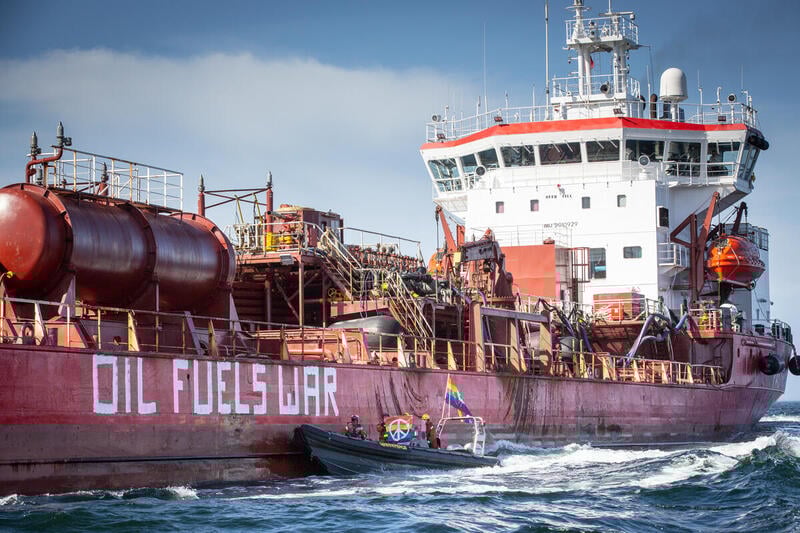
The Russian Arctic is now a militarised and ecologically vulnerable zone. Warming four times faster than the global average, it is under pressure from oil and gas drilling, military expansion, and the breakdown of international cooperation. Indigenous Peoples are being displaced from their land, their rights ignored and livelihoods destroyed.
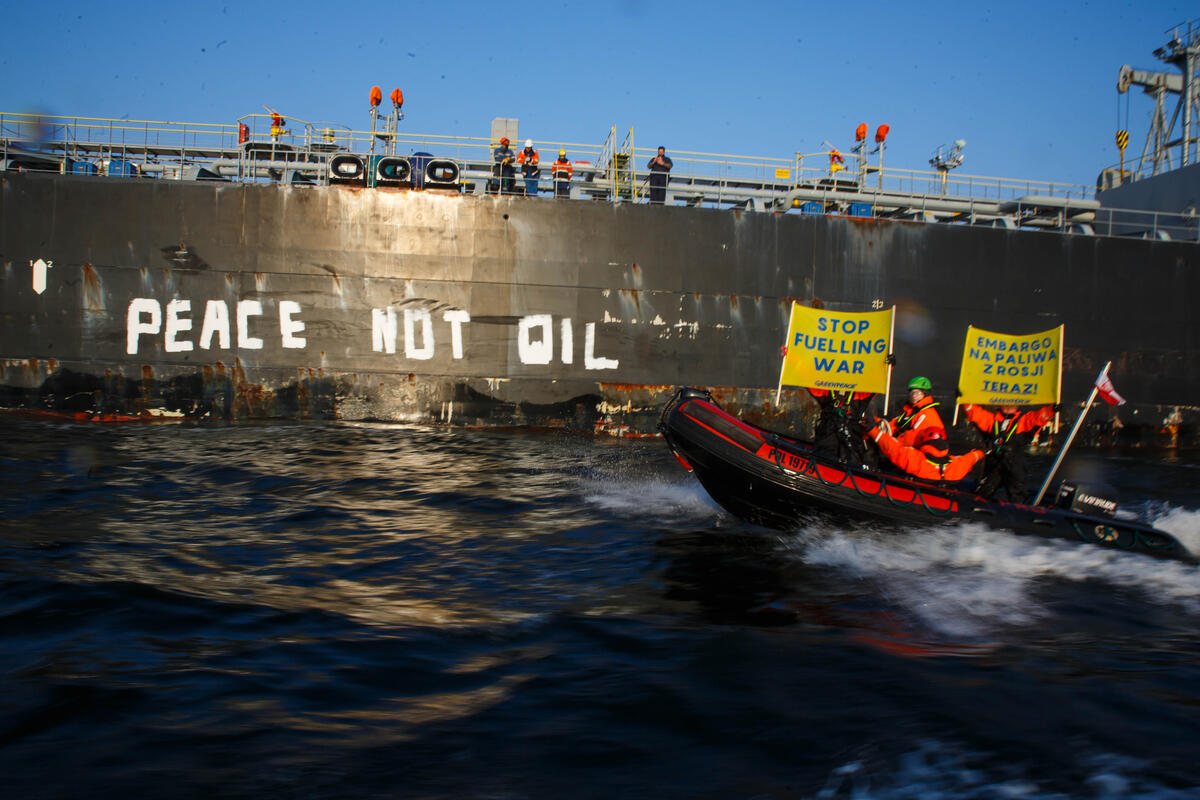
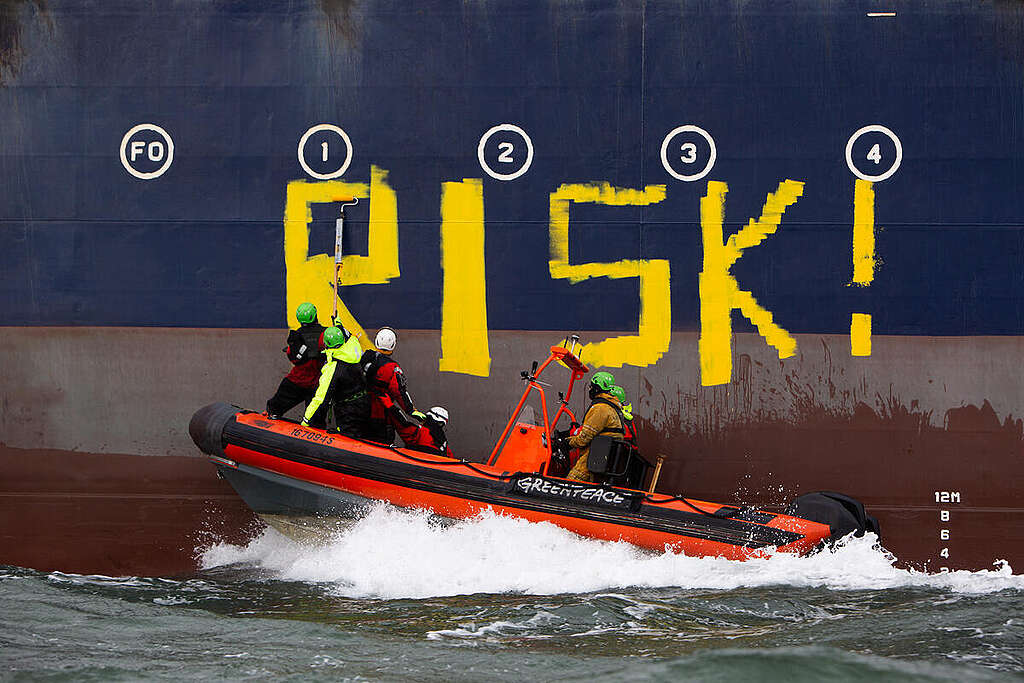
Beyond its borders, Russia exports its extractivist model. Through fossil fuel projects in Uganda, Egypt, Mozambique and beyond – and nuclear deals pushed by state nuclear corporation Rosatom, which is implicated in war crimes allegations at Ukraine’s Zaporizhzhia nuclear power plant – Russia locks countries into dependency while enriching elites. International actors remain complicit: many states and corporations continue buying Russian oil, gas and raw materials, sustaining war, repression and destruction. Greenpeace activists worldwide, however, continue to speak out boldly, urging their governments to sanction Russia’s shadow fleet and halt purchases of Russian fossil fuels.
At global forums like G20 and BRICS+, Russia systematically obstructs and sabotages international cooperation, hiding behind “resource sovereignty” to weaken binding climate and biodiversity agreements. Many of its “green” organisations are state-controlled, while genuine environmental governance has collapsed into imitation initiatives and propaganda.
A warning to the world
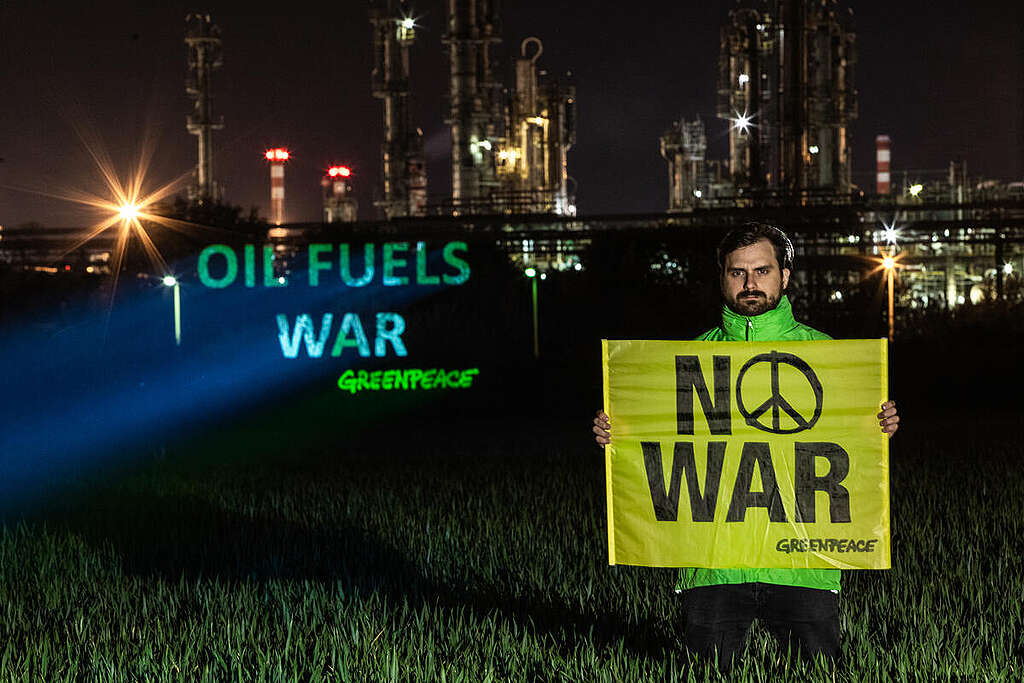
The lesson for the world is stark: when countries promote reckless extractivism or elites profiteering from destruction, or let fossil fuels dominate their economies, they risk sliding into the same dangerous cycle. The erosion of democracy, the fog of propaganda, and the silencing of dissent go hand in hand with environmental collapse and vicious war-mongering.
The Kremlin has cracked down on civil society, dismantling independent organisations and shrinking access to environmental information. Public oversight is almost impossible – but groundbreaking analysis like this proves reporting can cut through the silence. Moreover, it shows that environmental issues remain one of the few areas where ordinary Russians still find solidarity, even under severe constraints. Many organizations were forced to be closed, and many activists had to leave the home country. Those who remain tend to avoid confrontational topics, use coded language, and focus on expert reports, online petitions, or participation in state advisory councils. Local ecological protests, such as against landfills or industrial projects, continue and sometimes yield local victories, but systemic change is rare amidst the state intimidation.
Greenpeace Russia was forcibly closed after 30 years of defending forests, rivers and communities. But repression has not silenced the movement.
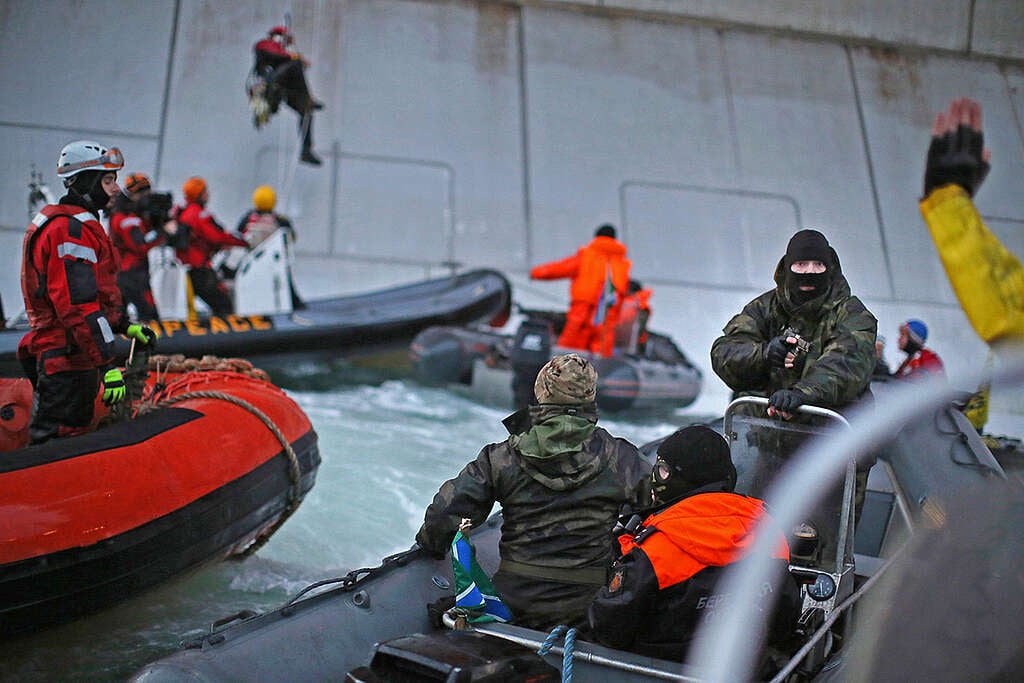
Twelve years ago, the Arctic 30 were arrested at gunpoint for peacefully protesting Arctic oil drilling. Their detention sparked a global outcry, and they were freed after three months. Russia was ordered to pay damages. The episode reminded the world of the power of solidarity, as people across the globe stood together to defend international activists risking their freedom to speak out for the planet.
…as the hope for resistance endures, solidarity continues to grow
Today, grassroots resistance in Russia still connects with international allies, keeping alive the hope of a sustainable alternative. Russia holds enormous potential for a different path: vast renewable resources, rich biodiversity, scientific expertise and strong public concern for the environment. But unlocking that potential requires fundamental change: an end to aggressions, restoration of civil society, a shift away from extractivism towards sustainability and others. Even as Putin’s assault on civic space in Russia continues, the environment remains one of the few subjects where civic engagement persists — offering potential that, if nurtured, could contribute to broader shifts in Russian society.
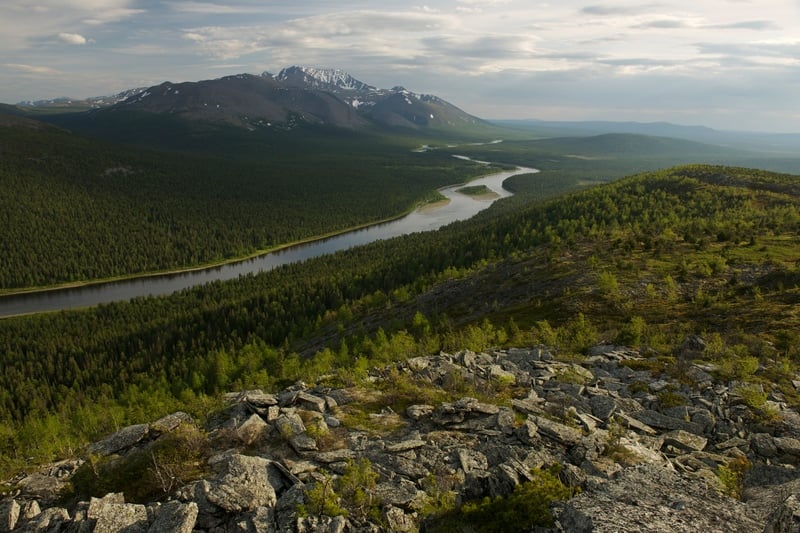
Russia is a warning for other countries whose government agenda depends on fossil fuel extraction, authoritarian rule and militarism. It is also a powerful reminder: without resistance there is no fair, green and peaceful future.
But repression breeds resistance – and Greenpeace continues to bear witness and break the silence. Governments and powerful elites have tried to silence us before, by bombing our ship, suing Greenpeace entities, shutting down offices and attempting to erase our existence. It didn’t work then, and it won’t work now. Our movement is global. It is unstoppable.Solidarity fuels hope. Together, we can resist, rebuild and create a fairer, greener and more peaceful future.
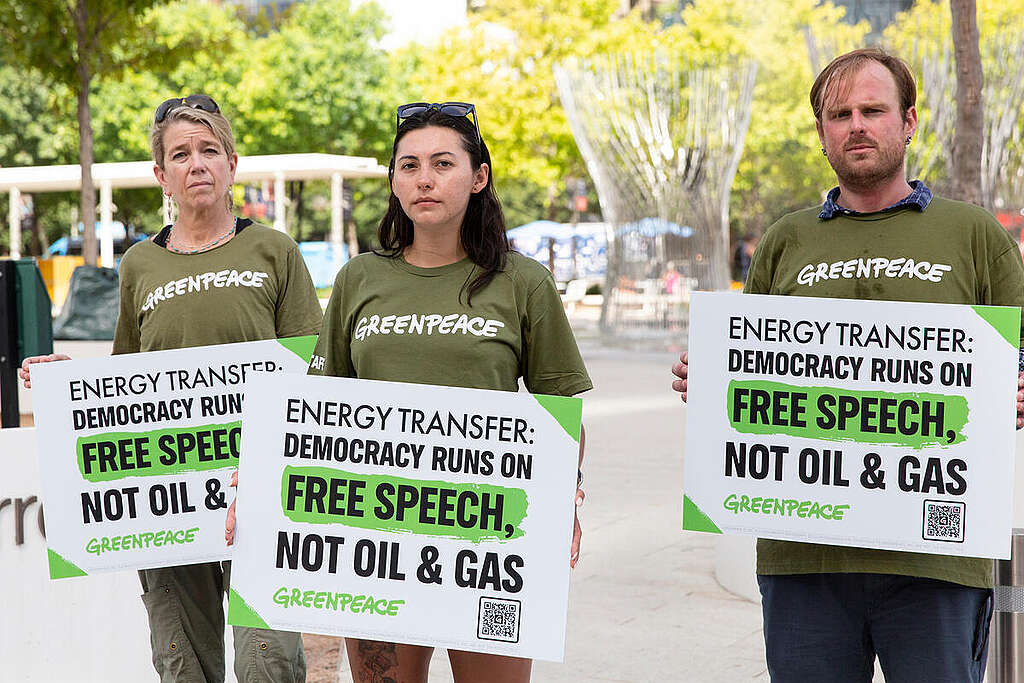
Tell Energy Transfer and other corporate bullies: Stop your attacks on free speech.
Add your name