


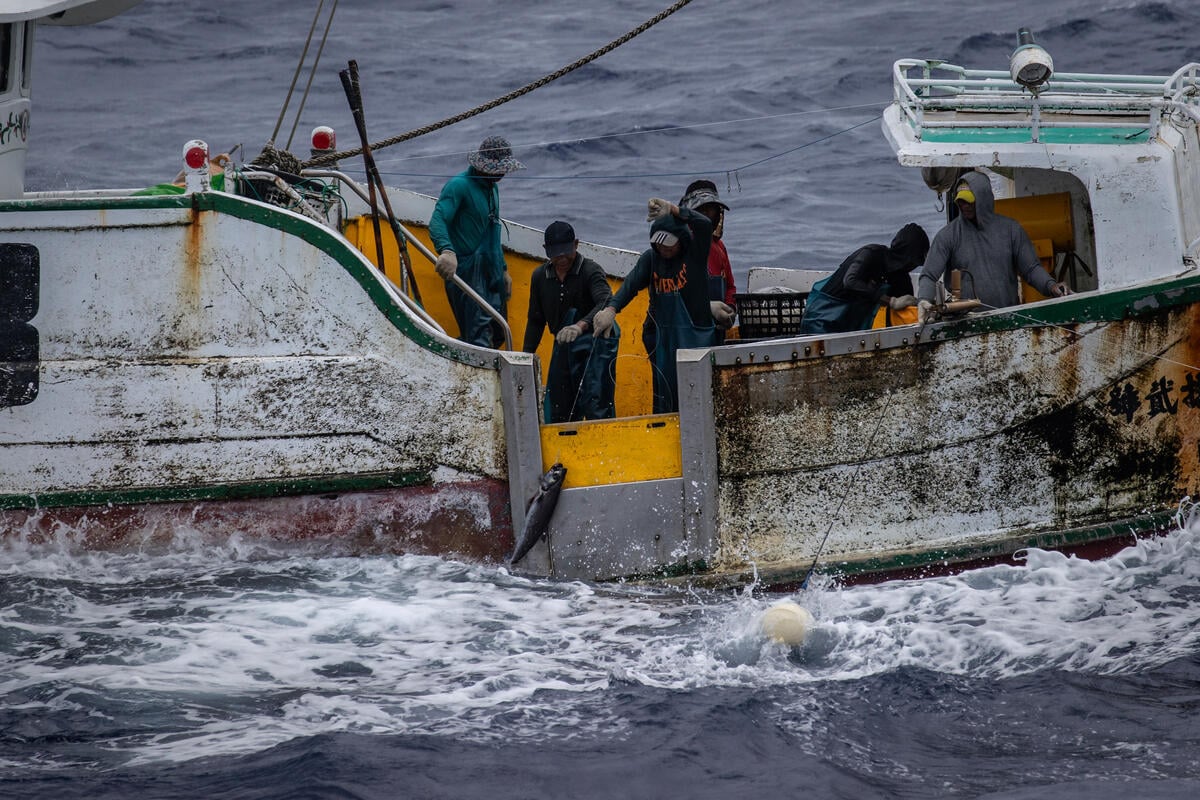
WASHINGTON (Oct. 8, 2026) — The U.S. State Department’s annual Trafficking in Persons Report identified persistent failures by Taiwan and Indonesia to protect fishers from forced labor, yet left both governments’ rankings unchanged. Taiwan retained its Tier 1 ranking for the 17th consecutive year, while Indonesia remained in Tier 2.
Kate Melges, Greenpeace USA Oceans Director, said: “How many times will the U.S. government document forced labor in the fishing industry and then award these same rankings? Taiwan and Indonesia occupy powerful positions in the global seafood supply chain and could take steps to address forced labor and human trafficking, yet meaningful progress remains minimal. The U.S. government’s own findings should be grounds for accountability, not an annual exercise in describing the same abuses. Fishers cannot afford another year of business as usual.”
The U.S. imports up to 90% of the seafood it consumes, including seafood harvested by Taiwanese and Indonesian fishing vessels, leaving U.S. consumers exposed to seafood that was caught with forced labor.
The report cites Taiwan’s failure to criminally prosecute forced labor, which it describes as “particularly prevalent” on distant-water fishing vessels, inadequate uptake of Wi-Fi for fishers at sea, and no progress on aligning local law with international labor conventions on fishing. The report also criticizes Indonesia’s failure to implement, oversee, and enforce labor regulations in both the domestic and foreign fishing sectors, naming the sector “among the most highly exploitative industries in Indonesia.”
Ahead of the report’s release, Greenpeace USA, Greenpeace Indonesia and 10 coalition partners submitted evidence to the U.S. State Department documenting persistent failures by both governments to address forced labor and human trafficking in the fishing sector. The coalition cited ongoing concerns, including barriers to communication at sea, excessive periods at sea without returning to port, weak enforcement, and inadequate worker protections.
Recent court cases illustrate fishers’ continuing efforts to seek accountability. In August, a Taiwanese court acquitted the captain and crew members of the Da Wang, a Taiwanese-owned fishing vessel, in a case involving allegations of human trafficking and forced labor. The prosecutor plans to appeal. Meanwhile, a separate suit brought by four Indonesian fishers alleging the tuna brand Bumble Bee benefitted from their years of forced labor continues to move forward in the U.S.
The Greenpeace global network’s Beyond Seafood campaign is calling for concerted action across the seafood supply chain — from governments and vessel owners to seafood brands, importers, and retailers — to end the isolation that enables abuse at sea.
Contact: Tanya Brooks, Senior Communications Specialist at Greenpeace USA, [email protected]
Greenpeace USA Press Desk: [email protected]
Greenpeace USA (inc.) is part of a global network of independent campaigning organizations that use peaceful protest and creative communication to expose global environmental problems and promote solutions that are essential to a green and peaceful future. Greenpeace USA is committed to transforming the country’s unjust social, environmental, and economic systems from the ground up to address the climate crisis, advance racial justice, and build an economy that puts people first. Learn more at www.greenpeace.org/usa.