

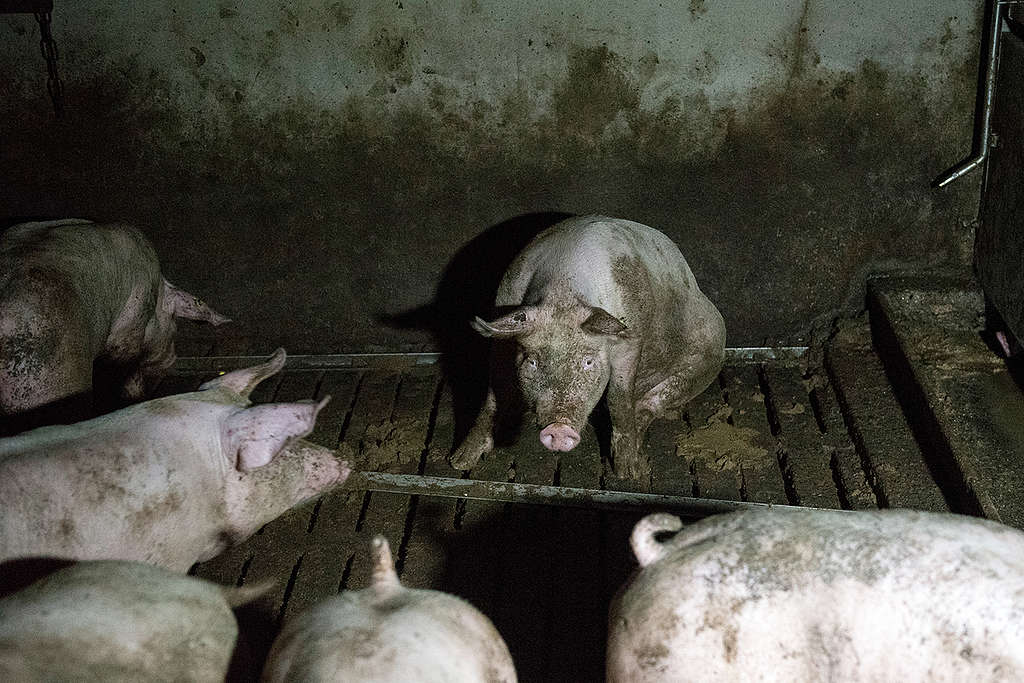
Pigs in factory farms in Germany. Intensive livestock farming on slatted floor, lack of room, with docked tails, pigs stand in own excrement and dirt.

Korvia särkevä kuolevan eläimen kirkuna. Loputtomista lantaläjistä leviävä pistävä ammoniakin haju. Eläinten ulosteesta saastunut joki. Ihmiset, jotka asuvat eläintehtaiden naapurissa, kärsivät niiden läsnäolosta päivittäin. Tehotuotanto tuottaa kärsimystä miljardeille eläimille, on haitallista paikalliselle ympäristölle ja asukkaiden terveydelle. Kiersimme ympäri Eurooppaa ja keräsimme näiden ihmisten tarinoita.

Espanjassa eläintentuotantolaitokset uhkaavat luonnon monimuotoisuutta
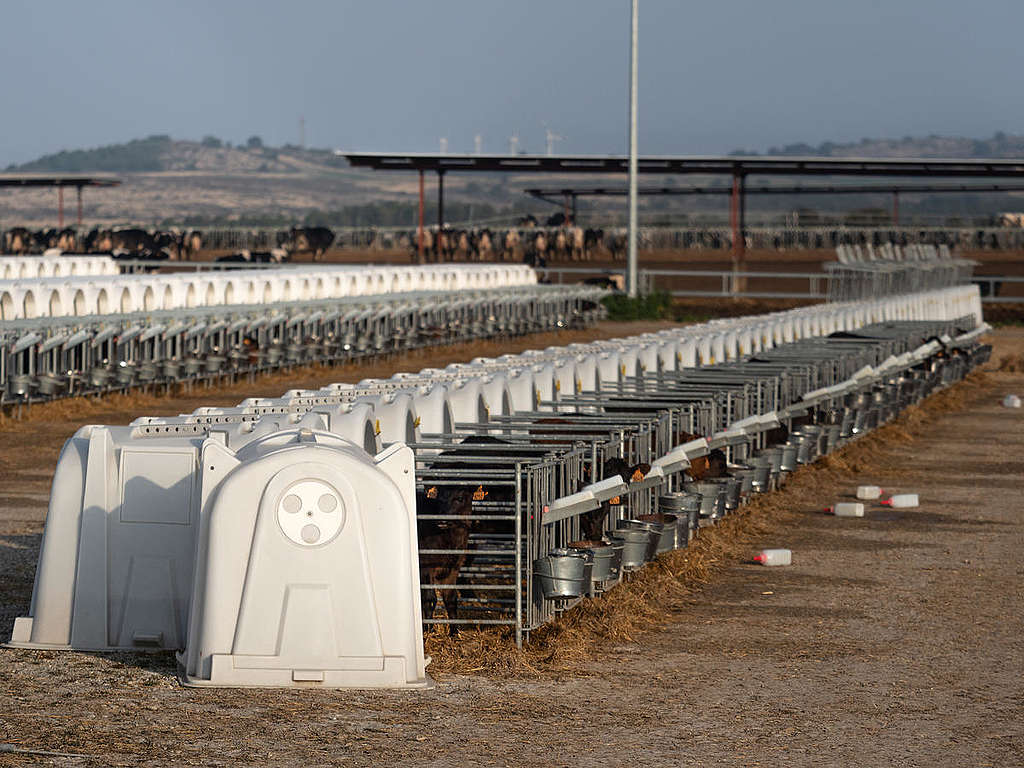
The dairy factory farm Valle de Odieta, S.C.L./Corraliza el Tomillar, S.Coop./Hibridación Termosolar Navarra, S.L. near the town of Caparroso has multiple rows where the calves are kept, without the possibility to move around, only standing in the same spot, deprived of any contact to their mothers. Each row contains at least 100 huts. 
According to official numbers provided in documents from the government of Navarre, in November 2018 the farm had 5,531 adult cows, 60% more than authorized through the Environmental Integrated Authorization. Based on comments from locals during interviews by Greenpeace Spain in February 2019, this amount is estimated to be around one fifth of the total milking cows in Navarre.

Caparroson lähellä sijaitsevalla maidontuotantolaitoksella vasikat seisovat lukemattomissa riveissä. Ne on erotettu emistään vain alle vuorokauden ikäisinä. Vasikoilla on niin vähän tilaa, etteivät ne voi liikkua. Sinilevä tukkii läheisen lammen, todennäköisesti korkeiden lannoituspitoisuuksien vuoksi. Valle de Odieta maatila on yksi Espanjan suurimmista maidontuotantolaitoksista. Kun eläintehtaiden koko kasvaa, pienviljelijät pelkäävät elinkeinonsa puolesta. Ricardo Antón, 56, pitää yrttitarhaa maitotilan läheisessä kylässä. Ricardo tuottaa ruokaa parille läheiselle koululle. “Kaikki nämä valtavat eläintehtaat uhkaavat koko paikallisen luonnon monimuotoisuutta. Pienet yritykset pystyvät hädin tuskin ylläpitämään tuotantoaan. Perinteinen maanviljely on katoamassa”, Antón suree.
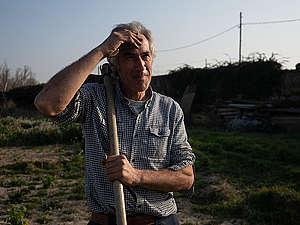
Ricardo Antón, aged 56, runs an organic horticulture farm in Caparroso, the village next to the Valle de Odieta factory farm. Ricardo, also known as “Ritxi” caters to small clients, including two school cantines. He commits to produce in a sustainable model and prefers to remain at a small enterprise level to guarantee quality over quantity. During the visit by Greenpeace Spain, Ritxi showed us the different land squares he works on and the type of products he harvests. 
Ritxi said to Greenpeace Spain during the visit to his farm: “All these big factory farms represent a threat to the ecosystem in the area. Also, smaller enterprises can hardly sustain their production. The traditional farmer is disappearing.”

Tanskassa sikatilat ovat valtavia eläintentuotantolaitoksia
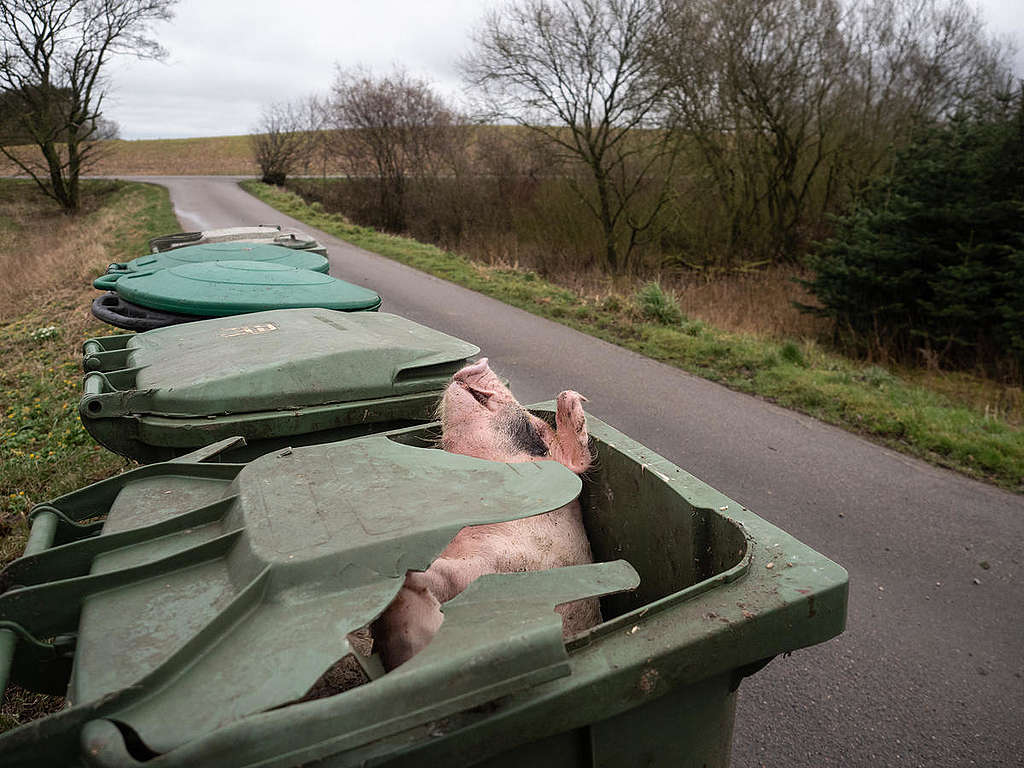
The body of a dead piglet sticks out of a broken bin outside the industrial pig farm Vandvaerksgaarden in the small town of Tingerup, 60 kilometers west of Copenhagen.
When this photo was taken, all five bins were filled with dead pigs, but only this one shows the content because of the broken lid.
Once a week a truck picks up the bodies and drives them to a destruction plant. Daka, a Danish company partly owned by Danish Crown, collects the dead animals. The company produces feed for pets and biofuels out of organic waste products. 
Dead pigs are also seen in front of other factory farms in the area.
Before the pigs were just thrown in the roadside, but after protests from local residents the municipality demanded that the bodies must be covered by a plastic shield.
Residents tell about frequent intolerable smells, noise pollution and health problems. In spite of this the local authorities keep on permitting the factory farmer to expand his farms.

Tanska on maailman suurin lihantuottaja asukasmäärään nähden. Pienessä Tingeruptin kylässä paikalliset asukkaat törmäävät usein roskiksiin hylättyihin sian raatoihin. Kylän reunalla sijaitseva Vandvaerksgaarden sikatila on yksi Peter Kjaer Knudsen perheen monista sikatiloista. Perhe on saanut sakkoja ympäristörikkeistä ja eläinten kaltoinkohtelusta.

Entinen lukion opettaja, Bente Joergensen, on asunut puolisonsa kanssa noin sadan metrin päässä Vandvaerksgaarden sikatilasta jo 20 vuoden ajan. “Haju on aivan järkyttävä. Se saa minut sairaaksi; päätäni särkee ja silmäni ovat punaiset ja turvonneet. Tehdasmaiset sikatilat kylän ympärillä ovat pilanneet elämäni.”

Munatilalla Ranskassa 185 000 tuotantoeläintä
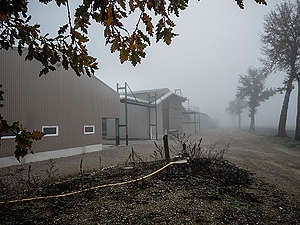
Gallès, the egg laying hen factory farm of Lescout, located a few hundred meters away from the village, is the only industrial facility for animal agriculture in the area and is currently farming 185,000 hens. First built in the 1980s, it steadily grew and was expanded in 2016 to the modern and highly industrial facility it is now. The inhabitants of Lescout have reported frequent smells and noise. At the time the photo was taken, some inhabitants expressed towards Greenpeace France that they suspected the presence of harmful substances in the environment.

Gallès SAS nimisellä, Lescoutin kylän reunalla sijaitsevalla, munatilalla pidetään 185 000 kanaa. Kylässä asuu 700 asukasta. Paikalliset ilmoittavat säännöllisesti viranomaisille häiritsevästä hajusta ja metelistä. Asukkaat myös epäilevät, että tilalta leviää ilmaan jotain haitallista ainetta. Vaikka viranomaiset tutkivat tapausta, paikallinen kunnanjohtaja vitkuttelee ilmanlaatumittausten suorittamista. 

31-vuotias Nicolas Mougel on viiden lapsen isä, joka asuu perheineen lähellä munatilaa. Tilalta kantautuva löyhkä on toisinaan niin voimakas, ettei perhe ei voi ulkoilla. Välillä lapset leikkivät pihalla hengityssuojaimet naamalla. Nicolas on erittäin huolestunut mahdollisista hengitysilman myrkyistä, joita munatila levittää ympäristöön. Eniten häntä huolestuttaa kolmekuisen vauvansa puolesta.  
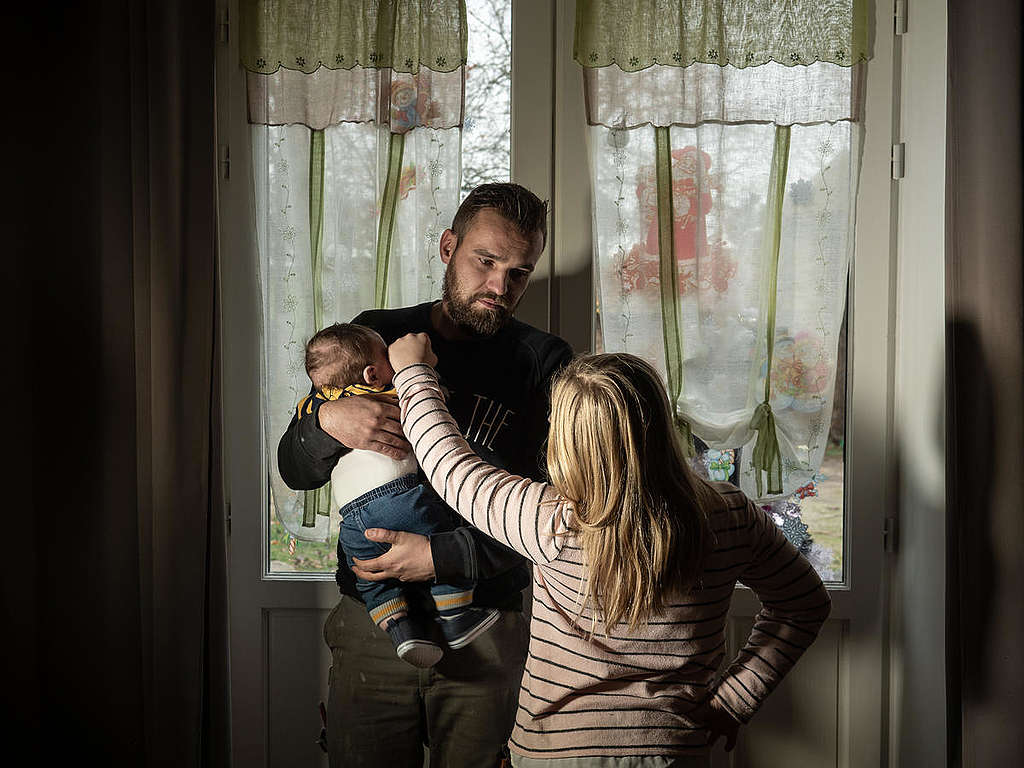
Near the village of Lescout there is a big hen factory farm, currently farming 185,000 hens.The smell and noises coming from the factory farm affecting the village of Lescout, located a few hundred meters away from the house of Nicolas Mougel.  Nicolas, 31 years old, works as a keeper at Château du Gua and is a father of five children. According to Nicolas, bad smells and noise happens mostly at regular times, usually in the evening and in the morning, but can occur at other times of the day. When the air smells bad it becomes difficult to enjoy the outdoors, and his children sometimes cover their faces if they want to play outside. Nicolas mentioned to Greenpeace France that he was concerned about potential toxicity of the air they’re breathing, and for his family including his then three month old child.

62-vuotias kylän asukas ei tahdo paljastaa oikeaa nimeään. Hän tiputtaa silmiinsä silmätippoja. Hän on ainoa kylän kahdesta silmäsyöpäpotilaasta ja ainoa selvinnyt potilas. Silmäsyöpä on äärimmäisen harvinainen maailmanlaajuisesti. Paikallisten mukaan syöpiä esiintyy kylässä hälyttävän paljon. “Lääkärini ei osannut nimetä syövän aiheuttajaa, mutta sanoi, että läheisellä munatilalla voi olla jotain tekemistä asian kanssa.”
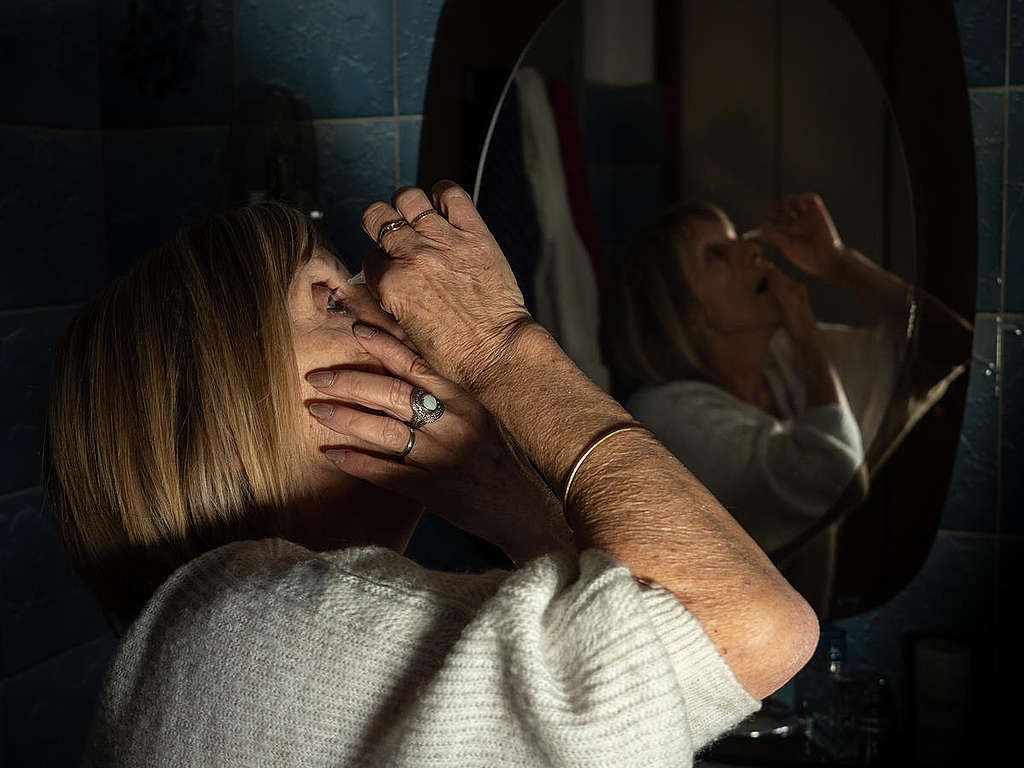
Near the small village of Lescout there is a big hen factory farm, currently farming 185,000 hens. In this picture, N., 62 years old, who prefers to keep her name anonymous, is administering drops to her eye to keep it hydrated. She has lived in Lescout for almost thirty years and is the only survivor of two cases of eye cancer recorded in the village, an extremely rare form of cancer.  At the time of a visit by Greenpeace France, locals expressed their concerns on what according to their calculations is an extraordinary high rate of cancer in the area. 
N. was lucky that the tumour did not affect her brain. Even though the malignant disease is healed, N.’s vision remains affected: “Today, I only have a few tenths of vision left in the right eye, which almost no longer restores the colors, and the straight lines appear curved. I prefer not to think of an evolution of my condition, and keep up the morale.”  N. recalls: “My doctors couldn’t identify the cause of my tumour, but they mentioned it could be caused possibly by the factory farm.”

Italiassa tehomaatalous uhkaa paikkallista taloutta
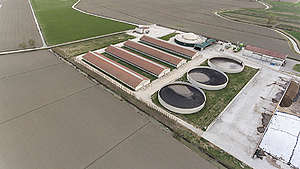
Aerial view of the pig factory farm of Società Agricola Biopig Italia di Cascone Luigi & C. Società Semplice in Schivenoglia, a small village in Italy’s Lombardia region. The farm holds around 4,500 pigs. In the area there is a high concentration of intensive pig farms. A local committee is fighting against their expansion and against the construction of new installations.

Lombardian alueella on runsaasti  jättiläismäisiä sikatiloja, joissa pidetään noin 4500 sikaa tilaa kohden. Paikalliset toimintaryhmät taistelevat tilojen laajennusta ja uusien tilojen perustamista vastaan. Maura Cappi, 50, johtaa toimintaryhmää Schivenoglian kylässä. 2017 Cappin ryhmä voitti kunnallisen kansanäänestyksen, joka torppasi uuden sikatilan perustamisen kuntaan. Cappi, joka itse pyörittää perhetilaa, iloitsee. “Voitosta huolimatta minun on jatkettava, koska tehomaatilat pilaavat ympäristömme ja taloutemme.” 
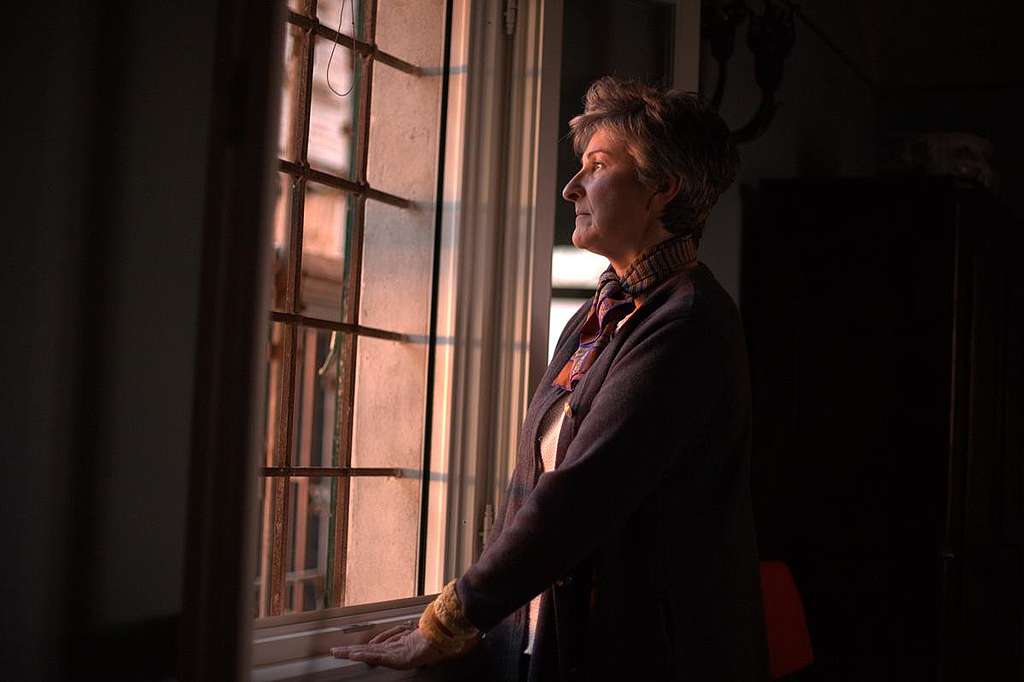
Maura Cappi, aged 50 and owner of a family farm, leads a local committee in Schivenoglia, a small village in Italy’s Lombardia region. The area has a high concentration of pig factory farms. In 2017, Maura’s committee promoted and won a municipal referendum against the construction of a new pig factory farm in the area, planned by Società Agricola Biopig Italia di Cascone Luigi & C.. The referendum led the municipal administration to give its negative opinion to the project and prevented the release of the construction authorization.
The company then appealed the decision, but lost the appeal. On May 9 2019, the Lombardian regional administrative court confirmed the municipality’s decision as a legitimate choice, especially considering the high environmental cost of this kind of farms. Maura is happy with the final decision. The struggle has made her stronger, despite having had to deal with hostile acts towards her and other committee members, like for example a verbal death threat. 
Maura said to Greenpeace Italy: “What happens here is not simply about growth of the farming sector. It is about an unhealthy industry that threatens the environment, the economy, the socio-economic relationships, and the future development of our territory.”

Eläintuotannossa ongelmakohtia myös Suomessa

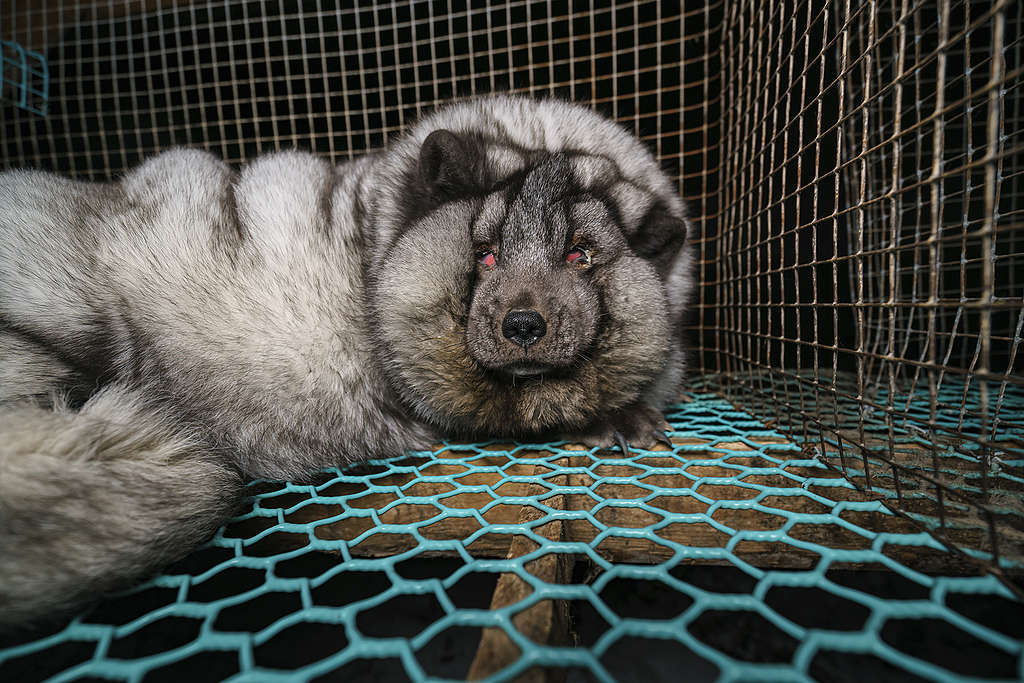
Ulosteeseen sekoittunut sadevesi seisoo pahnattomissa häkeissä hädissään pyörivien kettujen alapuolella. Eläinoikeusaktivisti Kristo Muurimaa nappaa kuvan turkistarhan ketusta, jonka silmä on muurautunut umpeen. Muurimaa on kuvannut eläinten oloja suomalaisissa eläintehtaissa jo 13 vuoden ajan. “Turkistarhat ja broilerikasvattamot löytää pelkän hajun perusteella. Eläinten tilojen puhtaanapidossa on monilla tiloilla ongelmia. Tämä ei ole ihme, koska eläimiä on paljon pienellä alueella. Asetukset sallivat, että yhtä satakiloista sikaa kohden on alle neliö tilaa. Broilerikasvattamoilla ja häkkikanaloissa on tyypillistä, että kuolleita kanoja jää lattialle tai ylimmille häkeille mätänemään useammaksi päiväksi, koska työntekijät eivät huomaa niitä”, selventää Muurimaa.
Kettutarha
Kristo Muurimaan kuva suomalaiselta kettutarhalta.

Nykyistä eläinsuojelualakia rikotaan ja sen tulkinta on löyhää. Muurimaa kuitenkin katsoo, että eläintuotantoon liittyvät ongelmat ovat syvemmällä kuin lain rikkomisessa. “Pohjimmiltaan on kyse siitä, miten suhtaudumme eläimiin. Tunnustammeko niiden itseisarvon tuntevina ja kokevina olentoina, joiden elämää tulee kunnioittaa riippumatta niiden suhteesta ihmiseen vai näemmekö eläimet vain hyödykkeinä, joiden kärsimys on toissijaista niistä saatavan hyödyn edellä?”

Teollinen eläintuotanto pilaa ympäristön ja ilmaston

Teollinen eläintuotanto aiheuttaa kärsimystä miljardeille tiedostaville ja tunteville eläimille ympäri maailman. Eläintehtaiden läheisyydessä asuvat kärsivät ympäristön pilaantumisesta. Teollisella eläintuotannolla on valtava vaikutus koko maailmaan. Se kiihdyttää ilmastonmuutosta merkittävästi. Maailman joet ja meret rehevöityvät ja saastuvat. Metsien elämä katoaa, kun metsät hakataan tai poltetaan karjan ja karjalle syötettävän soijan kasvatukseen. 

Syömällä vähemmän lihaa ja maitotuotteita voit tehdä arkipäivän ilmastotekoja. Lue uusimmista kasvisruokailmiöistä blogista ja inspiroidu muuttamaan omaa lautasmallia.