L’Oréal, the world’s largest cosmetics company, has decided to terminate its sourcing of packaging materials from SCA. This marks the third global corporation in a short period to distance itself from the controversial Swedish forestry company. The ongoing boycott continues to send shockwaves through the Swedish forest industry.
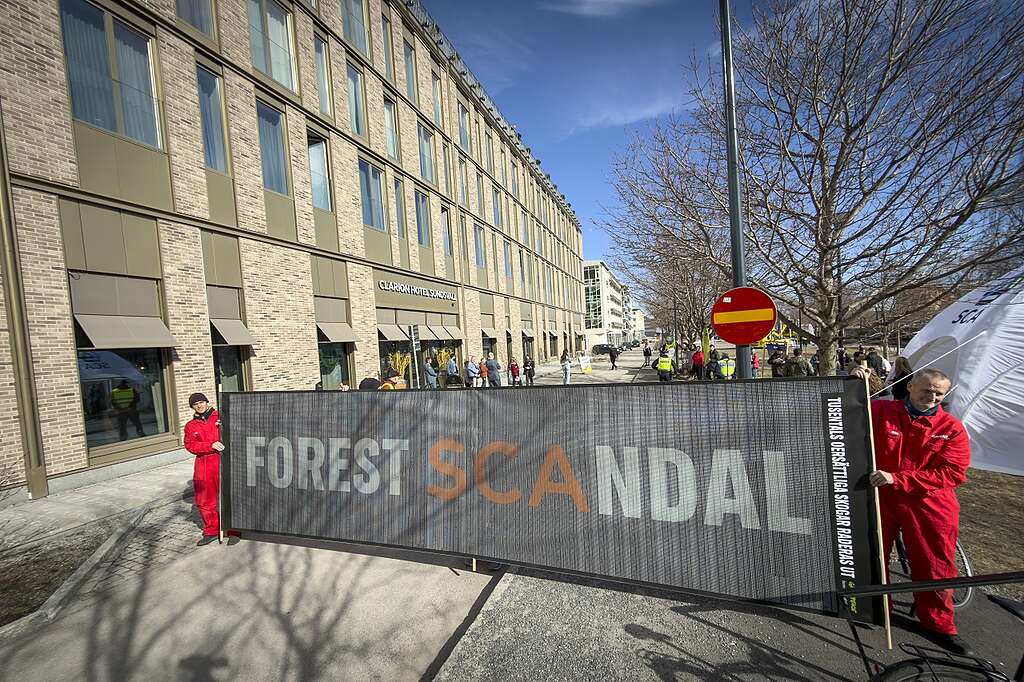
Photo from SCA’s Annual General Meeting last week. (c) Will Rose / Greenpeace
L’Oréal explains its decision by stating that SCA fails to meet the requirements of its internal policy for responsible and sustainable forestry. The company has announced that a total phase-out of all SCA products will be completed within two months. L’Oréal follows in the footsteps of Nestlé and Zalando, both of whom recently severed ties citing the company’s controversial logging practices.
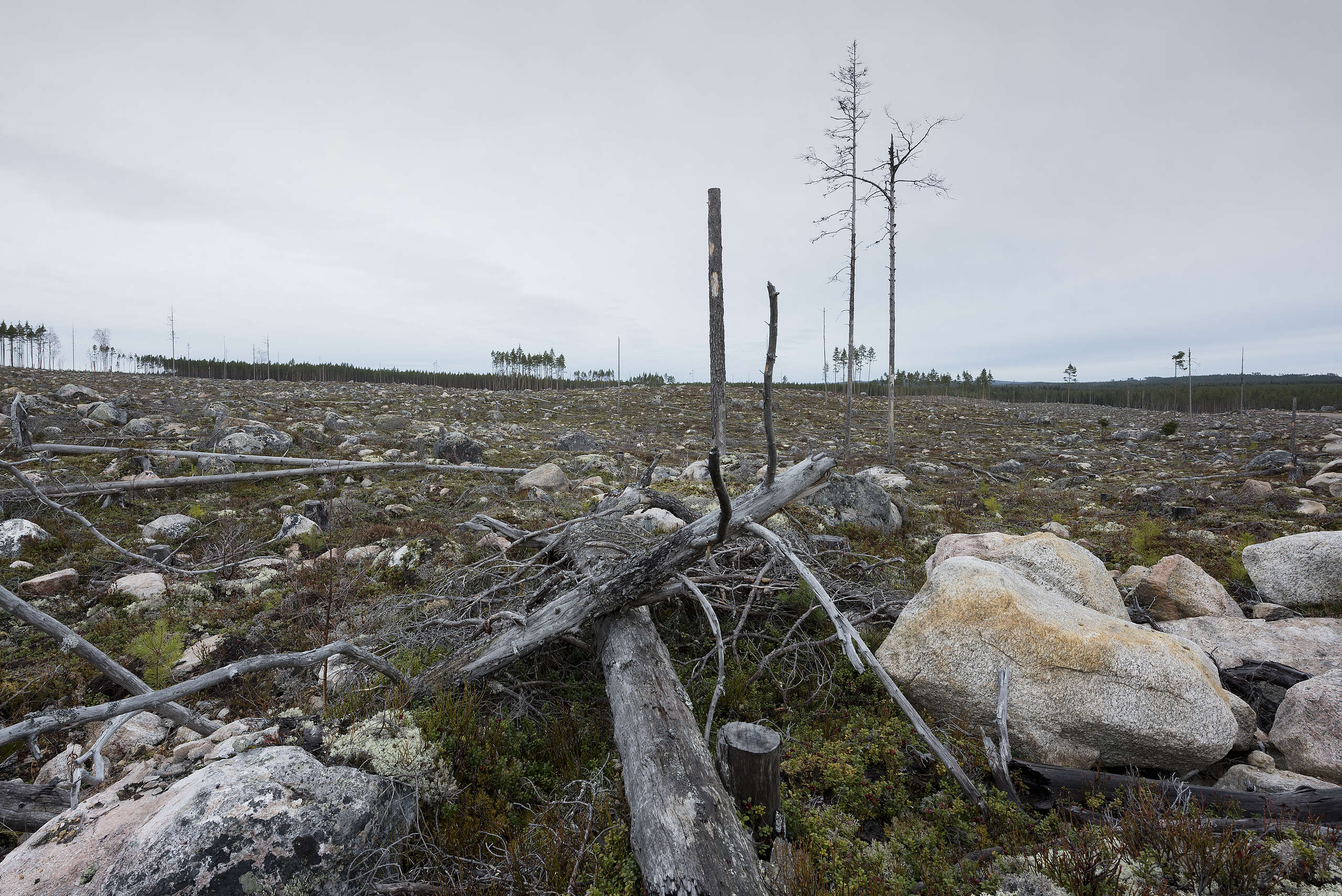
In recent years, SCA has faced intense criticism from environmental organizations and indigenous Sámi representatives for logging forests with high conservation values and for violations of Indigenous rights. This is the third high-profile global client SCA has lost in just five months. The NGOs Protect the Forest (Skydda Skogen) and Greenpeace argue that these departures signal a deep international crisis of credibility for the Swedish forestry model.
– We are seeing strong market support for our demands as major players turn away from companies responsible for forest destruction. This is a clear signal to both the industry and the Swedish government: they must abandon the current trajectory if they wish to safeguard the reputation of Swedish industry. To date, government policy has focused solely on intensifying logging at the expense of biodiversity, the climate, Sámi rights, and democratic participation, says Daniel Rutschman, International Campaign Manager at Protect the Forest.
The Swedish Forest Agency recently published a report confirming the urgent need to halt all logging in remaining natural and continuity forests. The agency warns that these ecosystems will be entirely gone in just 26 years if current logging and conservation rates persist. In a previous report, Protect the Forest identified SCA as the company likely responsible for the highest rate of logging in natural and continuity forests within the EU. Environmental groups have for years demanded a moratorium on logging these high-value forests.
– SCA has shown no ambition to increase protection of high-value forests or to slow down the logging of our last unprotected natural and old-growth forests. Until SCA implements changes that go beyond today’s harmful ’business-as-usual’ approach, we can expect the trend of clients leaving the company to continue, says Karolina Carlsson, Forest Campaigner at Greenpeace Sweden.
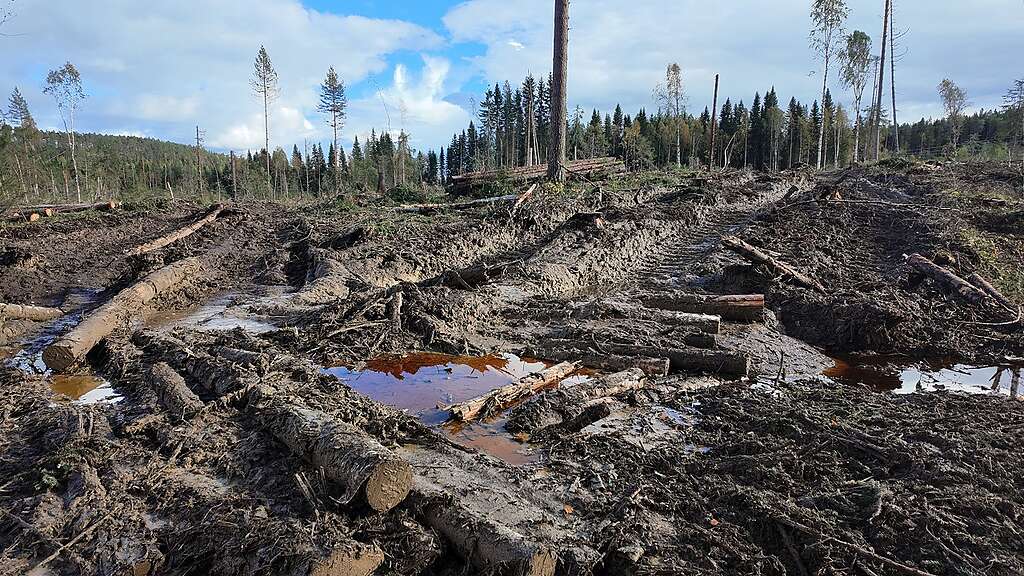
(c) Skydda Skogen
Both Zalando and L’Oréal purchase packaging from DS Smith, which in turn is one of SCA’s major customers.
– Two of DS Smith’s highest-profile clients have now chosen to distance themselves from SCA’s controversial forestry. We expect DS Smith to take responsibility and sever its own ties with SCA as long as these blatant sustainability risks remain, Daniel Rutschman concludes.
Background: A State of Emergency for Swedish Forests
- The 26-Year Countdown: A new report from the Swedish Forest Agency (Skogsstyrelsen), a government authority, warns that Sweden’s remaining natural and continuity forests will be entirely lost within 26 years if current logging rates persist. The agency describes the ongoing destruction of these habitats as ”irreversible” and a grave threat to the nation’s ecosystem services.
- The Scale of Loss: Approximately 26,000 hectares of high-value natural forests are logged every year in Sweden—an area larger than the city of Stockholm. This rapid deforestation is cited as the primary reason for the declining biodiversity recorded in the Swedish Red List.
- Climate & Carbon Stocks: Research published in the journal Science confirms that these unmanaged natural forests are far superior to industrial plantations at storing carbon. Protecting them is not only a matter of biodiversity but a critical necessity for meeting international climate targets.
Media Contact:
Daniel Rutschman, International Campaigner, Protect the Forest (Skydda Skogen) [email protected], +46 76-112 88 26
Karolina Carlsson, Forest Campaigner, Greenpeace Sweden [email protected], +46 73-986 50 96