
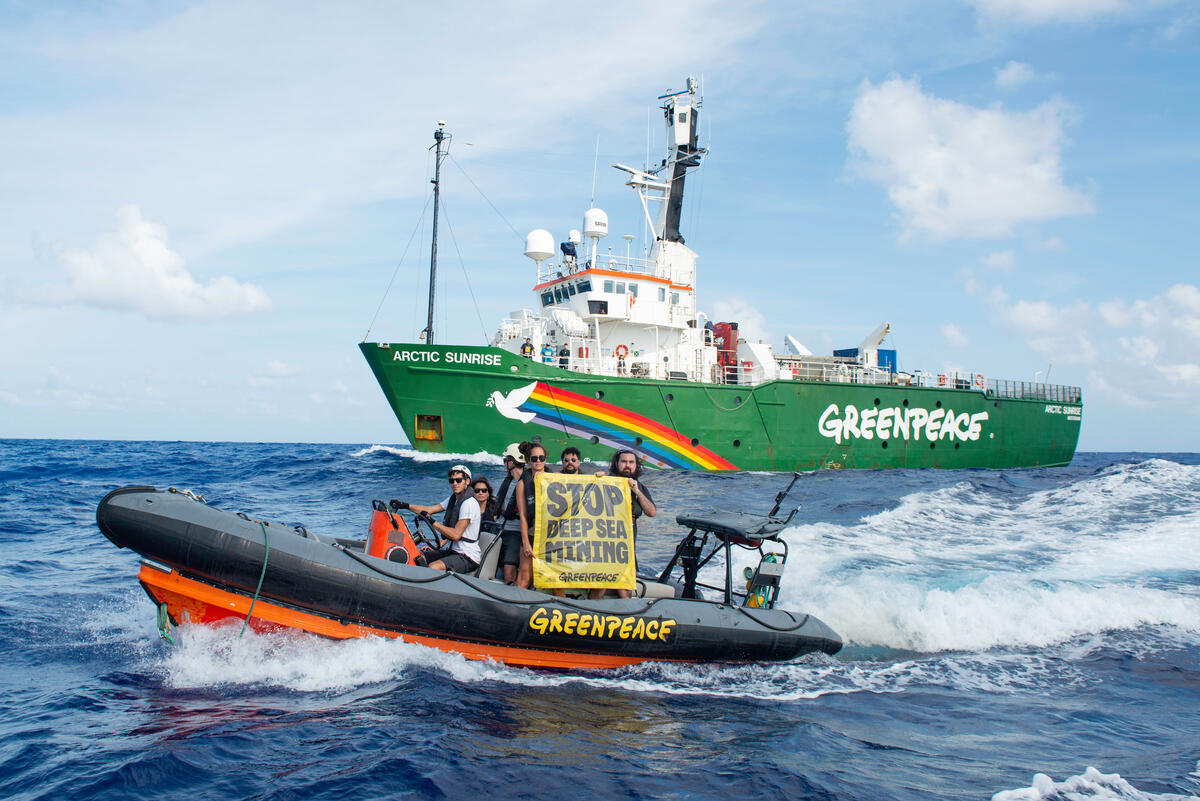
Stop deep sea mining
Deep sea mining is a destructive, extractive industry that is on course to cause irreversible impacts on ecosystems. Why would governments open up a new frontier in the ocean — and who is pushing them to do so?
A destructive industry
The global Greenpeace network is working to prevent a new destructive extractive industry from ever getting started in the oceans. Our position: no deep sea mining, not ever! To achieve that, we are joining Pacific Island communities, champion nations, environmentally concerned companies, and dozens of allied organizations across the globe in calling for a UN moratorium on deep sea mining.
In a planetary emergency, why would governments open up a new frontier for mining in the ocean — and who is pushing them to do so? Greenpeace is working to prevent this potentially catastrophic, extractive industry from ever getting started in the oceans.
What is Deep Sea Mining?
Deep sea mining is a new, highly-destructive extractive industry that is eager to start in our global oceans. Mining companies like, The Metals Company, Impossible Metals, GSR, and SeaX are seeking to profit by launching harmful and controversial mining methods on the planet’s deep seabeds aimed at extracting minerals such as nickel and cobalt from over 400 meters depth into the ocean, and falsely claiming it essential to U.S. national security and the world’s clean energy transition.
We now face a once in a generation opportunity to stop a new extractive industry from gaining a foothold and ravaging one of our last biodiverse boundaries: the precious ecosystems of the ocean’s floor. We can defend this boundary by demanding that government policy makers, forward-thinking clean transportation, and tech companies take a stand.
The creatures of the deep
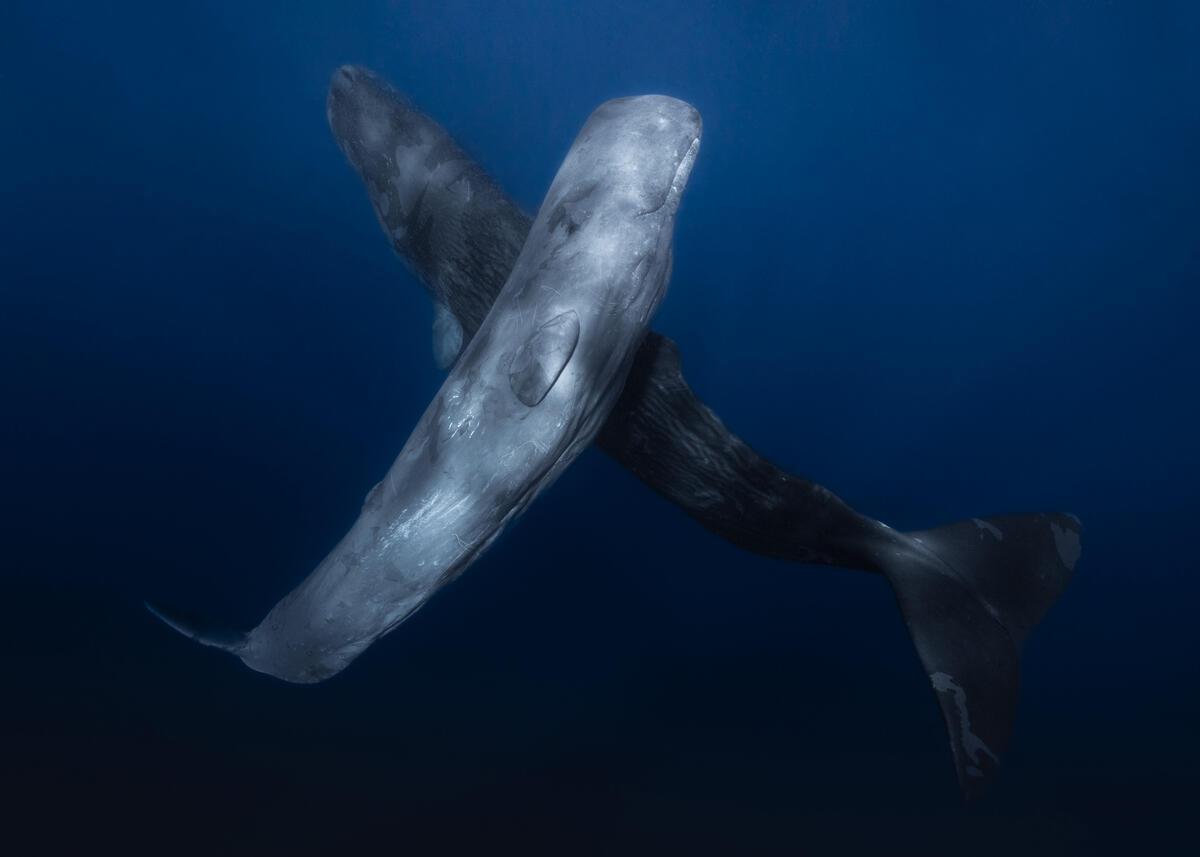
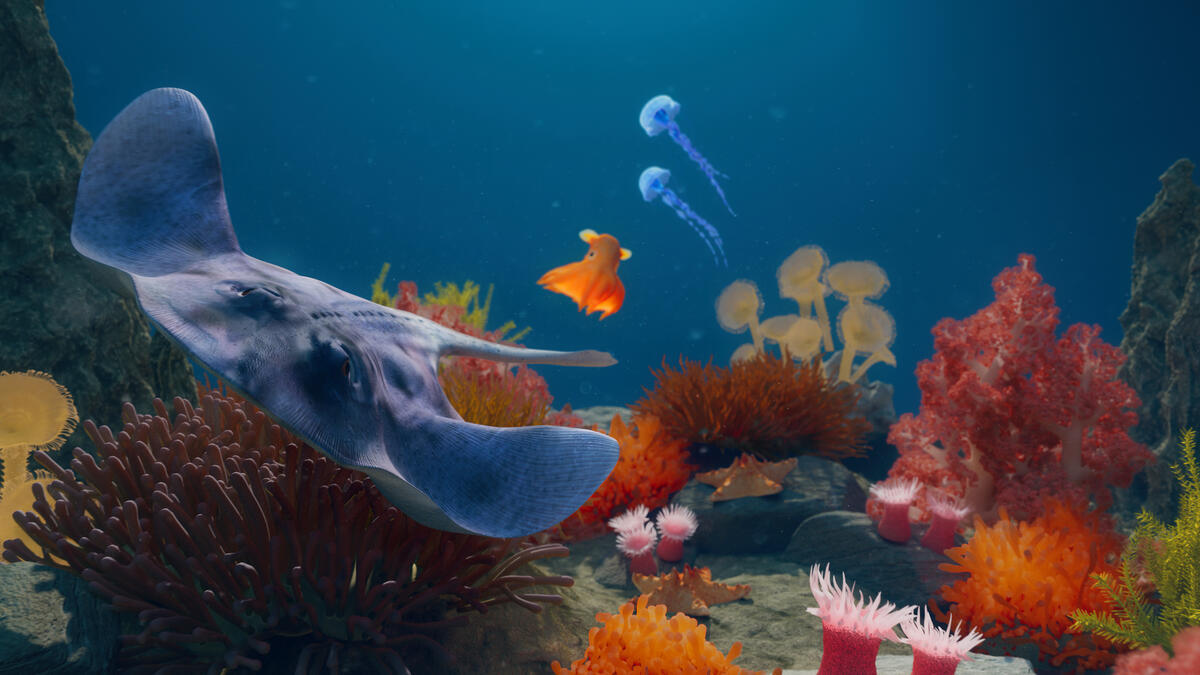
We know more about the surface of Mars and the moon than about the deep ocean. From underwater mountains providing oases for sea creatures to towering spires resembling sunken cities, the deep ocean is full of mysteries. As the largest habitable space on Earth, the deep ocean is home to ancient coral reefs sustaining the oldest known lifeforms, trenches deep enough to hold Mount Everest, and mysterious animals that can live for hundreds of years. Scientists discover new species on practically every voyage down to the depths.
This unique, living world is under threat from the incipient deep sea mining industry. Deep sea mining risks inevitable, severe, and irreversible environmental damage to our oceans and marine life. Right now, we are at a crucial moment in history. Governments and corporations have been granted licenses to explore for deep sea mining in ecologically sensitive waters, and the industry is positioning its development as essential and inevitable, despite new technological developments that make the minerals they want to mine more obsolete than critical for future electric vehicles and battery needs. But if the industry receives a green light to begin commercial mining we know the floodgates will open to countless companies seeking to profit regardless of the irreversible destruction to the world’s oceans.
Can we stop deep sea mining?
Commercial deep sea mining has never been approved under international law, and nations have yet to agree on rules to govern it. Instead of waiting, mining companies are now trying to go around the international process. The U.S. government is reviewing The Metals Company’s application to begin commercial mining in the Pacific, and plans to auction mining leases in the waters off American Samoa as early as November 2026, despite opposition from American Samoa’s leaders.
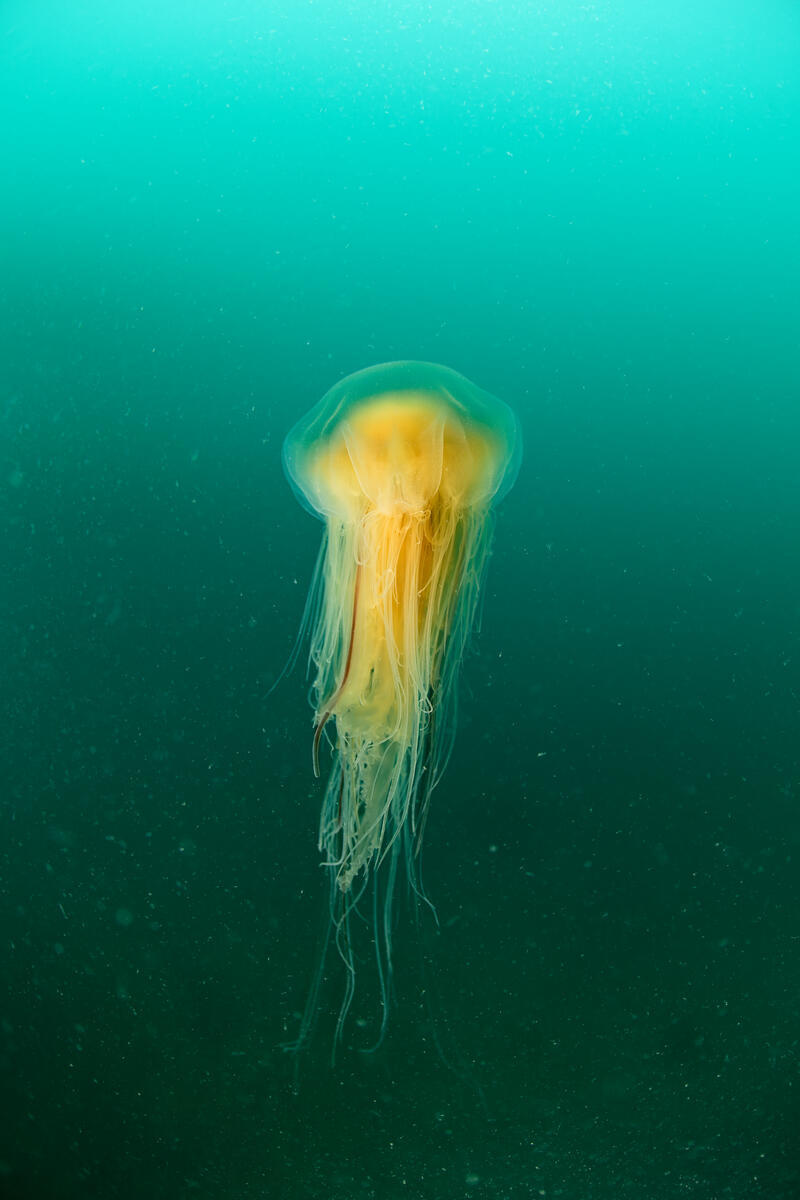
If mining begins, industrial-scale mining machines will tear up the deep seabed, destroying unique underwater worlds and the creatures that live there. The damage won’t stay in the depths: sediment plumes and noise put ocean life across the Pacific at risk. The deep ocean is also a critical container for planetary carbon and scientists warn that climate change could be hastened by dredging up these deep sea stores.
How can we stop deep sea mining?
Greenpeace is working on multiple fronts to stop deep sea mining before it ever starts:
Greenpeace is engaging the potential end users of deep sea mining, the automakers, battery companies, and tech corporations that utilize so-called “energy minerals”, which are the primary target of deep sea miners. By gaining commitments to never use deep sea minerals, we aspire to cut off demand for ocean destruction before there ever is a supply. Our transition to a fossil fuel free future must be ethical and sustainable, and not come at the expense of destroying the thresholds within which humanity can survive, develop, and thrive for generations to come. To achieve this, commercial deep sea mining must never begin.
Communities across the Pacific stand on the frontline of deep sea mining. They have the most to lose from operations gone wrong, from damages to abundant fisheries to sedimentation of the beautiful coral reefs that are central to Pacific culture and sustenance, and from climate change impacts that could eventually drive these communities from their ancestral homes. Greenpeace’s global network is working with long-standing Pacific activists who don’t want to see deep sea mining off their shores, or anywhere. These are the frontline heroes in this battle, and our role in the Pacific is to support them.
Through the Protect the Oceans campaign, Greenpeace is working with nations across the globe to forge a new Global Ocean Treaty that would provide a legal framework for biodiversity protections in nearly half of the planet covered by international waters. Our goal is to achieve a network of fully protected ocean sanctuaries that will cover at least 30% of the ocean by 2030. Due to the political power of deep sea mining interests, there is no guarantee this treaty will be granted the authority to put in place protections against this emerging destructive industry, but Greenpeace and our allies are working tirelessly to see that it does.
While no commercial projects are yet permitted in the global ocean, exploratory deep sea mining is licensed by the United Nations through the International Seabed Authority. These operations are destructive and may have irreversible consequences that even deep sea mining companies admit are wholly unknown due to the lack of sufficient science. Greenpeace is meeting these miners at sea, at port, and in the conference rooms of global politics. We are bearing witness to their destructive activities, and members of our global network have taken action to prevent their assaults upon the sea.
Recent victories
A growing wave of voices are speaking out against deep sea mining. Some demand an outright ban; others call for a moratorium until environmental protection, good governance, and community consent can be guaranteed. At Greenpeace USA, we believe there is no place for deep sea mining in a healthy well-managed ocean that sustains all life on this planet.
So far, 46 countries have announced support for a moratorium, precautionary pause, or ban, along with parliamentarians Indigenous and civil society groups, major companies, 82 financial institutions, and more than 900 science and policy experts from over 70 countries.
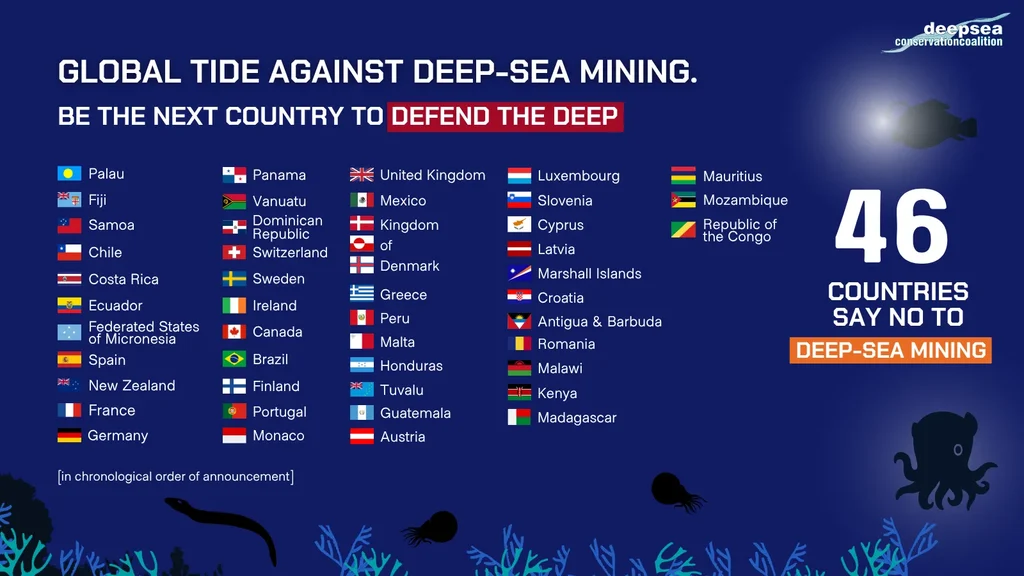
In July 2024, American Samoa joined Hawaii, California, Washington, and Oregon, in establishing its own ban or restrictions on seabed mining in its waters.
Opposition in Congress is growing, and it’s bipartisan. In January 2025, Rep. Ed Case (D-Hawaii) reintroduced two bills calling for a moratorium on deep seabed mining until its consequences are fully understood and strong protections are in place. In March 2026, Guam Delegate James Moylan (R) signed on as a cosponsor. The Republican delegates representing three U.S. Pacific territories have also raised concerns about the administration’s effort to fast-track mining permits.
What’s our end goal?
We have a real chance to stop this new ocean threat before it starts and we need your help. We must call on our governments to permanently ban deep sea mining in U.S. waters, block our ports and infrastructure from multinational corporations seeking to benefit from ocean destruction, and support a moratorium at the international level to stop commercial deep sea mining operations from launching before sufficient science or regulations are in place.
Learn more about…
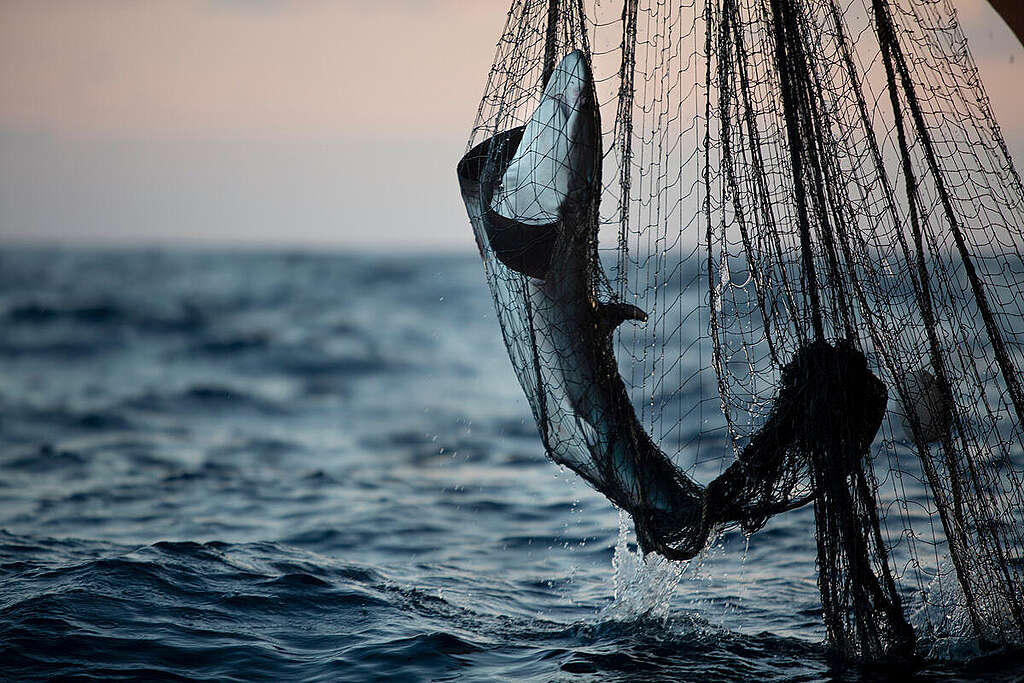
Protecting workers & wildlife at sea
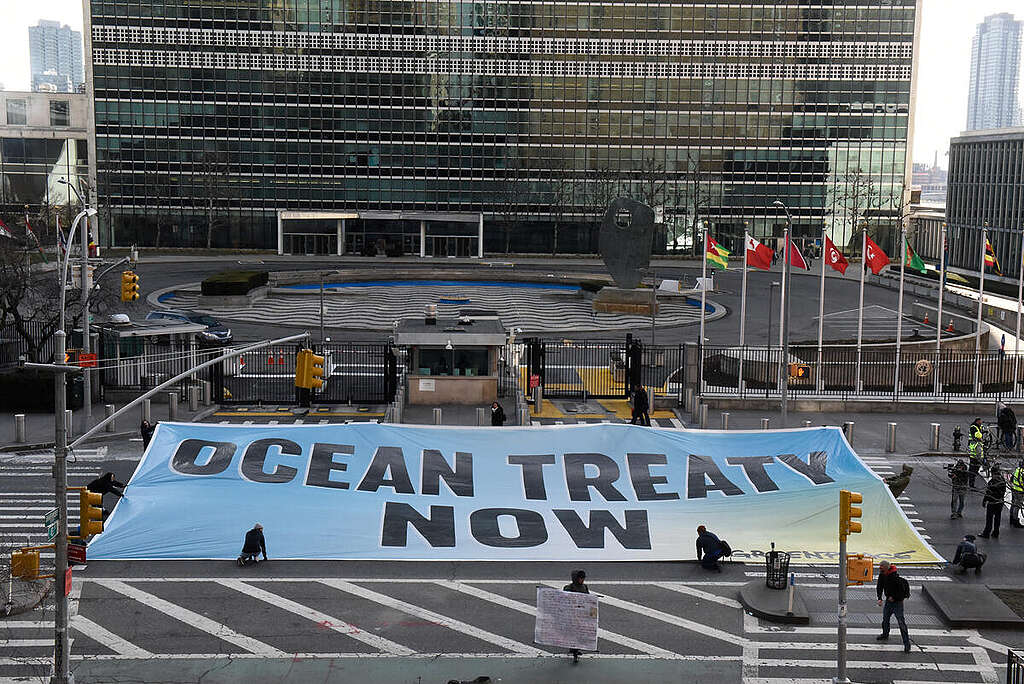
The Global Oceans Treaty
-
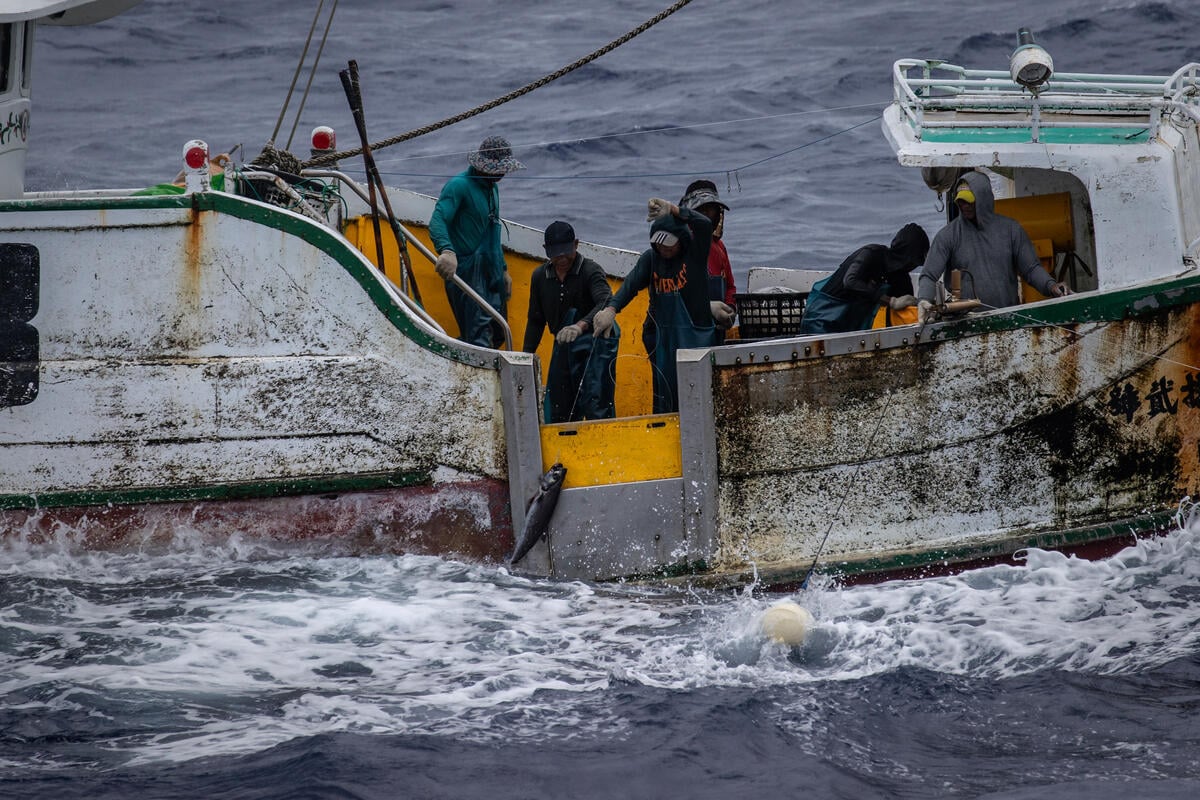
U.S. documents forced labor at sea, leaves Taiwan and Indonesia trafficking rankings unchanged
The U.S. State Department’s annual Trafficking in Persons Report identified persistent failures by Taiwan and Indonesia to protect fishers from forced labor, yet left both governments’ rankings unchanged.
-

Energy Transfer SLAPP case: eight reasons why justice demands a new trial
The trial held in Mandan, North Dakota in the Energy Transfer SLAPP case was fundamentally flawed in multiple ways.
-

Toxic AI boom breathes new life into a dying forever chemical industry
If PFAS are built into the backbone of the AI economy, they will remain in our water, soil and bodies for generations to come.
-
The high cost of cheap tuna: US supermarkets, sustainability, and human rights at sea (3rd edition)
In Greenpeace USA’s third scorecard measuring the human rights and sustainability practices of 16 major US supermarkets’ tuna supply chains, only two retailers achieved a passing score.
-
The High Cost of Cheap Tuna: US Supermarkets, Sustainability, and Human Rights at Sea
Published: 02-13-2023 Edition: 2nd Download: PDF A net bulging with tuna and bycatch on the Ecuadorean purse seiner ‘Ocean Lady’, which was spotted by Greenpeace in the vicinity of the northern Galapagos Islands while using fishing aggregating devices (FADs). Around 10% of the catch generated by purse seine FAD fisheries is unwanted bycatch and includes…
-
Fake My Catch: The Unreliable Traceability in our Tuna Cans
US seafood company Bumble Bee, one of the leading companies in the canned tuna market with nearly 90% consumer awareness levels, and its Taiwanese parent company Fong Chun Formosa Fishery Company (hereinafter referred to as FCF), one of the top three global tuna traders, play an important role in the global tuna industry, and thus…
-
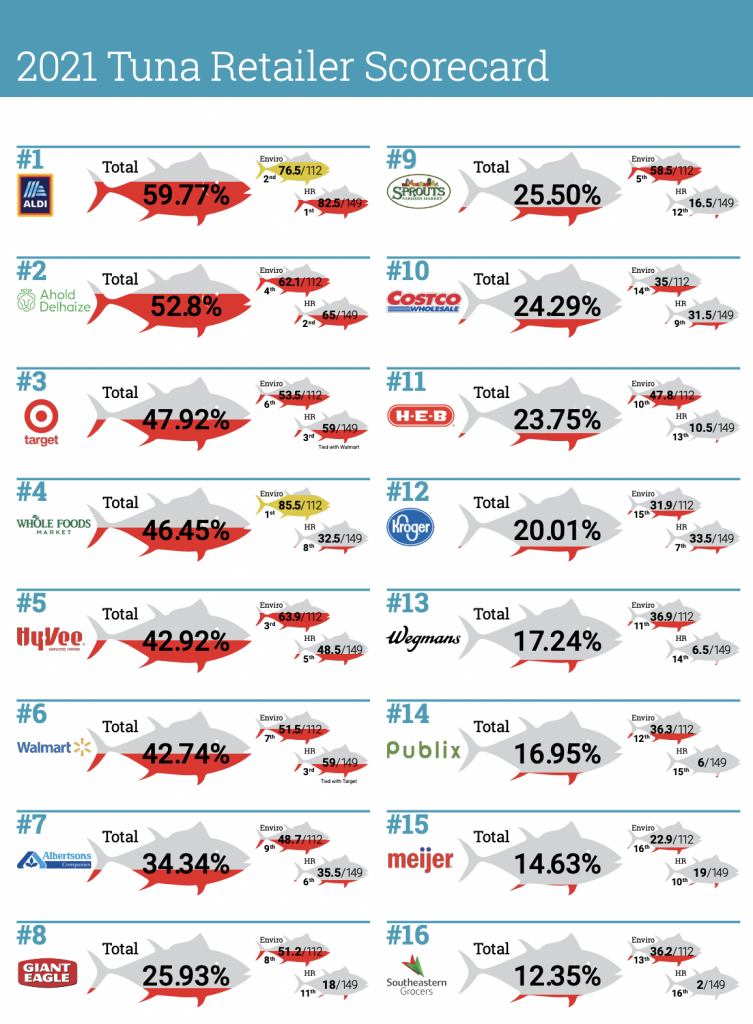
2021 Tuna Retailer Scorecard: The High Cost of Cheap Tuna
When Greenpeace USA published the first edition of Carting Away the Oceans (CATO) in 2008, not a single company out of the 16 major US retailers ranked on seafood sustainability received a passing score. Most of the companies surveyed had hardly given a thought to sustainable seafood; many had weak or non-existent policies, and commonly…
-
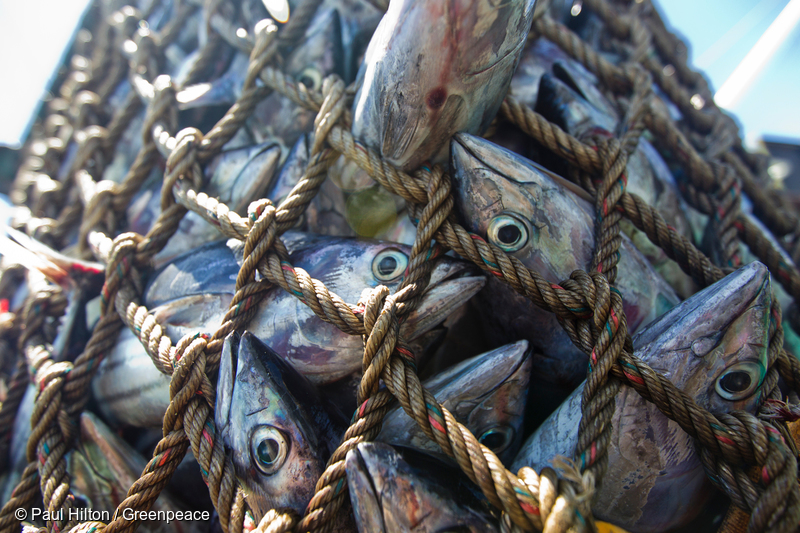
Fact Sheet: The Illegal Fishing and Forced Labor Prevention Act
Illegal, unreported, and unregulated (IUU) fishing, a top threat to ocean ecosystems and global food security, is inextricably linked to human rights abuses at sea. Workers on fishing vessels around…
-
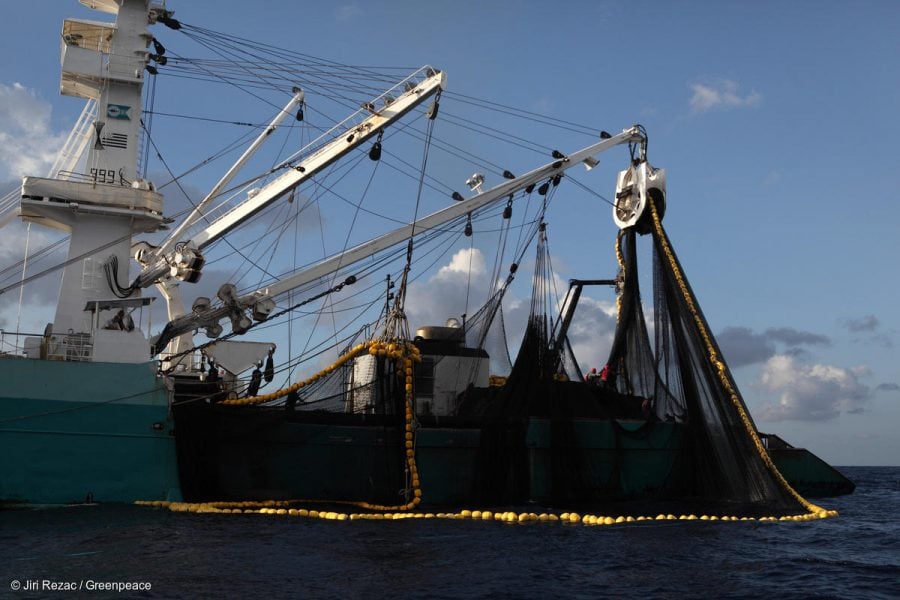
High Stakes: The Impacts of Destructive Fishing
The Indian Ocean is a crucial ecosystem in the race to protect the high seas. From safeguarding marine biodiversity to promoting sustainable, socially responsible fishing, the changes needed to protect…
-
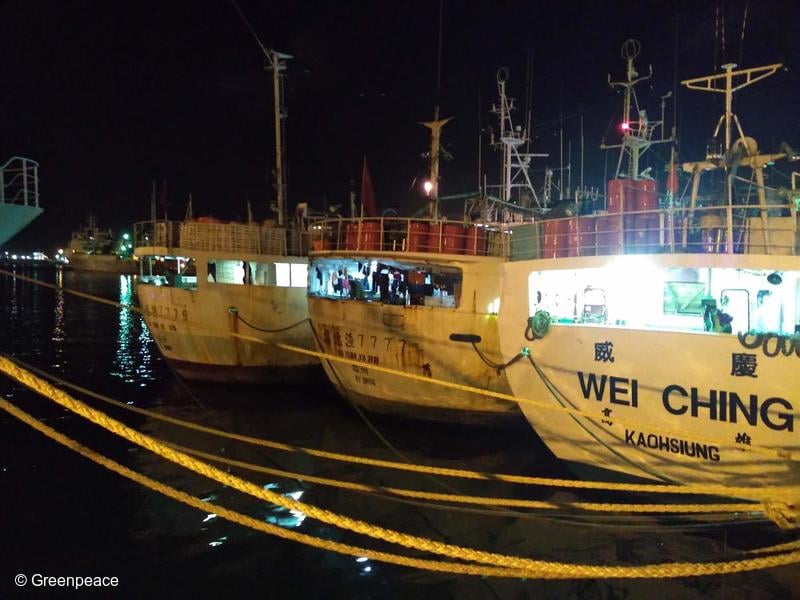
Choppy Waters – Forced Labor and Illegal Fishing in Taiwan’s Distant Water Fisheries
DOWNLOAD THE REPORT Taiwan is one of the world’s largest distant water fishing (DWF) powers, with over 1,100 Taiwanese-flagged vessels fishing across our oceans and hundreds more Taiwanese-owned vessels flagged…