Stop deep sea mining before it starts
The deep sea is a true treasure trove of biodiversity, vital in our battle against climate change. But deep sea mining poses a looming threat to its delicate balance. Let’s take action to protect this invaluable resource.

The polymetallic (sometimes called ‘manganese’) nodules on the soft sediments in the Clarion-Clipperton Zone in the Pacific Ocean, play a very important role. They provide hard-substrate habitat for immobile animals, such as corals and sponges, which in turn provide habitat for other animals. A famous example for such highly specialized associations is the deep sea ghost octopus (nicknamed ‘Casper’): it wasn’t until recently, that scientists discovered that these nodules function as breeding grounds for deep-sea ghost octopuses which lay their eggs on sponges that only grow on these nodules and then guard them, likely for years before hatching. Without these polymetallic nodules, the sponges would not be able to grow in the soft sediments – and without sponges ‘Casper’ the ghost octopus would not find a place to lay eggs and reproduce.
Nodule collection will remove the habitat of deep-sea fauna, and because the nodules take millions of years to form, the removal of habitat may effectively be permanent. It is unlikely that the deep-sea ecosystems would ever fully recover after Deep Sea Mining activity.
-
How to Hold a Sponge: On quiet leadership and the conditions for change
I’ve come to learn that while Greenpeace is an organization that speaks boldly, it’s also an organization that listens boldly.
-
We did it: Canada has ratified the Global Ocean Treaty. What now?
After more than 20 years of campaigning, Canada has finally ratified the Global Ocean Treaty. A historic win for the ocean, and for all of you who made it possible.…
-

Greenpeace Canada applauds Canada’s ratification of the Global Ocean Treaty, paving the way for world’s first ocean sanctuaries
Today, Prime Minister Carney announced the official ratification of the Global Ocean Treaty at the OceanEye International Alliance event organised during the UN General Assembly in New York. The ratification…
-
End of ISA’s 31st session: moratorium support surges as ISA fails to tackle unlawful deep sea mining
While governments failed to set a clear direction on unlawful deep sea mining at the ISA, our hive in Toronto was buzzing with folks finding ways to take meaningful action.
-

Connecting the dots: fires, fossil fuels and nature
My (white) family immigrated from South Africa in the 90s and my parents were keen to dive into all the things they thought were “quintessentially Canadian.” This involved skiing, which…
-
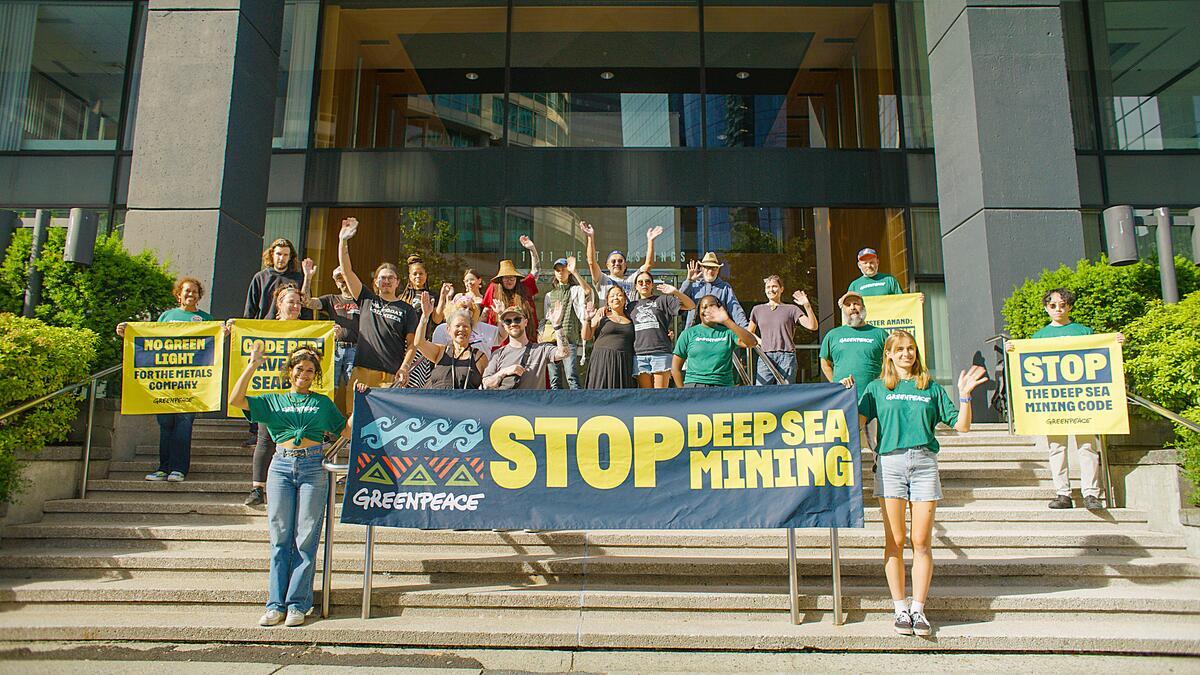
Global deep sea mining negotiations are starting. Here’s what you need to know.
Everything you need to know about the 31st session of the International Seabed Authority (ISA).
-

An excess profits tax on corporations will save you money (& the climate)
Every time a global crisis sends oil and gas prices higher, the same pattern repeats itself. Families pay more for gas, groceries and everyday essentials, while fossil fuel companies make…
-
Marinvest: The biggest LNG project you’ve never heard of
It’s no accident that you’ve likely never heard of the massive LNG project proposed for Baie Comeau, on Quebec’s north shore of the St. Lawrence River.
-
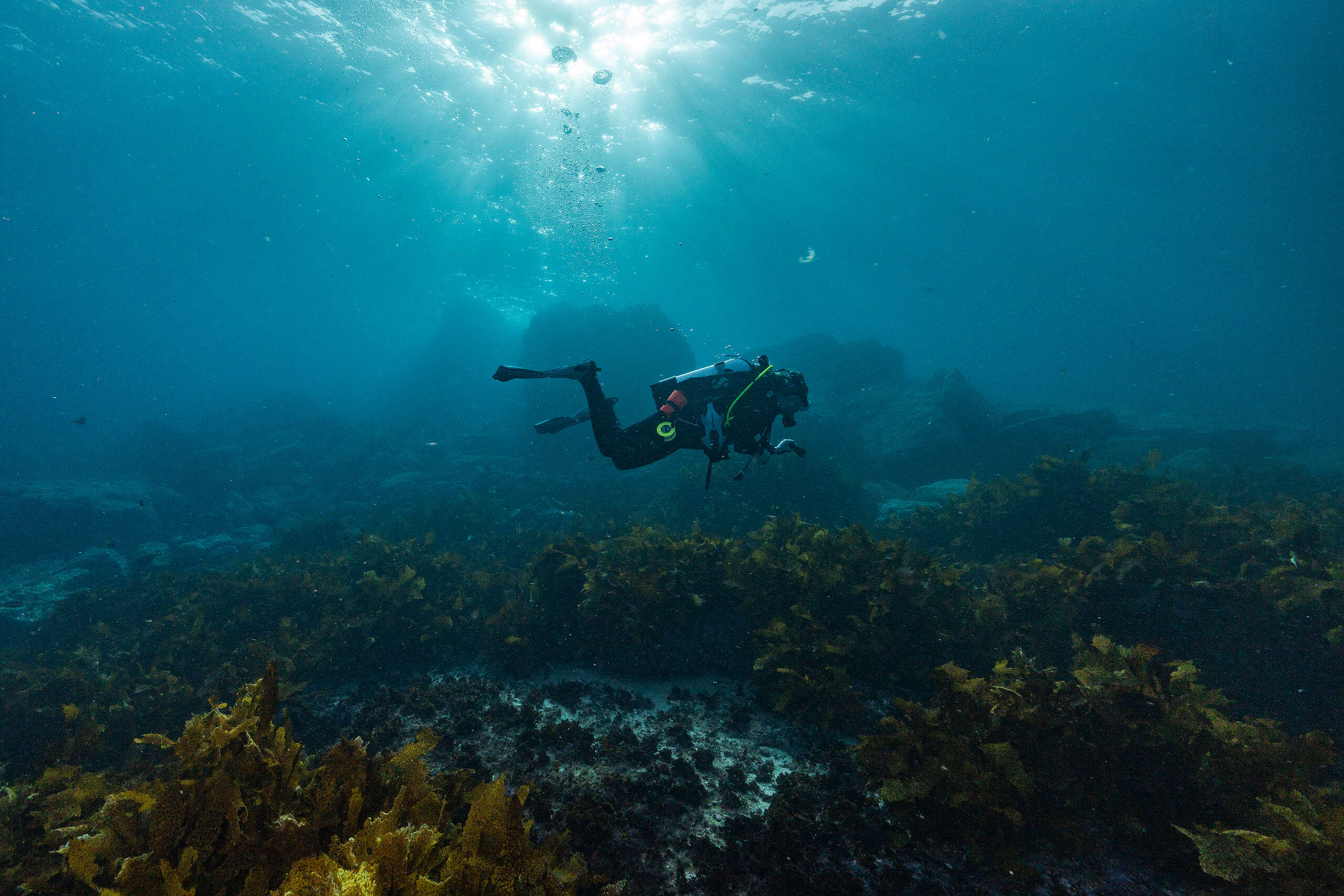
A Dose of Good News!
Check out some of the most recent campaign updates and victories to bloom within the Greenpeace network.
-
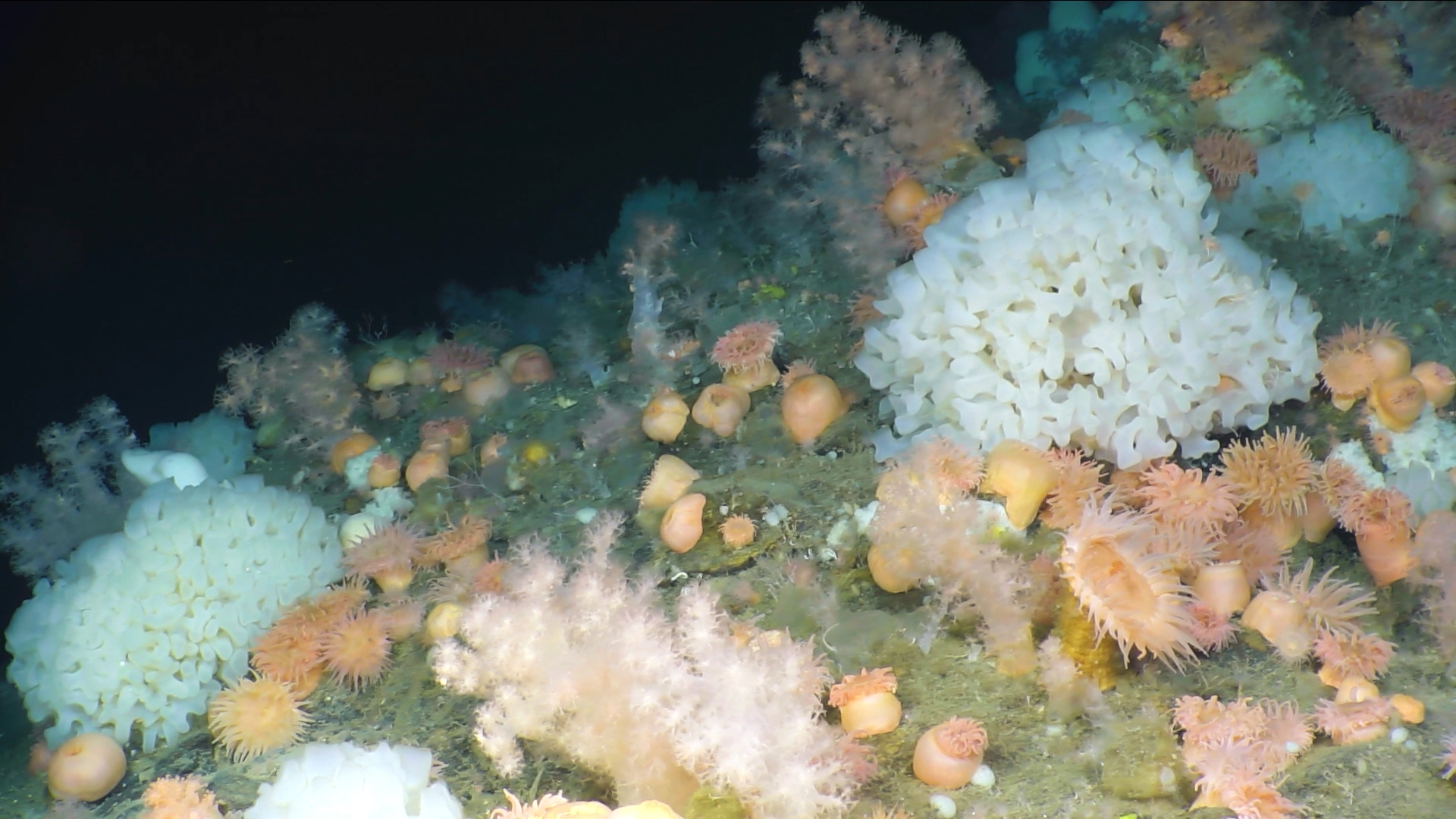
Greenpeace ends Deep Sea Arctic Expedition with findings of new species and over 100 hours of groundbreaking underwater footage
Today, Greenpeace concluded its month-long science expedition to seamounts and hydrothermal hot springs in the Arctic deep sea. The expedition, known as the Deep Sea Arctic Expedition, launched on May 8, 2026, bringing together world-leading researchers and scientists to explore deep-sea ecosystems from depths down to 3,000 metres.
-
Greenpeace Canada reaction to industrial carbon price announcement
The only thing happening faster than the federal rollback of climate policies is the global renewable energy revolution that will turn all of these concessions to Big Oil into a massive lost opportunity to build a better, safer Canada.
-
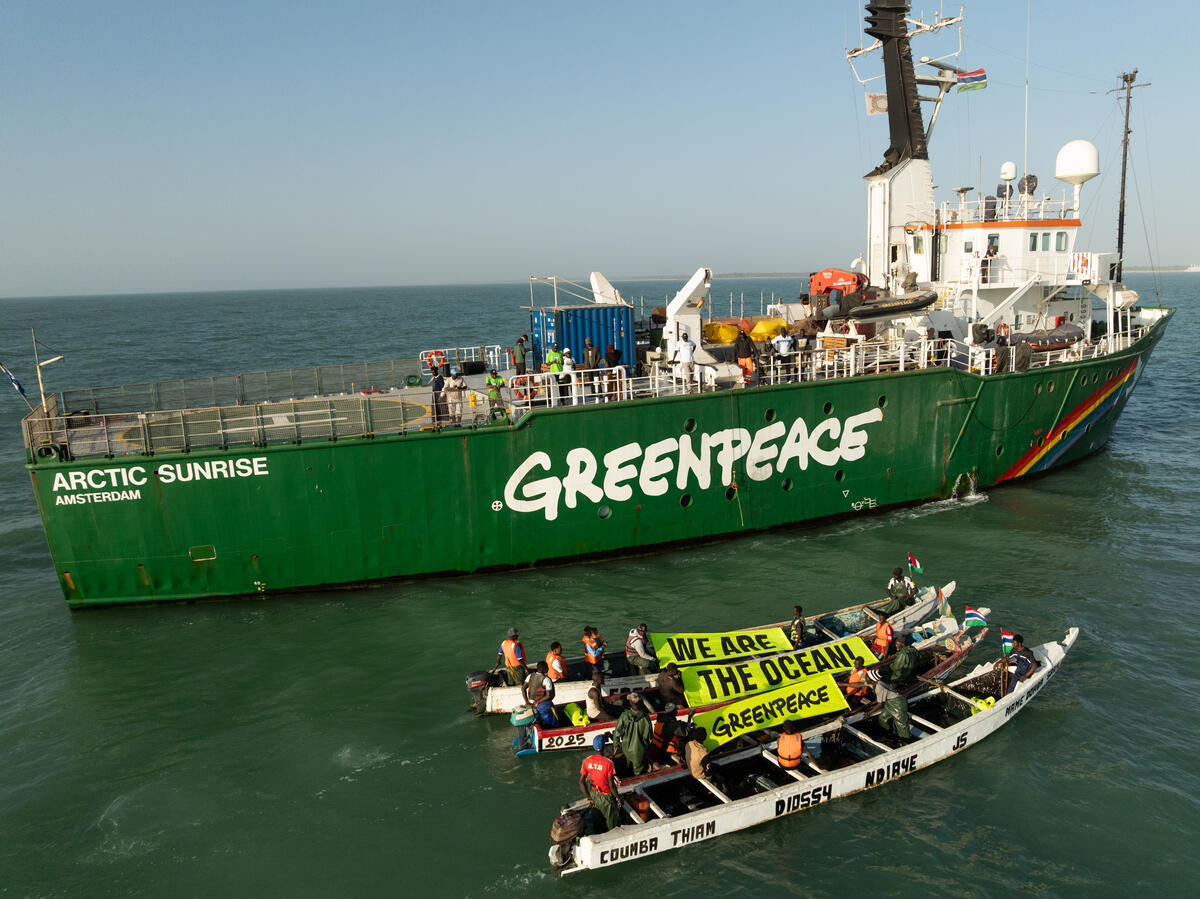
Greenpeace launches history-making Deep Sea Arctic Expedition into the deep sea, livestreaming from 3,000 m depth
VANCOUVER – On May 8, 2026, Greenpeace will officially launch on a month-long scientific mission to the Arctic deep-sea. The expedition, known as the Deep Arctic Expedition, is a first of its kind in Greenpeace history.
-
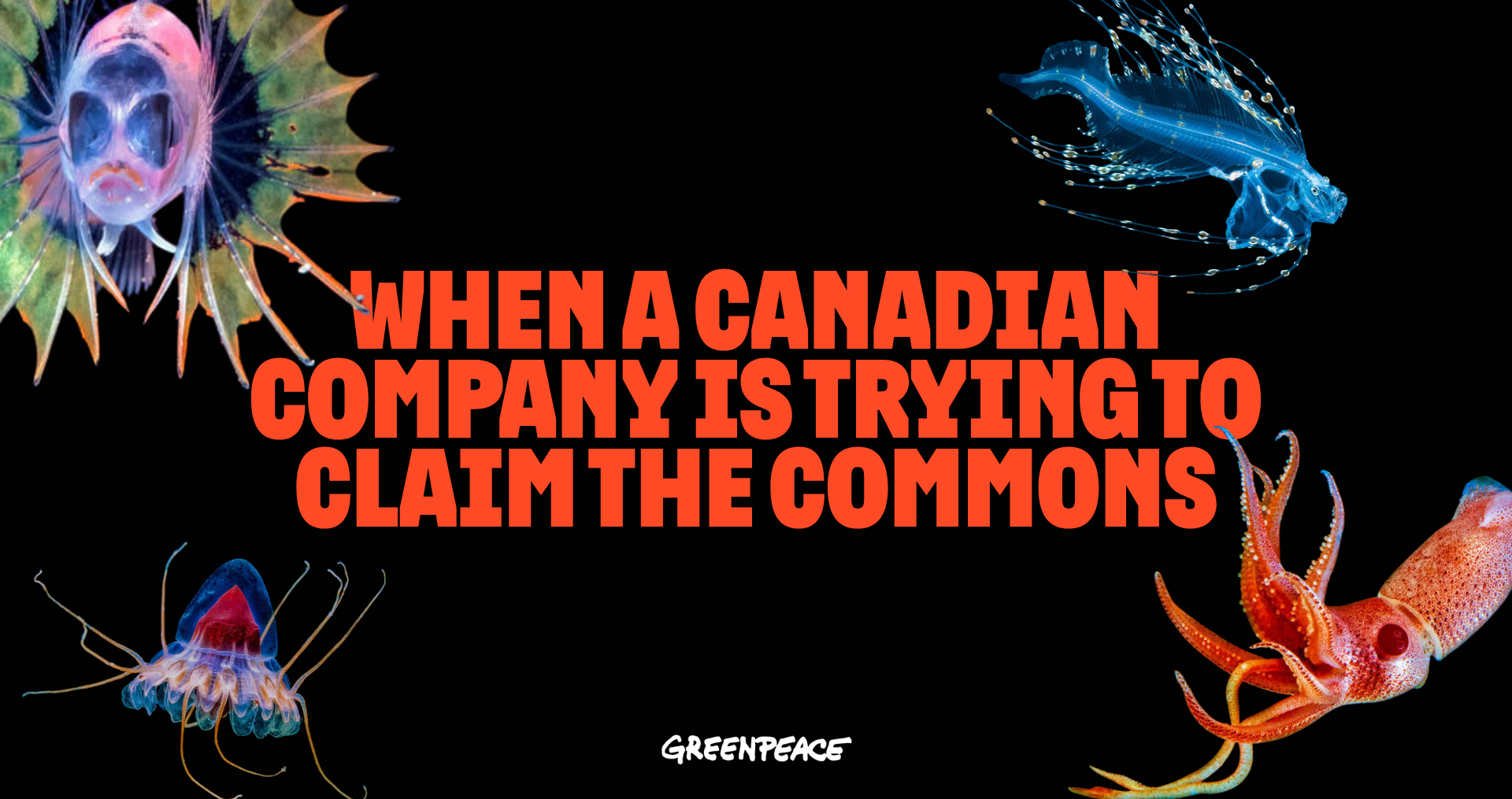
When a Canadian company is trying to claim the commons
Last month, talks at the International Seabed Authority (ISA) council meetings showed that the world is nowhere near ready to proceed with deep sea mining. A lack of regulatory frameworks,…
-
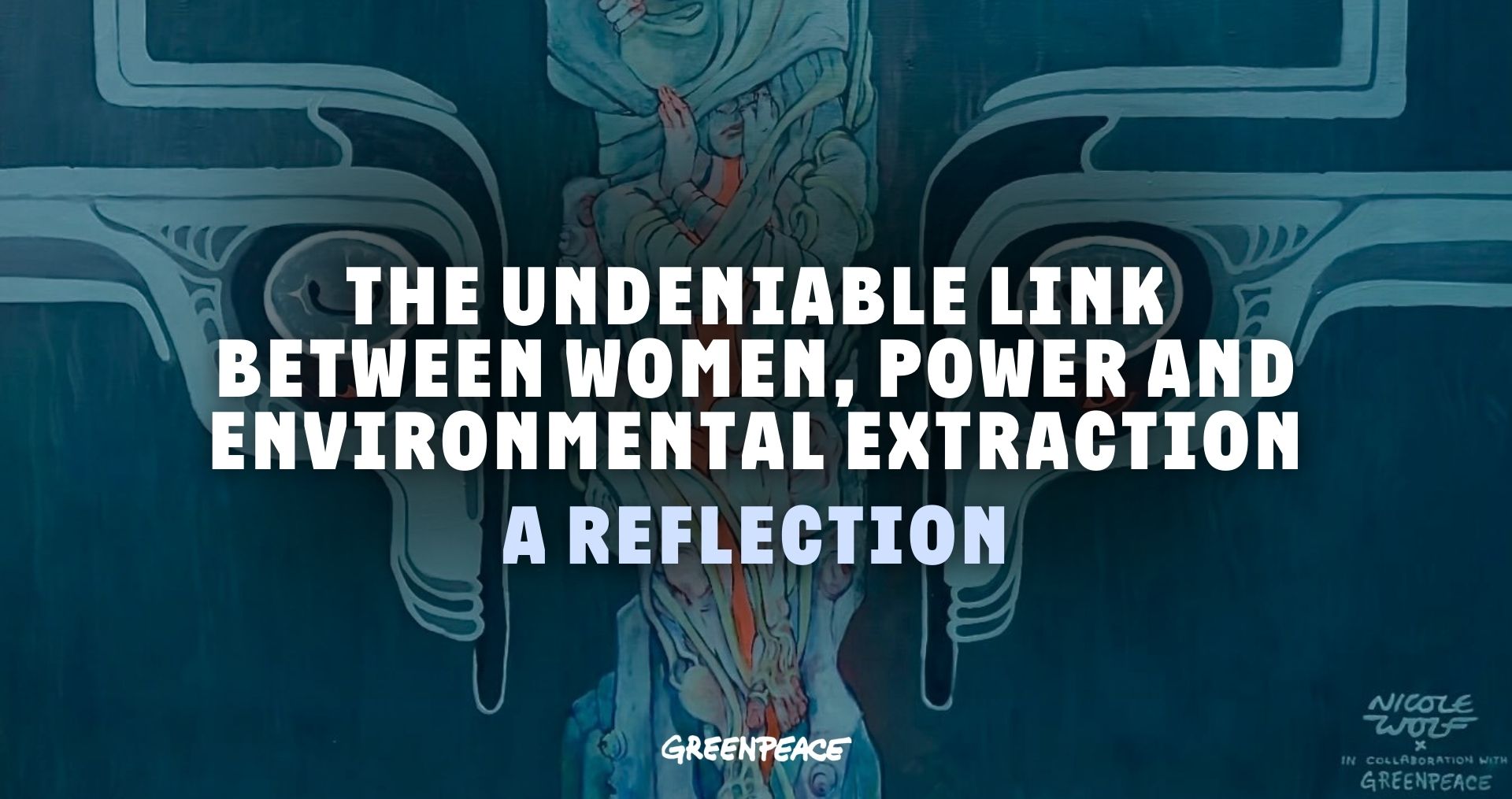
I worked with survivors of gender-based violence. The link between women, power and environmental extraction is undeniable
Two decades ago, I spent my nights working the overnight shift on the support line of the Toronto Rape Crisis Centre/Multi-cultural Women Against Rape.
-

LNG expansion in doubt: Even Shell is looking for an exit
Now that we have cheaper and cleaner alternatives, expanding LNG might be good for oil companies and increasingly authoritarian petrostates, but it is bad for affordability, our security and the climate.
-
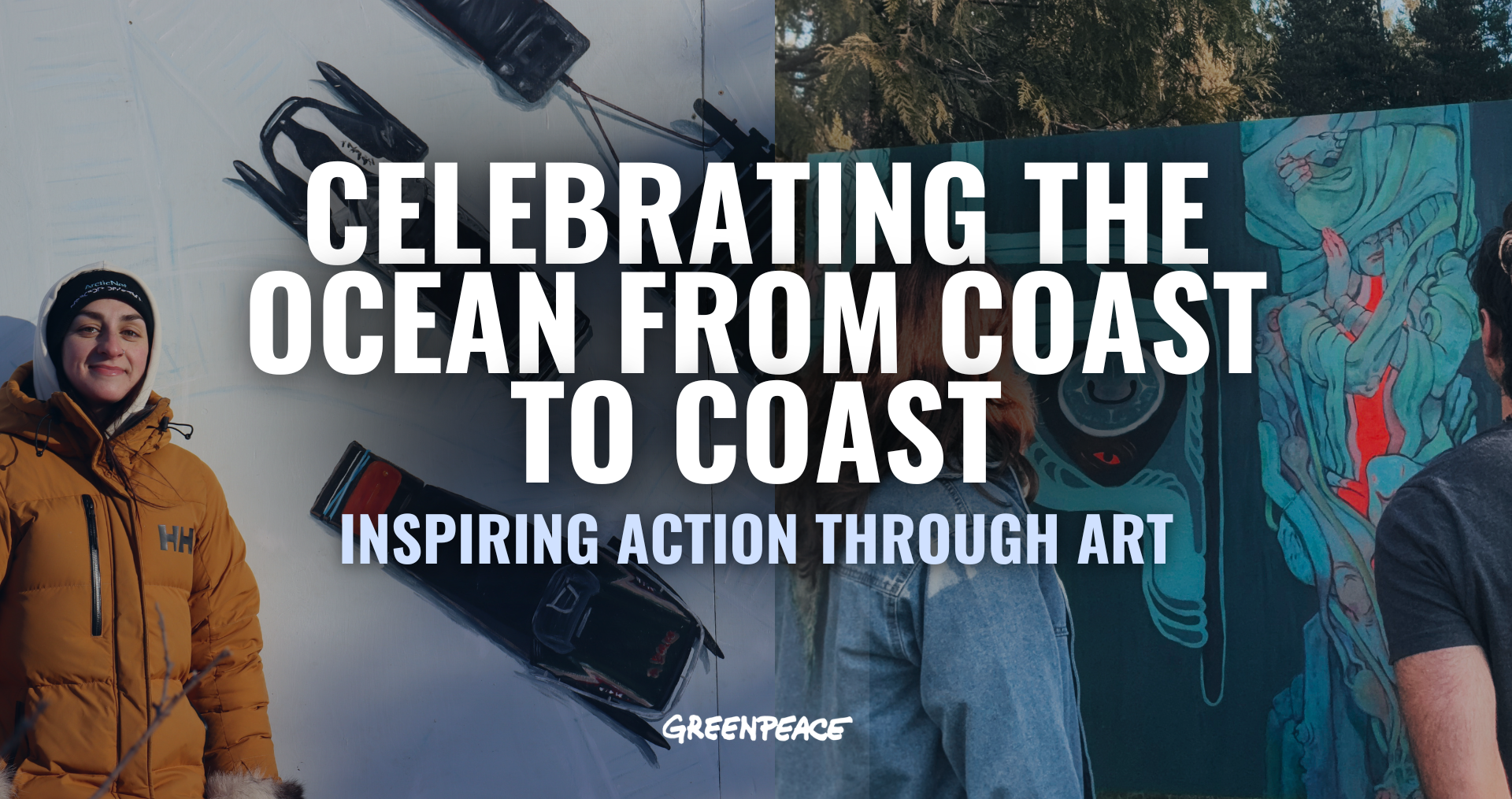
Celebrating the ocean from coast to coast
Today, we are celebrating the Global Ocean Treaty entering into force by unveiling two ocean-themed murals on the coasts of Turtle Island.
-
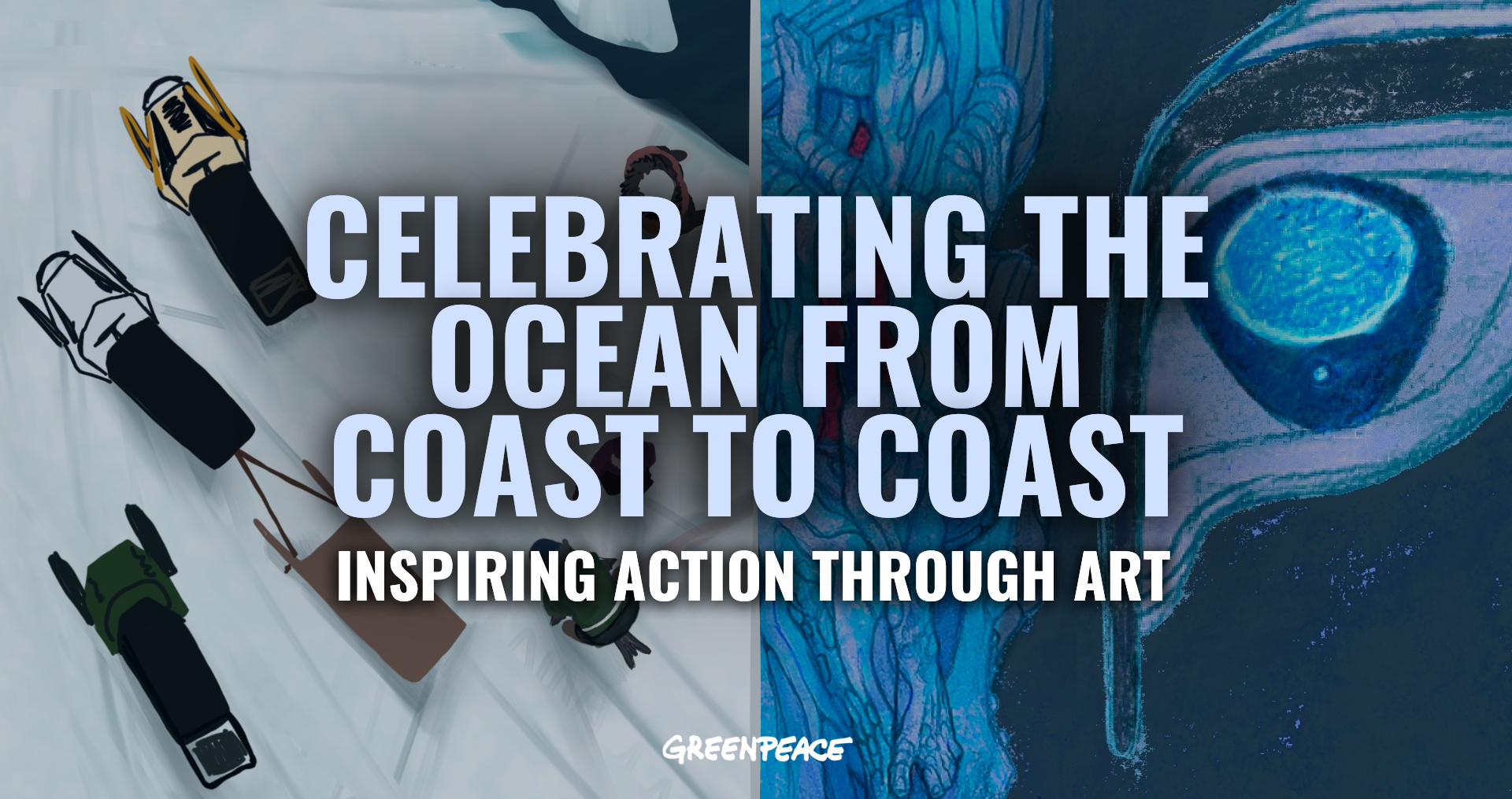
Canadian Artists Unveil Oceans Murals as Historic Ocean Treaty Comes into Force
OTTAWA – Today, Greenpeace Canada unveiled two coastal murals in celebration of the Global Ocean Treaty officially entering into force after two decades of campaigning to protect the high seas.…
-
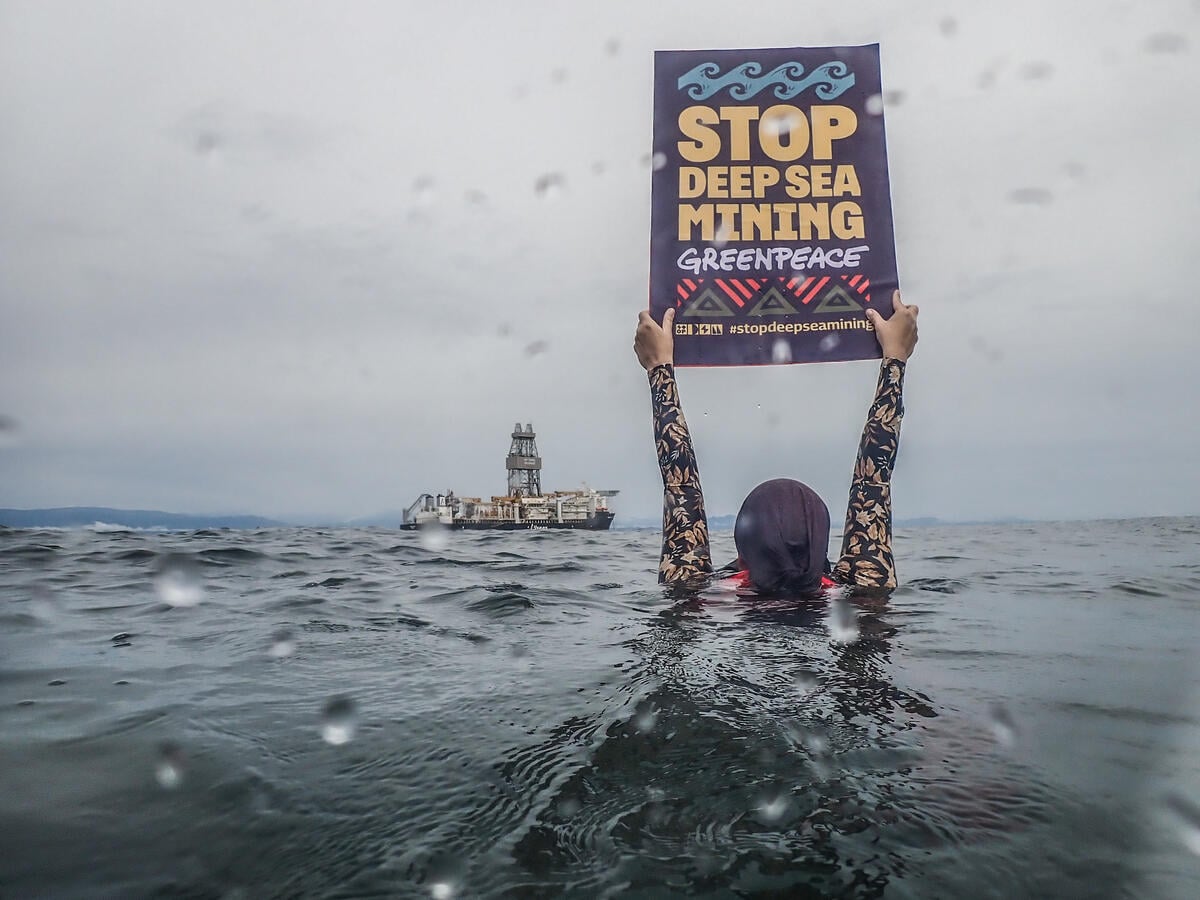
Double victory: deep sea mining plans halted in the Arctic and Pacific
Norway and the Cook Islands announced a pause to their deep sea mining plans, showing evidence of the growing opposition around the world to this disastrous industry.
-
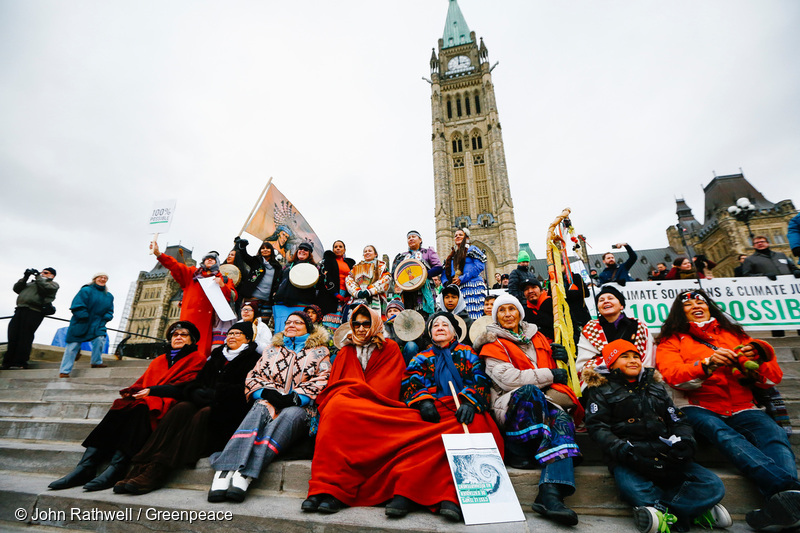
Did someone say MOU? Reading between the lines of Mark Carney’s plan to build an oil pipeline from Alberta to the BC coast
The Carney government’s MOU with the Government of Alberta to build a new tar sands pipeline rolls back key climate policies and attacks Indigenous rights.
-
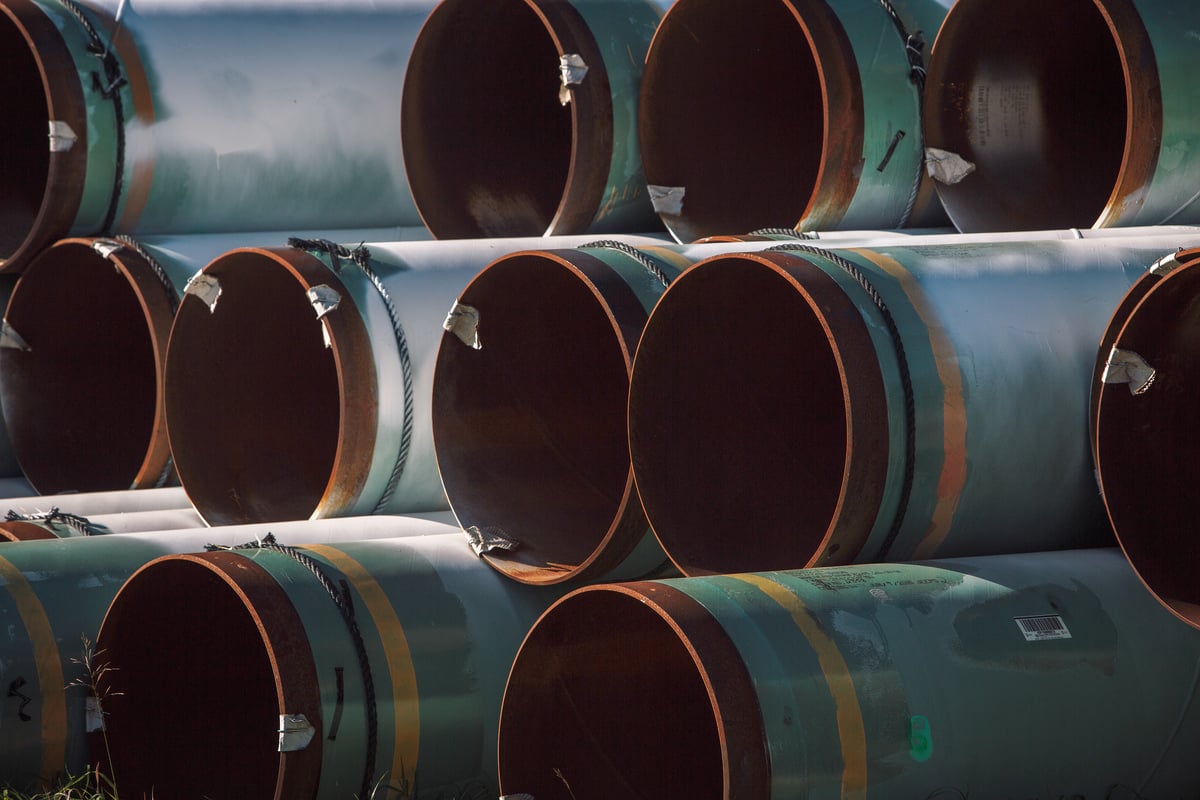
Greenpeace Canada Reaction to the Canada–Alberta MOU announcement
Toronto – “The Canada – Alberta MOU announcement is so much worse than we expected, and we expected it to be bad. Not only are they trying to ram through a…
-
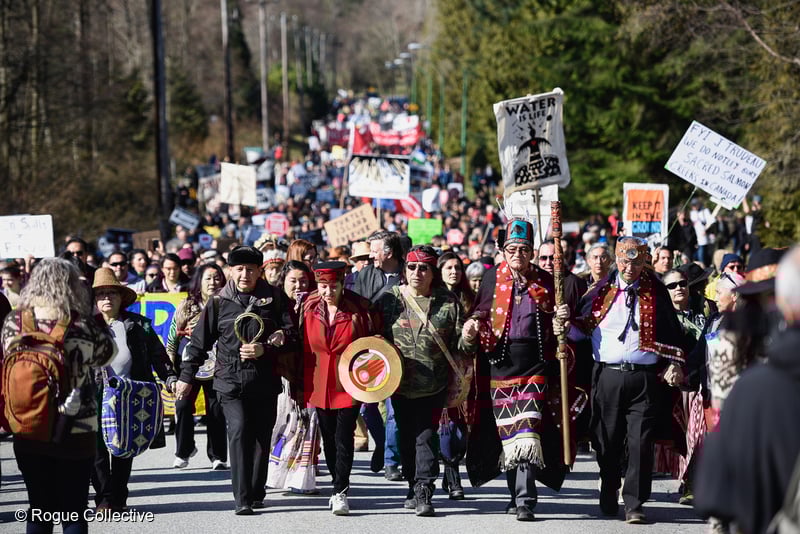
Why over 40 organizations oppose northwest coast oil pipeline and tankers project
It is not in the national interest to pursue a project that pits province against province, runs roughshod over Indigenous rights, and puts local economies and north Pacific coastal and marine ecosystems at risk.
-
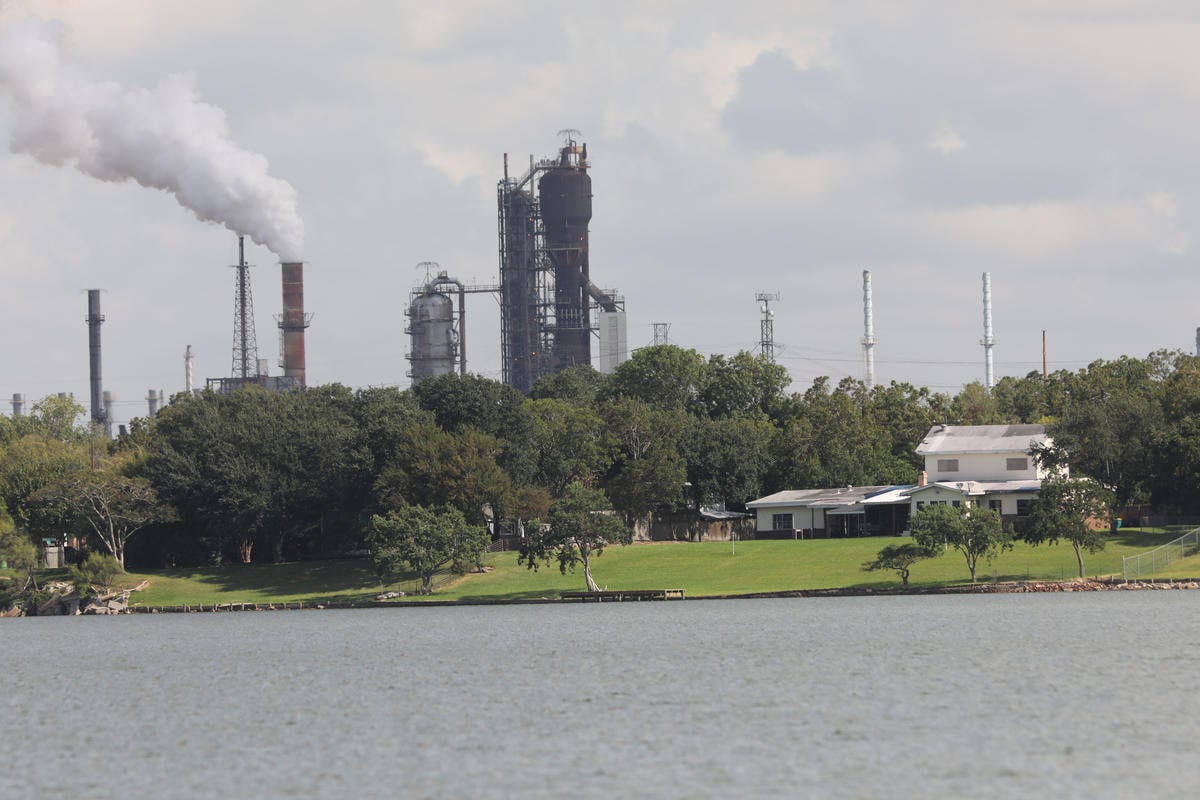
Greenpeace Canada reaction to new nation-building projects under Bill C-5
Fast-tracking fossil fuels will Build Canada Wrong rather than Build Canada Strong. While courageous people from around the world fight to avoid the increasingly catastrophic impacts of climate change at…
-
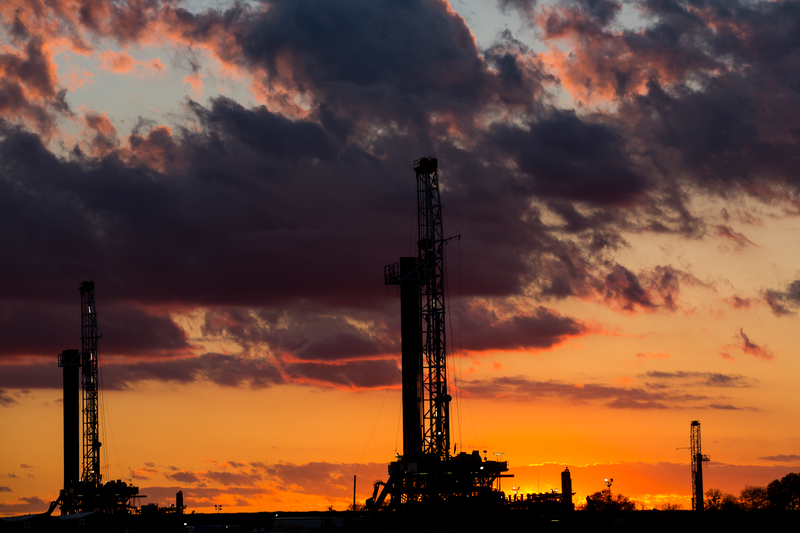
Greenpeace Canada Reaction to Budget 2025
“This is a guns-not-butter budget with massive new spending on border guards, police and the military, but austerity for programs that care for people and nature. You can’t fight for…
-
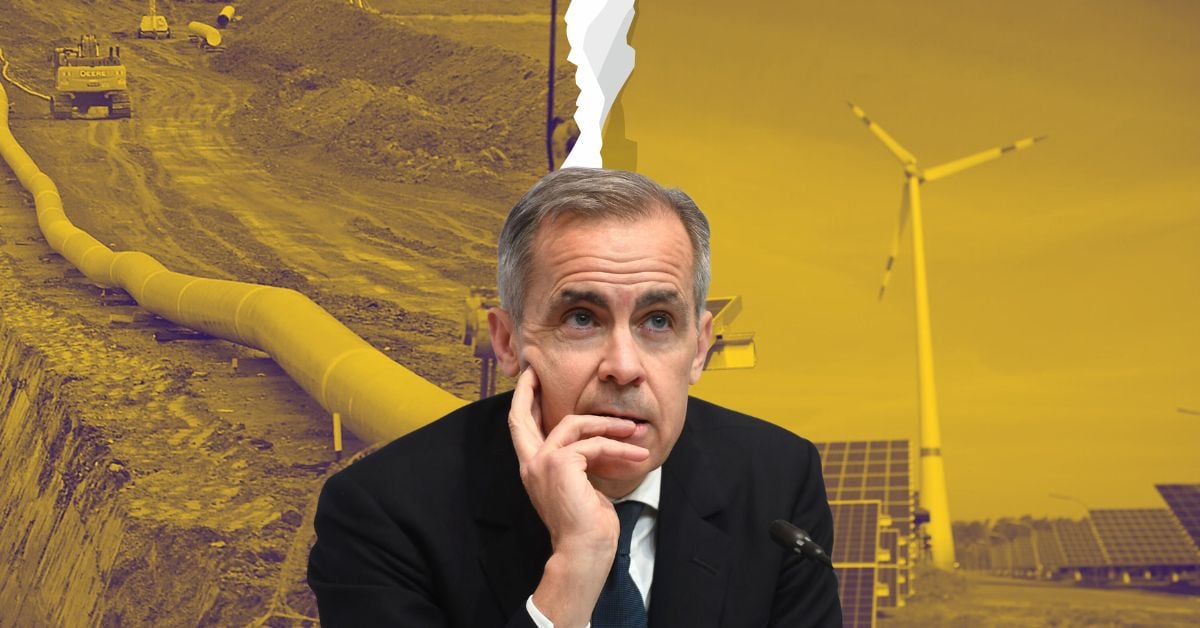
Now is not the time to roll back action on climate change
Advice for our hockey-loving Prime Minister on his new climate plan: If you are serious about winning the Stanley Cup, you don’t trade away your star forwards because you have a good goalie.
-
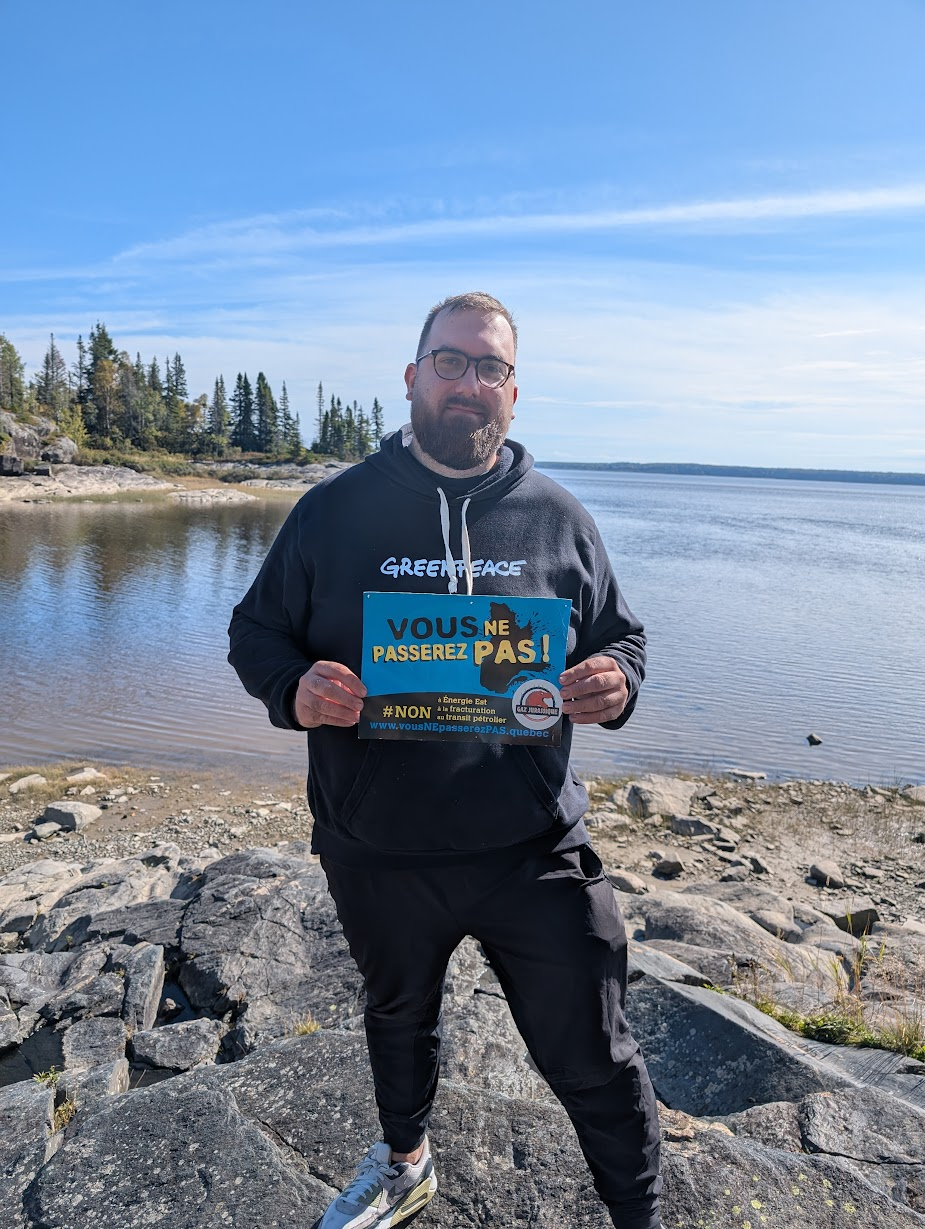
A dangerous new LNG project in Québec? Not on our watch!
We’ve exposed a major fossil fuel project that could threaten a vital ecosystem.
-
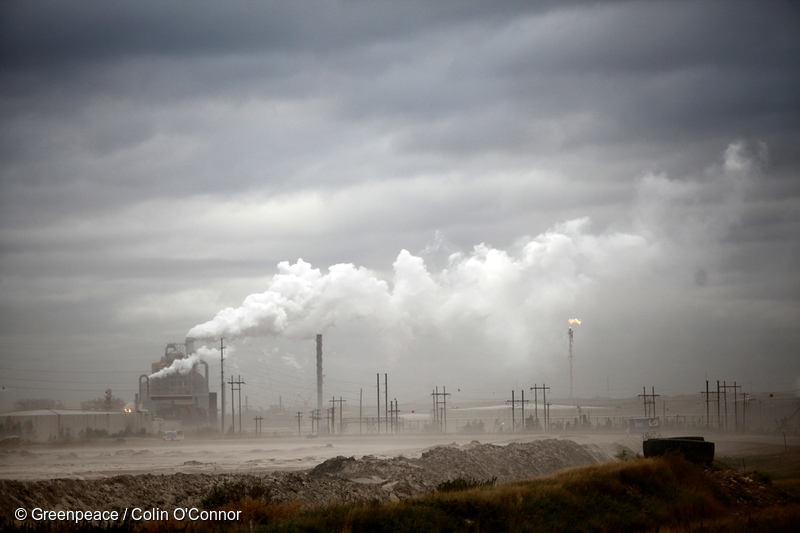
Greenpeace Canada reacts to documents showing close relationship between CSIS and oil giant TC Energy on intelligence sharing
Toronto — Documents obtained under Access to Information legislation reveal that the Canadian Security Intelligence Service (CSIS) embraced a proposal from pipeline giant TC Energy to create a formal information-sharing…
-
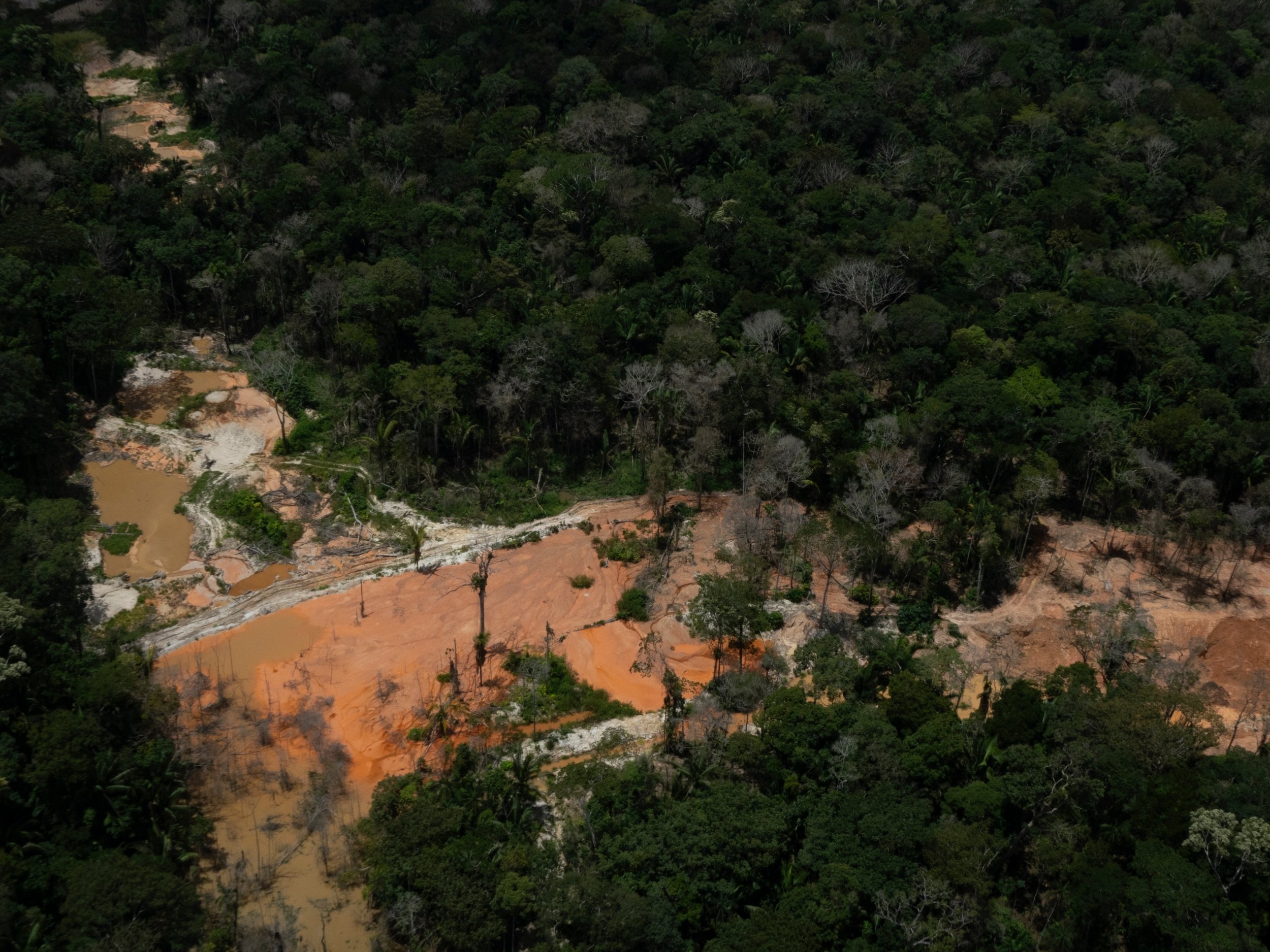
Greenpeace Canada Reacts to Trump ally overseeing Quebec mining project
Greenpeace Canada Calls for Withdrawal of Carney’s Support for U.S.-Owned Torngat Metals Project
-
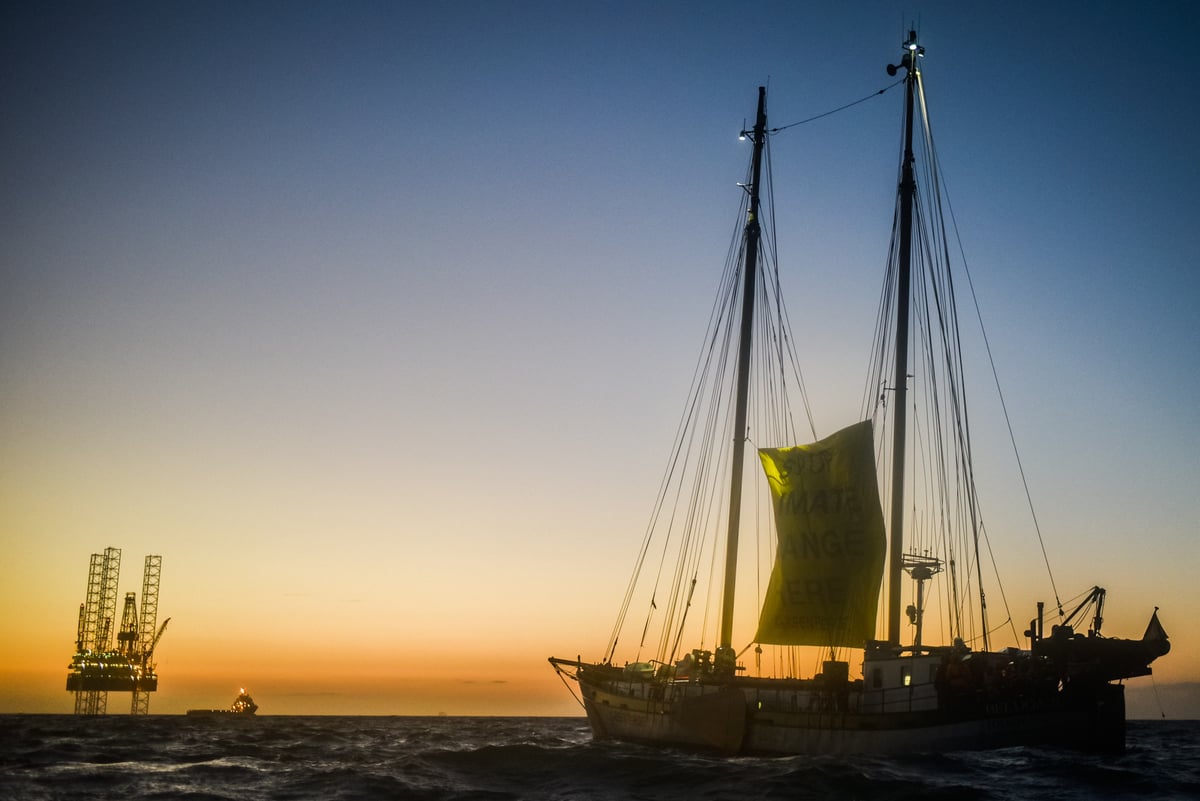
Hooray for the High Seas: the Global Ocean Treaty comes to life
We did it! More than sixty governments have now ratified the Global Ocean Treaty, a crucial milestone for protecting the ocean.
-
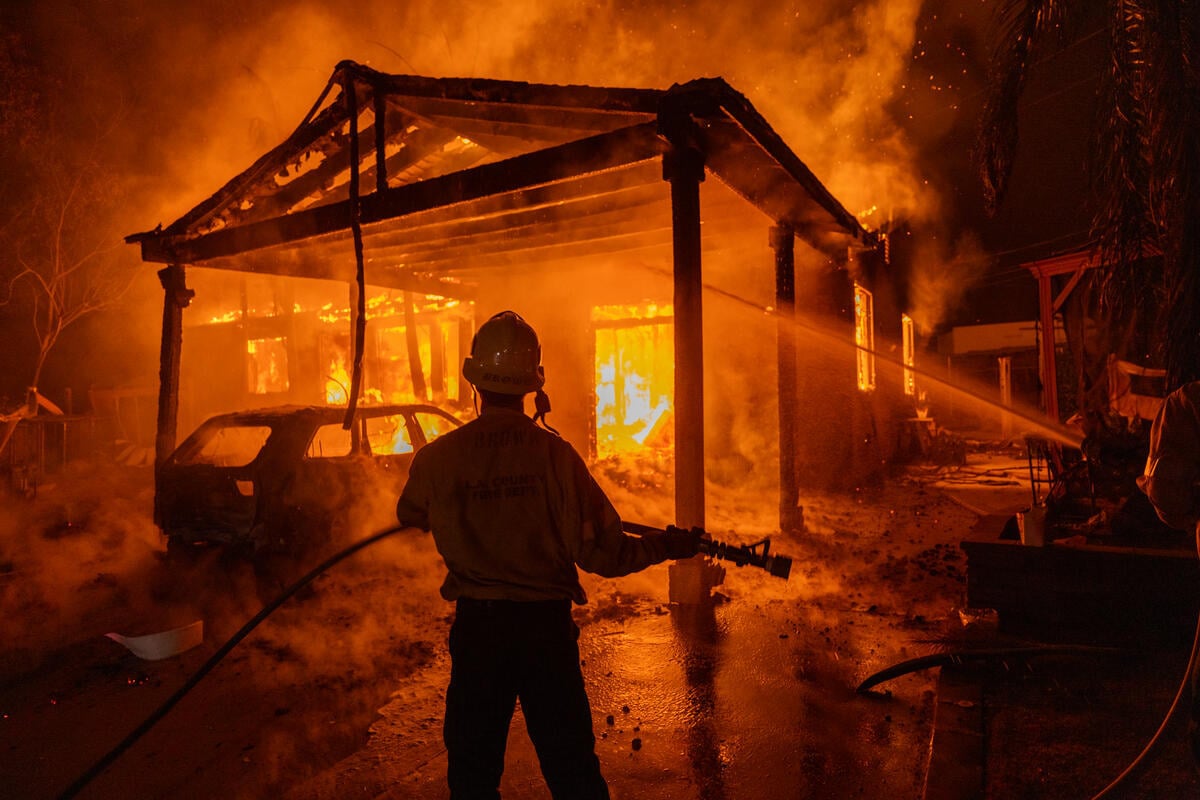
Why is it easier to believe conspiracy theories than climate science?
While we can’t help but marvel—grimly—at the creativity of some of the conspiracy theories around wildfires and extreme weather, their role in obscuring the role played by climate change is going to get (more) people killed.
-
Deep-sea mining isn’t innovation: it’s ecological theft
Right now, countries are gathering at the International Seabed Authority (ISA) in Jamaica to debate whether companies should be allowed to mine the deep ocean for profit. The frontliner? Canada-based…
-
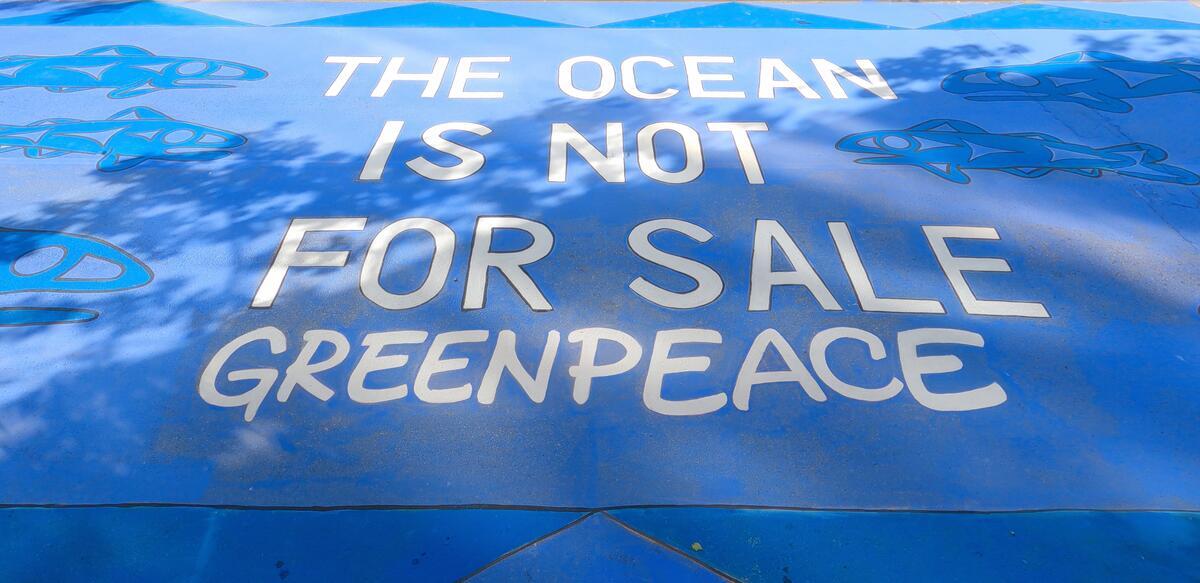
Greenpeace Canada organizes a collective ground mural in support of deep sea mining moratorium
VANCOUVER – Greenpeace Canada, local Indigenous artists, volunteers and supporters gathered today outside the Vancouver headquarters of The Metals Company (TMC) to paint a collective street mural and expose the…
-

Greenpeace reacts to proposed new LNG project in Quebec
MONTREAL, July 4, 2025 — Greenpeace Canada expresses its deep concern about Marinvest Energy Canada’s proposed new liquefied natural gas project, which seeks to build a floating LNG terminal in…
-
5 things to know about the Canadian company trying to start deep sea mining: The Metals Company
What makes Vancouver-based The Metals Company (TMC), a little-known company that isn’t even making any money, a threat to the ocean, international conventions, transparency and the clean energy transition?
-
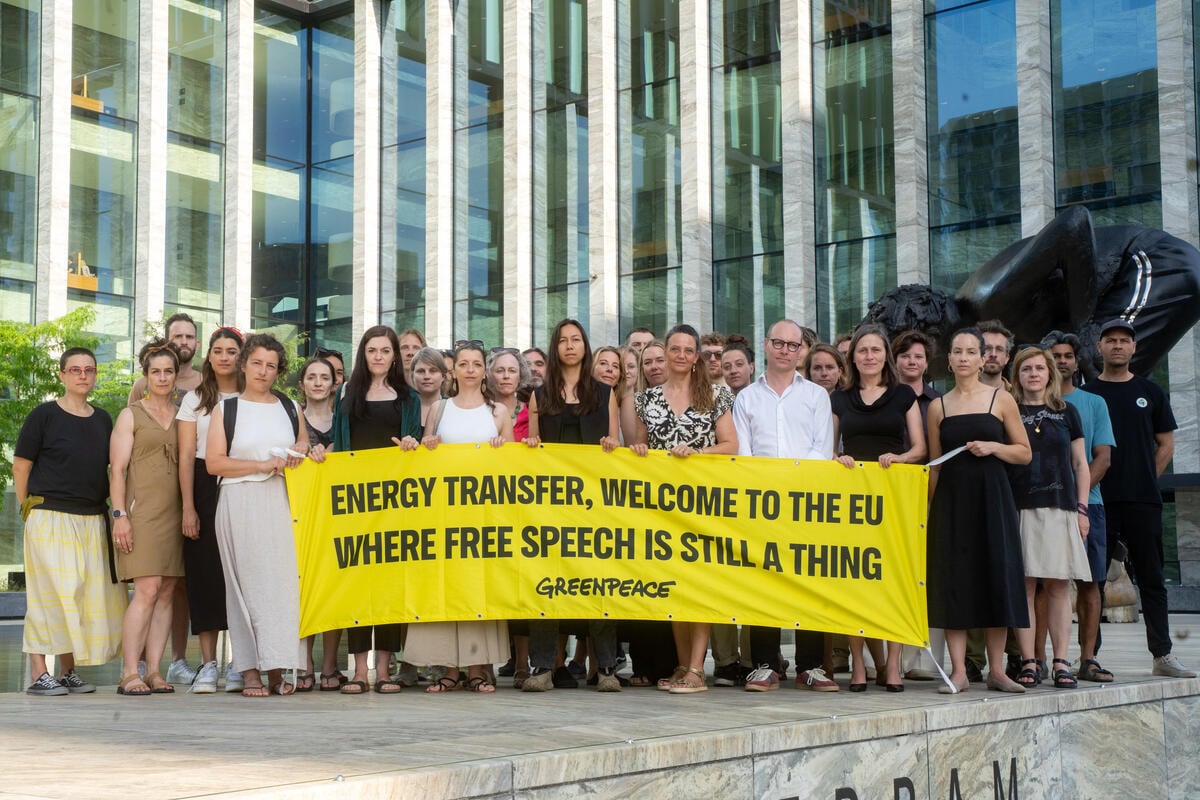
Greenpeace International begins groundbreaking Anti-SLAPP case to protect freedom of speech
2 July 2025, Amsterdam, Netherlands – In a first test case of the European Union’s new legislation to protect freedom of expression and stop abusive lawsuits, Greenpeace International today challenges…
-
Breaking down the Building Canada Act: Fast track climate solutions, not fossil fuels
The federal government’s proposed fast track legislation could become a bigger giveaway to the oil & gas lobby than Harper’s 2012 omnibus bill, if we let it.
-
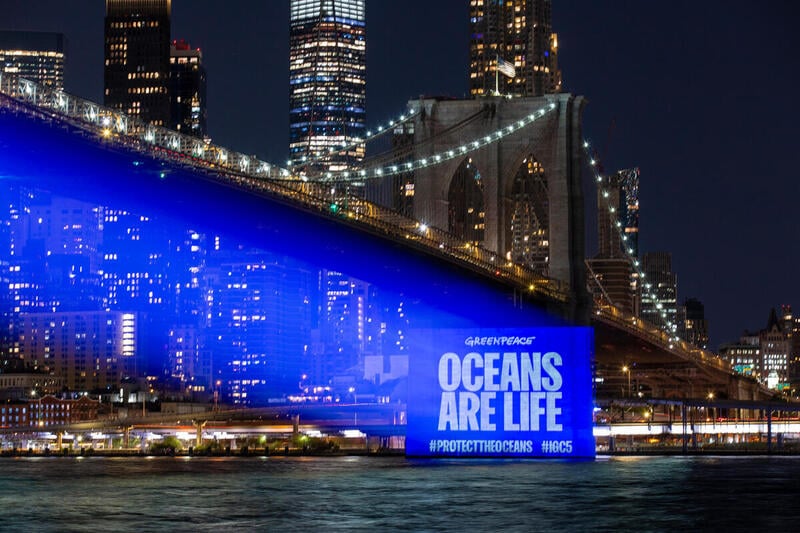
Greenpeace Canada’s reaction to the opening of the UN Oceans Conference
TORONTO – The UN Ocean Conference (UNOC), which is taking place this week from 9 to 13 June, is the most significant political moment on oceans since the agreement of the…
-
Greenpeace Canada reaction to potential bypass of federal environmental laws
Toronto – In response to news that the federal government is considering bypassing federal environmental laws to fast-track projects it considers to be in the national interest, Greenpeace Canada’s Nature &…
-
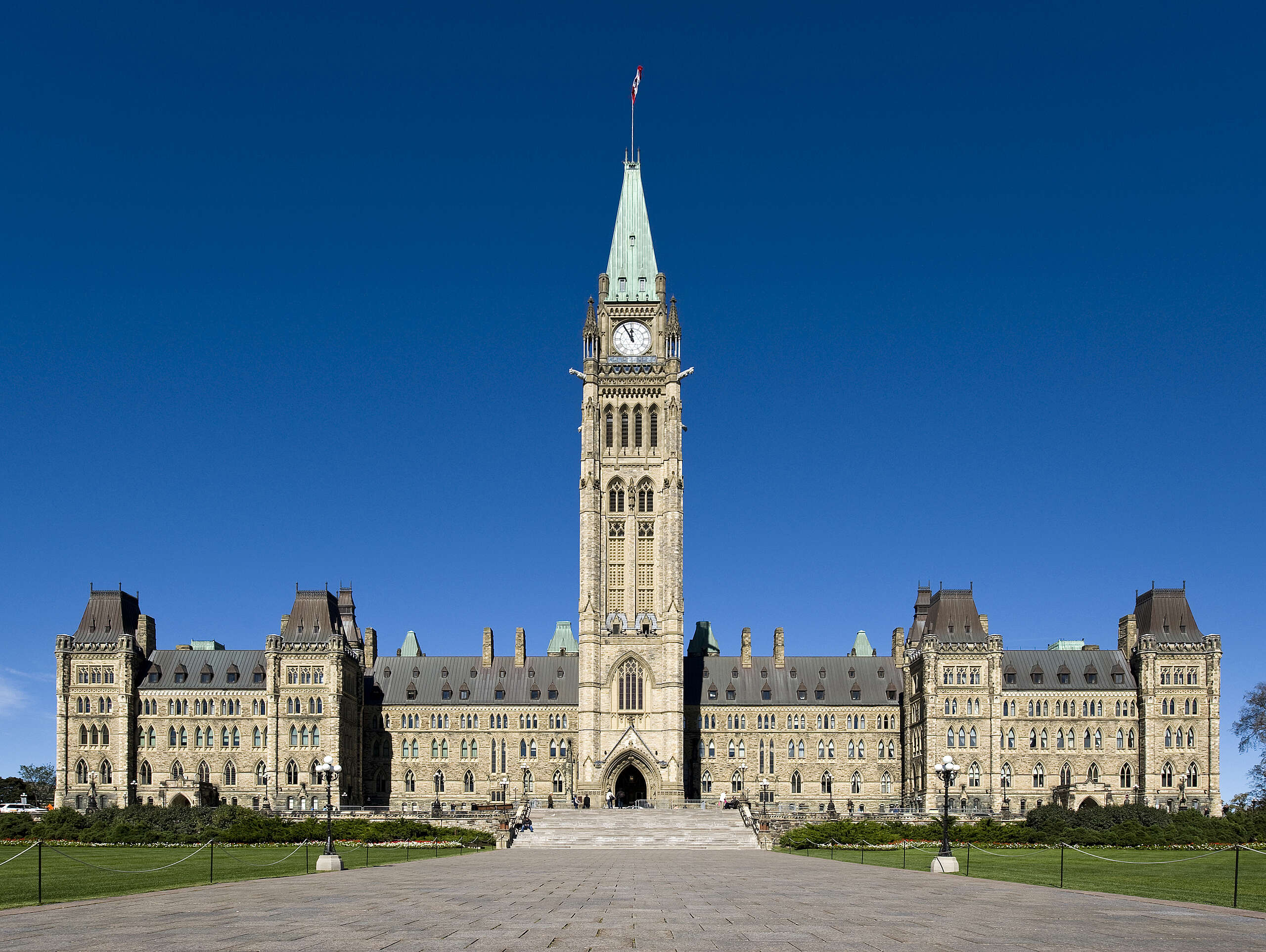
Greenpeace Canada reaction to Speech from the Throne
Toronto – In response to the emphasis on fast-tracking projects of national significance in today’s Speech from the Throne, Greenpeace Canada senior energy strategist Keith Stewart said:
-
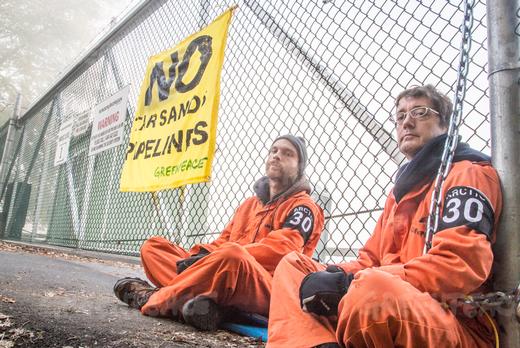
The Phony War over Pipelines
No oil company actually wants to build a pipeline, so what do they want? For the federal government to get out of the business of regulating or pricing GHGs.
-

100 days of Trump & his billionaires’ war on the environment
Across the world, right now, including here in Canada, billionaires, oligarchs, and corporations are using their wealth to silence dissent, undo decades of social and environmental progress, and manipulate the…
-

Greenpeace reaction to Carney’s election as the Prime Minister of Canada
OTTAWA – In reaction to Mark Carney being elected as the new Prime Minister of Canada, Christy Ferguson, Executive Director at Greenpeace Canada, said:
-
Poilievre wants to repeal Bill C-69 (Environmental Assessment Laws)—what does this mean for nature?
Bill C-69, passed in 2019, created the ‘Impact Assessment Act’ to ensure that major projects consider effects on biodiversity, water, communities, and Indigenous rights — not just profit. In other…
-
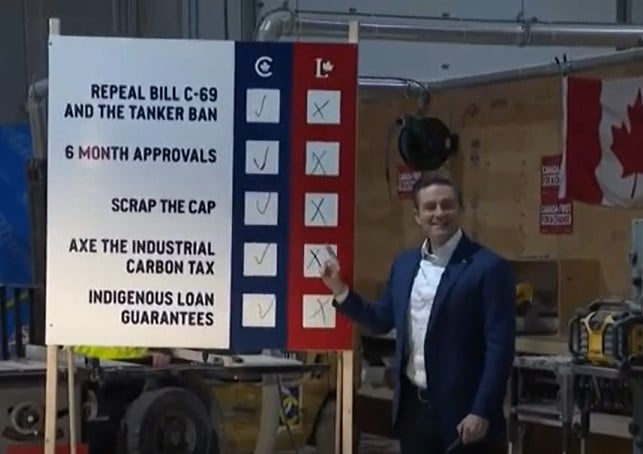
Pierre Poilievre wants you to know that he will obey Big Oil
One of the remarkable aspects of this election is that the Conservative Party is bragging about how eager they are to do exactly what Big Oil tells them to.
-
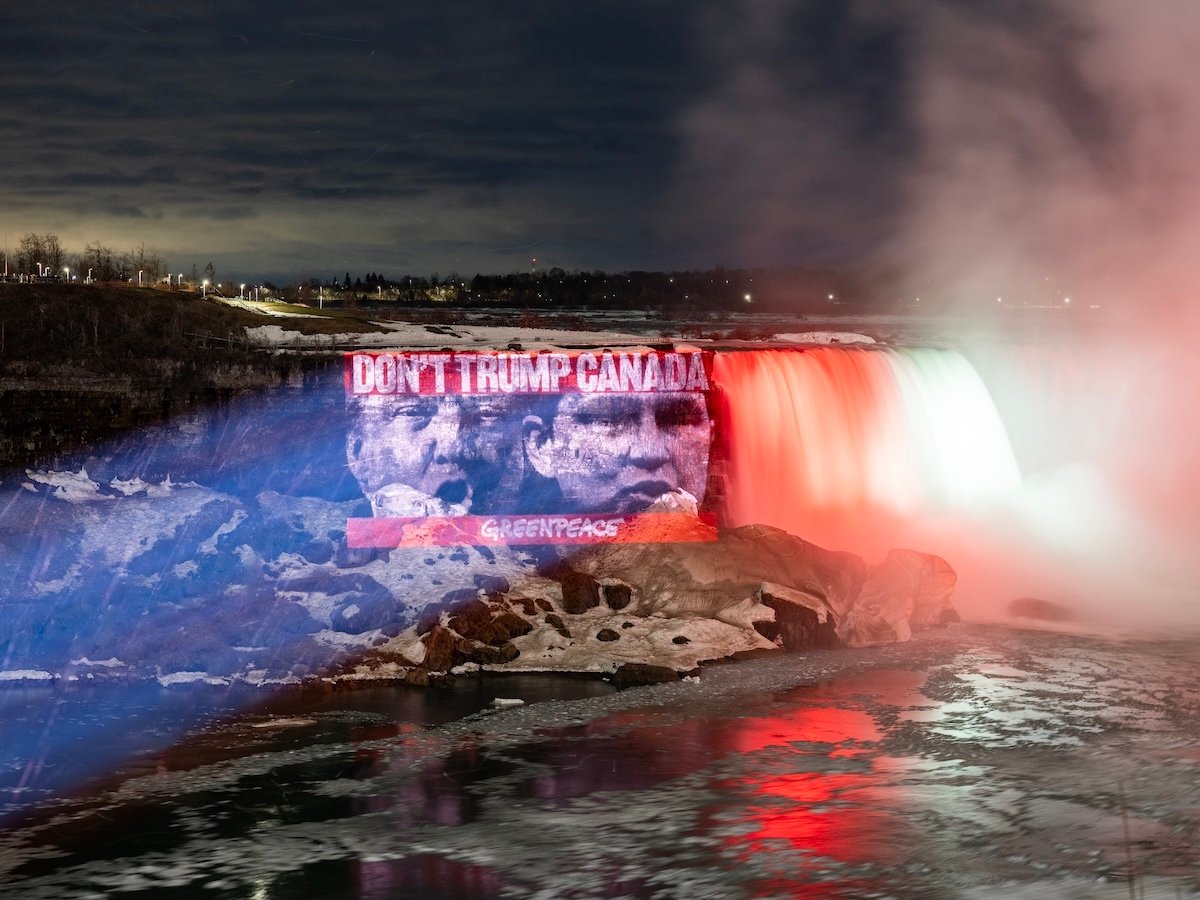
Greenpeace Canada projects on iconic Niagara falls ahead of federal elections: Don’t Trump Canada
Greenpeace Canada projects on iconic Niagara falls ahead of federal elections: Don’t Trump Canada
-

JOIN: Federal Leaders Debate Night BINGO! and Town Hall
Join us for the federal elections 2025 leadership debate BINGO party!
-

Greenpeace welcomes Liberal Nature Platform, 100,000 Canadians seek nature accountability law
MONTREAL – Earlier this week, the Liberals led by Mark Carney announced plans for nature protection in Canada, unveiling a series of commitments aimed at conserving biodiversity, bolstering Indigenous stewardship,…
-
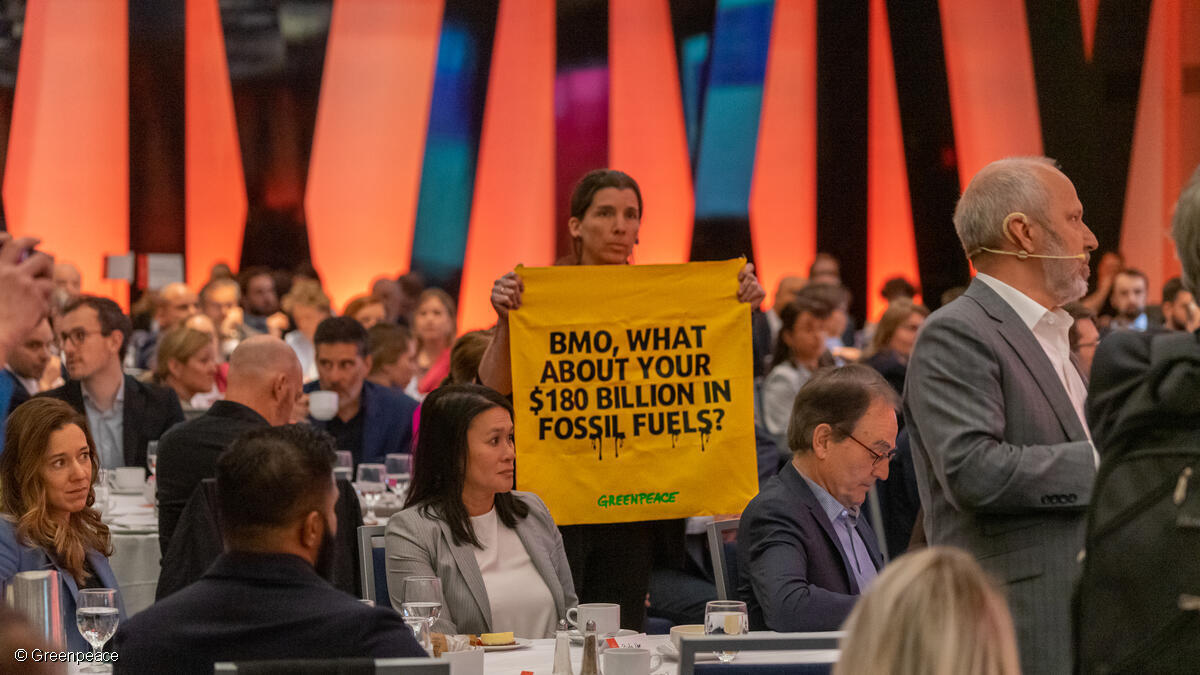
Greenpeace calls on BMO to end partnership with CAPP over oil lobby’s election platform
Greenpeace Canada is calling on BMO to end its partnership with the Canadian Association of Petroleum Producers (CAPP) in response to the oil lobby’s publication of a 2025 federal election platform that calls for a major rollback of environmental legislation and an end to all federal regulation of emissions reduction and carbon pricing.
-
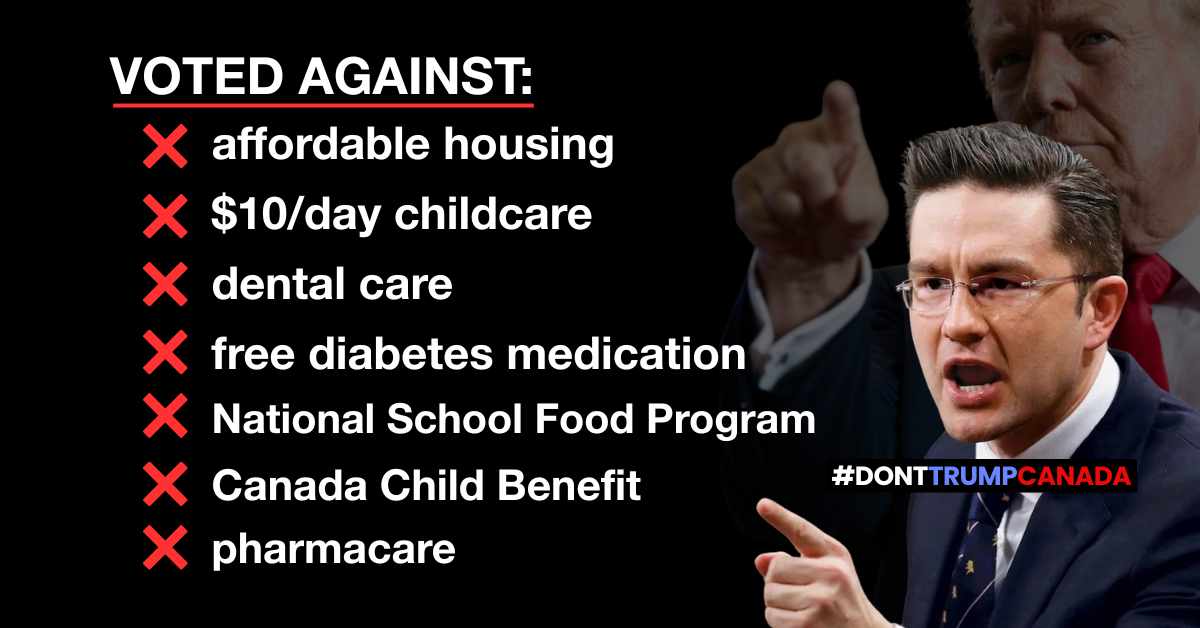
Politics of Exclusion: Conservative Leader Pierre Poilievre’s Voting Track Record 2004-2024
Pierre Poilievre speaks with conviction. “We are Conservatives,” he says. “We don’t believe in big fat government programs. We don’t believe in giving money.” At first, it might sound like…
-
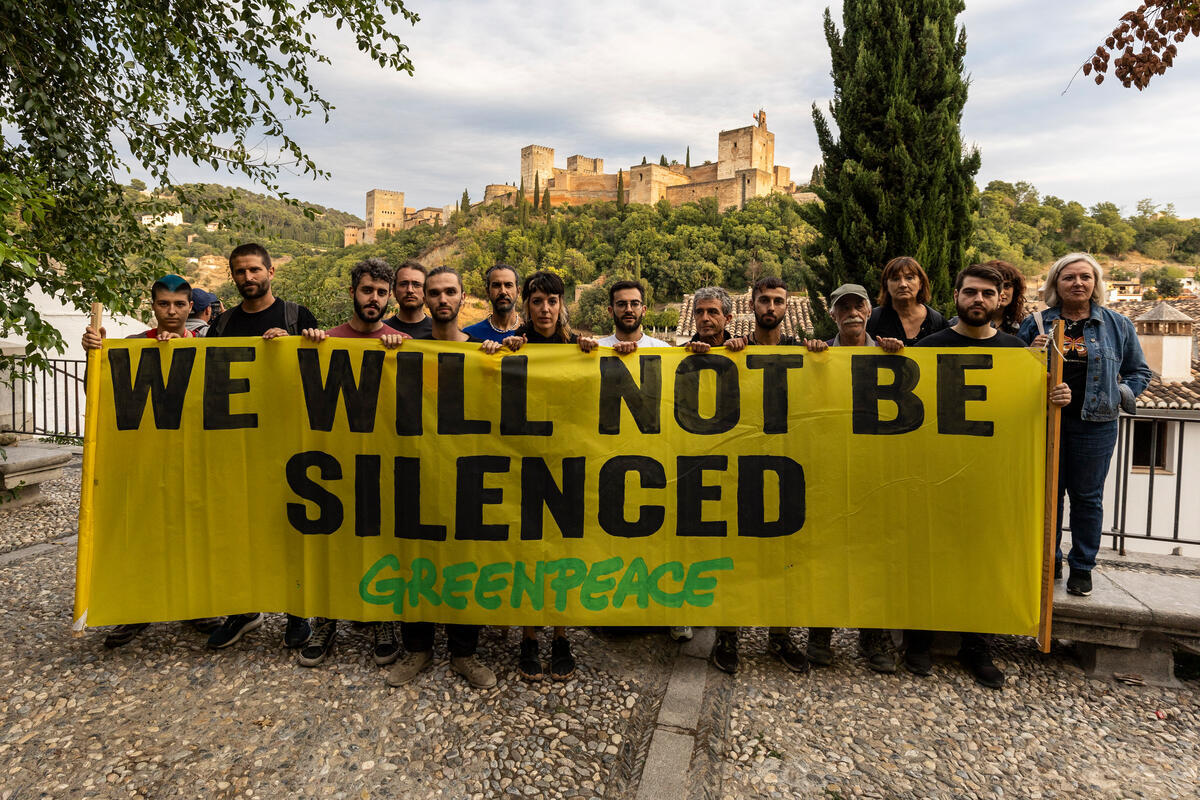
Jury finds Greenpeace entities liable for more than $660 million in Energy Transfer’s baseless lawsuit
A $660 million verdict is not enough to silence our movement
-

Mark Carney versus Pierre Poilievre on climate change and environmental policy (and other stuff)
Here’s what we know so far on the climate policy platforms of Liberal leader Mark Carney and Conservative leader Pierre Poilievre.
-
Pierre Poilievre’s positions on climate change, biodiversity and social justice
Pierre Poilievre’s Conservative party is opposed to all major federal climate policies, would undermine biodiversity protections and takes us backwards on economic and social justice issues.
-

Greenpeace Canada reaction to Poilievre promising to eliminate industrial carbon price
In response to today’s announcement from Pierre Poilievre that he would eliminate the industrial carbon price, Greenpeace Canada’s senior energy strategist Keith Stewart said:
-
Groups send open letter to Carney, urging forward-thinking policy to future-proof the Canadian economy
Today, climate-concerned organizations from across Canada published an open letter to Mark Carney, calling on the newly elected Prime Minister-designate to future-proof the Canadian economy by putting forward climate-aligned finance policy.
-
Greenpeace reaction to Carney’s election as the leader of the Liberal Party of Canada
n reaction to Mark Carney being elected as the new leader of the Liberal Party of Canada and thus the new Prime Minister of Canada, Keith Stewart, Senior Energy Strategist at Greenpeace Canada, said
-
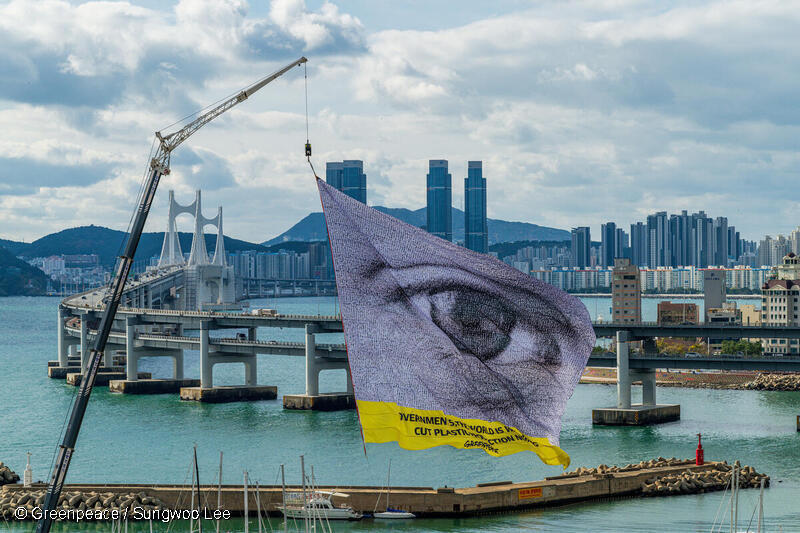
Global Plastics Treaty: What Happened at INC-5 and What’s Next?
The fifth round of negotiations for a new Global Plastics Treaty to end plastic pollution (Intergovernmental Negotiating Committee or INC-5) finished in Busan, South Korea on December 1st, 2024. This…
-
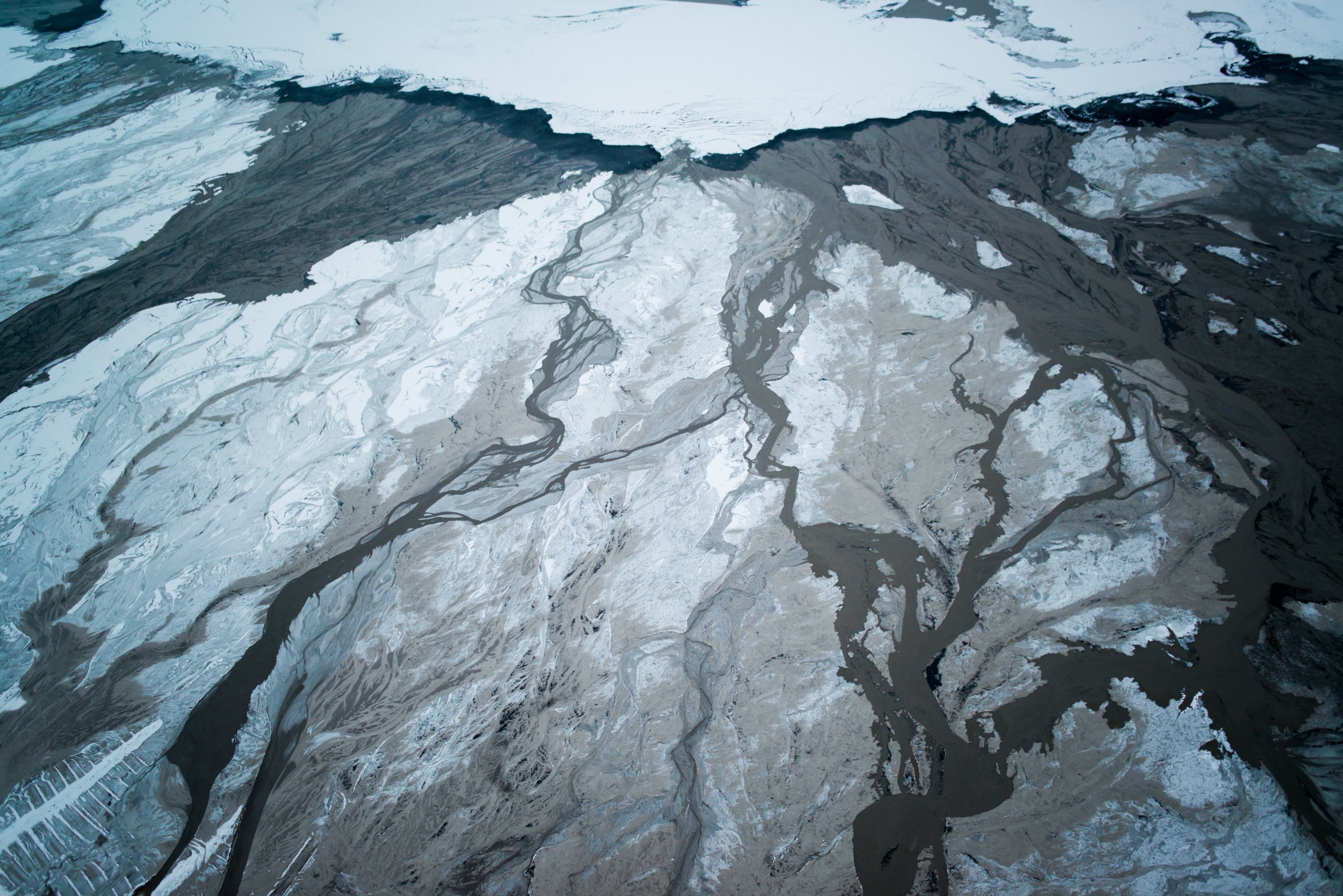
Do fossil fuels cause climate change?
We’ve all been there. You’re talking to someone who says that fossil fuels aren’t causing climate change. Or that climate change is happening naturally, and not because of anything that…
-

Fossil fuel projects in Quebec are “mirages,” according to 100 organizations and representatives
Fossil fuel transportation projects including pipelines are not the way forward, according to 100 civil society organizations and stakeholders. Many people have been proposing new projects in light of the trade and economic conflict with the United States. The civil society groups emphasize that a socio-ecological transition is needed to ensure Quebec’s economic prosperity and…
-

How to win Trump’s Trade War: Build a greener, more resilient future
Donald Trump is threatening a trade war. We can respond with an alternative that takes care of people and sets a clear vision for a greener, more resilient future.
-
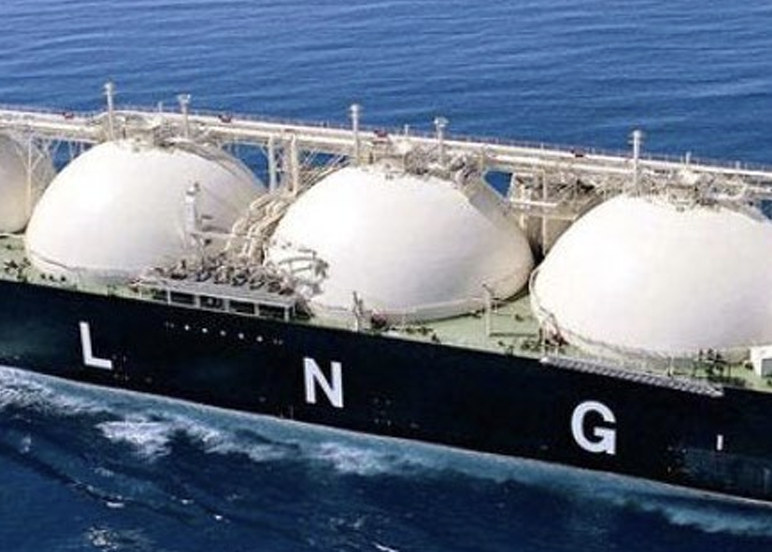
Canadian banks’ and investors’ unrestricted support for LNG is fueling a future climate bomb
Canadian banks are pouring billions of dollars into the global expansion of liquefied natural gas (LNG) terminals that could potentially unleash more than 10 gigatonnes of climate-wrecking greenhouse gas emissions, according to new research.
-

The fight continues, no treaty yet: Global Plastics Treaty negotiations fail to deliver agreement
The fifth session of the Intergovernmental Negotiating Committee (INC5) for a Global Plastics Treaty ended today with an agreement to meet again for what will be the final negotiation meeting to land a deal.
-
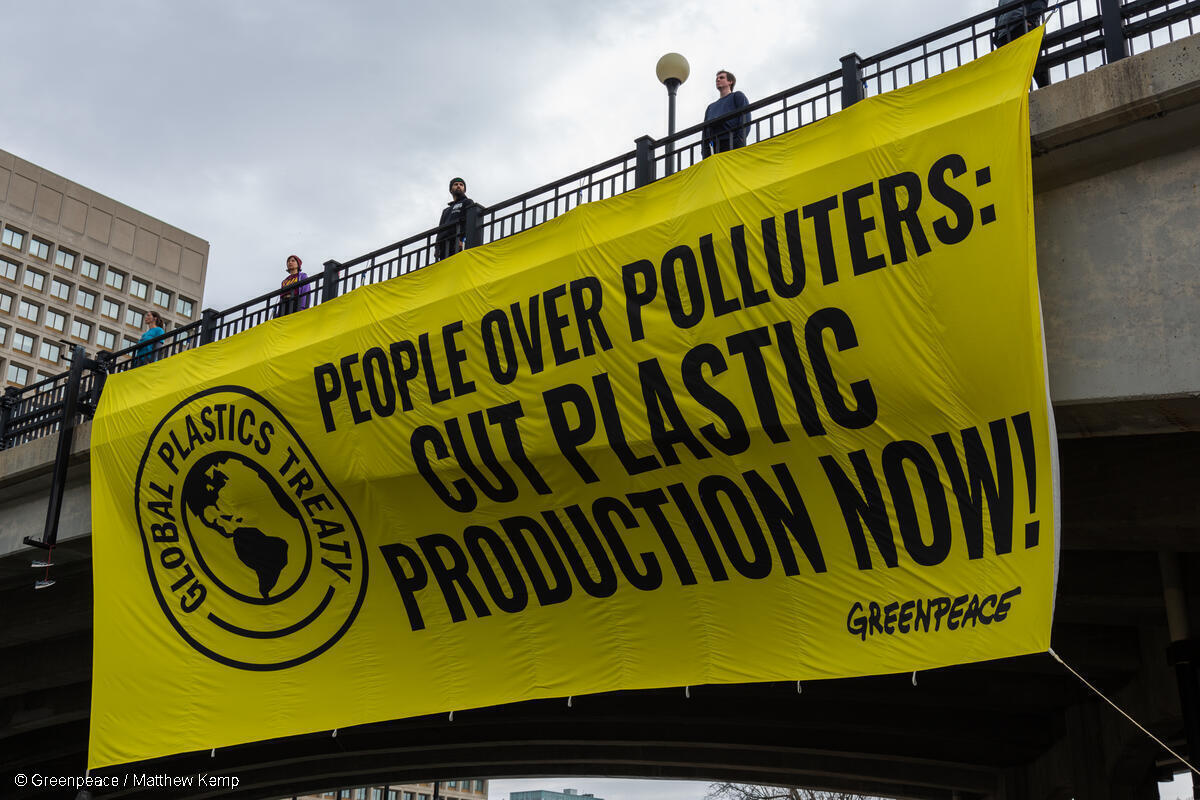
Greenpeace Canada reactive to an analysis of fossil fuel and chemical industry lobbyists at INC5
The increase, once again, in fossil fuel and petrochemical lobbyists engaged in Plastics Treaty negotiations exposes an industry pulling out all the stops to keep us trapped in the plastic crisis.
-
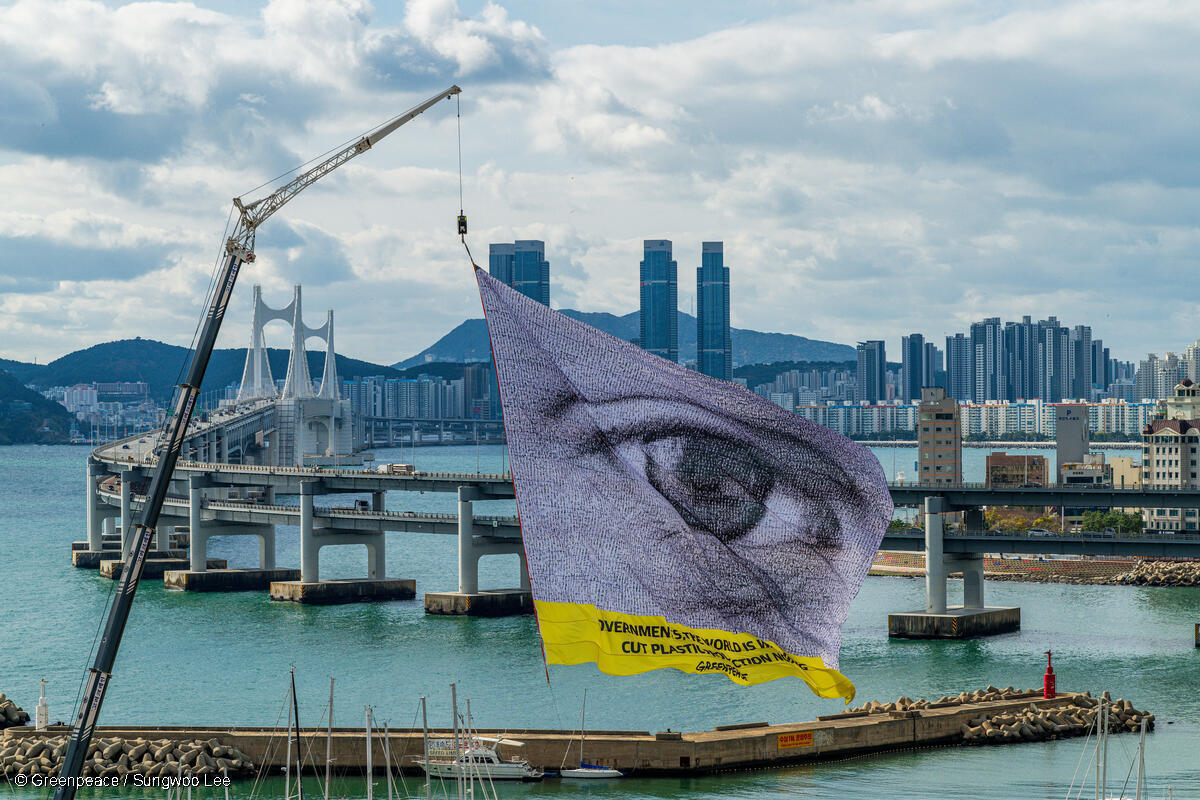
At Plastics Treaty Talks, Greenpeace warns world leaders: “We are watching”
Massive public support for a strong Global Plastics Treaty that cuts plastic production is undeniable in Canada and globally. Today we delivered a reminder to world leaders that we are watching to see if they will step up to finally put people and the planet before plastic.
-
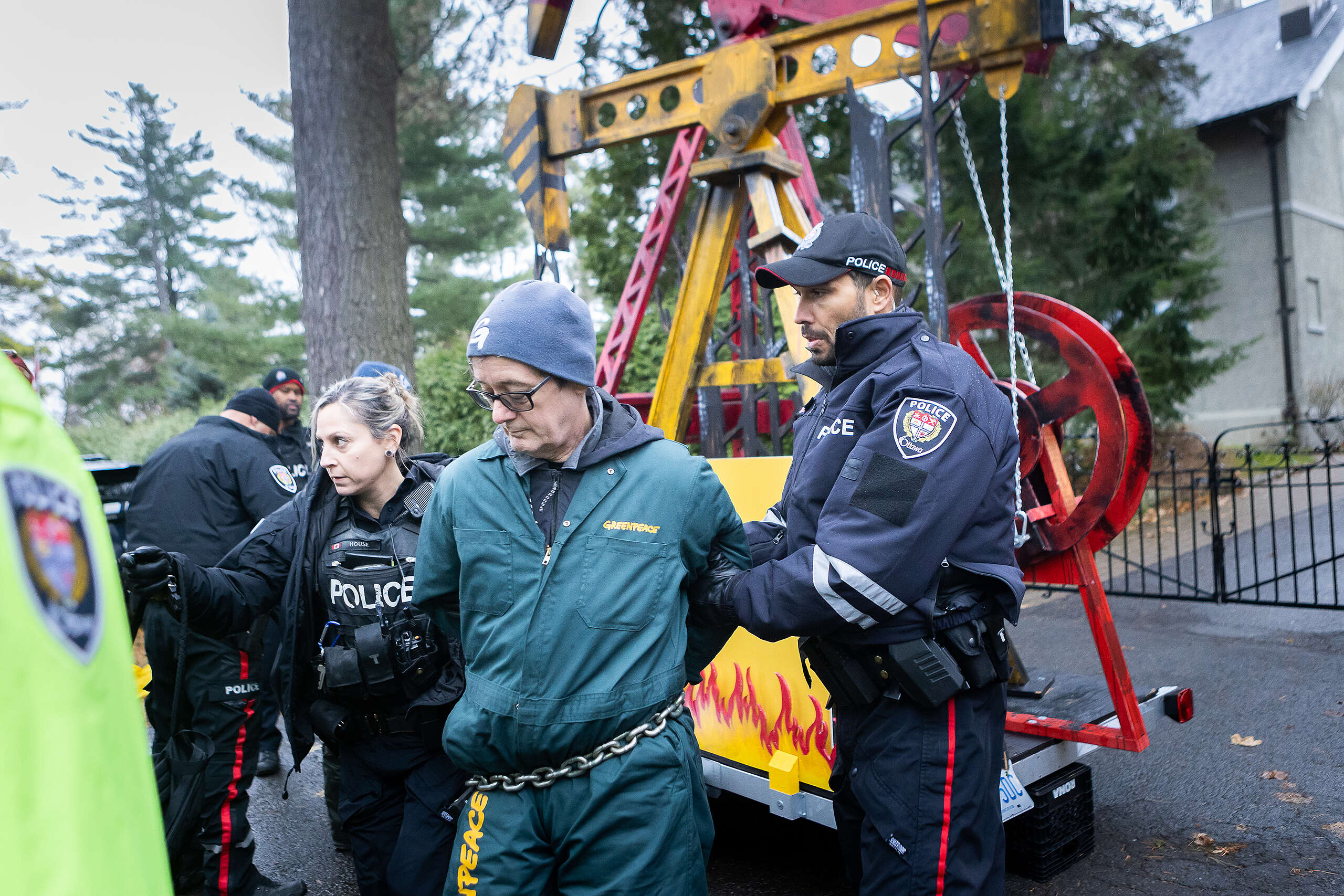
Peaceful activists arrested while calling out Poilievre’s anti-climate agenda
Two activists from Greenpeace Canada were arrested for mischief and intimidation at Stornoway, Ottawa’s official residence of the Leader of the Opposition, Pierre Poilievre.
-
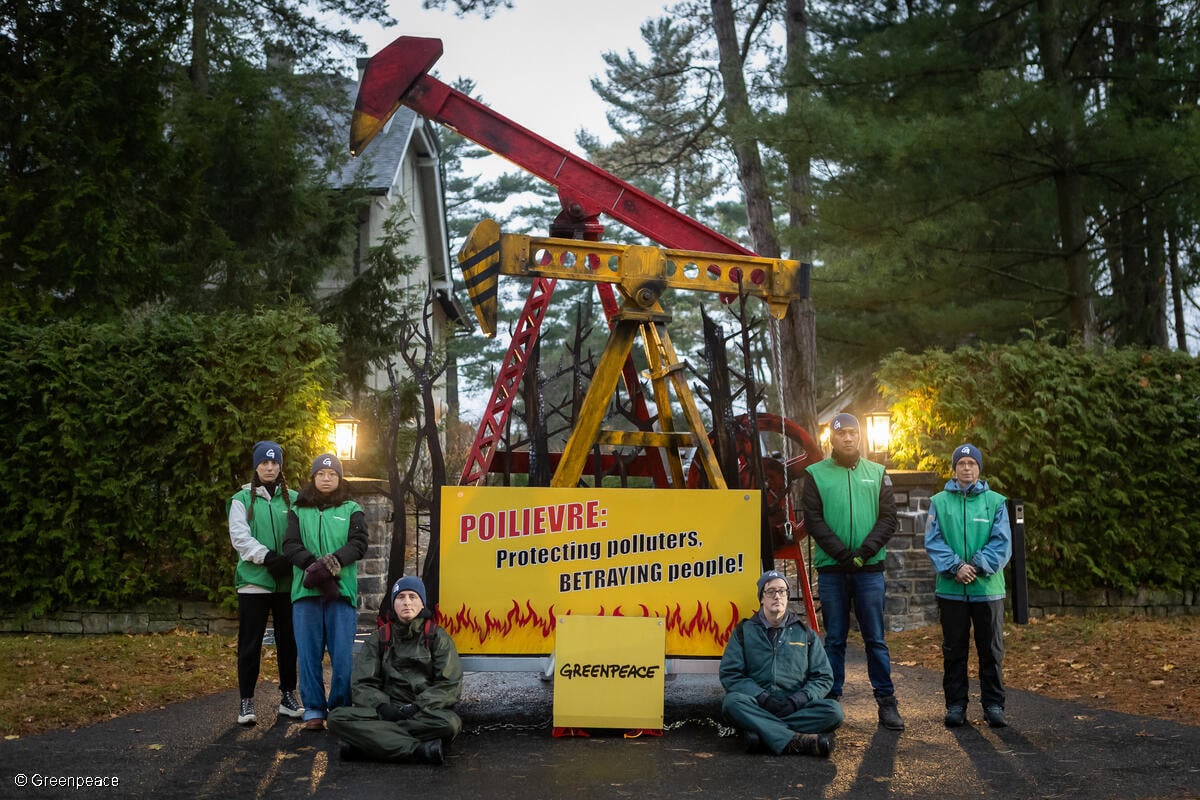
Greenpeace Canada blocks Poilievre’s house, calling him out for his anti-climate agenda that betrays people
Early this morning, two activists locked themselves to a replica oil pumpjack in the driveway of Stornoway, the official residence of the Leader of the Opposition in Ottawa, unveiling a strong message: Poilievre: Protecting polluters, betraying people. The oil jack, surrounded by burned forest and flames, was painted with charcoal made from wood burned in…
-
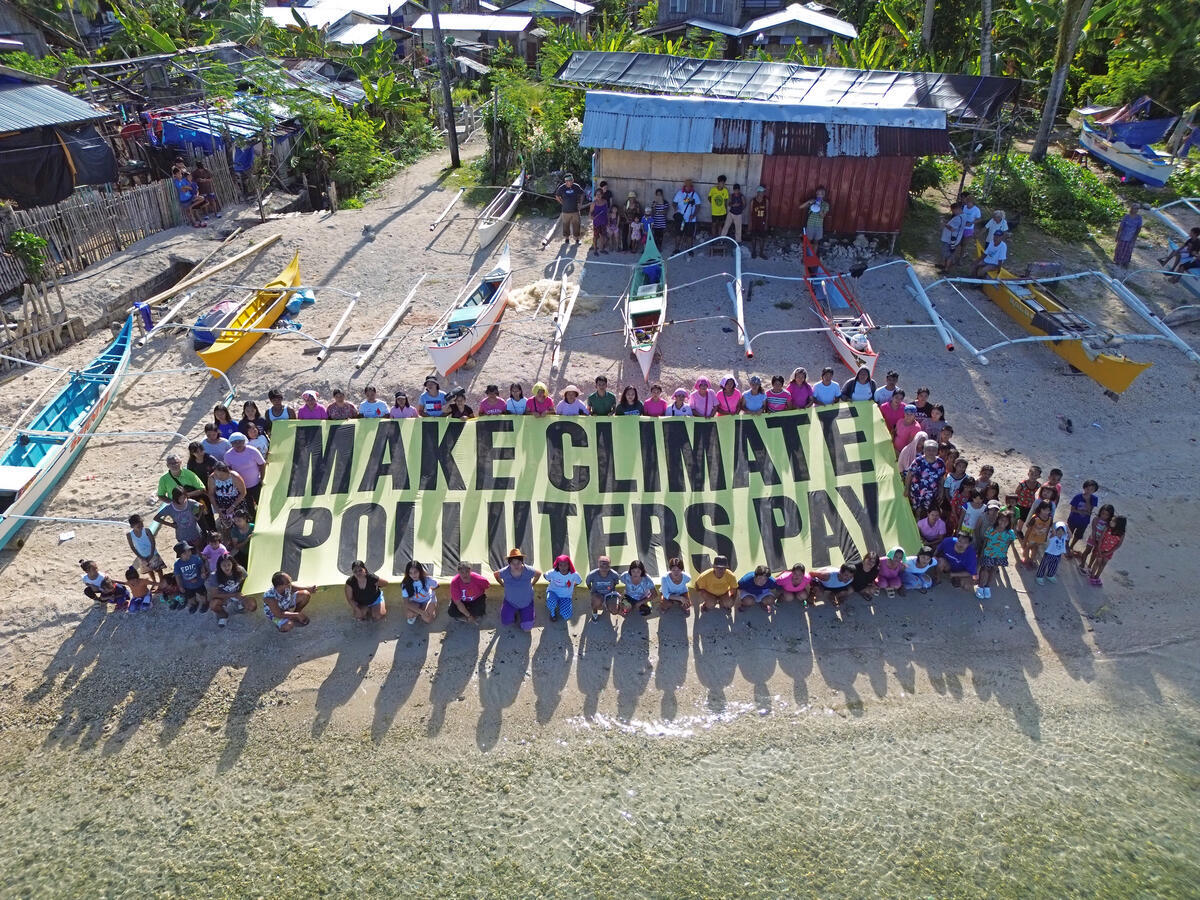
Taxing Big Oil would grow UN climate loss and damage fund by more than 2000%, analysis finds
A small tax on just seven of the world’s biggest oil and gas companies could grow the UN Fund for Responding to Loss and Damage by more than 2000% and help address the costs of extreme weather events, according to new analysis published today by Greenpeace International and Stamp Out Poverty. The organisations are calling for a…
-
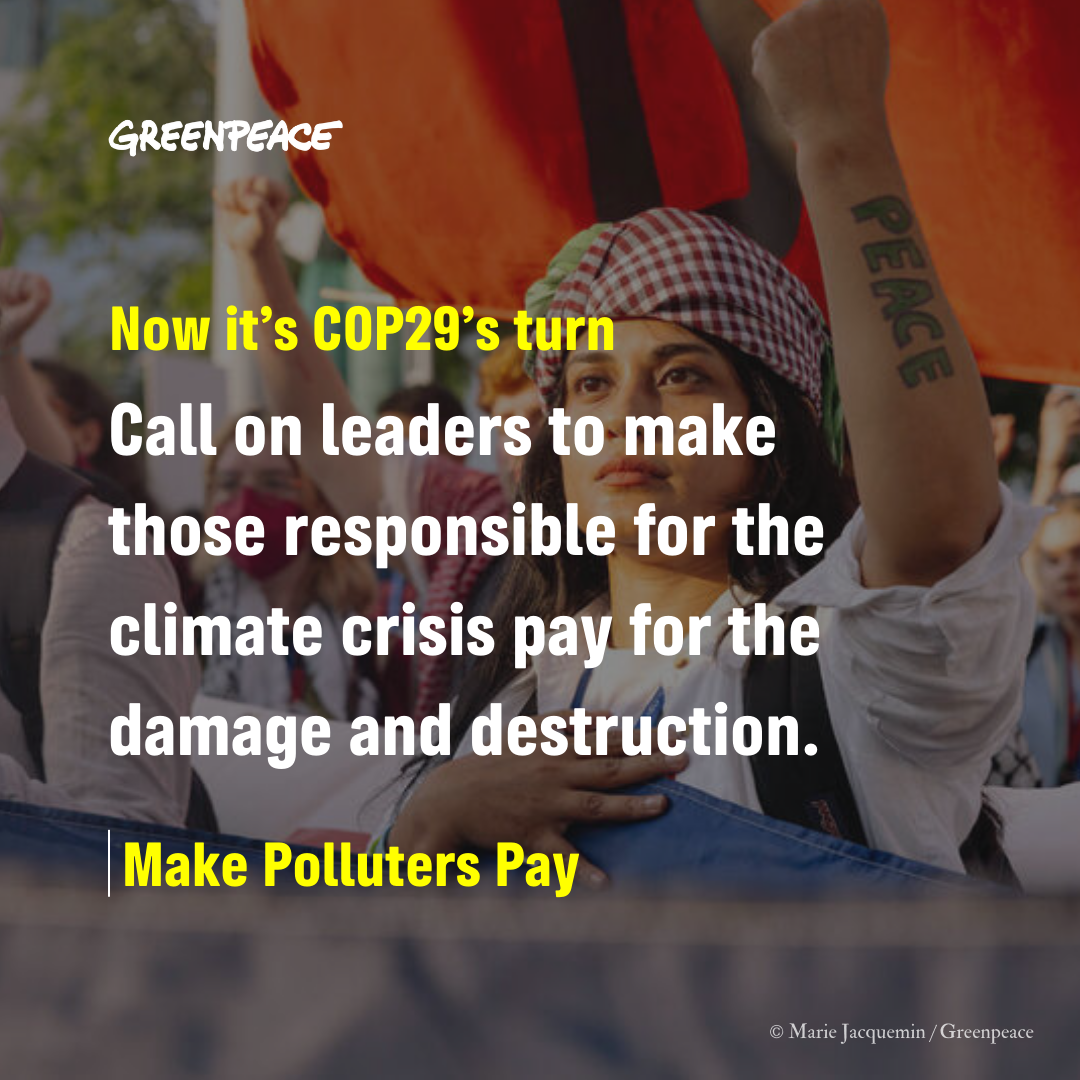
Leaders must seize decisive moment for climate finance at COP29
World leaders at the UN climate change conference COP29 in Baku must respond boldly to another year of record temperatures and rising emissions by agreeing a robust new finance goal to support desperately needed climate action in developing countries.
-
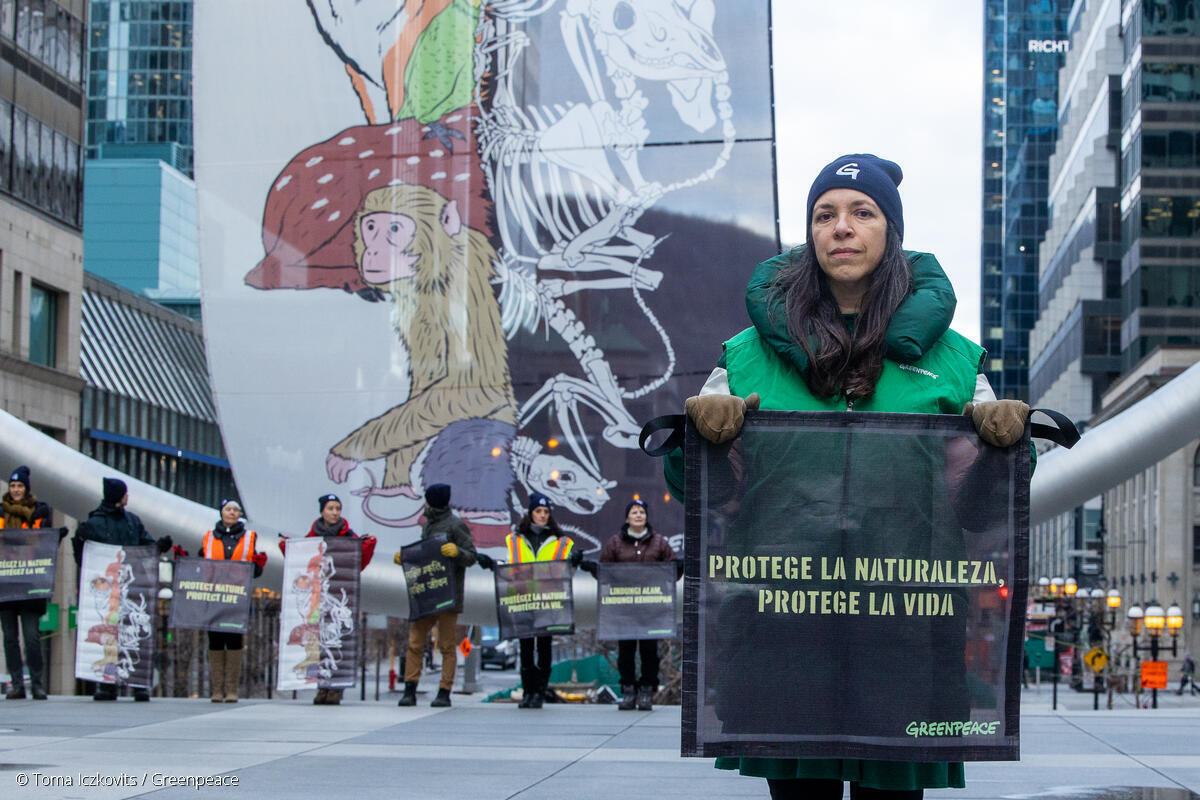
UN biodiversity COP16 delivers new protections but fumbles nature finance, sends call for action to upcoming climate talks at COP29
Greenpeace welcomes COP16’s establishment of a new body dedicated to Indigenous Peoples’ rights, roles, territories and knowledge, progress on ocean protections, and on integration of biodiversity and climate action. But a last-minute and anti-climatic suspension of negotiations leaves disappointment about closing the finance gap.
-
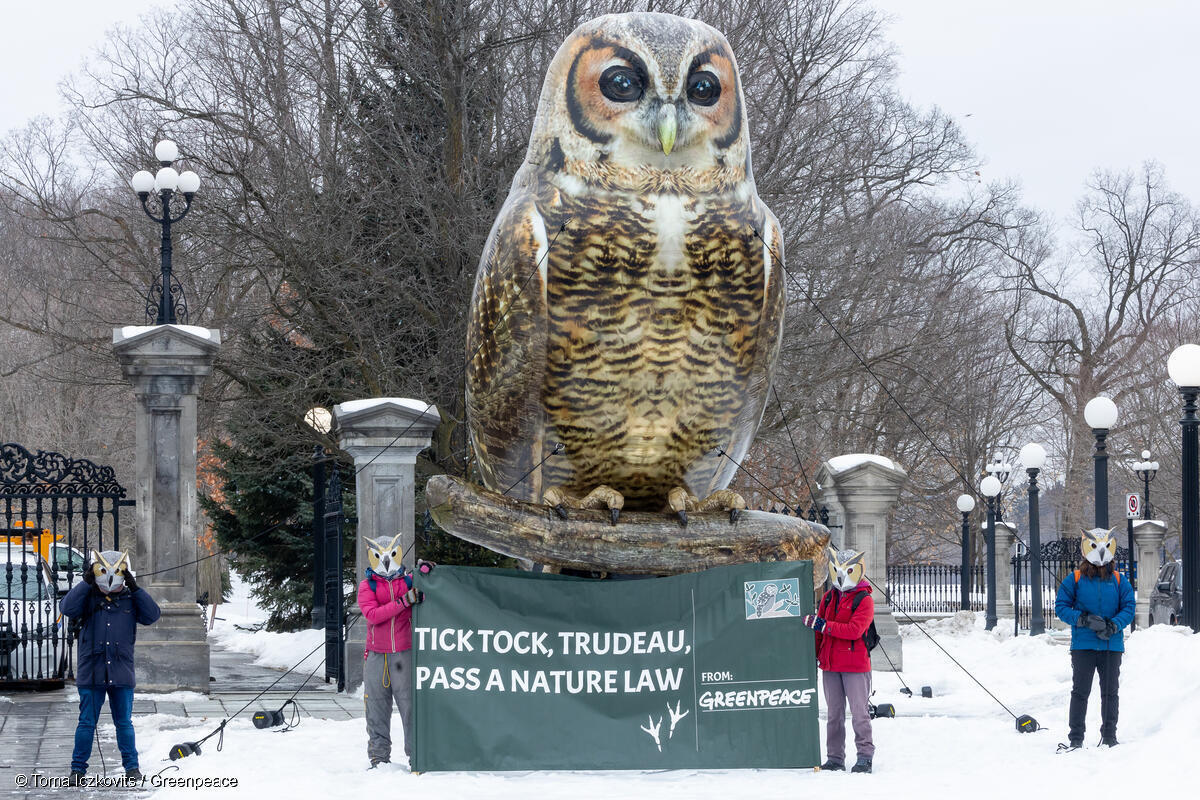
Urgent call for Canada to act on Bill C-73 at COP16
Ecojustice, Greenpeace Canada, the David Suzuki Foundation are calling on House leaders and the Standing Committee on Environment and Sustainable Development to prioritize Bill C-73, the Nature Accountability Act
-
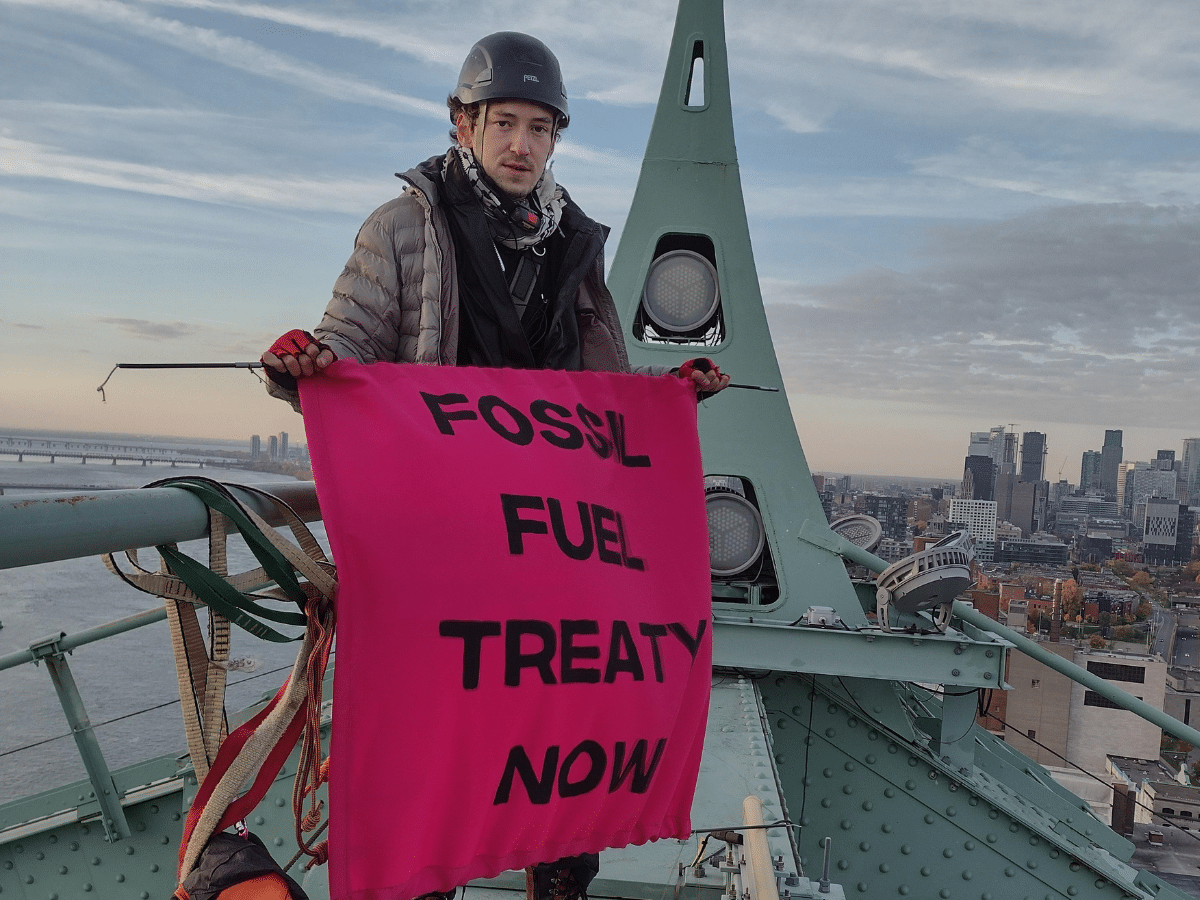
Civil society groups denounce the criminalization of environmental protest
Several key players from environmental and social justice groups came together to denounce the criminalization of peaceful protest. This united statement responds to the arrest and prolonged detention of three environmental activists as well as a broader wave of repression against the movement.
-
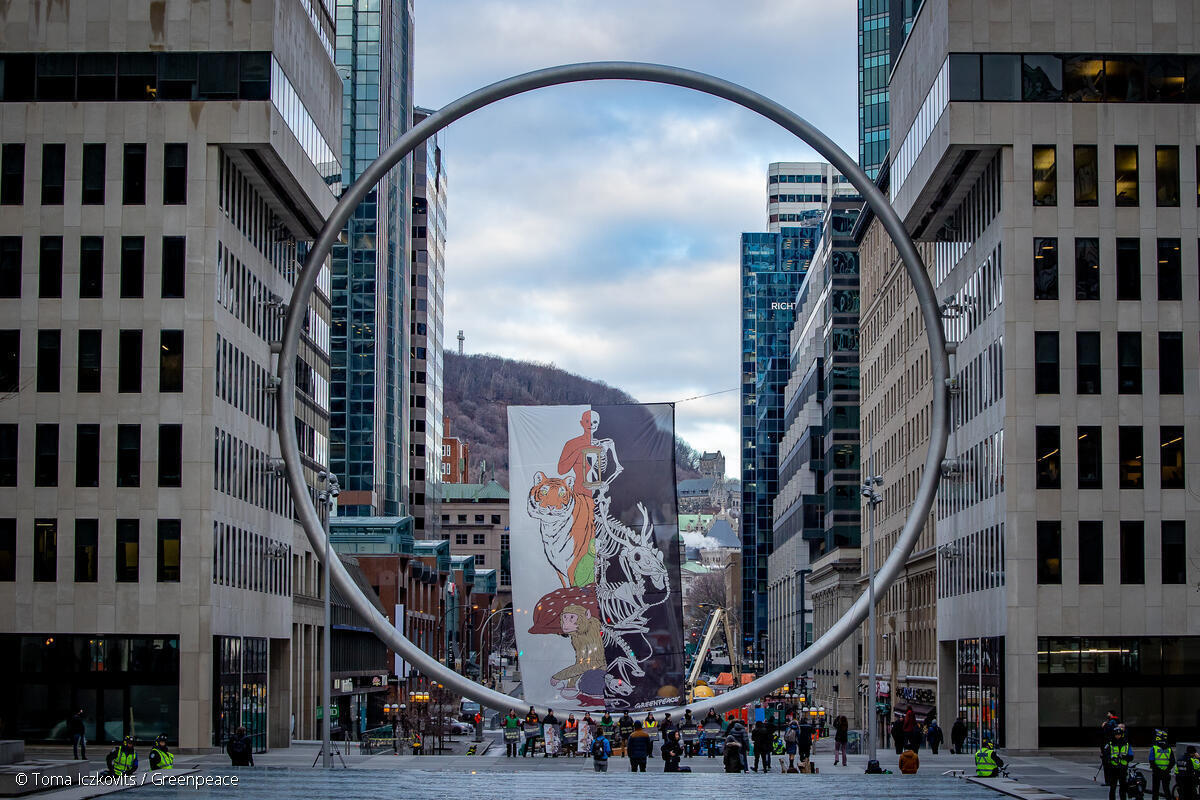
UN Biodiversity COP16 is a chance for nature to recover
Governments come together for two weeks of negotiations in Cali, Colombia, to progress on the historic Kunming-Montreal Global Biodiversity Framework.
-
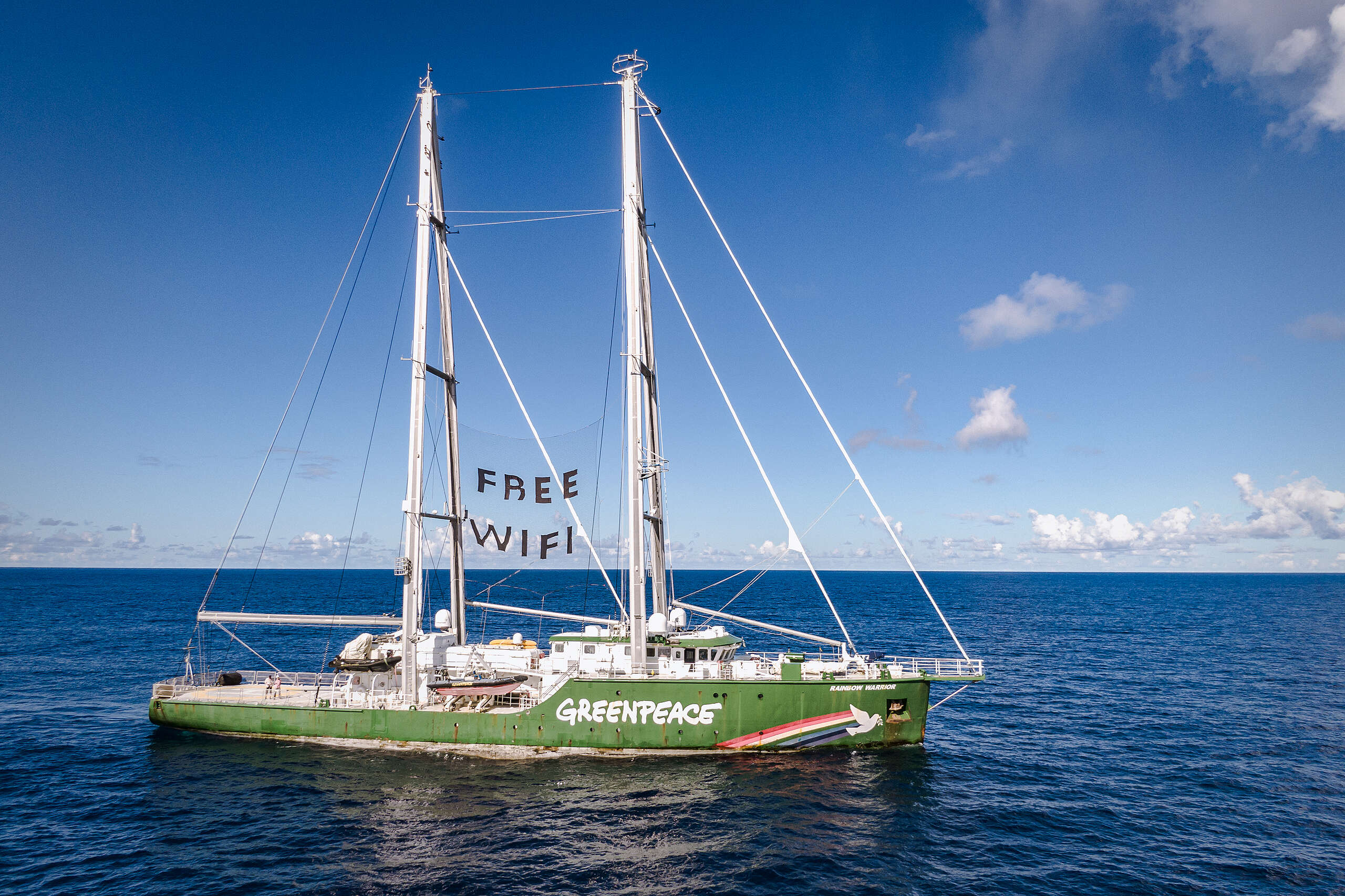
Greenpeace marine investigation exposes destructive fishing practices in the North Pacific Ocean
Ahoy, ahoy! We’ve just returned from another marine investigation, this time on the high seas of the North Pacific Ocean.
-
Join the fight against greenwashing
We won a major victory earlier this year when the federal government passed tough new anti-greenwash legislation, but now the oil lobby is fighting hard to weaken it.
-
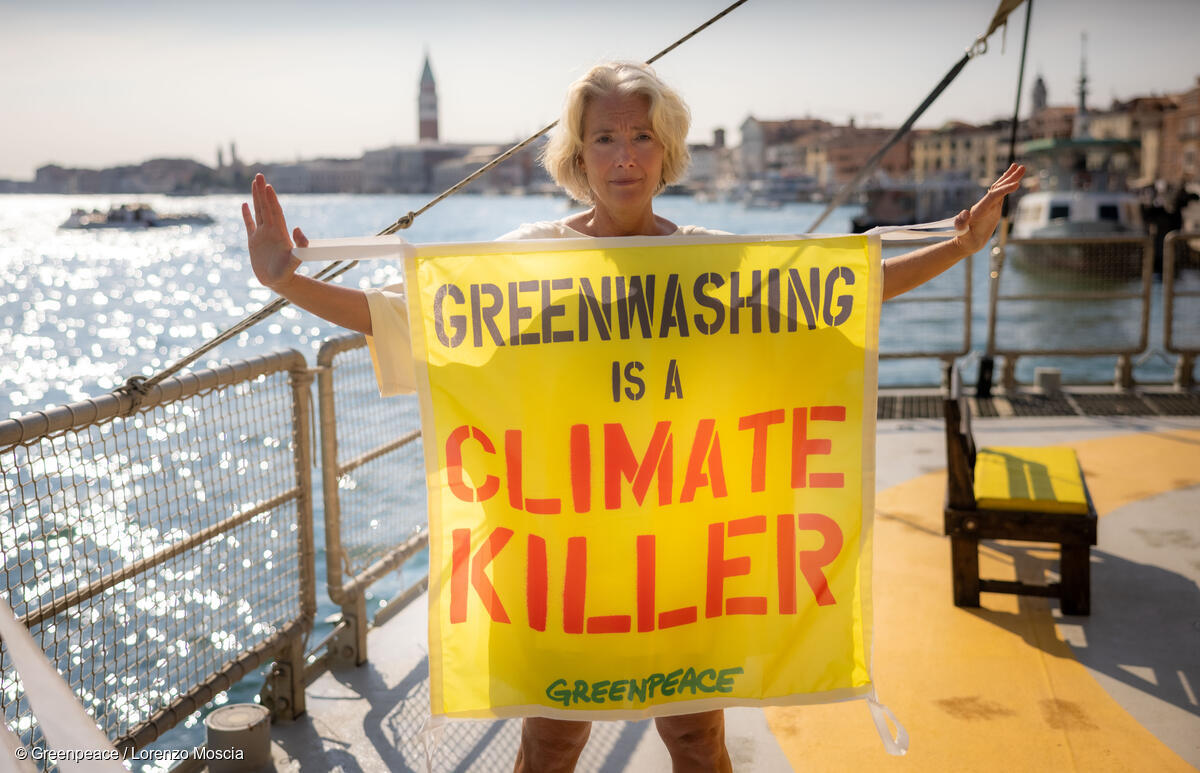
Canadians overwhelming (93%) support anti-greenwashing legislation: Poll
New data shows that Canadians overwhelmingly support the core of the new federal anti-greenwashing legislation (Bill C-59), with 93% of Canadians supporting the statement “Companies should face penalties for making environmental claims that they can’t prove are true”, according to a survey conducted by Angus Reid Forum and commissioned by Greenpeace Canada.
-
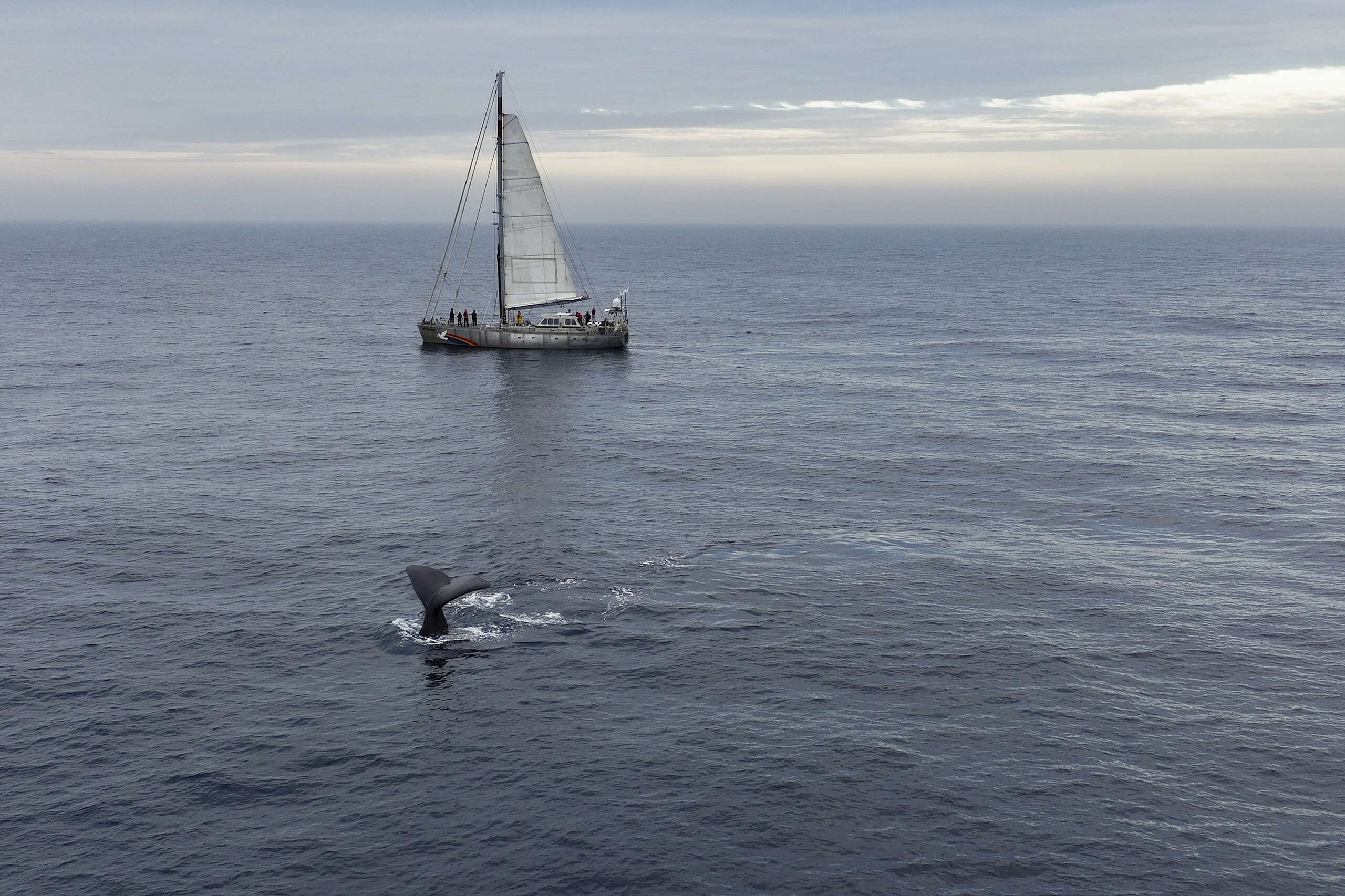
Greenpeace sets sail to stop deep-sea mining
In case you haven’t heard, the Norwegian government plans to open Arctic waters for deep-sea mining. And the spot they have in mind — an area located in the Norwegian…
-
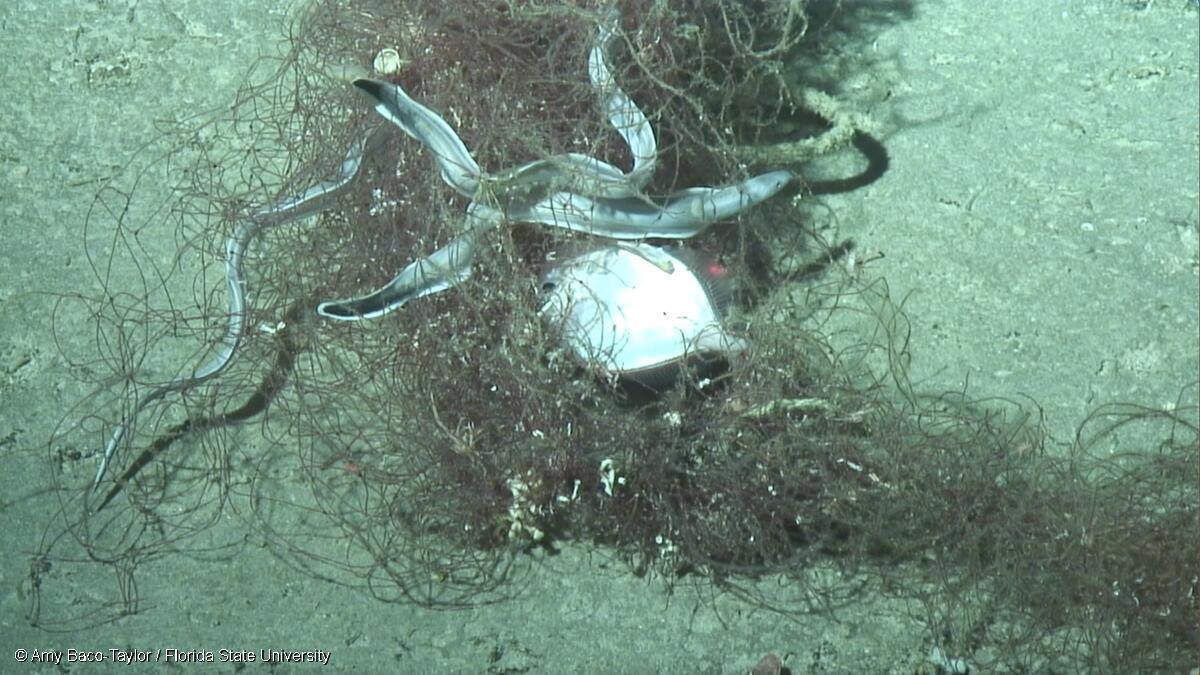
Footage released by Greenpeace reveals damage in the deep ocean from industrial fishing
In a new video published today, Greenpeace International reveals dramatic damage of bottom trawling on the Emperor Seamounts in the North Pacific, devastating fragile ecosystems, and calls for the creation of a new marine protected area in the High Seas.
-

Emperor Seamounts – oases of life Canada can help protect
Deep beneath the northern Pacific Ocean lies a remote chain of more than 800 seamounts. These oases of life, known as the Emperor Seamounts, are home to a rich variety…
-
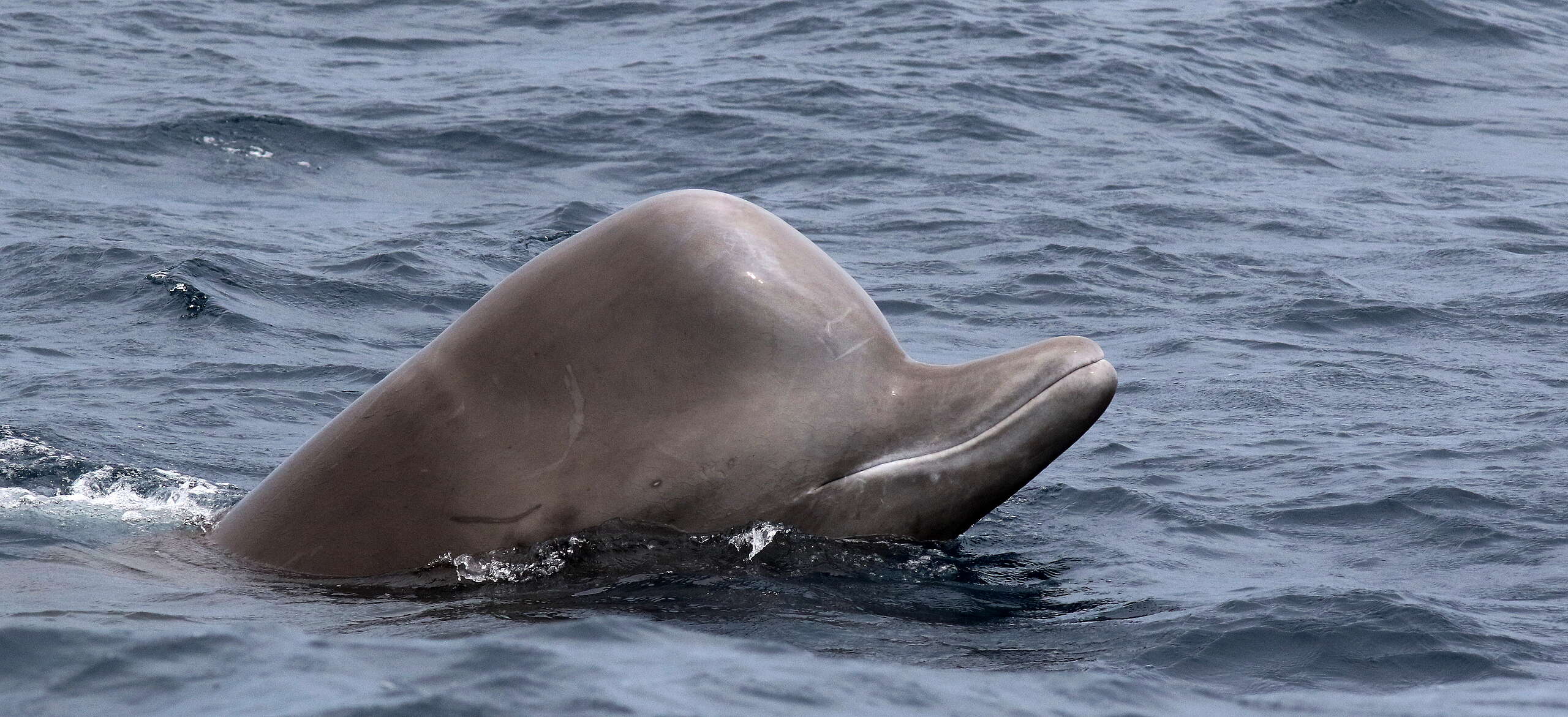
3 whales potentially at risk from deep sea mining in the Arctic
The vast Norwegian Sea that stretches up to the Arctic is home to an incredible array of wildlife. Now, a new and alarming threat looms on the horizon north of…
-

Chill Your Heatwave: Greenpeace offers free vegan ice cream in Montreal to expose Big Oil driving the planetary thermostat up
In the midst of an intense heat wave hitting Montreal today, Greenpeace Canada activists are out on Mont-Royal Avenue with their “Chill Your Heatwave” bike, serving free vegan ice cream to offer a refreshing perspective on these extreme temperatures. Activists highlighted the fossil fuel industry’s leading role in driving these extreme temperatures and demanded fossil…
-
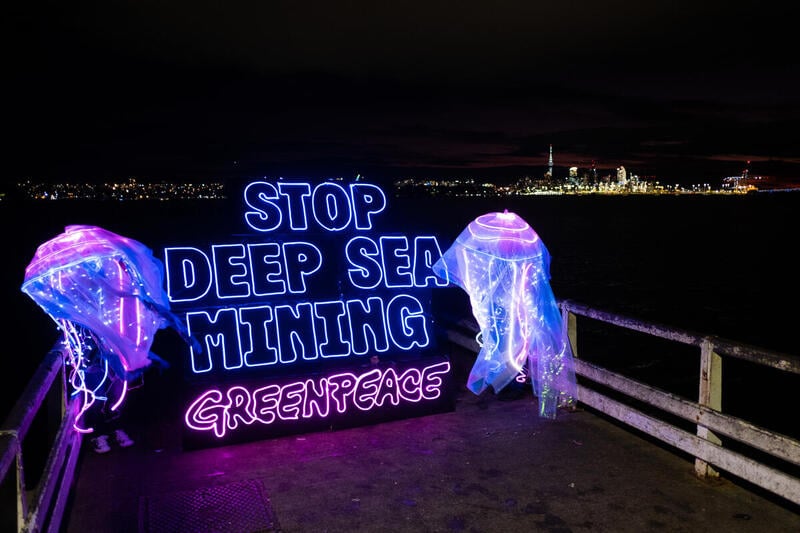
5 reasons to be hopeful in the fight against deep sea mining
In just a few days, another crucial International Seabed Authority (ISA) meeting will start. From July 15th to August 2nd, world leaders will discuss the future of the deep ocean.
-
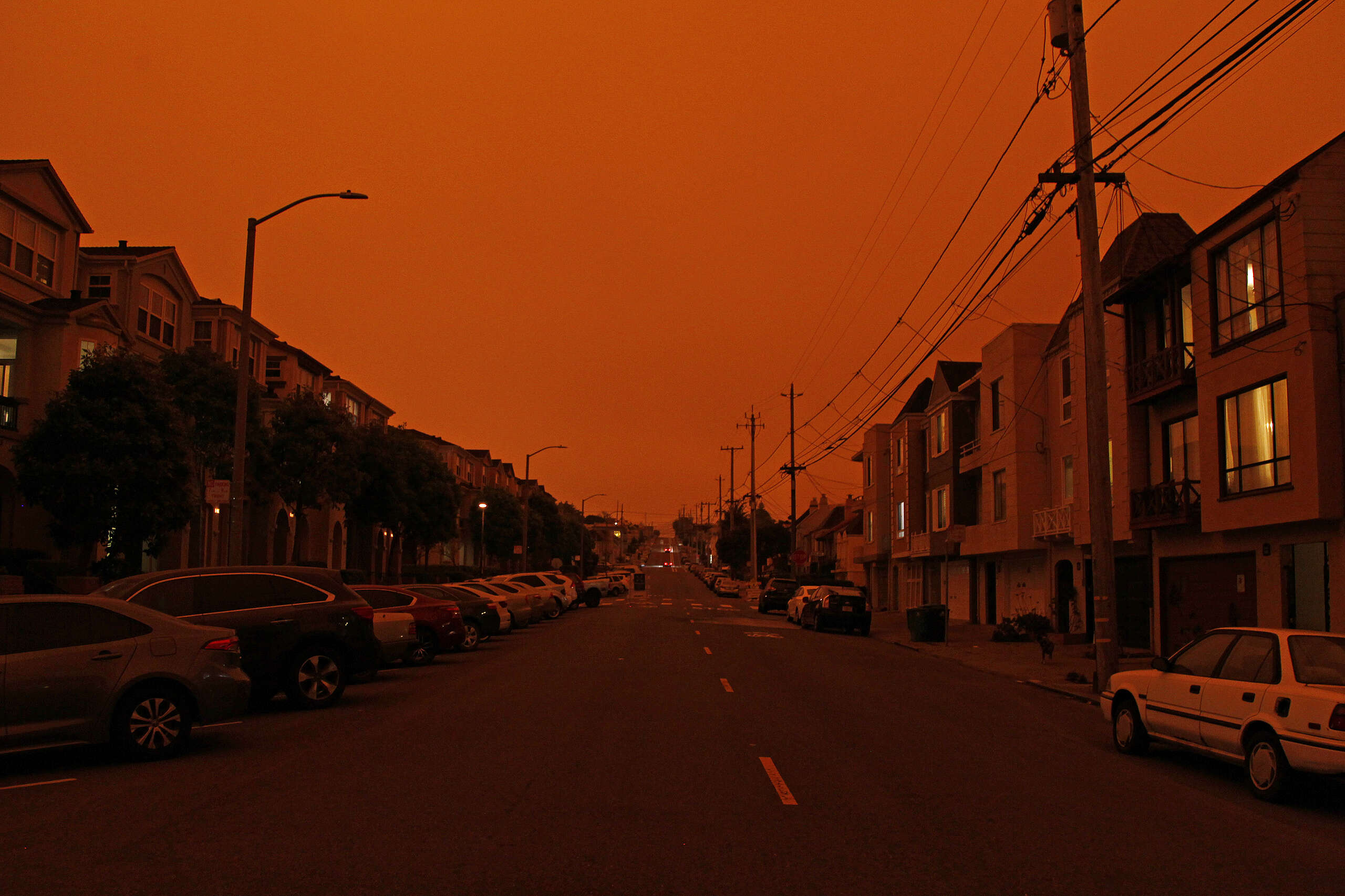
The pitch for a Climate Recovery Fund
While climate disasters disrupt lives around the world, the fossil fuel industry evades accountability. They need to pay into a Climate Recovery Fund.
-
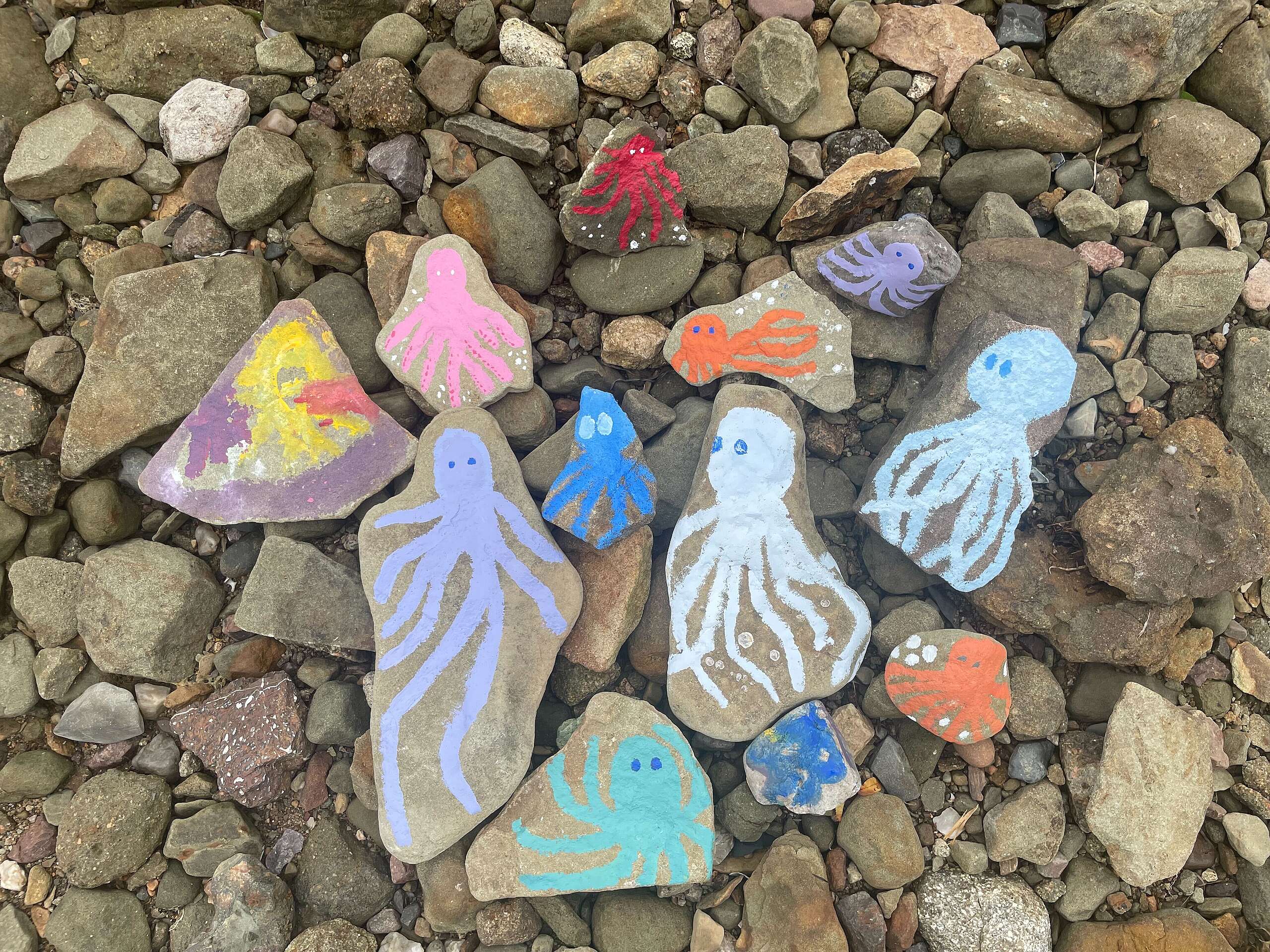
Artivism for the Oceans: Help Us Protect the Deep Sea from Mining!
Later this July, the International Seabed Authority (ISA) will convene its Council and Assembly meetings in Kingston, Jamaica. During its last meeting in March, allies of the deep sea mining (DSM) industry made an unsuccessful attempt to ban Greenpeace from future meetings. Now, they are gearing up for another push to gain approval for deep-sea…
-
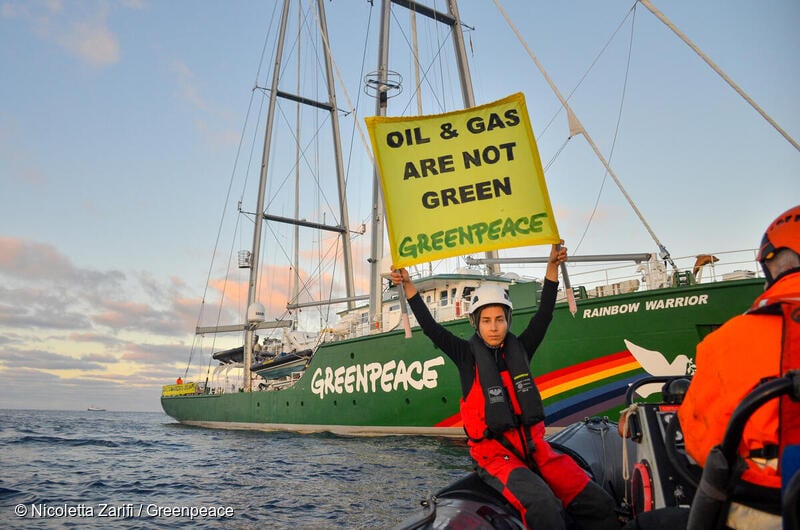
Buckle up, the oil industry is driving us toward disaster
We wouldn’t want a consortium of car manufacturers writing the laws on vehicle safety or an alliance of pharmaceutical companies determining the health benefits of medications. So why would we…
-
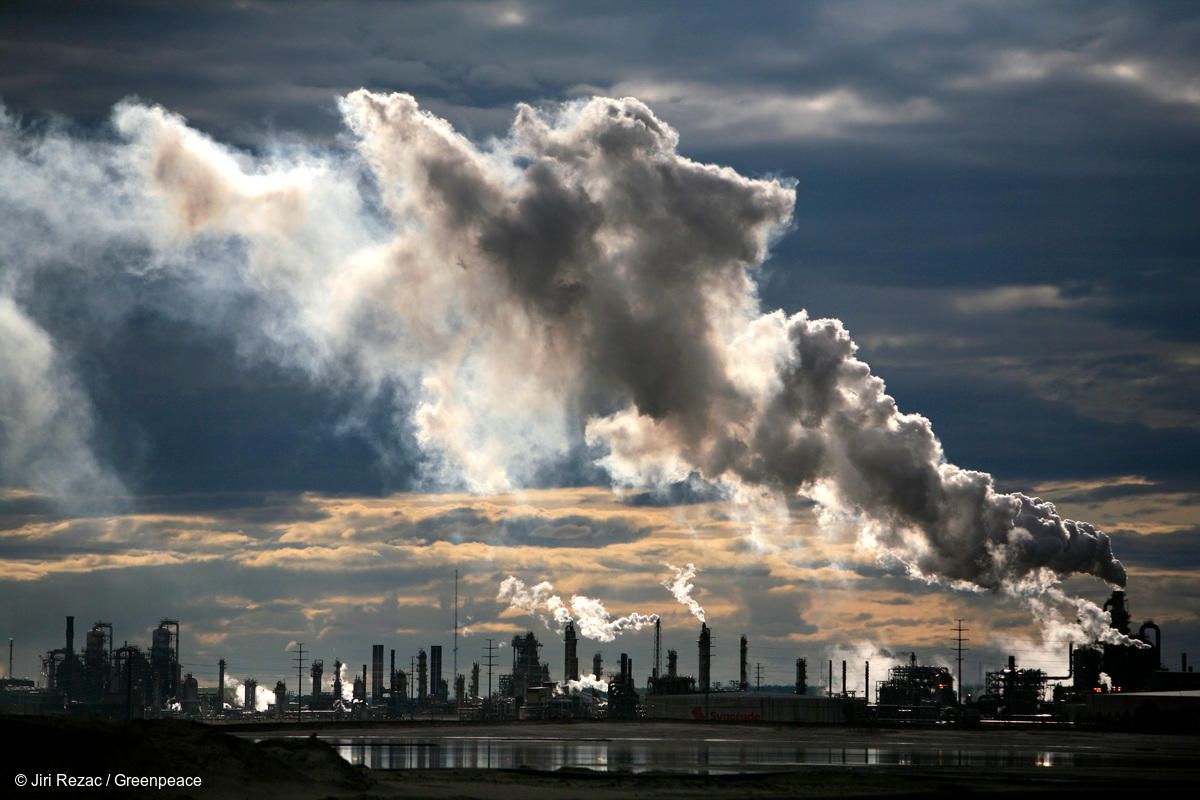
Greenpeace Canada’s reaction to the Pathways Alliance scrubbing all information from their website and social media channels
The Pathways Alliance scrubbed all information from their website and social media channels claiming that “amendments to the Competition Act will create significant uncertainty for Canadian companies that want to communicate publicly about the work they are doing to improve their environmental performance.
-
6 things you can do for the ocean today
From demanding world leaders ratify the Global Ocean Treaty, to supporting coastal communities to protect their homes and livelihoods, there are many ways you can take action for the ocean today.
-
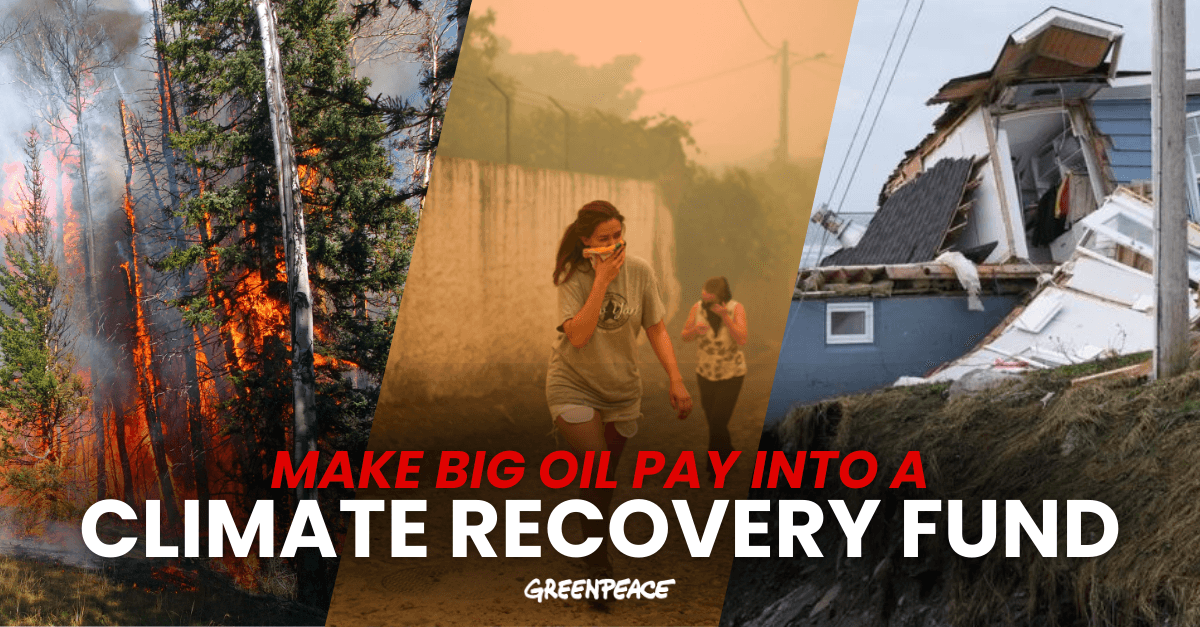
Greenpeace reacts to Big Oil’s Misleading Testimony at Federal Environment Committee
In reaction to Canada’s leading oil and gas executives testifying on their contribution to the climate crisis while amassing billions in profits, Salomé Sané, Climate Campaigner for Greenpeace Canada said:
-
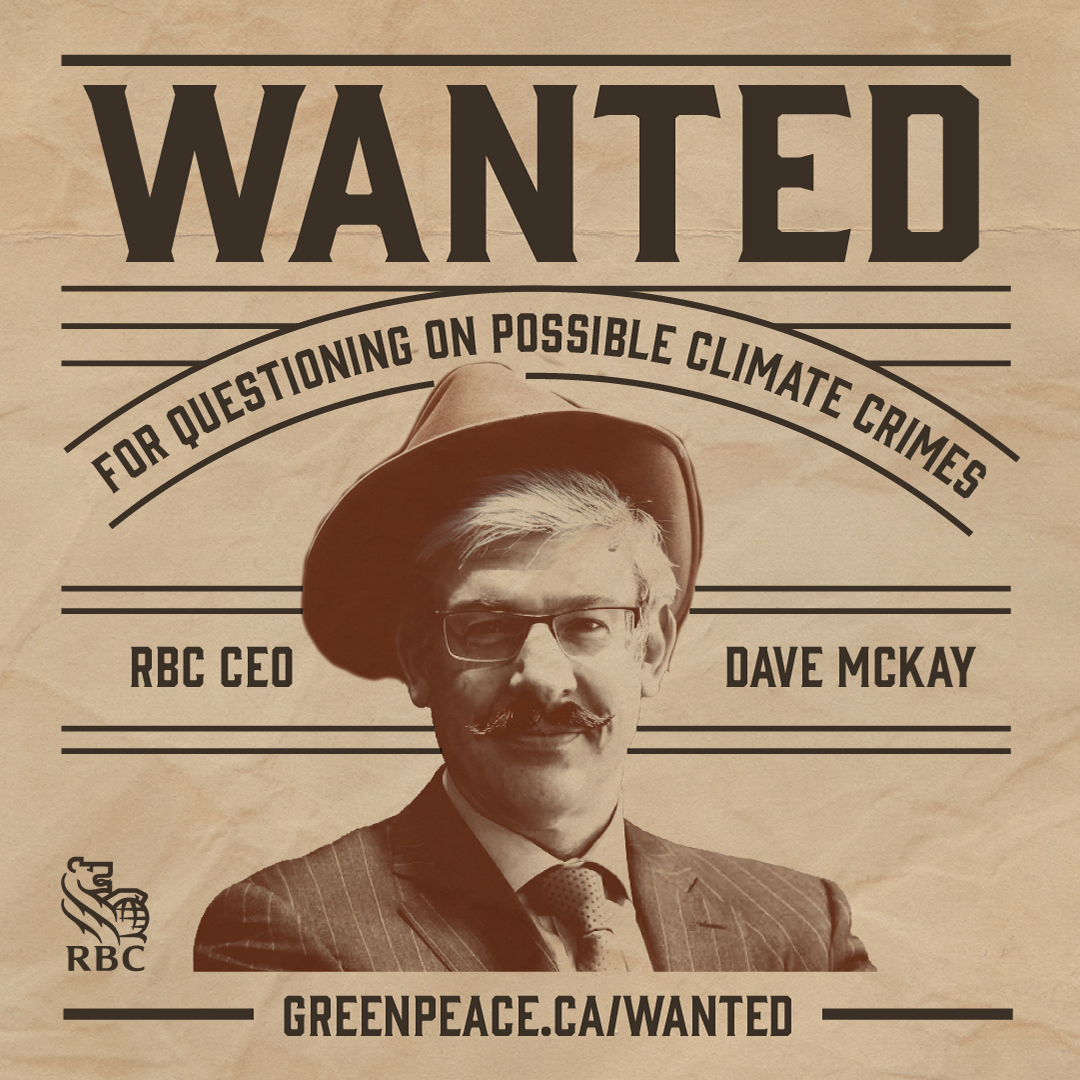
Bankers to be grilled on greenwash
Wanted: Canadian bank CEOs have been summoned to appear before the House of Commons Standing Committee on the Environment and Sustainable Development. Now we need the committee members to ask tough questions on our behalf.
-
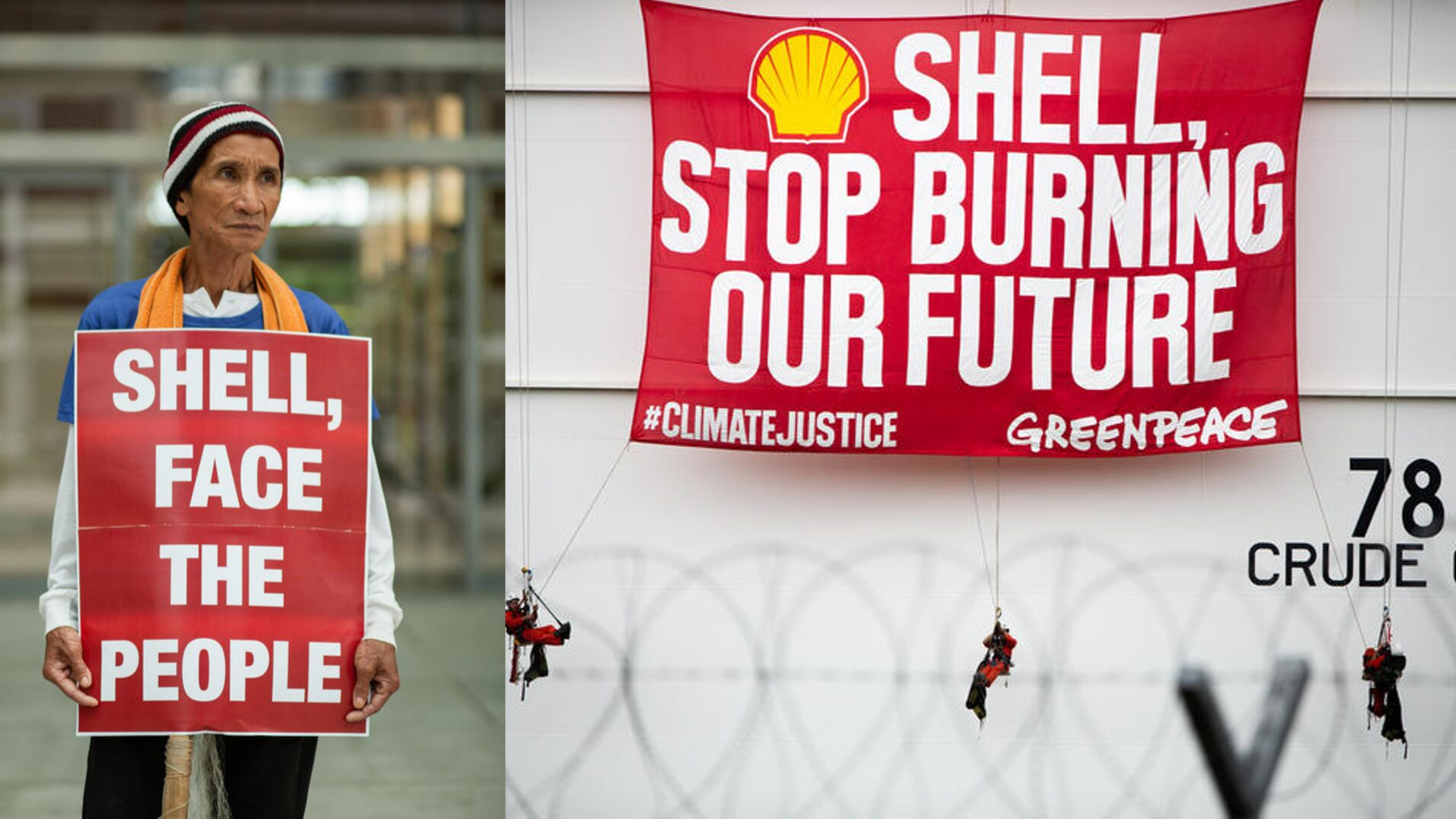
Shell’s flagship carbon capture project sold $200M of ‘phantom’ emissions credits: Greenpeace report
Shell’s flagship carbon capture project has made over $200 million (CAD) selling emissions credits for reductions that never happened, according to a new investigative report Selling Hot Air from Greenpeace Canada.
-
INC-4: Plastics talks in Ottawa end on a disappointing note under compromised Canadian leadership
Late on Monday night, the fourth session of the Intergovernmental Negotiating Committee (INC-4) for a Global Plastics Treaty ended with world governments failing to agree on the inclusion of any reference to plastic production or polymers in intersessional work, despite strong support by various countries, scientists and civil society groups. While Canada supported in principle…
-
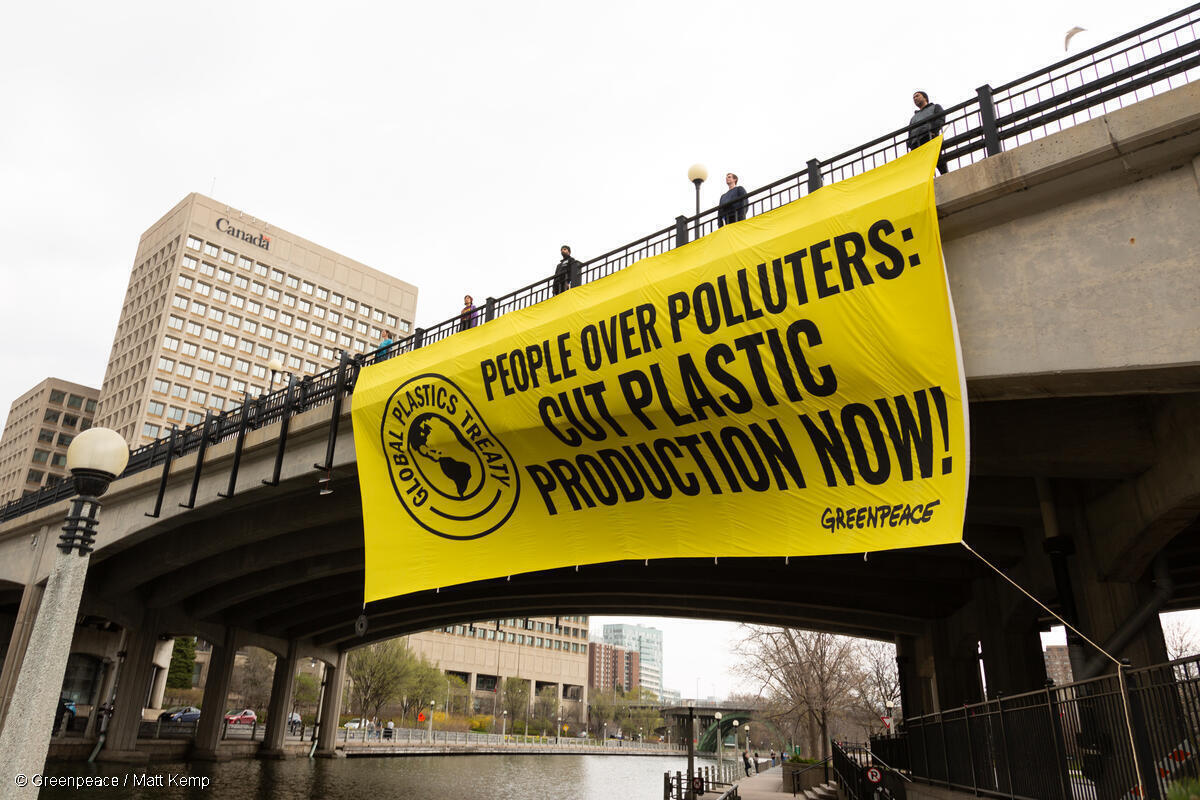
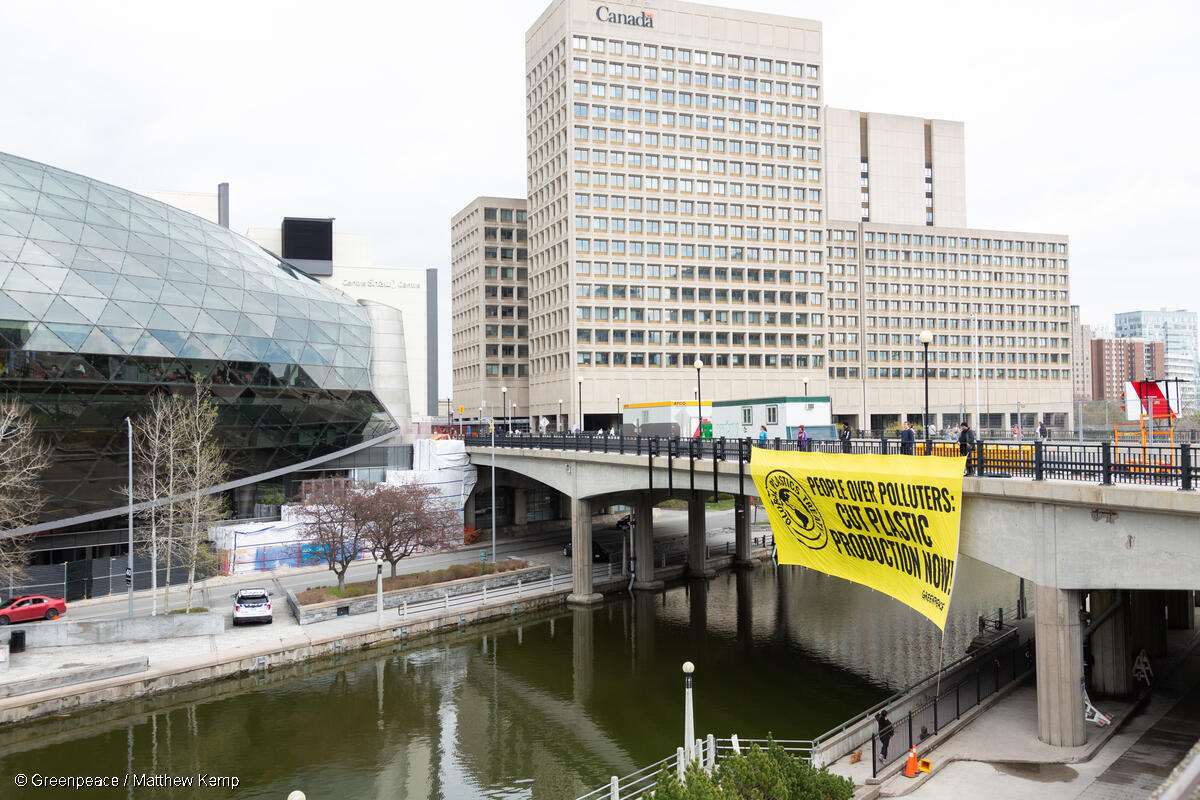
INC-4: Greenpeace hangs a banner on Mackenzie King Bridge, urging delegates to put people over plastic
Twenty-four hours before the end of the negotiations for a Plastics Treaty at the fourth Intergovernmental Negotiating Committee (INC-4), Greenpeace Canada activists hung a banner on the Mackenzie King Bridge, right next to the Shaw Center, where world delegations are gathered. The fourteen meters banner read “People over polluters: Cut plastic production now!” and followed…
-
INC-4: Greenpeace reacts to Minister Guilbeault undermining ambition during Plastics Treaty talks in Ottawa
In response to Minister Guilbeault declaring “a cap on plastic production may be too complicated” at the fourth session of the Intergovernmental Negotiating Committee (INC-4), Sarah King, Head of Plastics & Oceans at Greenpeace Canada, said:
-
INC-4: Greenpeace reacts to Minister Guilbeault undermining ambition during Plastics Treaty talks in Ottawa
In response to Minister Guilbeault declaring “a cap on plastic production may be too complicated” at the fourth session of the Intergovernmental Negotiating Committee (INC-4), Sarah King, Head of Plastics & Oceans at Greenpeace Canada, said
-

INC-4: Peaceful Greenpeace activist arrested by police at the Shaw Center
One activist from Greenpeace Canada was arrested outside of the Shaw Center in Ottawa while engaged in a peaceful protest.
-
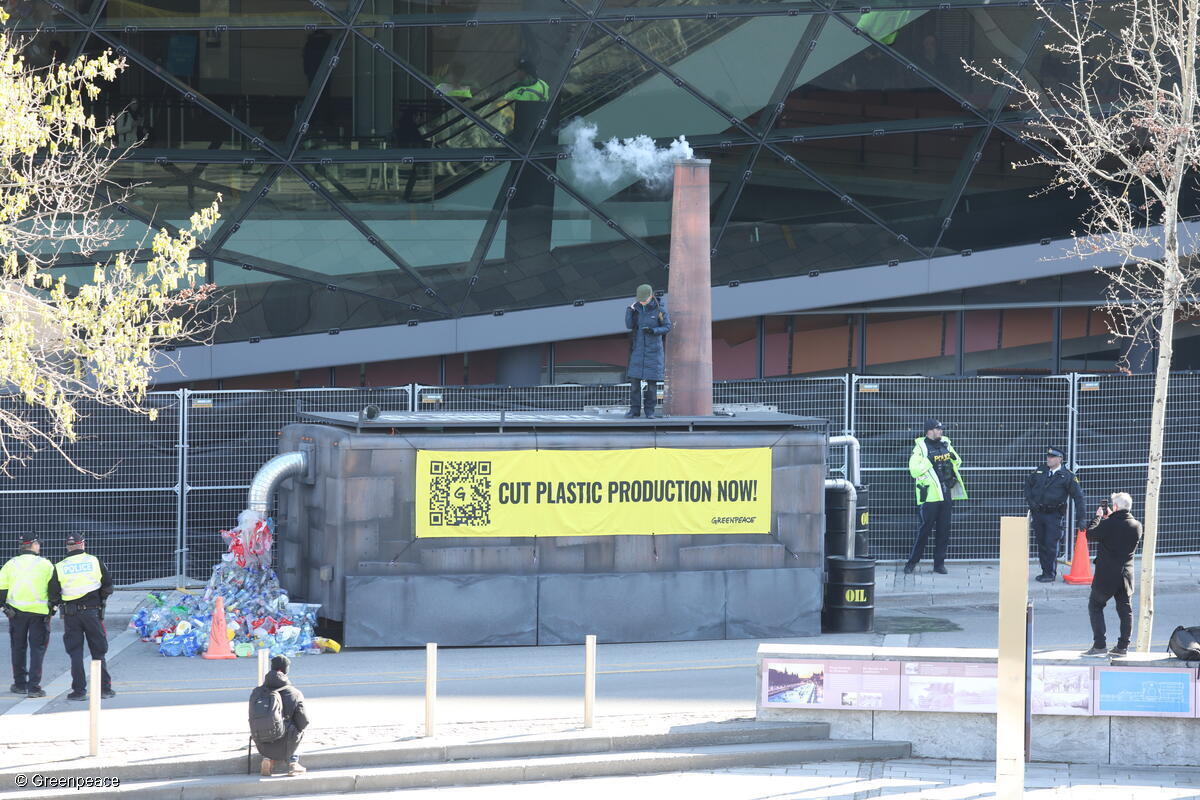
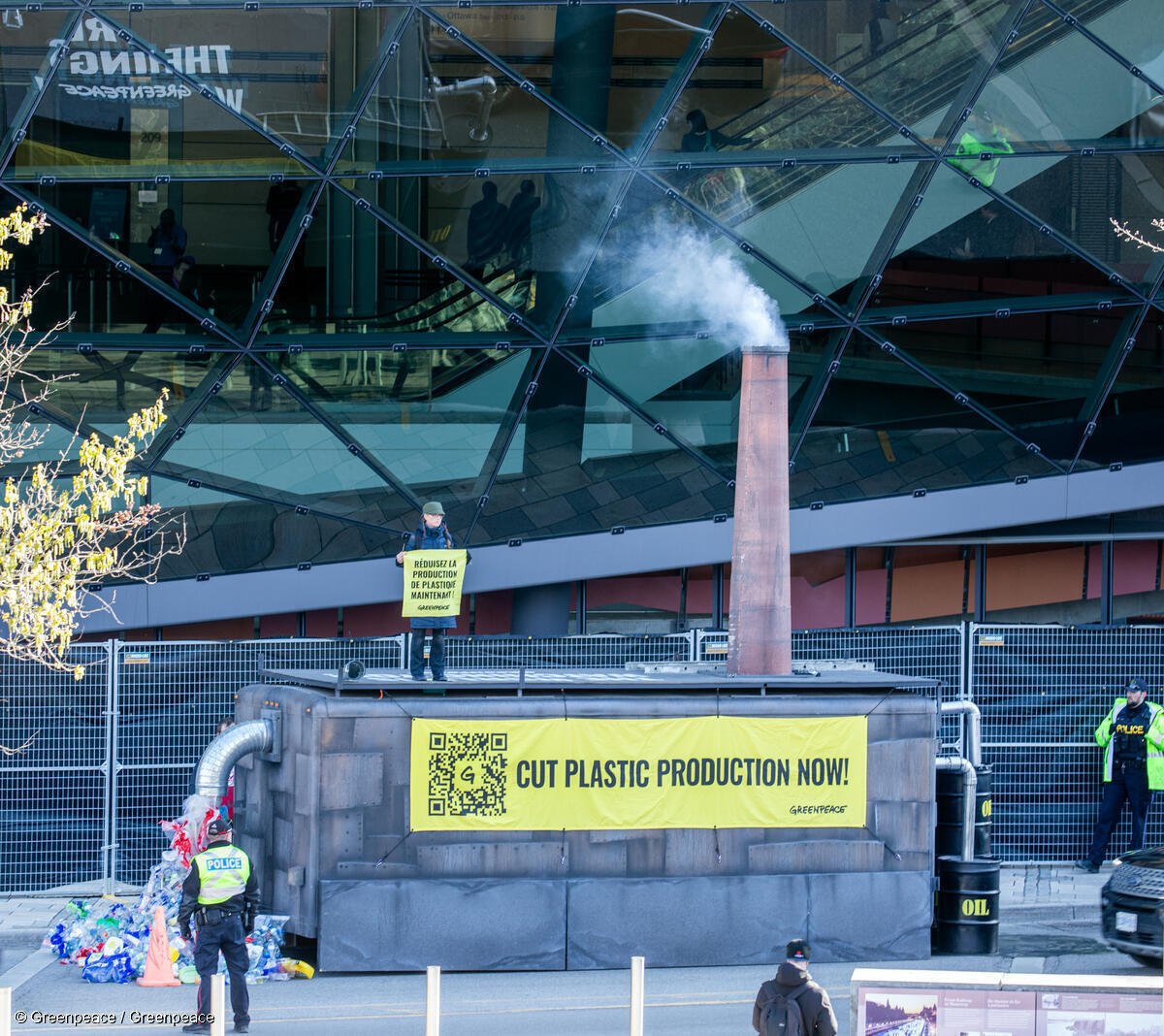
Greenpeace ramps up pressure on UN delegates to cut plastic production, by delivering a “Global Plastics Factory”
As a new day of negotiations begins at the fourth Intergovernmental Negotiating Committee (INC-4) in Ottawa, Greenpeace Canada delivered a 20-foot “Global Plastics Factory” to the doorstep of the Shaw Center, where the talks on a Global Plastics Treaty are taking place.
-
RBC’s new climate policy means it should stop financing oil sands giants: Greenpeace report
RBC’s new corporate commitment to drop clients who lack an adequate net zero transition plan means the bank should stop financing Canada’s biggest oil sands companies, according to a report from Greenpeace Canada. Greenpeace is calling on RBC to drop oil companies like Suncor, Cenovus and CNRL whose net zero transition policies don’t meet the…
-
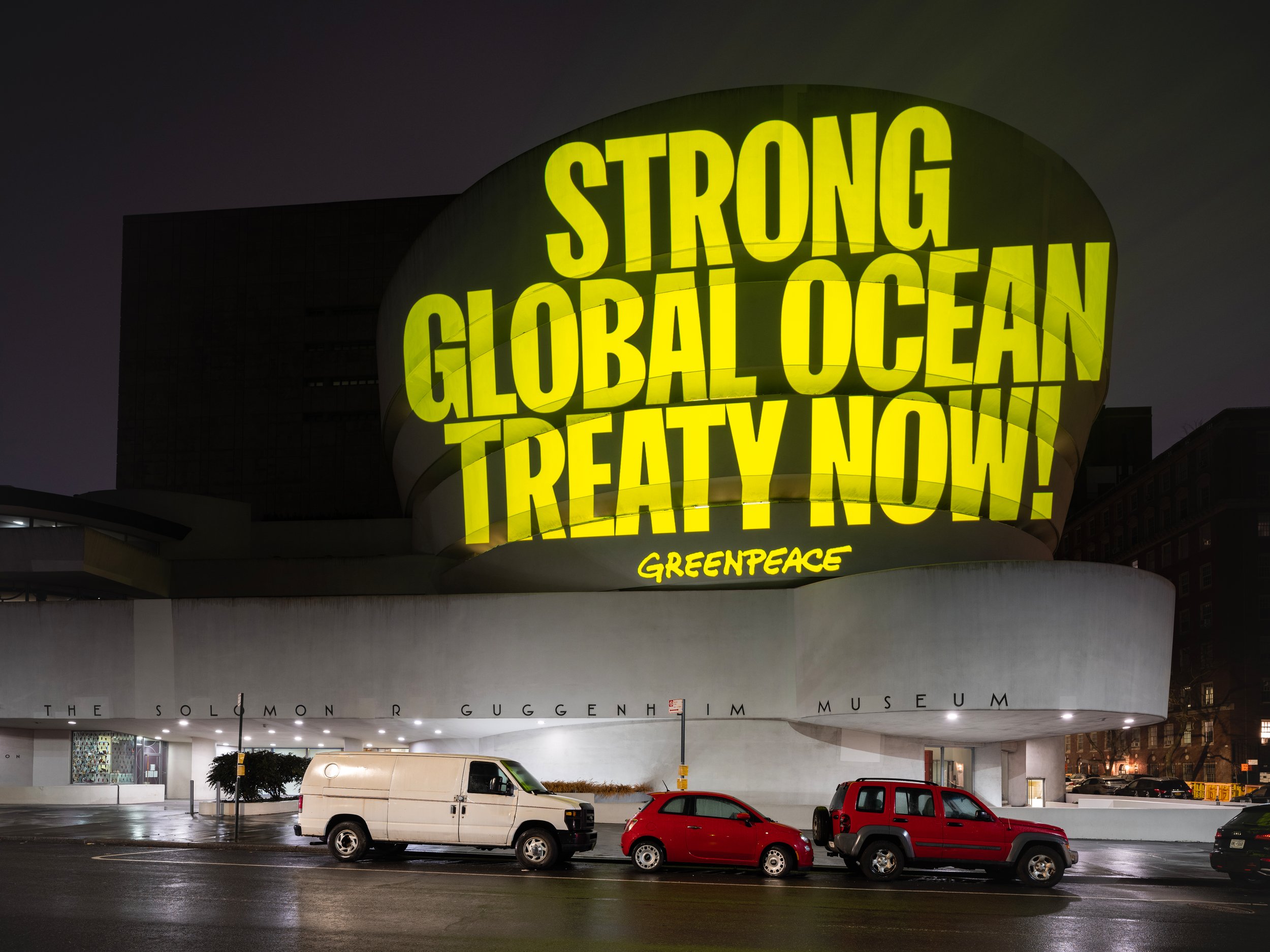
Greenpeace Canada reaction to Canada signing UN Ocean Treaty
We are pleased to see Canada make good on its commitment to secure the Ocean Treaty but now we need to see more urgency to write this historic Treaty into law.
-
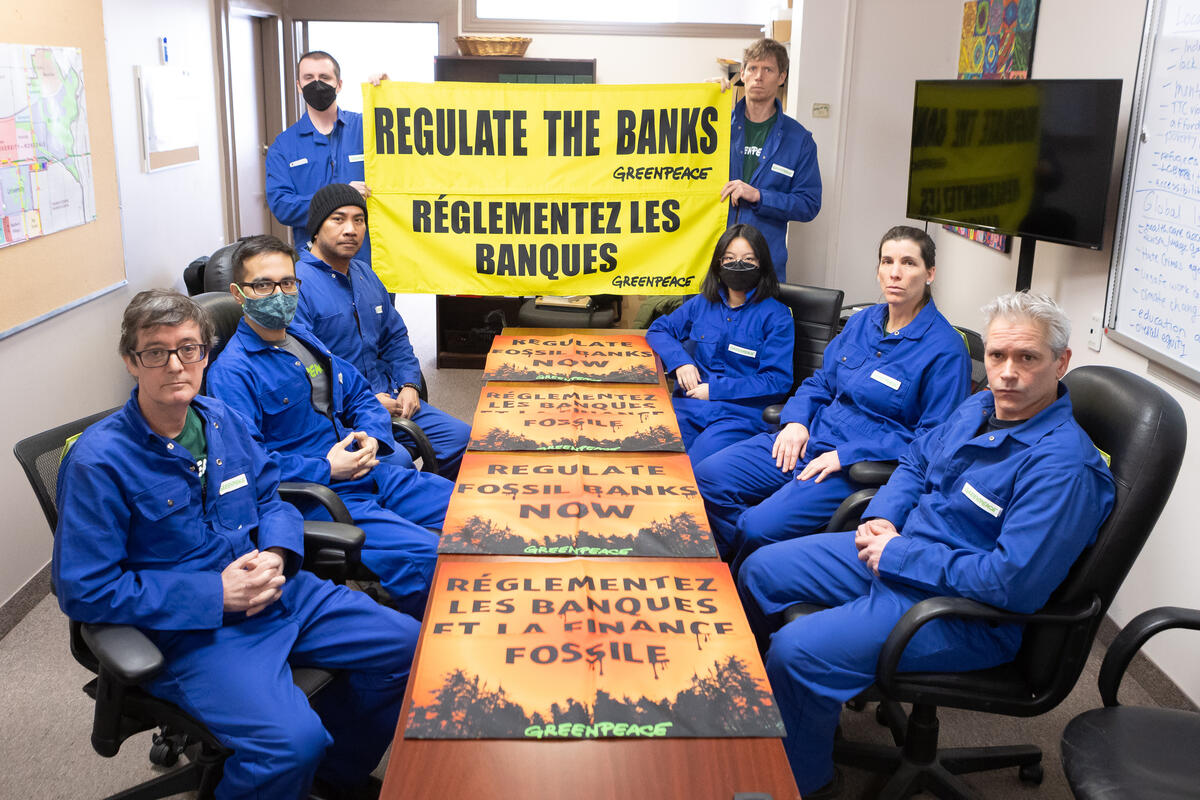
Ahead of budget, Greenpeace activists in Minister Freeland’s office demanding climate action and banking regulations
Earlier this morning, Greenpeace Canada activists entered Finance Minister Chrystia Freeland’s downtown Toronto office calling on the Liberal government to stop backsliding on existing climate commitments and commit to regulating Canadian fossil banks in the 2024 federal budget. As the Liberal government delays or waters down long-promised climate policies and refuses to rein in irresponsible…
-
Greenpeace Canada reacts to new Copernicus data: global heating exceeding 1.5°C threshold for 12 months
Today, Copernicus Climate Change Service (C3S), the European Union’s Earth Observation Programme released new data showing that for the first time global warming has exceeded a global average of 1.5°C above the pre-industrial baseline across an entire year, from February 2023 to January 2024.
-

We called out Shell’s false claims on carbon offsets
In 2020, Shell Canada made a promise it couldn’t keep.
-

Industrial Research Chairs working on fossil fuels received 300 times more money than similar alternative energy projects according to Greenpeace Canada report
Oil and gas companies are pumping millions into academic research, influencing the priorities and scope of critical research areas, according to “Bad Cheques,” a new Greenpeace Canada report.
-
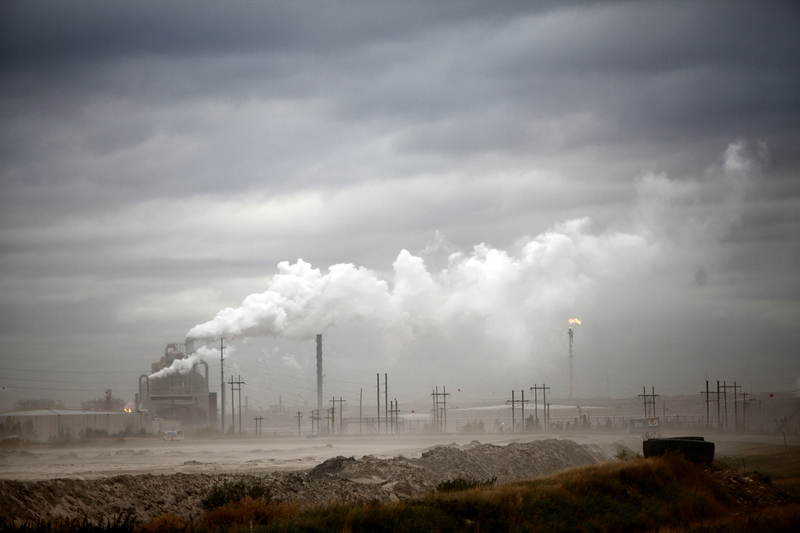
Unveiling Greenwashing: The Urgent Need for Transparency in the Fossil Fuel Industry
As the world grapples with the pressing need for climate justice, a troubling trend has emerged within the fossil fuel industry: greenwashing. It’s time to shed light on this deceptive…
-
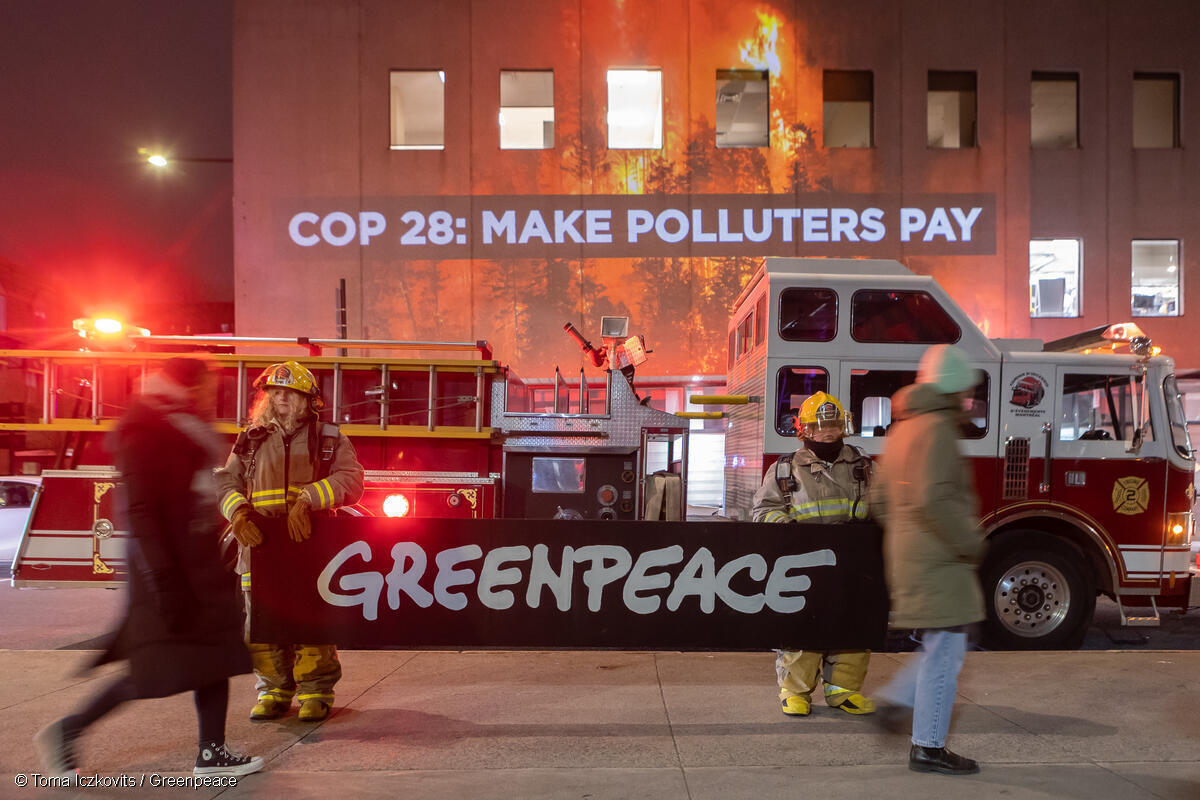
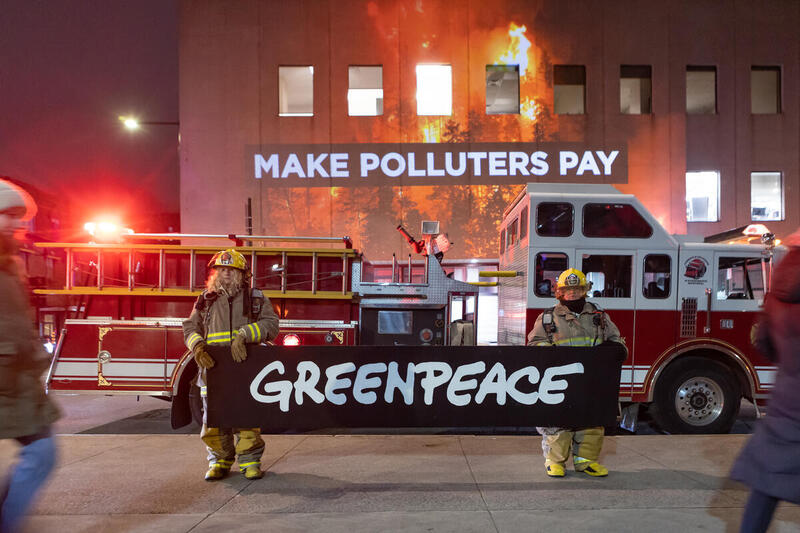
It’s time to make polluters pay
As I stood outside Environment Minister Guilbeault’s office, mere hours before the start of the 28th UN Climate Summit (COP28) in Dubai, the air was crisp and fresh. This was a real contrast with the smokey weeks of the summer when forests burned at record rates.
-
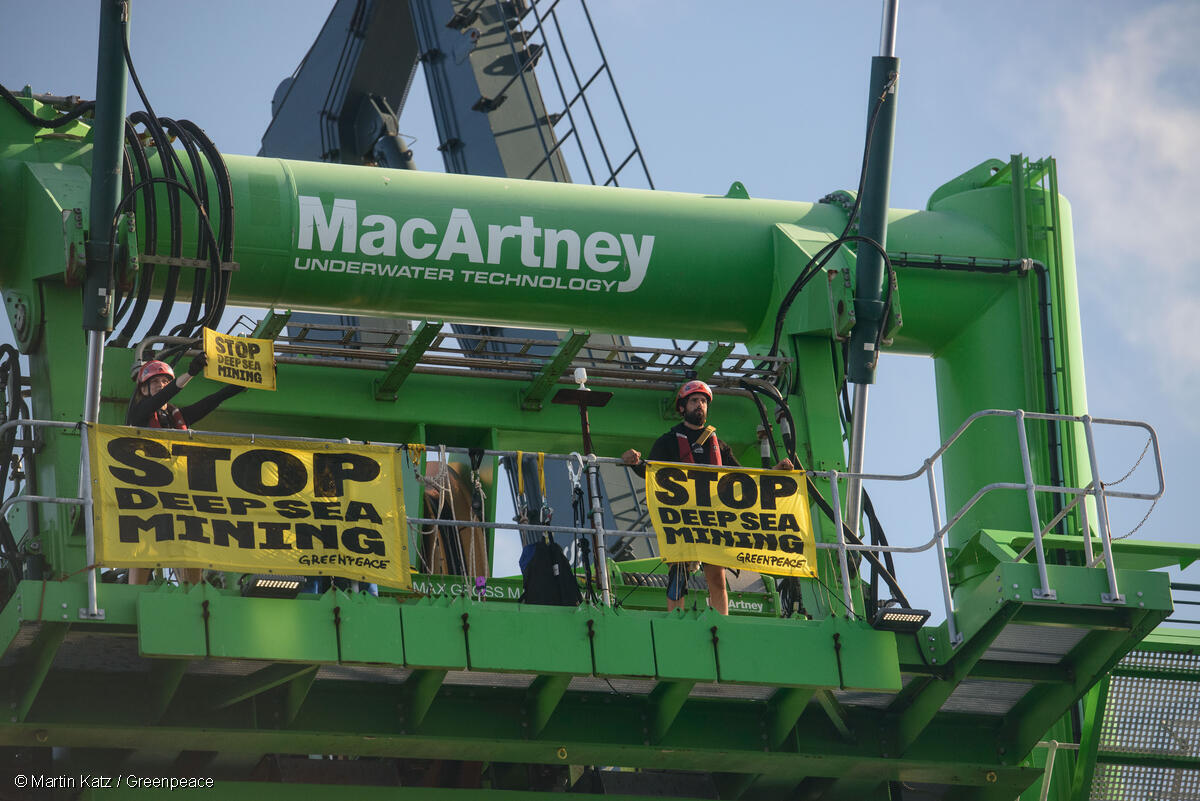
Deep sea miners take Greenpeace to court for peaceful protest at sea
Would-be deep sea miners The Metals Company has launched legal proceedings against Greenpeace International for an ongoing peaceful protest at sea in the Pacific Ocean.
-
How to #TakeCashOutOfCarbon: A Step-by-Step Guide to Take Action on Fossil Banks
Here are 5 simple steps you can take to urge decision-makers to #TakeCashOutOfCarbon by aligning Canada’s financial system with The Paris Agreement.
-
As deep sea mining talks end, Greenpeace calls for a mining moratorium, not regulations that allow destruction
“Each new announcement of support for a moratorium is a beacon of hope for the deep sea and the global ocean.”
-
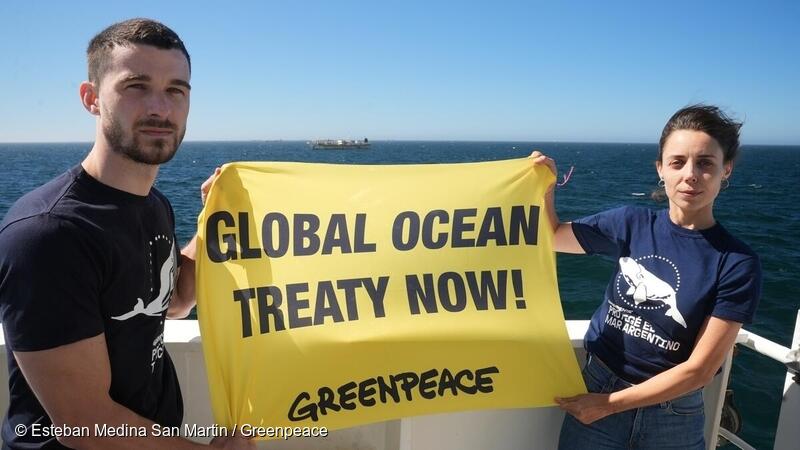
UN Ocean Treaty opens for country signatures: Greenpeace comment
Six months after its agreement, 68 governments have already signed the UN Ocean Treaty in New York.
-
Shocking extent of threats to ocean health revealed in new Greenpeace report, calls for urgent protection using historic UN Ocean Treaty
A major new analysis of the threats facing the oceans has been released today in a Greenpeace report.
-
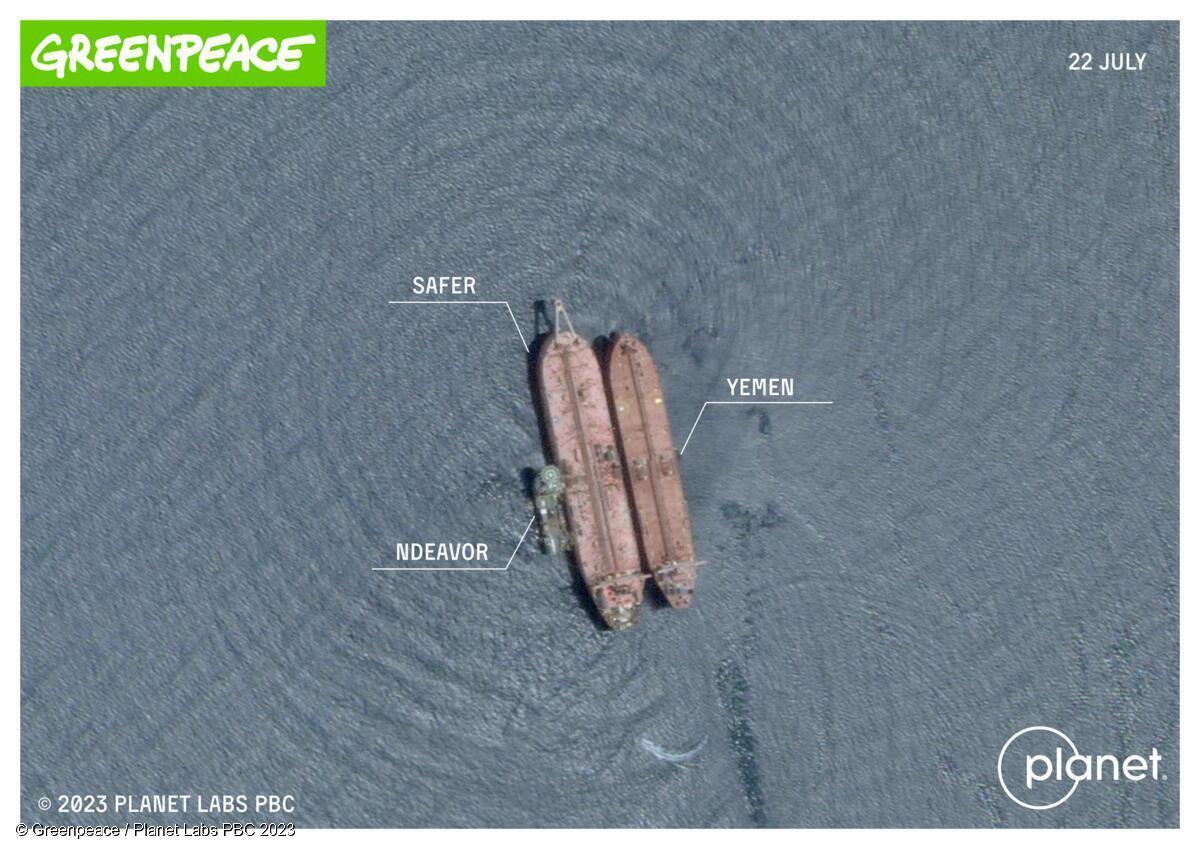
The ship that became a ticking time bomb — how Greenpeace prevented one of the biggest oil spill disasters in history
For the past eight years, a ticking time bomb has floated off the west coast of Yemen in the Red Sea.
-
Deep sea mining industry fails to get green light but remains a threat
The International Seabed Authority (ISA) negotiations end today with deep sea mining companies failing to get an immediate green light to start mining.
-
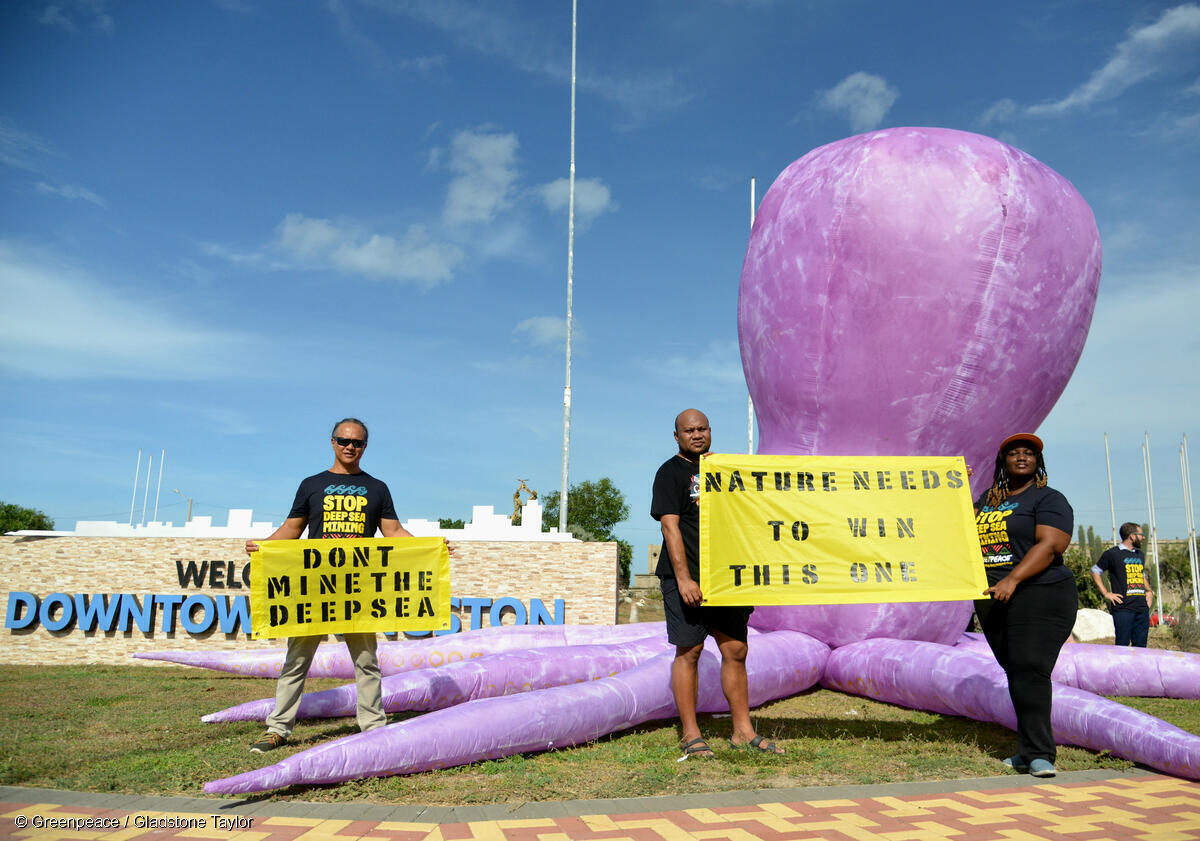
Why Canada’s support for a deep sea mining moratorium matters
On July 10th, Federal Minister Joly, Minister Wilkinson and Minister Murray announced Canada’s support for a moratorium on deep sea mining in international waters. While the oceans are not safe from deep sea mining just yet, this was a huge step forward.
-
Canada backs moratorium on deep sea mining as critical talks resume
Governments at the International Seabed Authority (ISA) will gather today in Kingston to discuss whether to allow deep sea mining to go ahead.
-
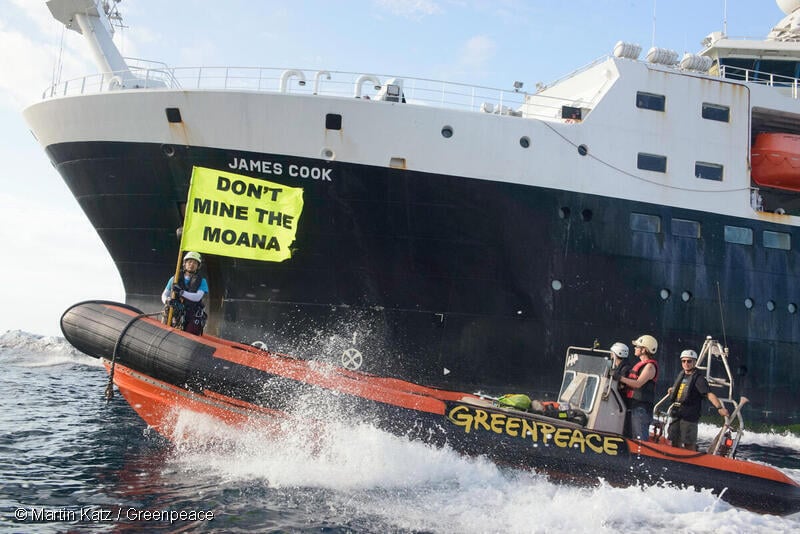
Deep sea mining: a concrete threat we need to shut down now
Deep sea mining would endanger fragile marine ecosystems that took millennia to develop, and threaten the livelihoods and traditions of people from the Pacific and their spiritual connection to the ocean.
-
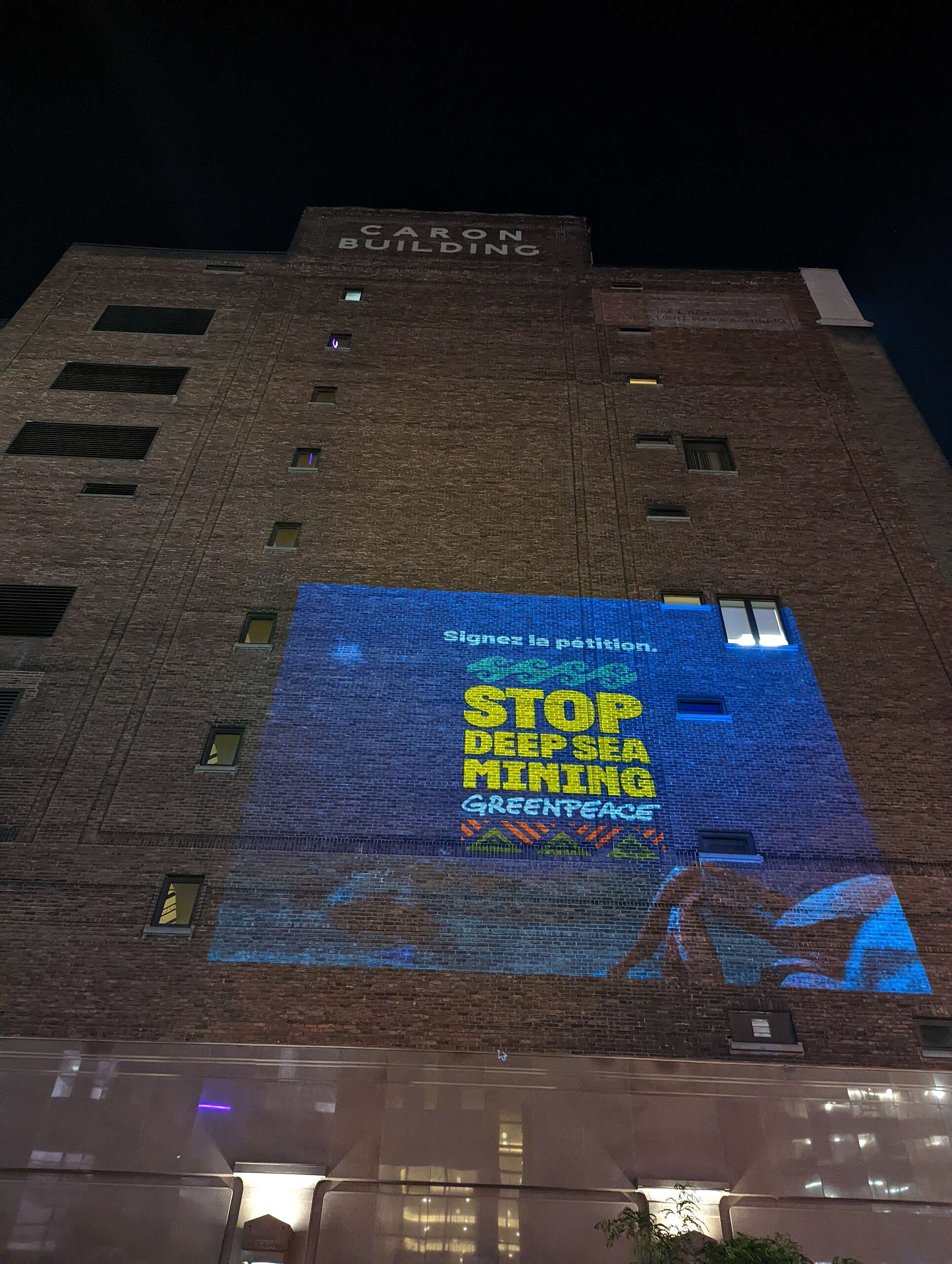
Greenpeace calls on Canada to help stop deep sea mining, projecting the deep ocean in downtown Montreal
Greenpeace Canada projected two giant videos last night illustrating the harms deep sea mining would cause to highly sensitive marine ecosystems.
-
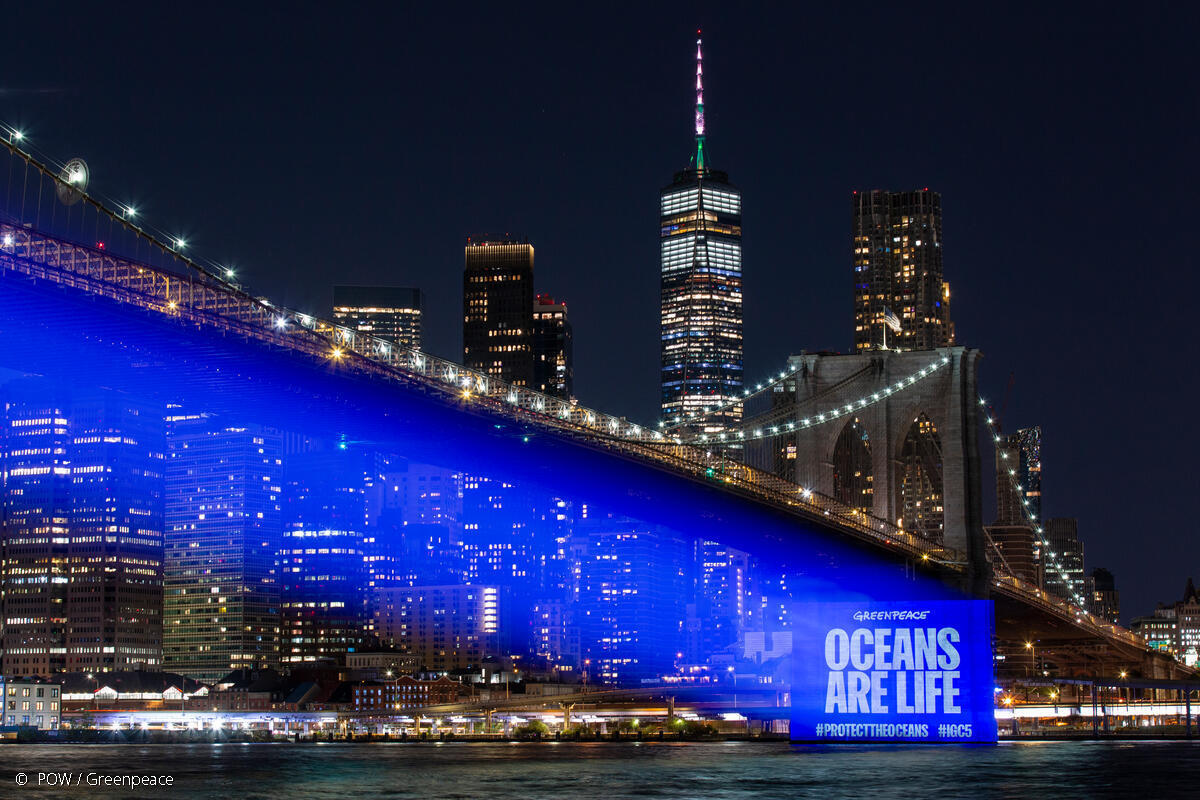
UN Ocean Treaty formally adopted, as the race to ratification begins
The historic UN Ocean Treaty has been formally adopted by consensus in New York after the Treaty text was agreed in March 2023.
-
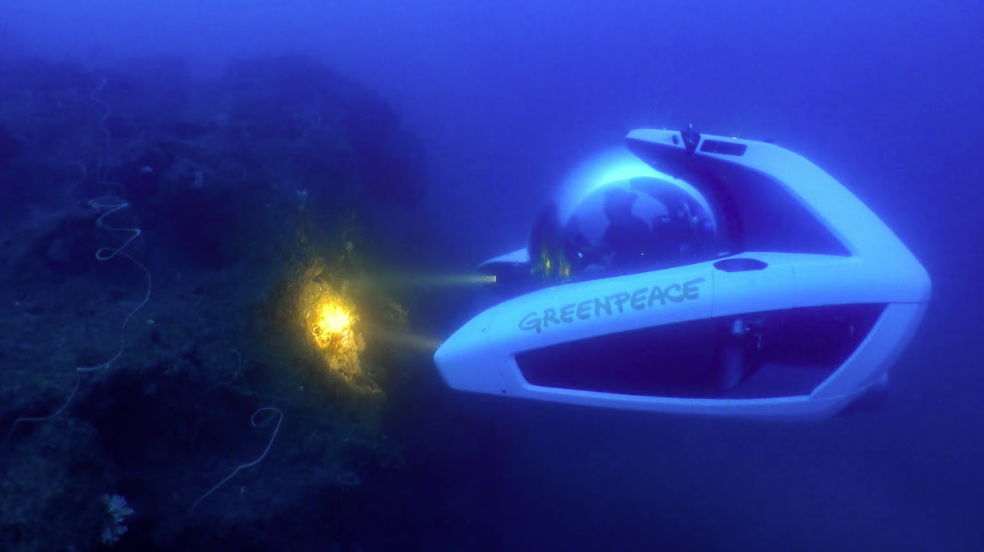
On Greenpeace ship, scientists reveals never-before-studied reef ecosystem threatened by new US-Mexico pipeline
A group of scientists on board a Greenpeace ship in Mexico’s waters has concluded research on a never-before studied coral reef, threatened by a planned gas pipeline by Canadian company TC Energy. Scientists, joined by fishers and activists from Greenpeace Mexico on board the Arctic Sunrise, have warned that the pipeline would threaten the livelihoods…
-
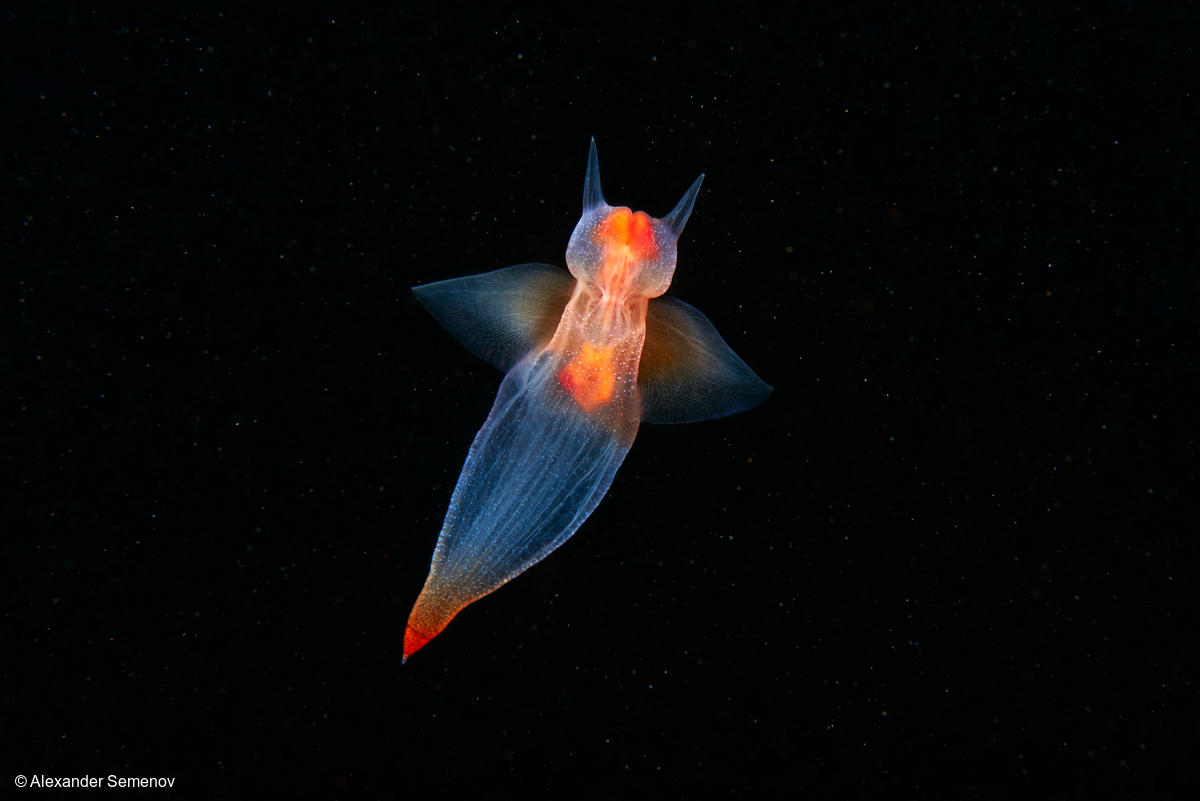
Protect the deep sea this World Oceans Day
On this World Oceans Day, help protect the ghost octopus and other marine creatures from the environmental threat of deep sea mining.
-
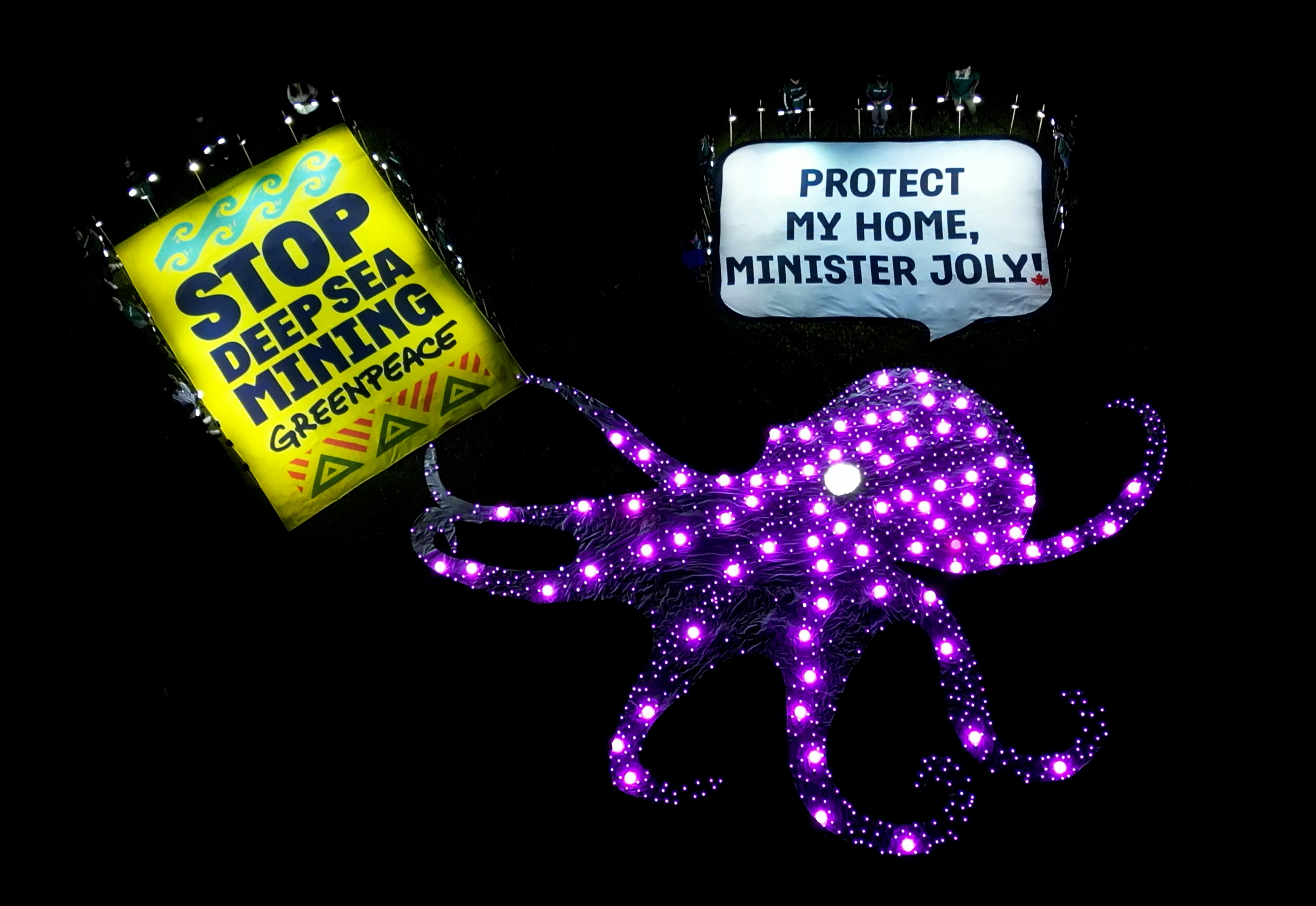
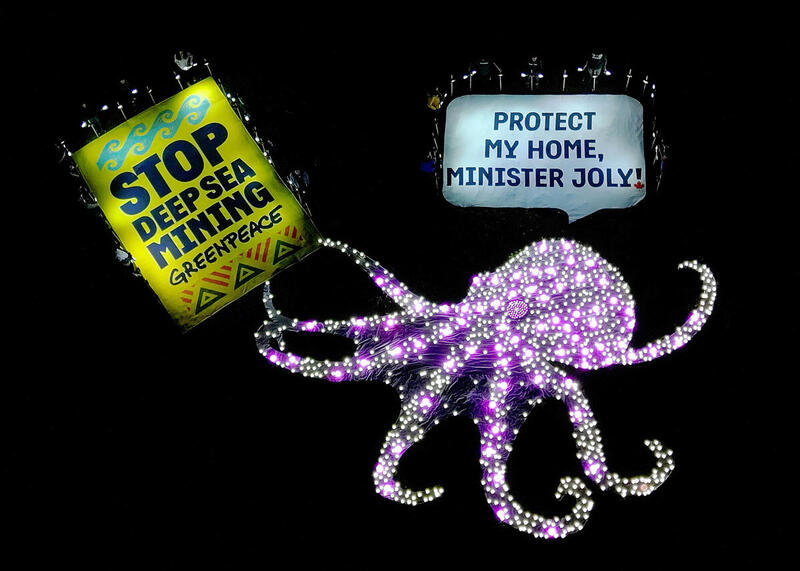
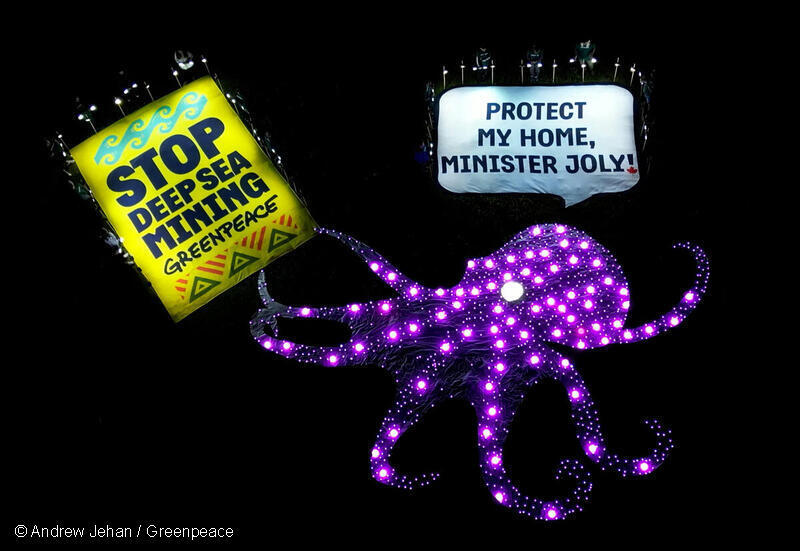
Giant octopus lights up island in Ottawa, urging Canada to oppose deep sea mining
Greenpeace activists and staff created a 48 by 30 foot octopus light installation on Maple Island near the federal Global Affairs buildings to urge Minister Melanie Joly to say no to deep sea mining in international waters.
-
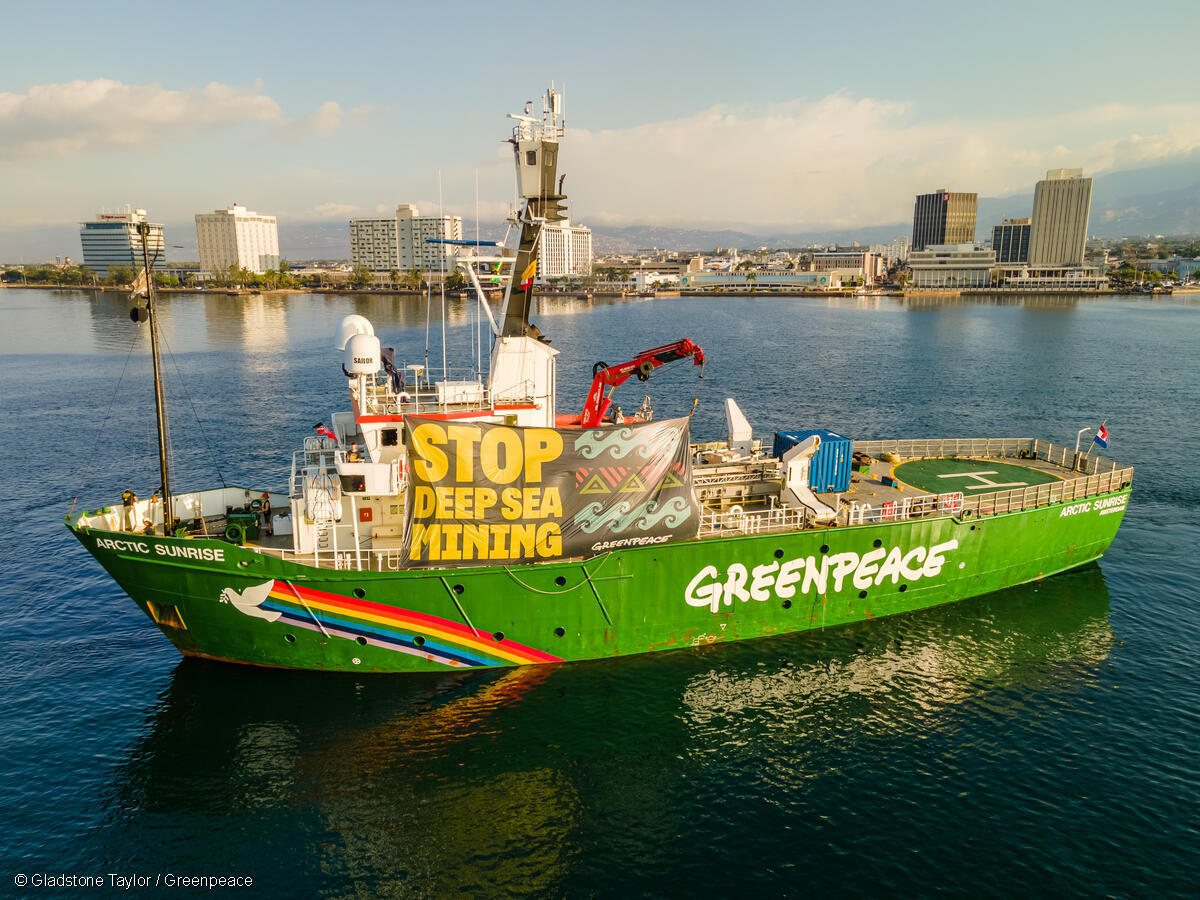
The link between deep sea mining and neocolonialism in the Pacific
Deep-sea mining is an destructive form of mining that would damage the oceans beyond repair, threatening their ability to help fight climate change. Yetnmining companies, including TMC The Metals Company, want to convince governments to let them exploit the seabed. Here’s why we need to stop them.
-

Why do companies want to mine the ocean floor?
Deep-sea mining is an destructive form of mining that would damage the oceans beyond repair, threatening their ability to help fight climate change. Yetnmining companies, including TMC The Metals Company, want to convince governments to let them exploit the seabed. Here’s why we need to stop them.
-

Deep sea mining industry stalks, while governments talk
The world is waking up to the significance of the threat from deep sea mining, but governments have squandered a major opportunity to take action
-
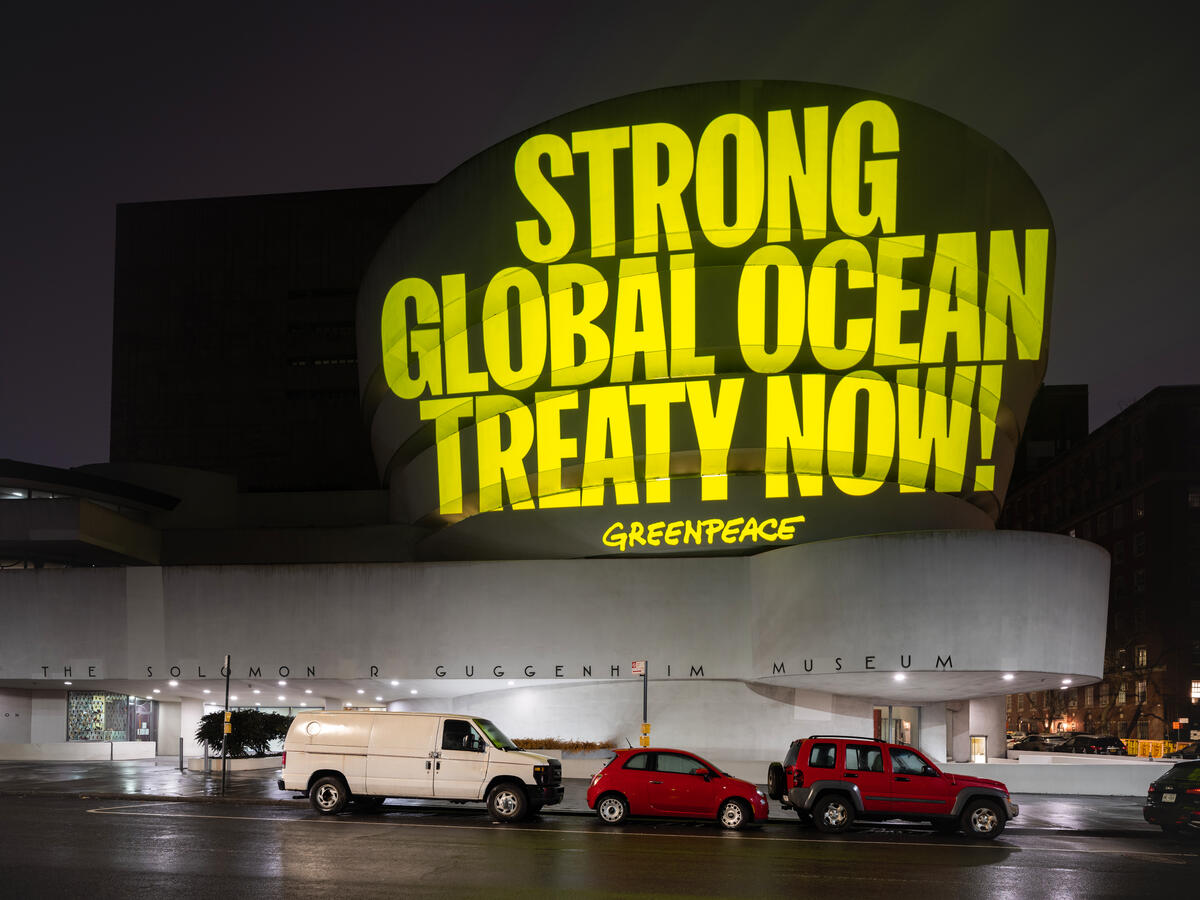
Historic UN Ocean Treaty agreed: Greenpeace statement
A historic UN Ocean Treaty has finally been agreed at the United Nations after almost two decades of negotiations.
-
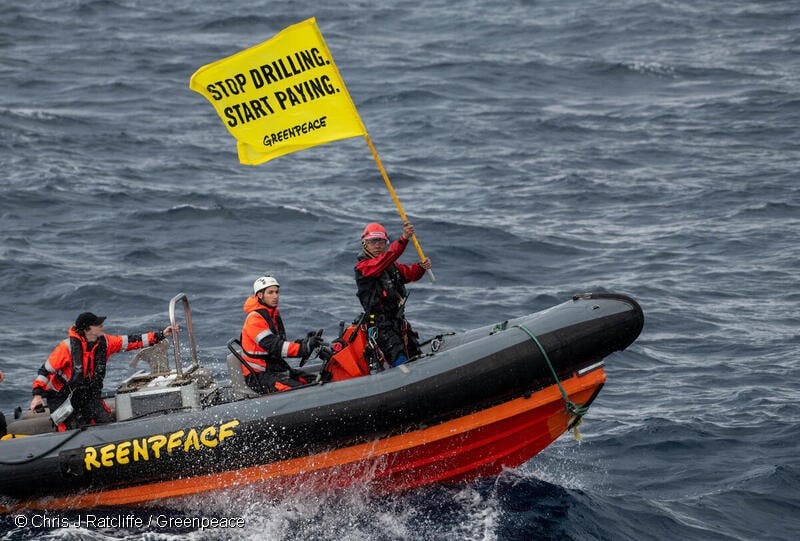
Courage, Love, Change: A Dose of Good News!
Learn about the ways that Greenpeace and its partners have been working to effect change in the past few weeks!
-
UN Ocean Treaty negotiations resume as 30×30 hangs in the balance: Greenpeace opening statement
The final negotiations for a UN Ocean Treaty resume today.
-
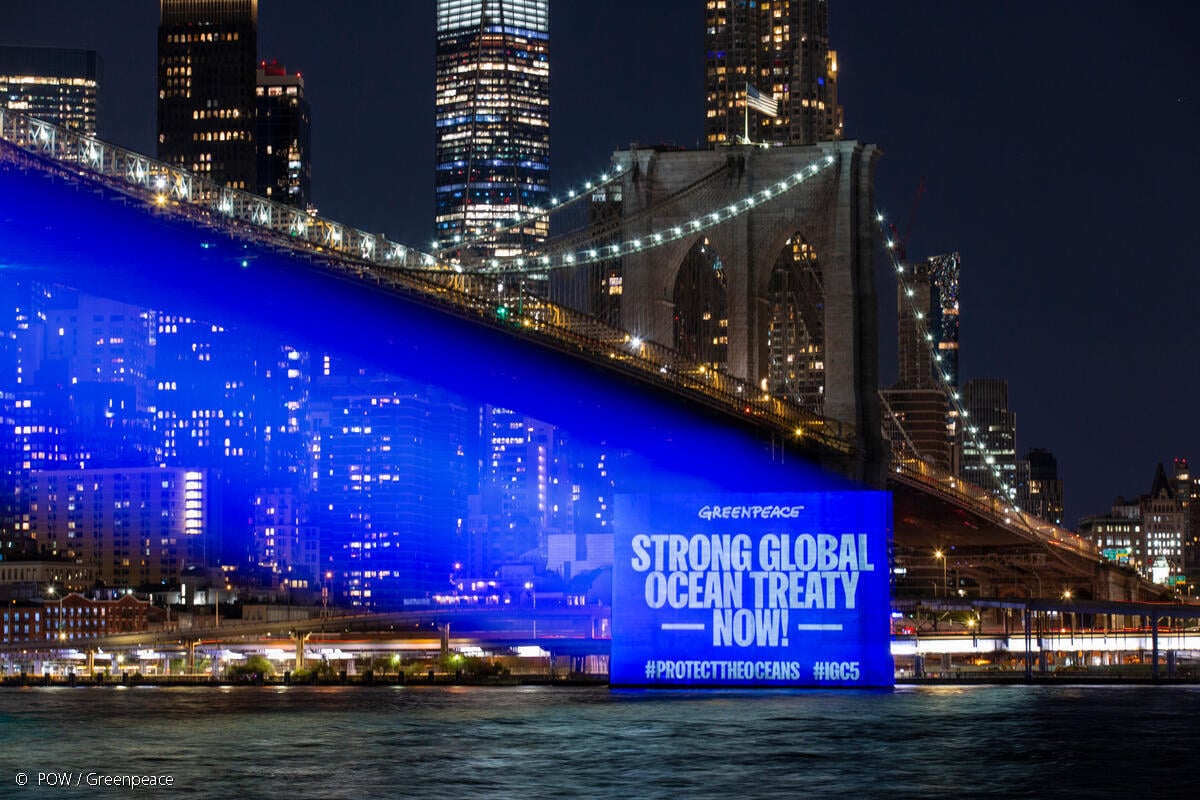
UN Global Ocean Treaty talks set to resume this month
Media Briefing: The final UN Global Ocean Treaty negotiations resume Feb. 20
-
A Dose of Good News for the New Year!
Like a plant that grows in the cracks of a sidewalk or the sundogs shining in the winter sky, hope is everywhere.
-
Canadian Nature Groups Welcome Global Deal to Reverse Nature Loss by 2030 at COP15
Canadian environmental groups welcome the Kunming-Montreal Agreement at COP15 in Montreal to halt and reverse global biodiversity loss by 2030 and applaud Canada’s leadership, which was instrumental in landing the deal.
-

Reaction of Greenpeace Canada to the final COP15 deal
This announcement is a huge moment for nature, which is so important to everyone. While the deal isn’t perfect, we are happy to see a strong recognition of Indigenous rights and knowledge. This is the future of ethical and effective conservation worldwide.
-
COP15 recognises Indigenous Peoples’ work, but won’t disarm the threat of mass extinction
At the final adoption of an agreement at COP15, Greenpeace welcomes the explicit recognition of Indigenous Peoples’ rights, roles, territories, and knowledge as the most effective biodiversity protection that has come out of the UN biodiversity talks.
-
Nature groups give high marks for Canada’s new commitment to a high ambition action plan to halt and reverse nature loss
Canadian nature groups welcomed the announcement saying the Minister’s remarks promise to deliver a national strategy that commits to “raise the bar” to deliver on a great many issues that the nature community has been asking for.
-
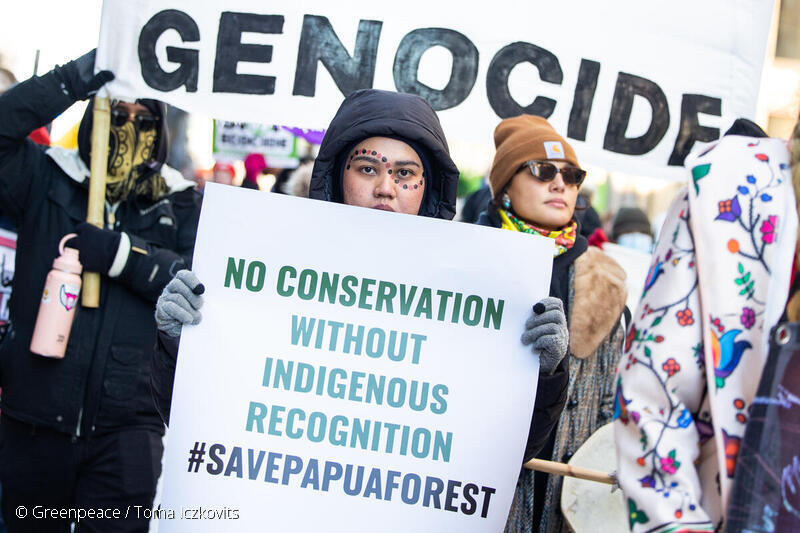
Greenpeace calls for real biodiversity protections in final week of COP15
Recognition and respect for the roles of Indigenous Peoples, who protect 80% of existing biodiversity globally, was removed from some parts of the draft agreement. Over the weekend, thousands marched on the COP15 convention center in Montreal over the weekend, calling for rights for Indigenous Peoples.
-
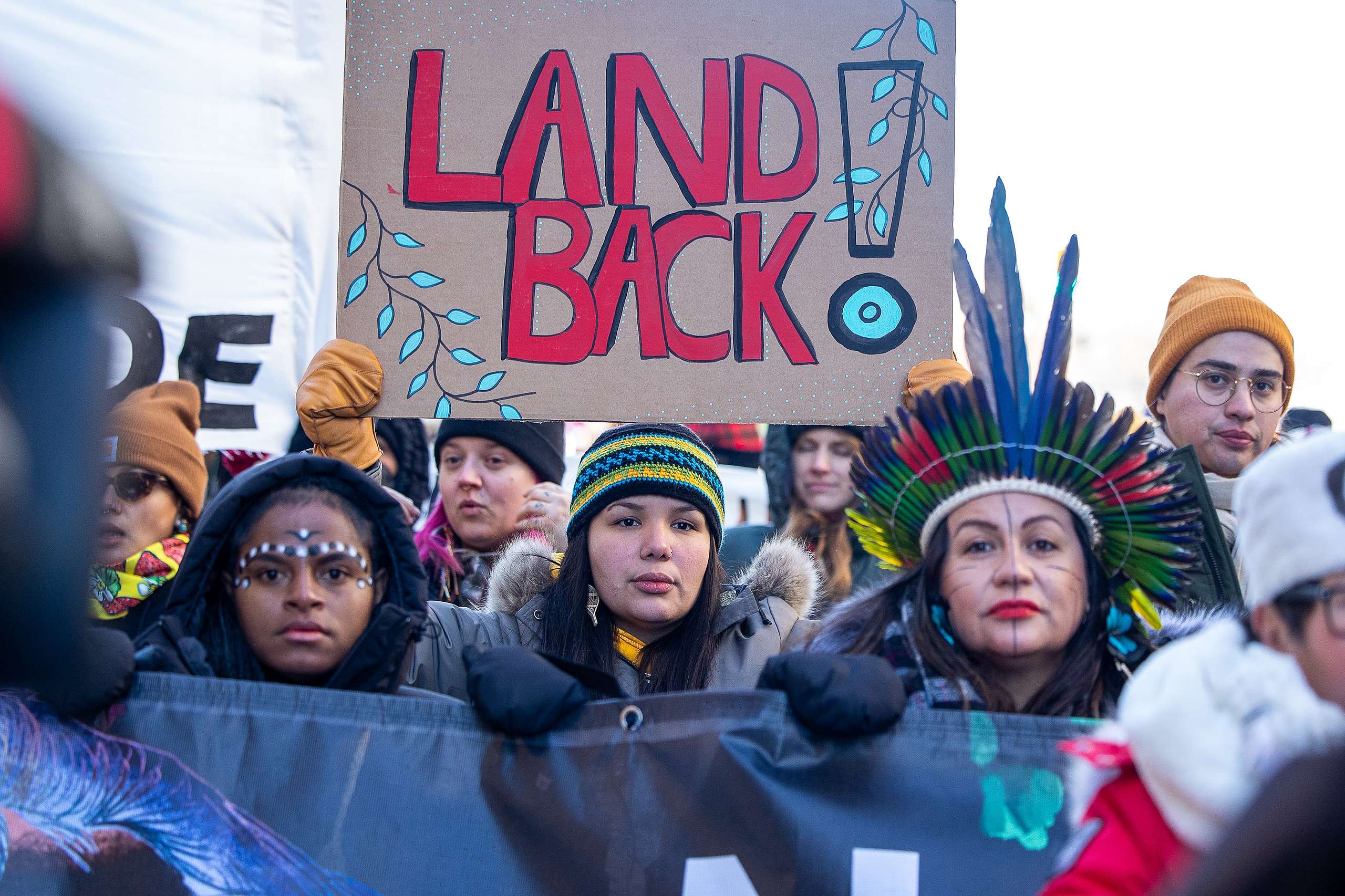
Great March for Biodiversity and Human Rights: over 3,500 people take to the streets for biodiversity and human rights
Over 3,500 people gathered today to join the Great March for Life, which started at 1:00 pm at the Mount Royal statue, despite the freezing cold.
-
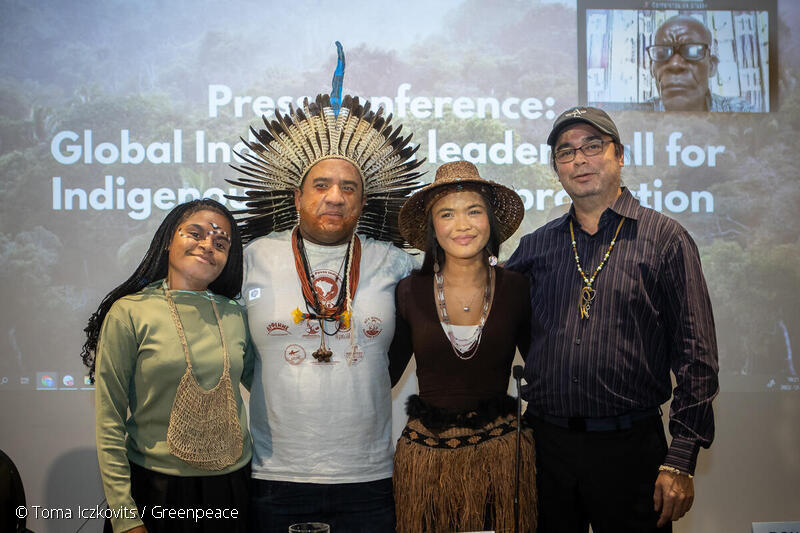
Global Indigenous leaders gather in Montreal to call for Indigenous-led nature protection
With 1 million species at risk of extinction worldwide, it is clear that nature is in crisis. So, it needs protection. A clear indicator of success for these negotiations will be how much they enshrine Indigenous knowledge as a science of the land in its own right.
-
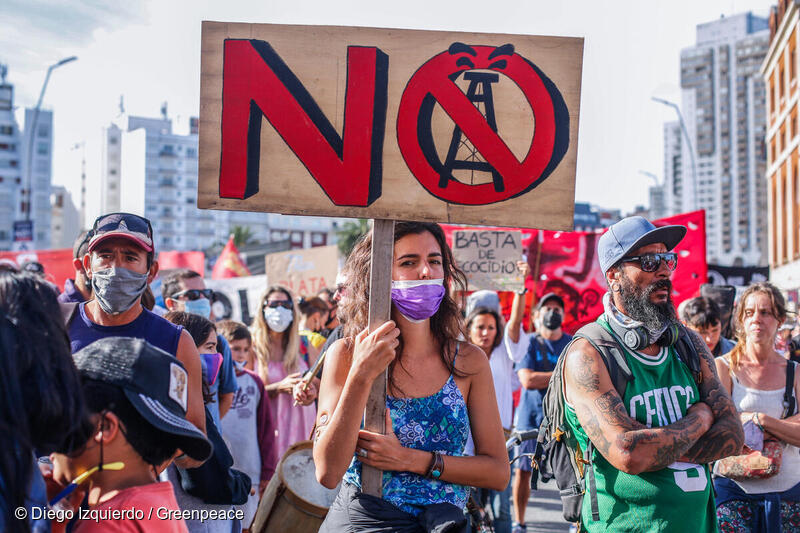
Reaction to Trudeau’s announcement of $350 million in international biodiversity funding
This announcement at the launch of the Biodiversity COP15 in Montreal increases the pressure for other developed countries to step forward and put new, not previously allocated money on the table.
-

All eyes on Montreal: COP15 is the make-or-break moment for global biodiversity
COP15 is a chance to create a systematic shift in the global fight to protect biodiversity. Biodiversity is the network that supports all life, including humanity.
-
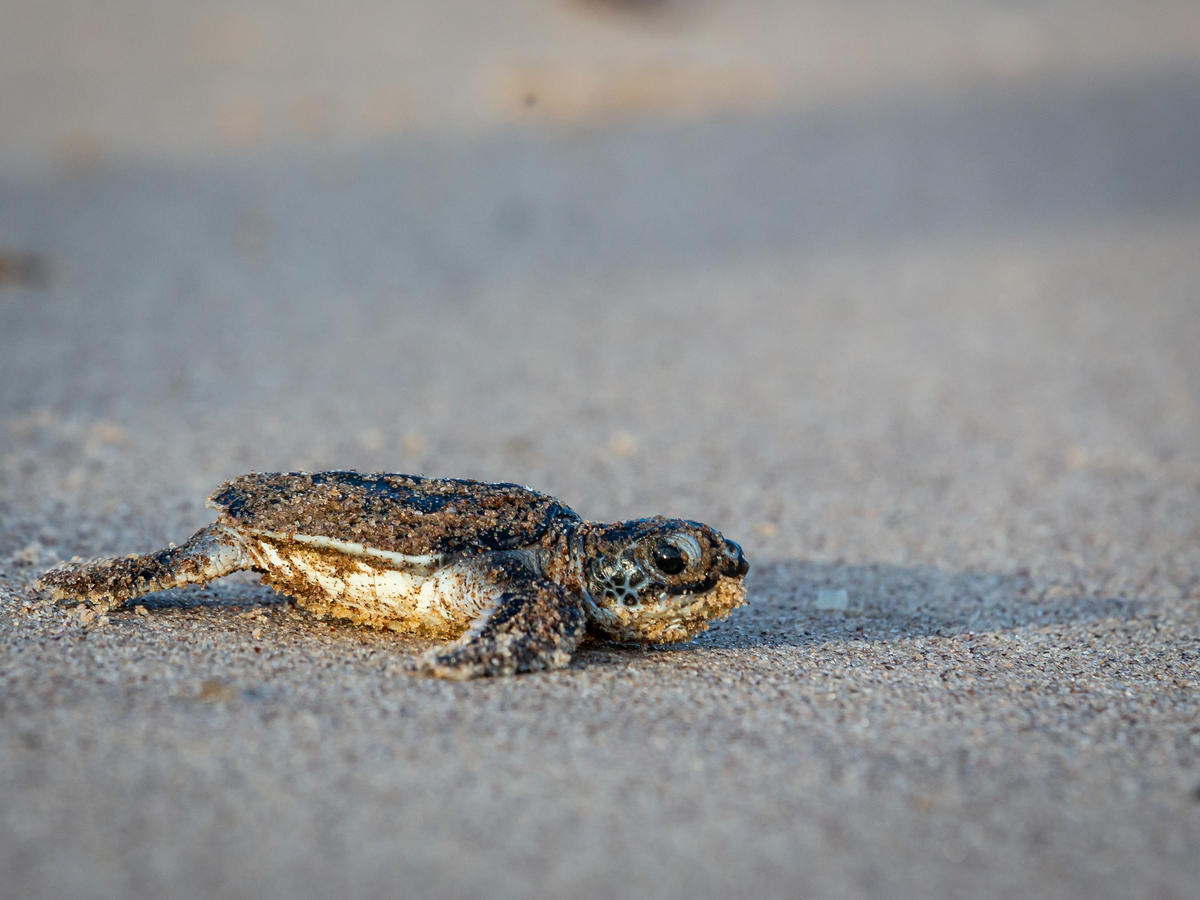
Peace, Love, Gratitude: Environmental Victories of 2022
The story of Greenpeace is one of hope.
-
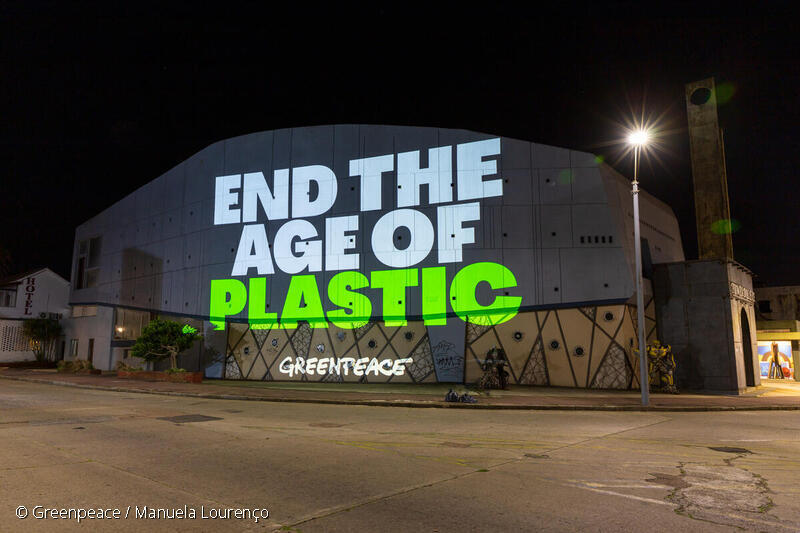
A new Plastics Treaty: How Canada can help end the age of plastic
Negotiations to create a new Global Plastics Treaty at the UN are currently underway. ‘Tis the season to help Minister Guilbeault and the federal government define what a truly ambitious, strong Global Plastics Treaty means – to turn off the plastic tap once and for all.
-

New polling: over 80% of Canadians are worried about the nature crisis and believe the federal government should lead at COP15
A new poll by Environics reveals that 84% of Canadians express concern about the future of the planet due to the state of wildlife and nature today.
-
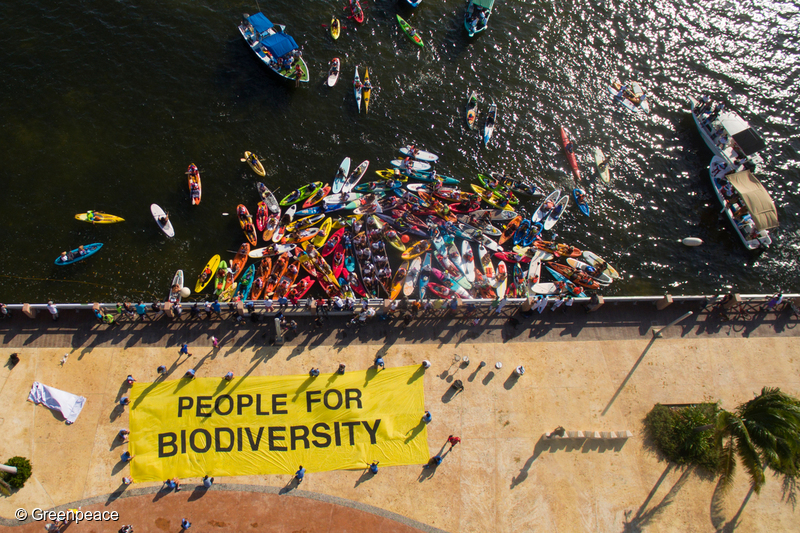
Why world leaders must step up to protect biodiversity at CBD COP15
Greenpeace has sounded the alarm for world leaders: if you’re serious about biodiversity, it’s time to self-invite for COP15.
-
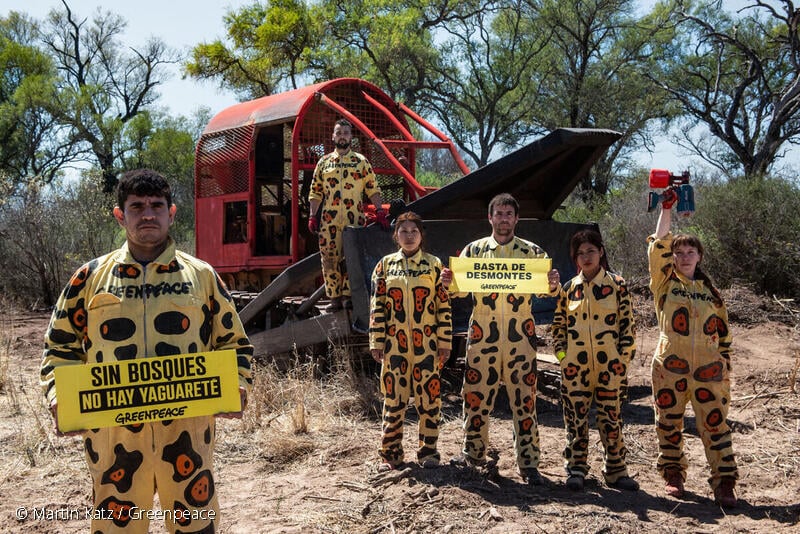
Your Dose of Good News!
There are so many ways to effect change. Just take a look at some of the recent campaign victories from around the world. From the forests to the coasts, our activism is fostering creative, peaceful, and diverse solutions. We’re excited to share some of these stories with you, along with some cool content for you to…
-

Greenpeace investigation finds suspected human rights abuse by suppliers of major US and Taiwanese seafood company
Major US seafood brand Bumble Bee and its Taiwanese owner, tuna trader FCF, are suspected to have illegal fishing and human rights abuse in its supply chain, according…
-
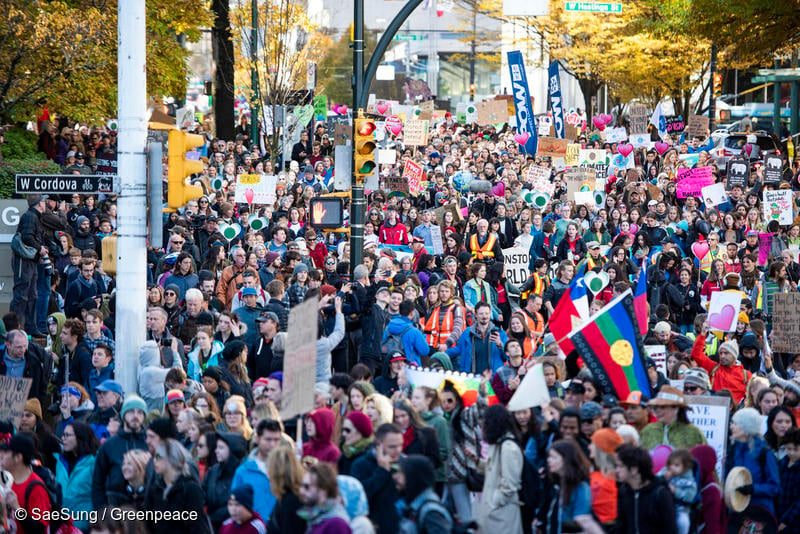
A Dose of Good News
Maybe you’ve participated in our campaigns. Maybe you’re feeling overwhelmed by some of the media headlines lately and could use a dose of good news. Maybe you’re working on a…
-
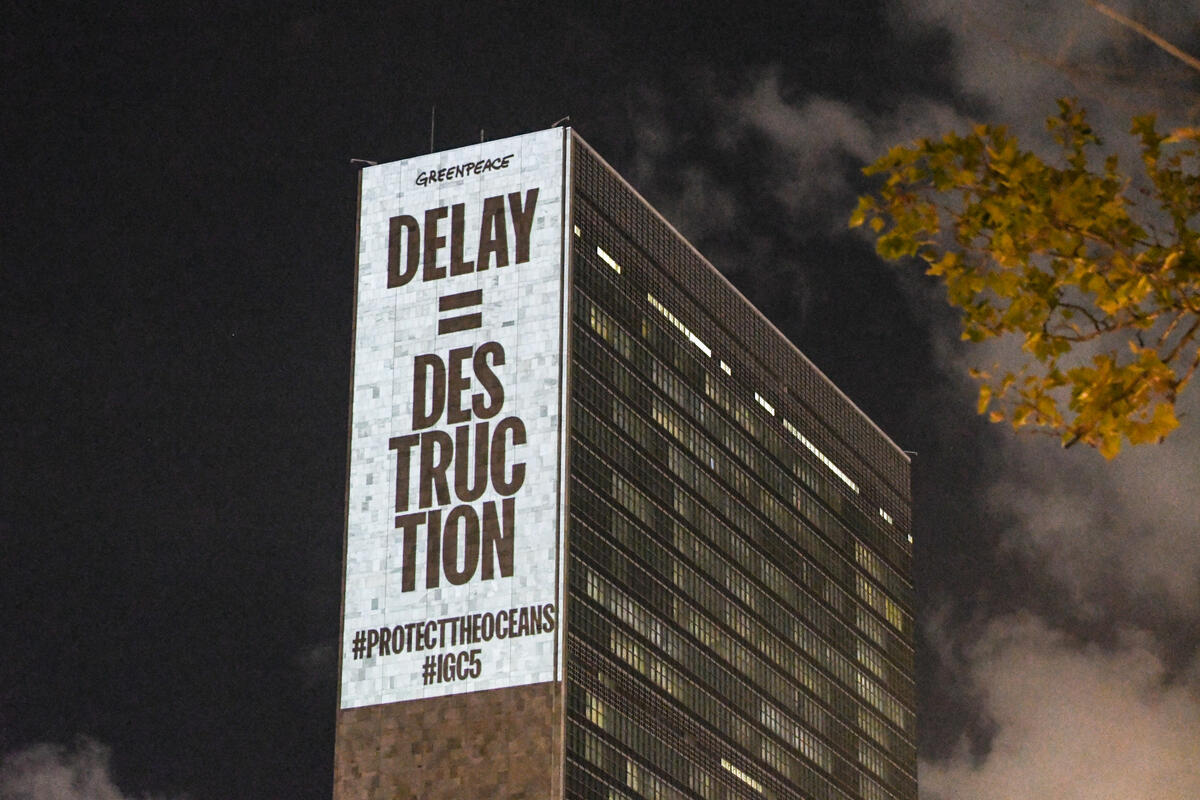
UN Ocean Treaty talks collapse, as the ocean crisis deepens
UN Ocean Treaty talks have failed to reach agreement on a Treaty which can deliver Ocean Sanctuaries across 30% of the oceans by 2030.
-
UN Ocean Treaty talks set to fail because of ‘High Ambition Coalition,’ including Canada
UN Ocean Treaty talks are on the brink of failure because of the greed of countries in the High Ambition Coalition and others like Canada.
-
Why a Global Ocean Treaty can’t wait
In a few days, we’ll know the fate of the global oceans.
-
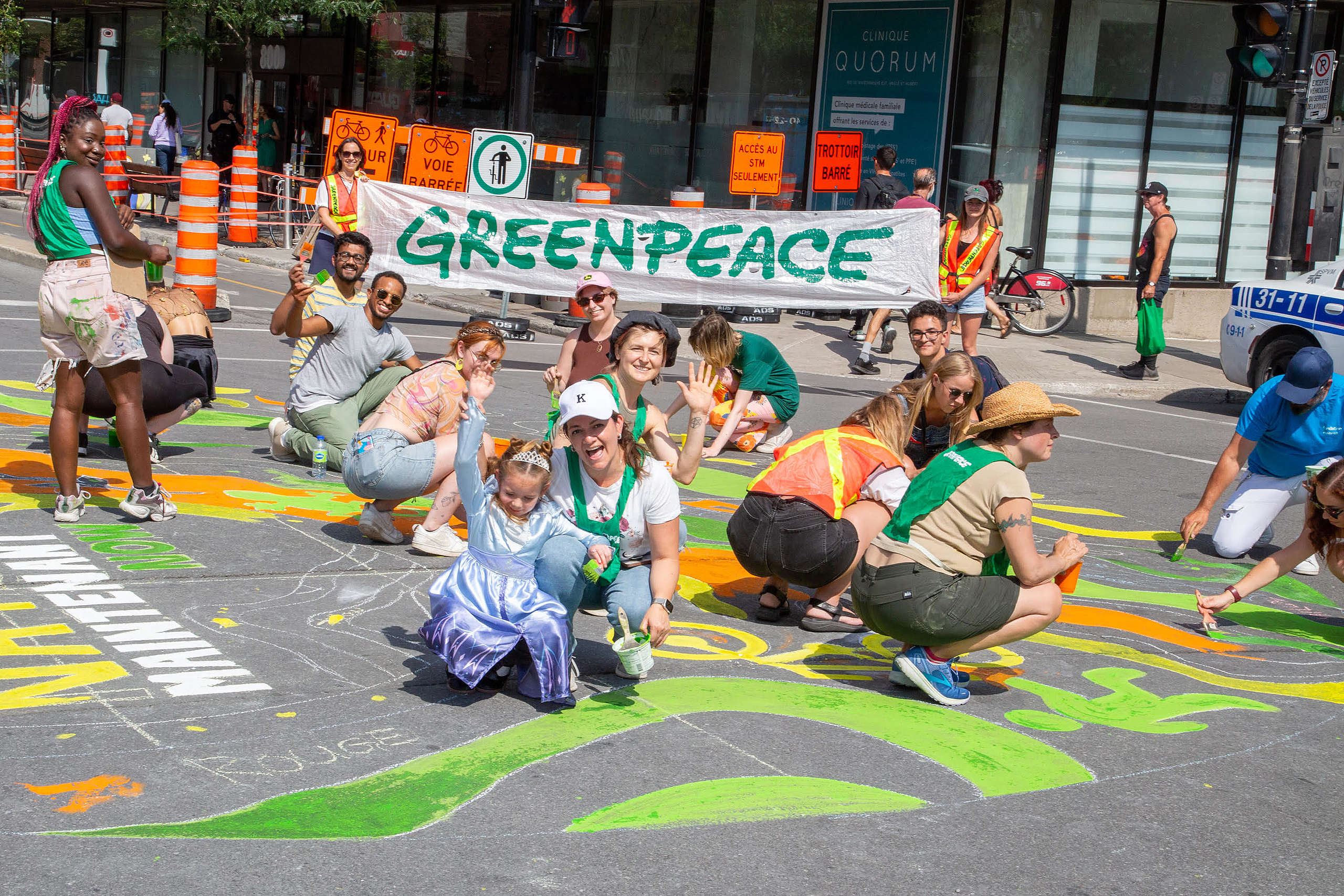
Greenpeace Canada paints a mural in front of Minister Steven Guilbeault’s office, calling him to pass strong nature protection law
Greenpeace Canada and its supporters painted a mural in front Minister Guilbeault’s office in Montreal to make him commit to passing a Nature & Biodiversity Act that redefines our relationship with nature, prioritizes Indigenous People’s rights, and ensures equitable access to nature for everyone.
-
UN negotiations to decide the fate of the oceans begin, Greenpeace comment
The final negotiations for a Global Ocean Treaty begin today and run until Aug. 26 at the United Nations.
-
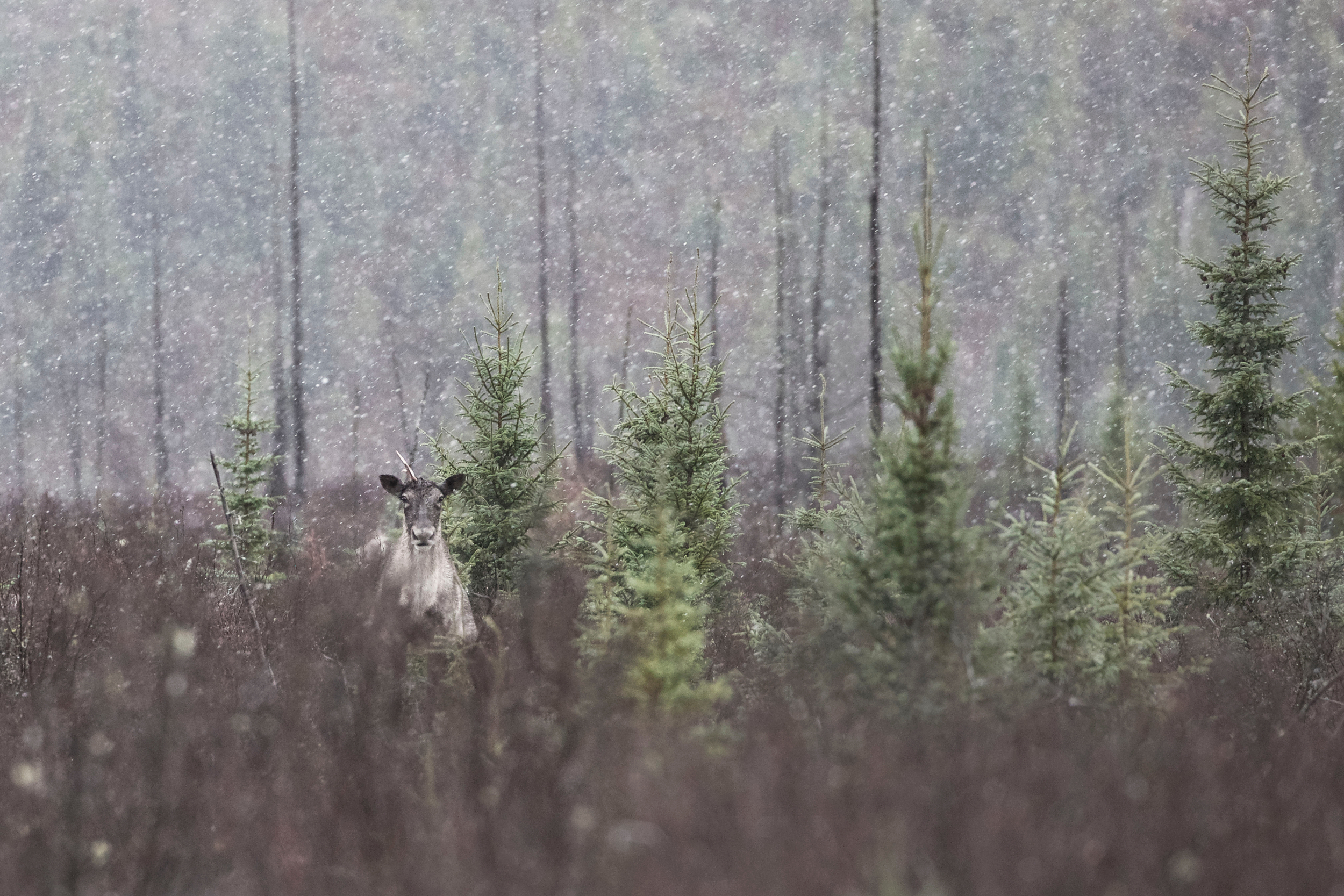
Protecting Nature and Biodiversity with Better Laws
Canada must show up to the CBD negotiations as if life on earth depends on it—because it does.
-
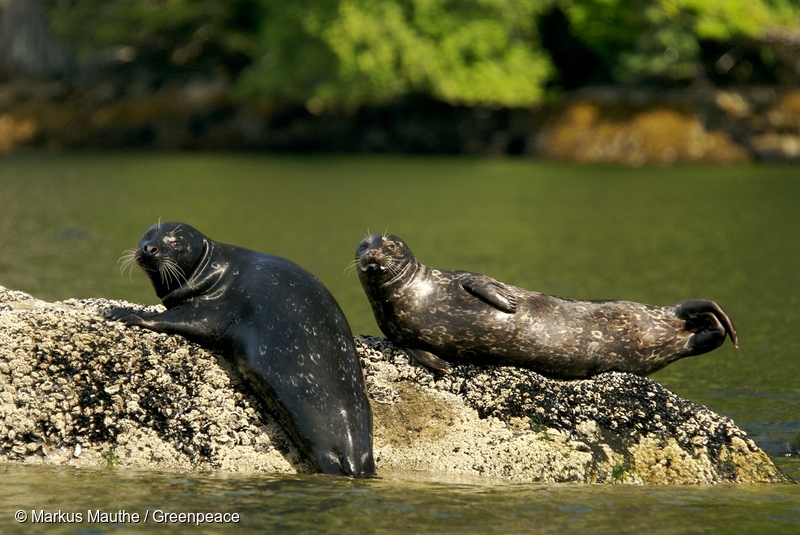
Biodiversity talks leave all key issues unresolved before Montreal
Biodiversity negotiations dragged at a glacial pace this week in Nairobi, leaving a heavy workload for final talks in Montreal, where Canadian hosts and the Chinese presidency will need to steer the process and tackle virtually all key issues, including Indigenous rights and key targets to protect and restore ecosystems.
-

Ahead of the Montreal Biodiversity summit, new Greenpeace Canada report calls for strong nature protection legislation
Hosting this global event comes with a responsibility to show leadership, so it’s time for Minister Guilbeault to go beyond nice words and declarations, and step up his actions. That means prioritizing people’s right to a healthy environment over corporate interests.
-
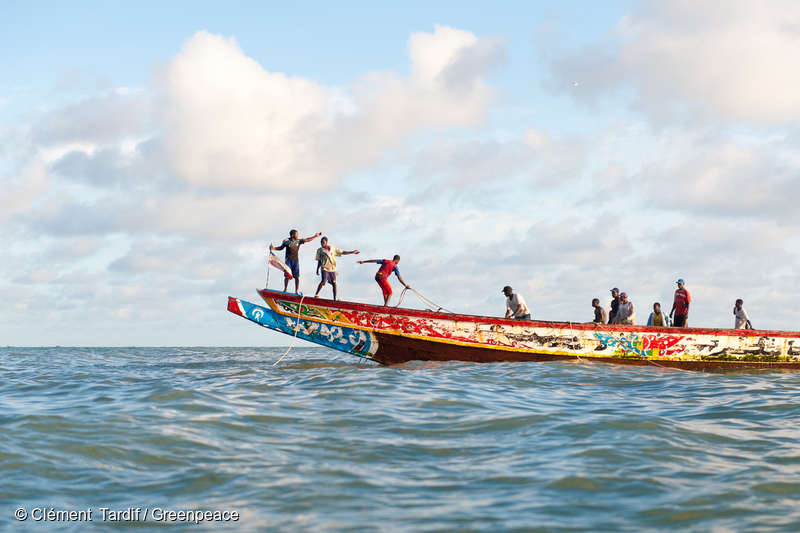
Why protecting the ocean means protecting people
When you read the phrase ‘ocean conservation’ what images come up in your mind? A mighty blue whale? Cute penguins from our recent Antarctica trip? Maybe some fish swimming in…
-
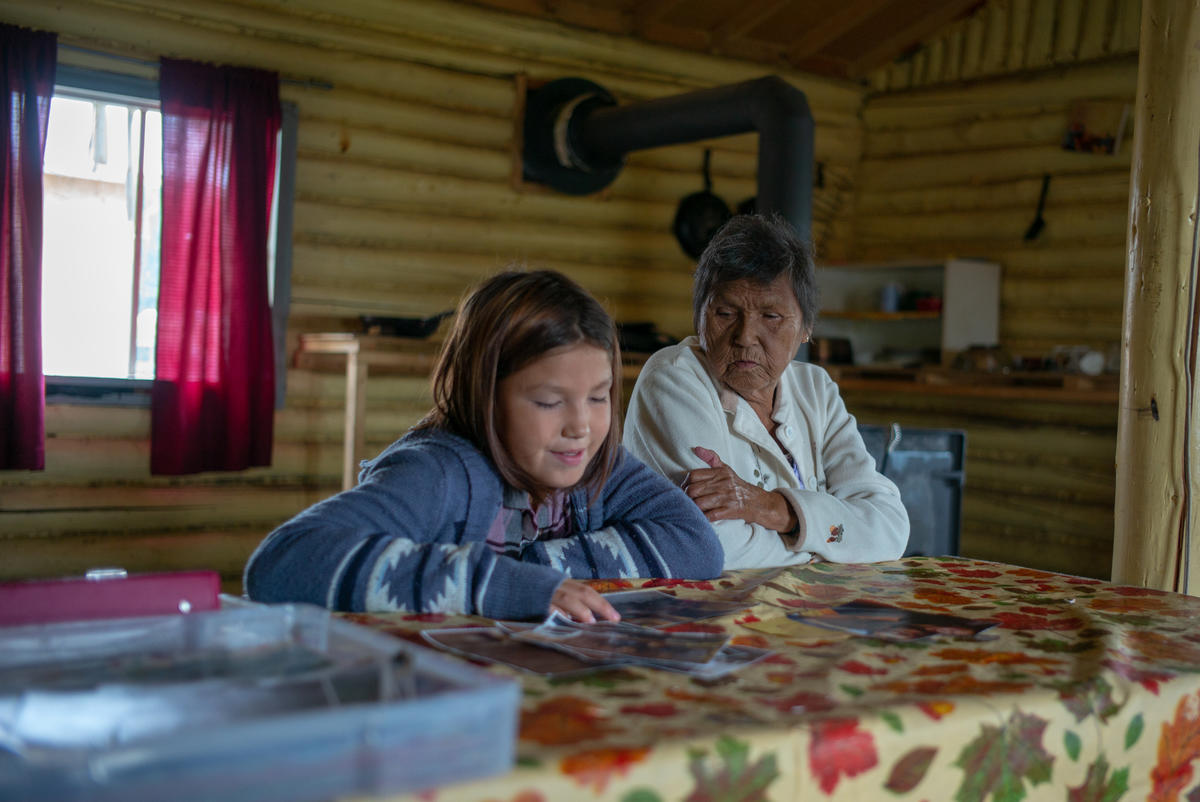
Nature is for everyone – so is defending Her
This week we are kicking off a month-long series of live talks exploring the theme of decolonising Nature, restoring the land and building justice.
-
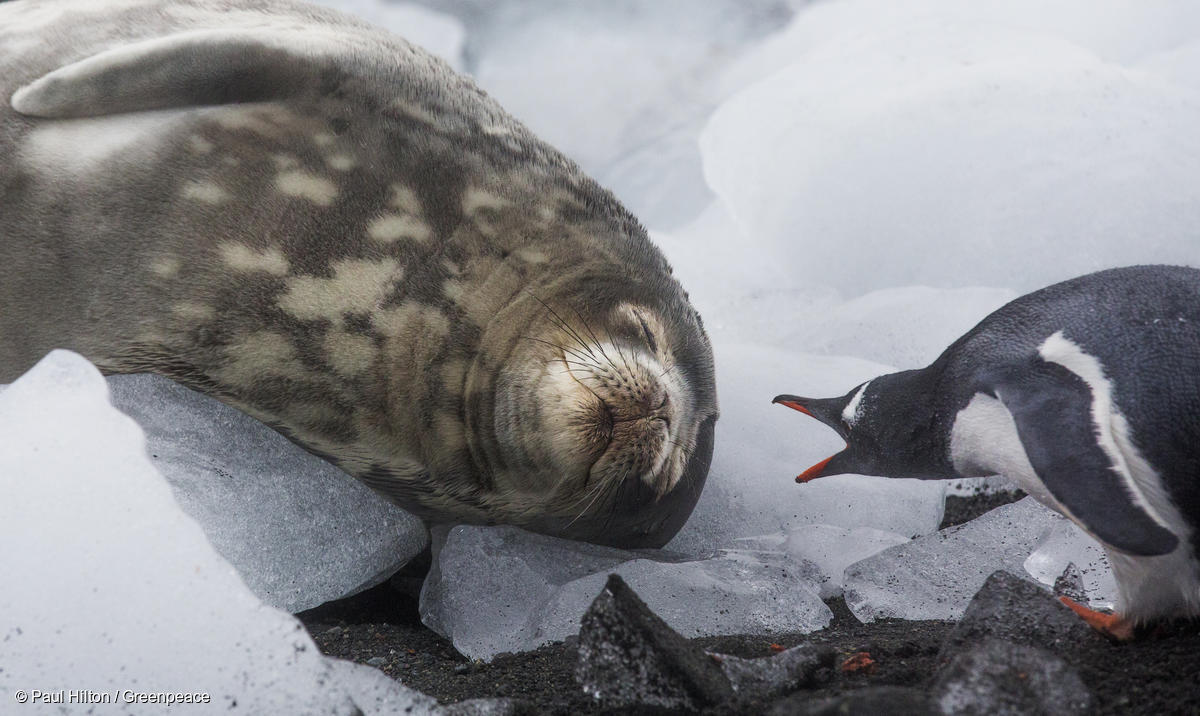
Protecting Nature’s rainbow of life: digging in on the biodiversity crisis
We want to protect at least 30 per cent of our planet by 2030 and half by 2050 — an achievable goal if we start now.
-
Greenpeace’s statement on the Geneva biodiversity meetings in the run up to COP15 in Kunming, China
What we desperately need in the run-up to COP15 is ambition and a solid implementation framework. The time for distractions has run out.
-
Greenpeace comment on UN ocean treaty negotiations
Governments have let a crucial opportunity to address the ocean biodiversity crisis stall, as negotiations on the Global Ocean Treaty at the UN are paused until a later date.
-
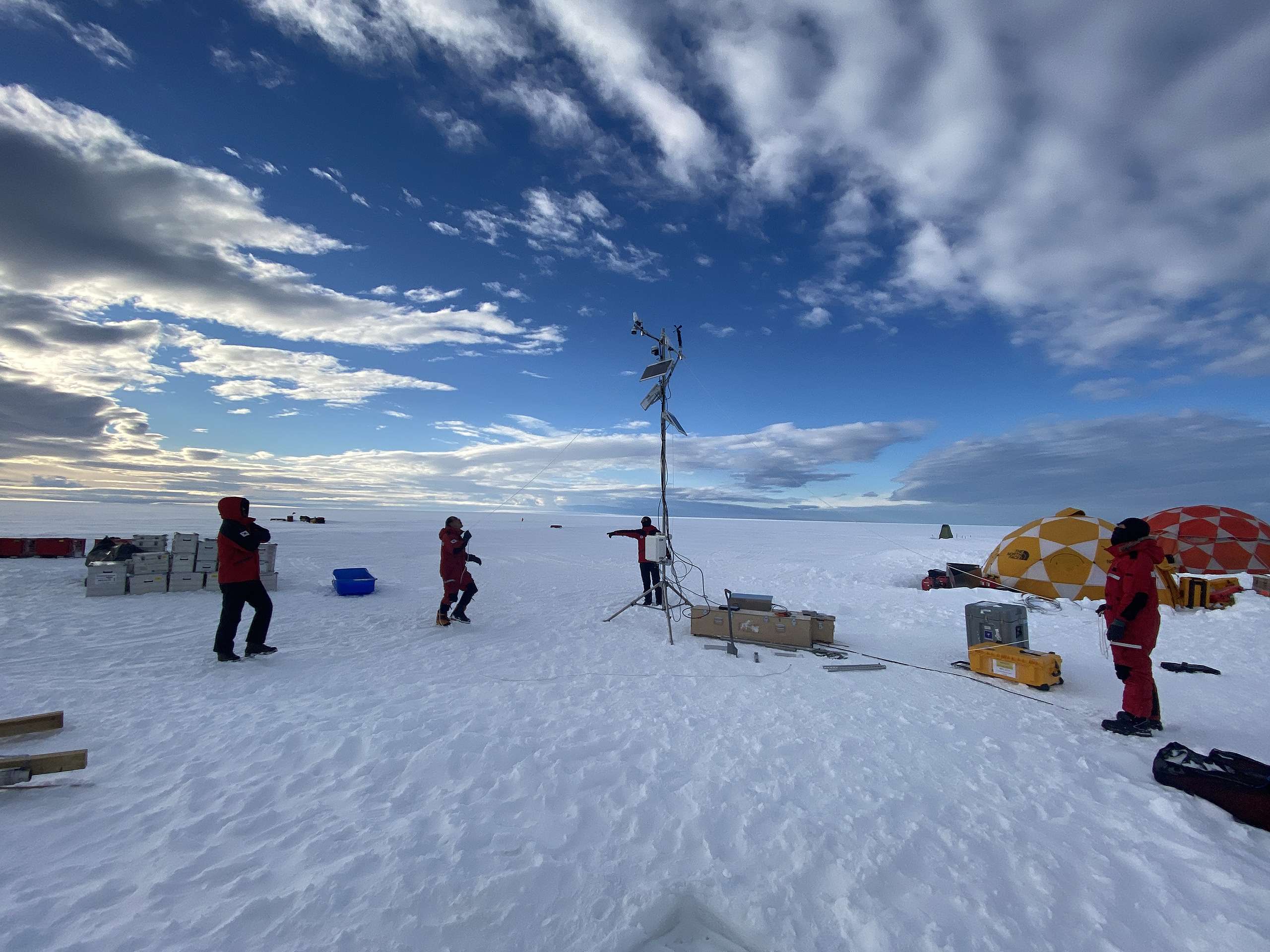
‘Fractured and breaking’: Checking in on the ‘Doomsday Glacier’ with David Holland
On the edge of western Antarctica sits the world’s most unstable glacier, held back from falling into the sea by a slab of floating ice.
-

Rethinking Nature Protection: Call for Artists
This Fall, governments will assemble in Kunming, China for the 15th UN summit under the Convention on Biological Diversity. The international conference will set the stage for the negotiations of…
-
Greenpeace calls for unity and action as delegates arrive at biodiversity meeting in Geneva
Delegates gather at a pre-meeting for this year’s Convention on Biological Diversity (CBD) COP15
-
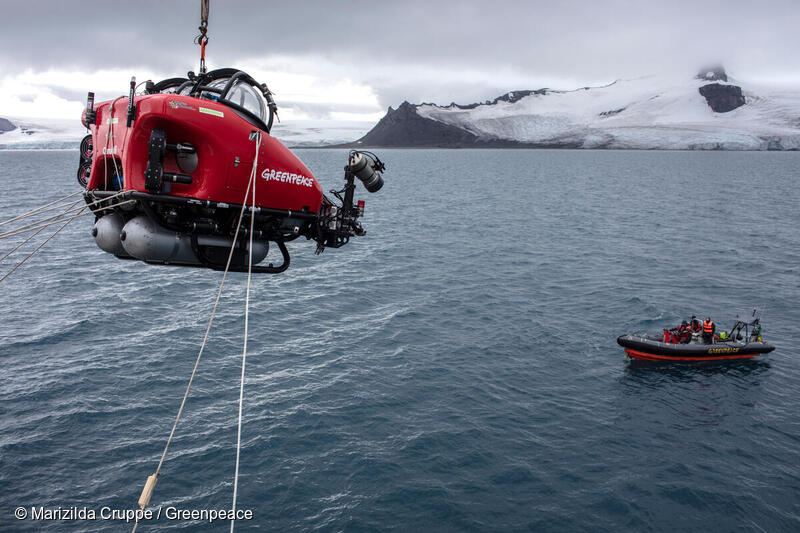
Scientists aboard Greenpeace Antarctic expedition find abundance of life in southernmost submarine research dive in history
Since the last record was broken in 2017, an area of sea ice roughly the size of Switzerland has disappeared. This ice used to protect this precious region, now we need governments to.
-

The mental load of zero waste
The mental load is a term for the constant demands which typically fall on women’s shoulders, related to the planning, management and execution of a task or set of tasks.
-
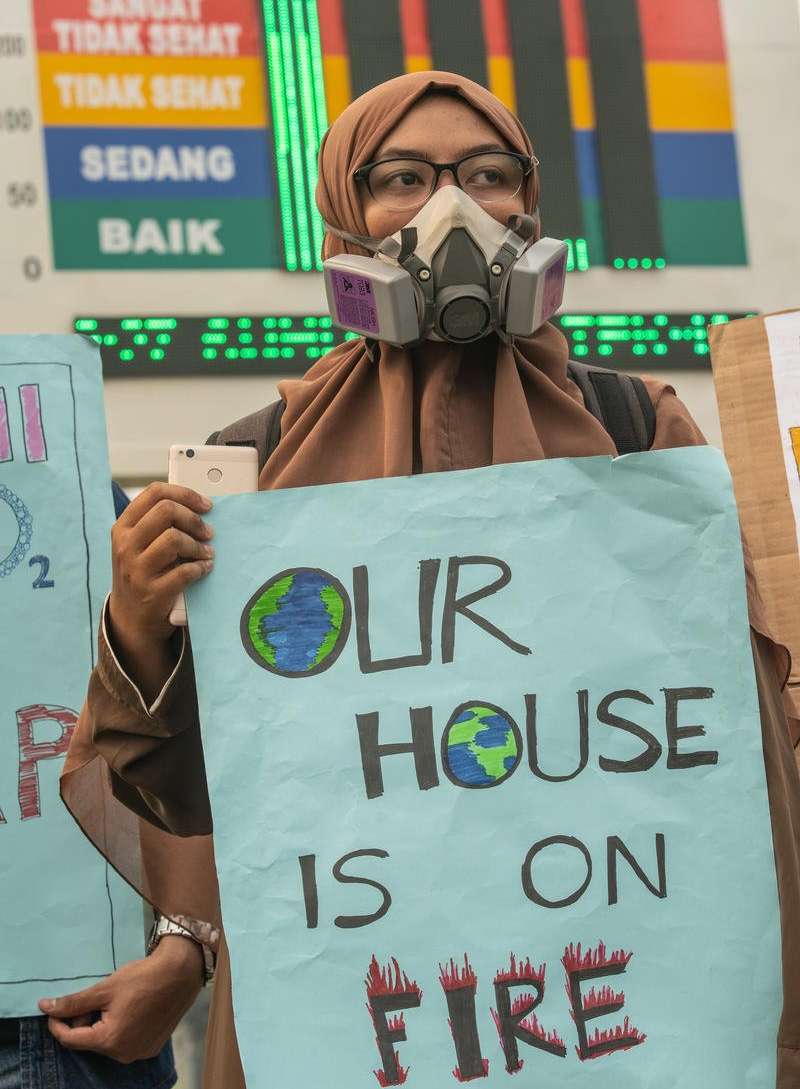
5 things you need know about the new IPCC WG2 report
The world’s leading climate scientists just released their latest massive assessment on the impacts of climate change and how and to what extent those impacts can be adapted to.
-
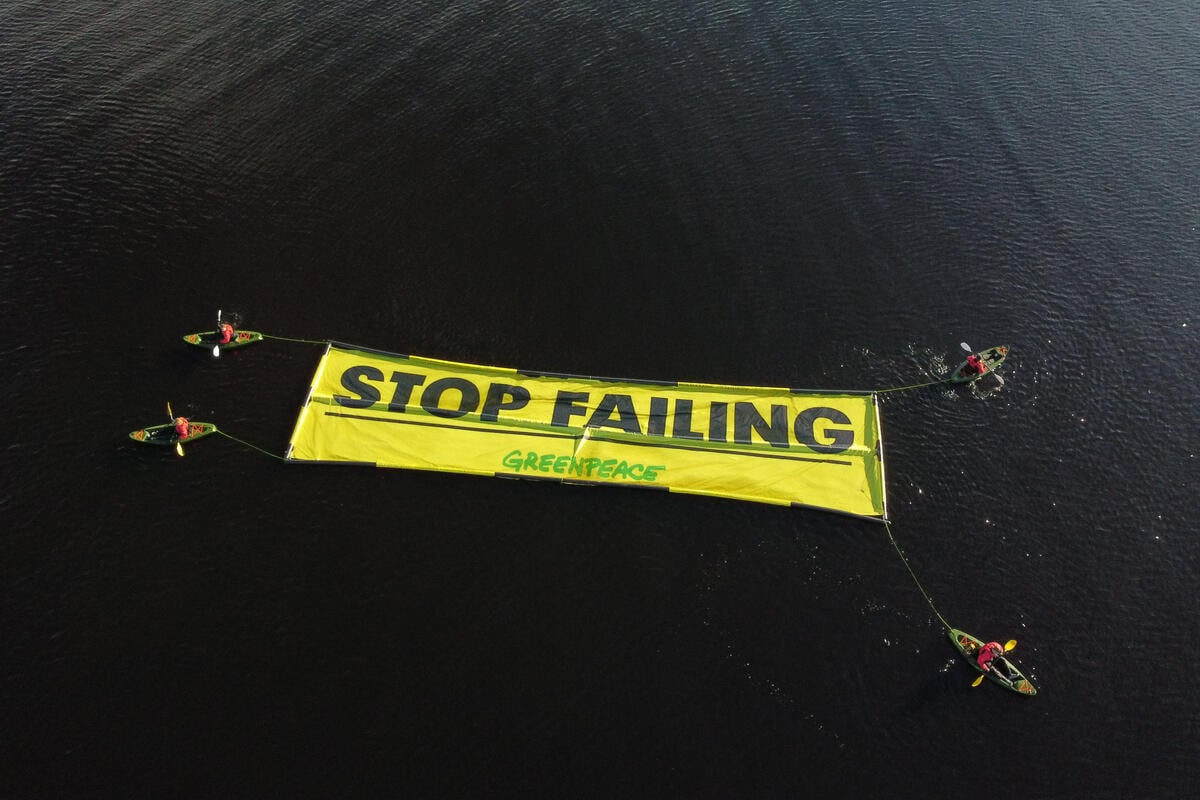
New IPCC report: we are not prepared for what is coming
In the most comprehensive assessment of climate impacts yet, the Intergovernmental Panel on Climate Change’s (IPCC) Working Group II report delivered their latest scientific assessment to world governments…
-
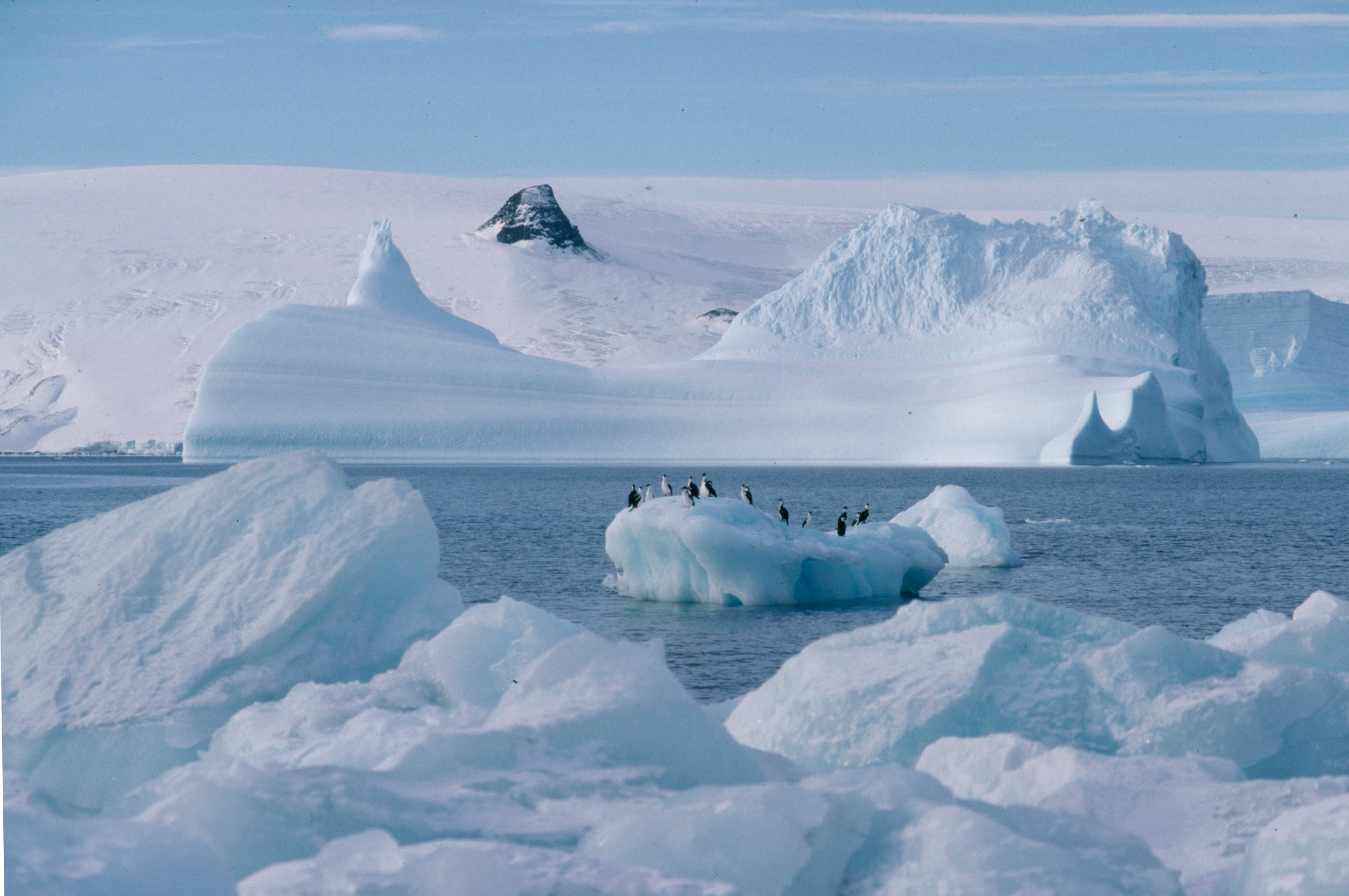
Antarctic Sea Ice Minimum set for a record low
Data from the National Snow & Ice Data Center shows that this year Antarctic sea ice will reach the lowest extent on satellite record.
-
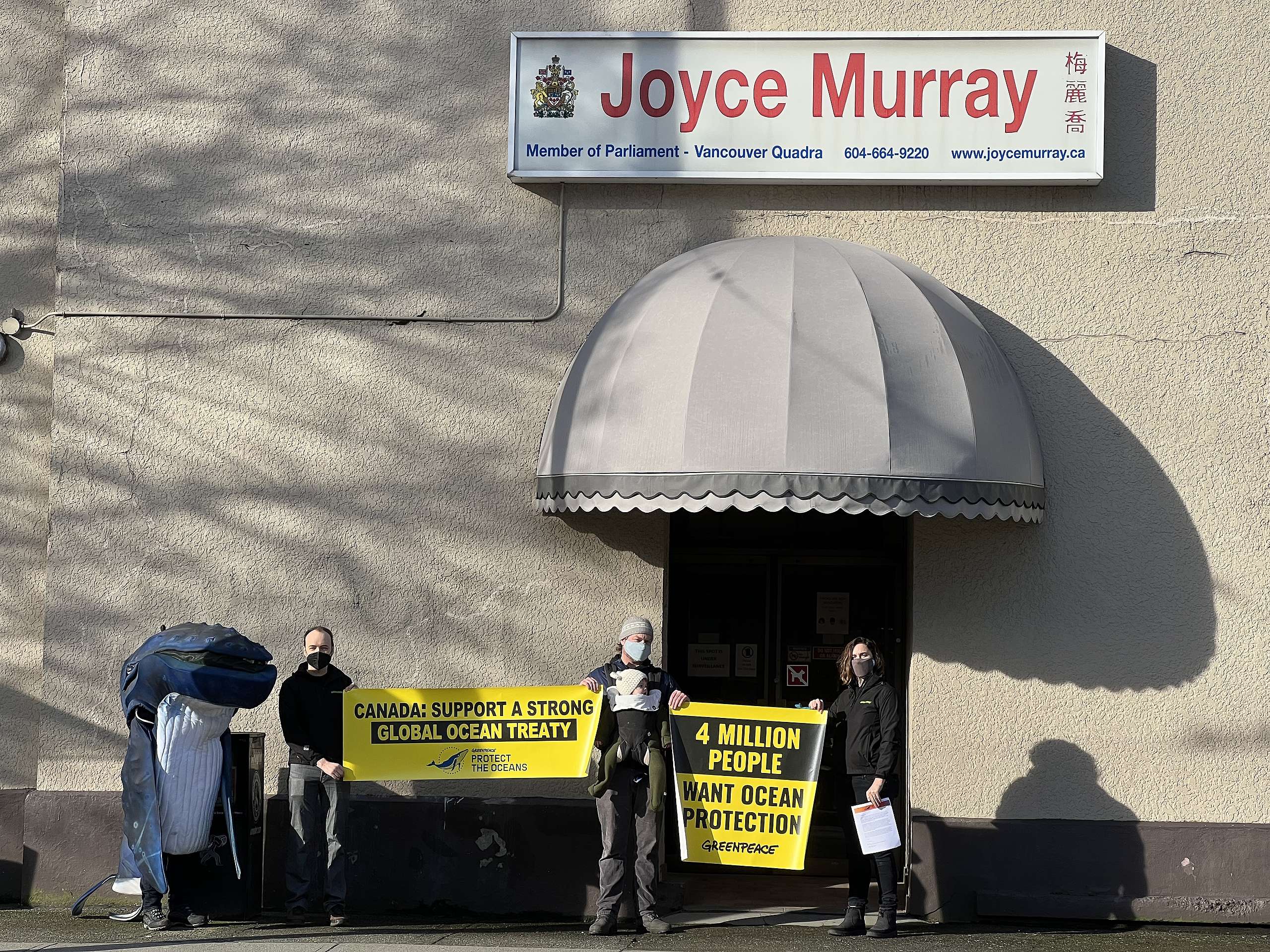
4 million people worldwide call for global ocean protection via strong UN Treaty
Today, Greenpeace delivered a petition calling for the protection of the global ocean commons to the office of Joyce Murray, the Minister of Fisheries, Oceans.
-

New IPCC climate report to add pressure for action and justice
Approval of the Intergovernmental Panel on Climate Change (IPCC) Working Group II report on Impacts, Adaptation and Vulnerability in a virtual session (14-25 Feb).
-
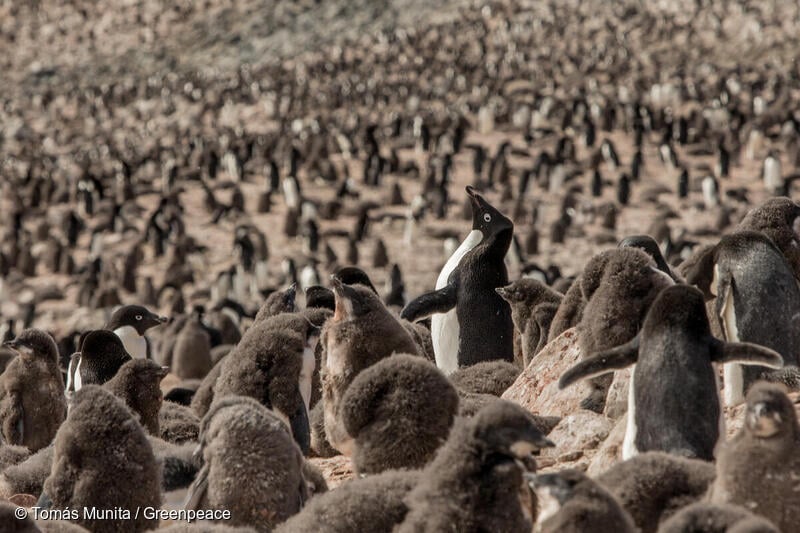
Scientists in Antarctic confirm climate refuge in the remote Weddell Sea
Scientists from Stony Brook University on Greenpeace’s Antarctic expedition have found that vast colonies of Adélie penguins in the remote Weddell Sea have remained stable in the last decade
-
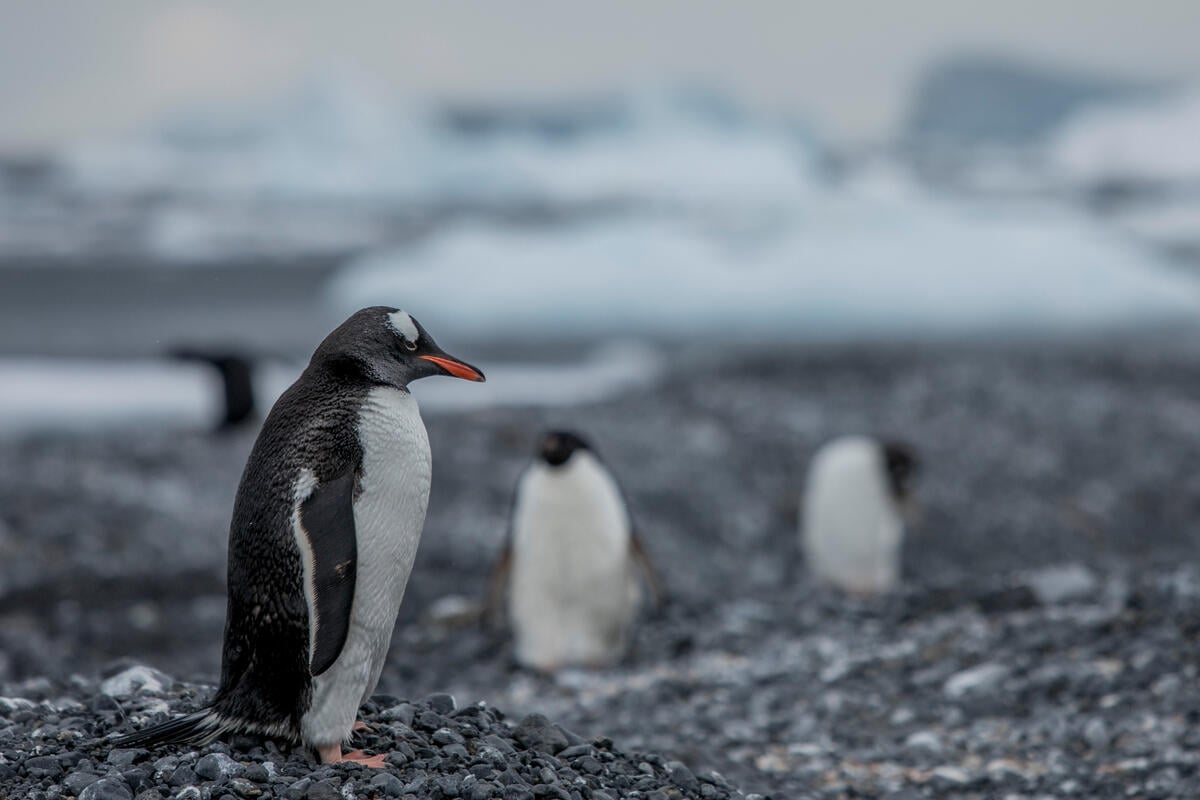
Scientists discover new penguin colonies that reveal impacts of the climate crisis in the Antarctic
New penguin colonies not previously known to science have been found in the Antarctic by researchers from Stony Brook University. These include a new gentoo penguin colony never before recorded…
-
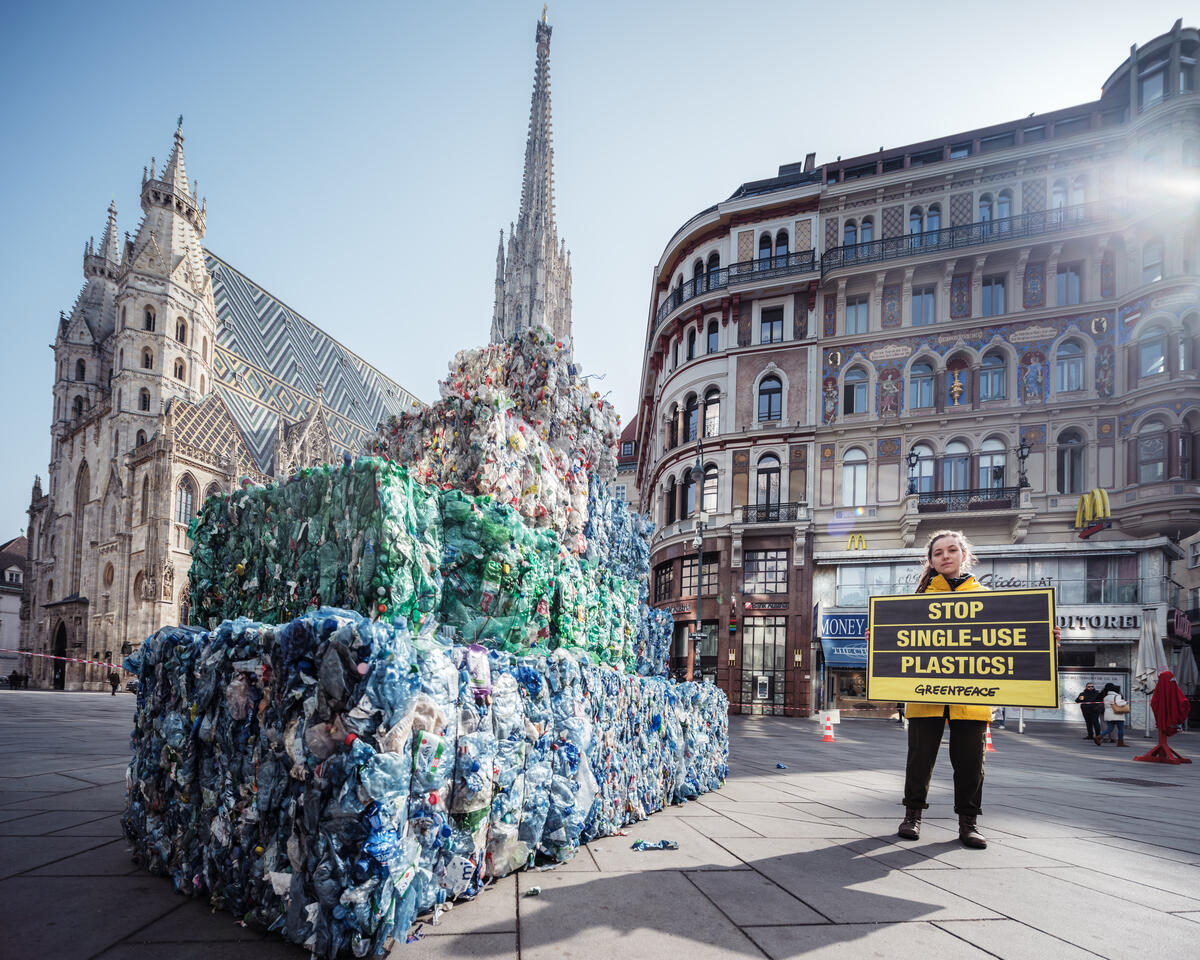
The world is ditching plastics with reuse and refill laws and practices
Thanks to pressure from millions of people around the world, governments are finally beginning to acknowledge that the only way to tackle the plastic pollution crisis.
-
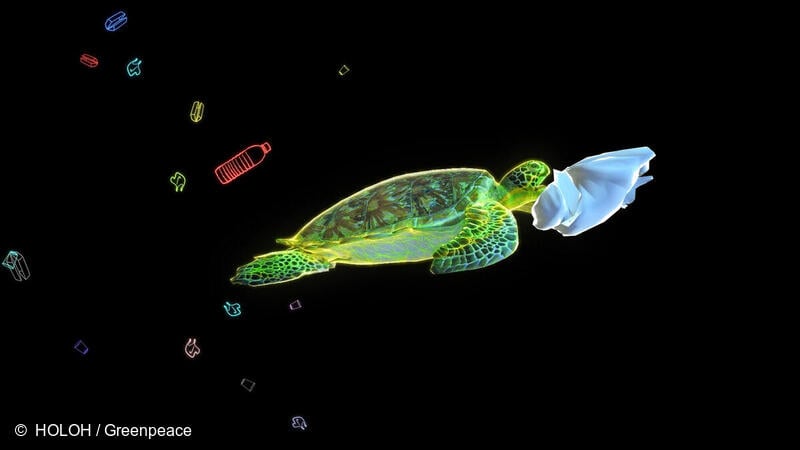
Who to blame and what to do with ocean plastic pollution?
Oceans are the lungs of our planet but its plastic pollution risks reaching 90 mln tonnes by 2030. So it’s time to fight ocean pollution.
-
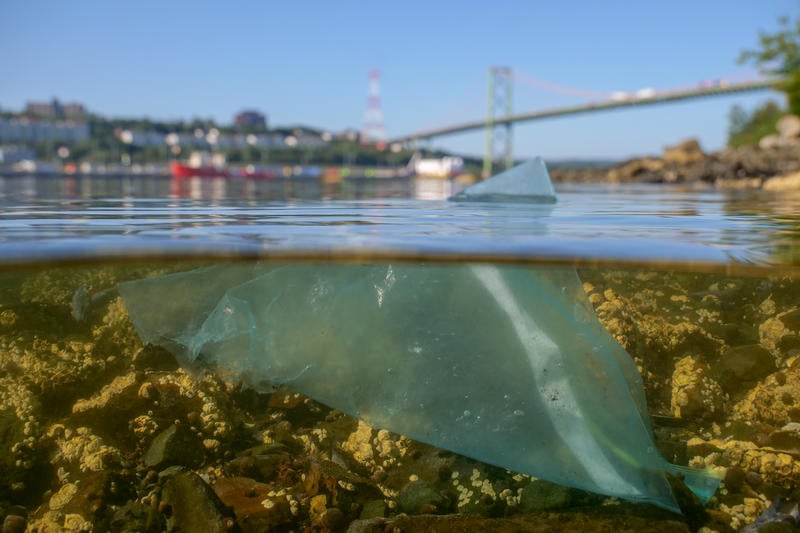
Plastic listed as toxic under CEPA: a bold move against the plastic industry’s pressure
Earlier today, the federal government announced the addition of plastic manufactured items as toxic under Schedule 1 of the Canadian Environmental Protection Act (CEPA). This addition is not only an important step paving the way for the single-use plastic ban promised by the federal government in 2020, but it is also sending a bold message…
-
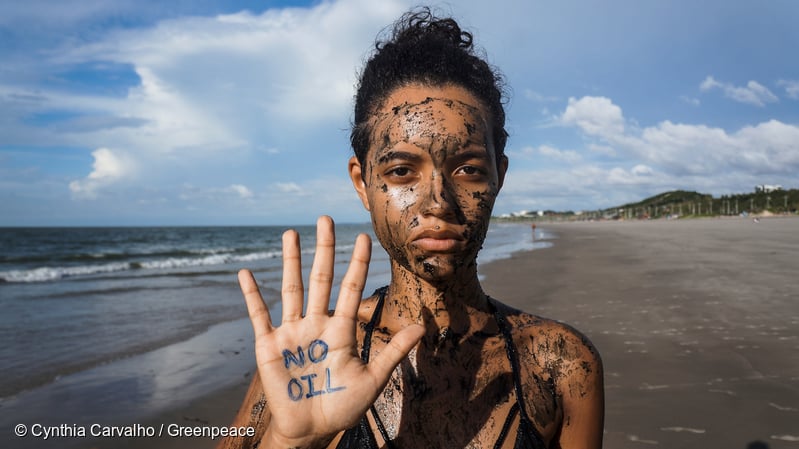
The oil and gas industry is inherently misogynistic
In celebration of International Women’s Rights Day, Greenpeace Canada is proud to highlight the womxn who contribute to our success! Each day, they will share their perspectives on their roles and experiences as women in the environmental movement!
-
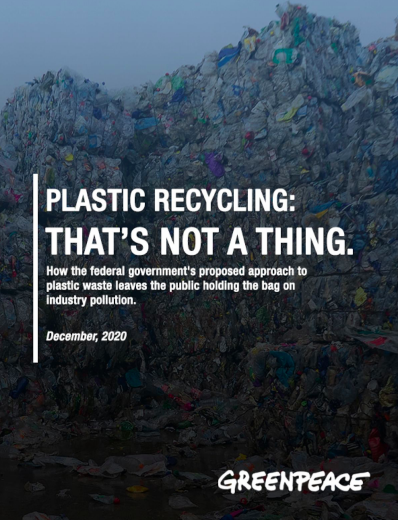
With holiday waste set to spike, Greenpeace report warns that plastic recycling “is not a thing”
VANCOUVER / AAMJIWNAANG — A new Greenpeace investigation reveals that Canada can’t handle the plastic trash companies generate. Findings demonstrate that the federal government’s new approach for achieving zero plastic waste by 2030 is likely doomed to fail, leaving households, communities and the environment to deal with the consequences.
-

Canada’s new #ZeroPlasticWaste plan? That’s a hard no.
You may have seen our response to the long-awaited federal single-use plastics ban announcement and thought to yourself – that seems harsh even for you, Greenpeace. Isn’t a ban what…
-

Greenpeace reaction to Tim Hortons and Loop partnership on reusable container pilot program
TORONTO – Today, Tim Hortons, announced that it will partner with Loop to pilot a deposit-return reusable cup and packaging program in some locations across Toronto. The pilot is set to begin in 2021. Burger King, also owned by Restaurant Brands International Inc., will pilot similar programs outside of Canada. In response to the news,…
-

Greenpeace stands in solidarity with Mi’kmaq fisherfolk
Greenpeace stands in solidarity with Mi’kmaq fisherfolk in response to the violent and racist attacks on Mi’kmaq fishermen in Nova Scotia.
-

Long-awaited plastic ban fails to put dent in waste and pollution crisis
In reaction to the federal government’s announcement concerning its approach to zero plastic waste by 2030 strategy.
-
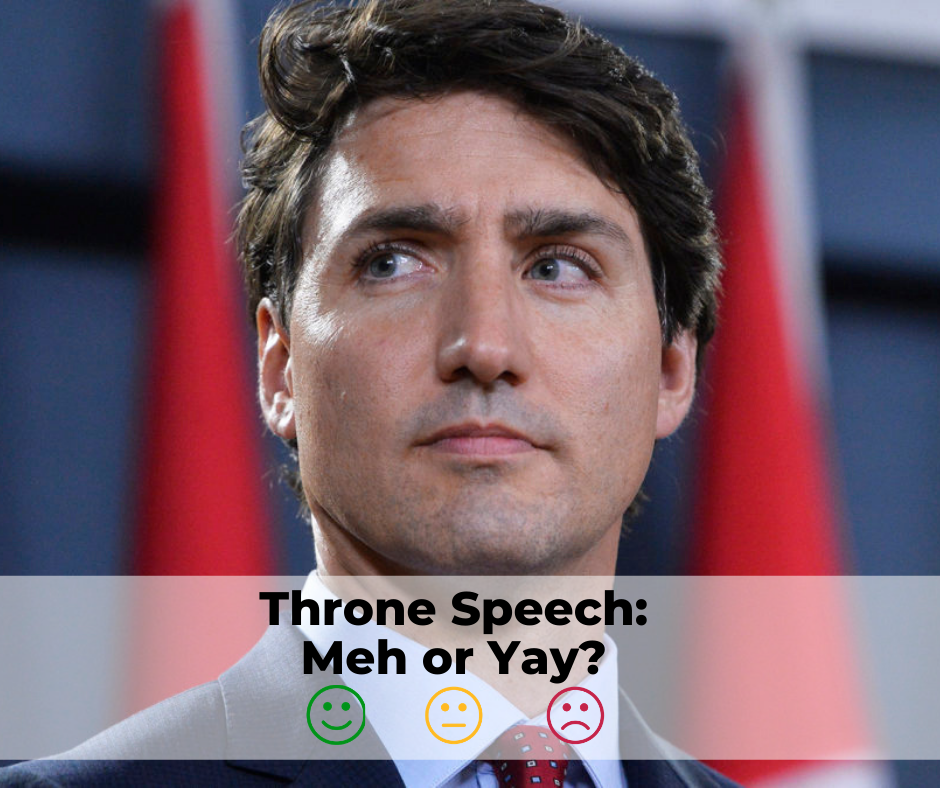
Throne Speech: meh or yay?
Our scorecard tells you whether or not the government’s plans will curb inequality and fix the climate crisis.
-
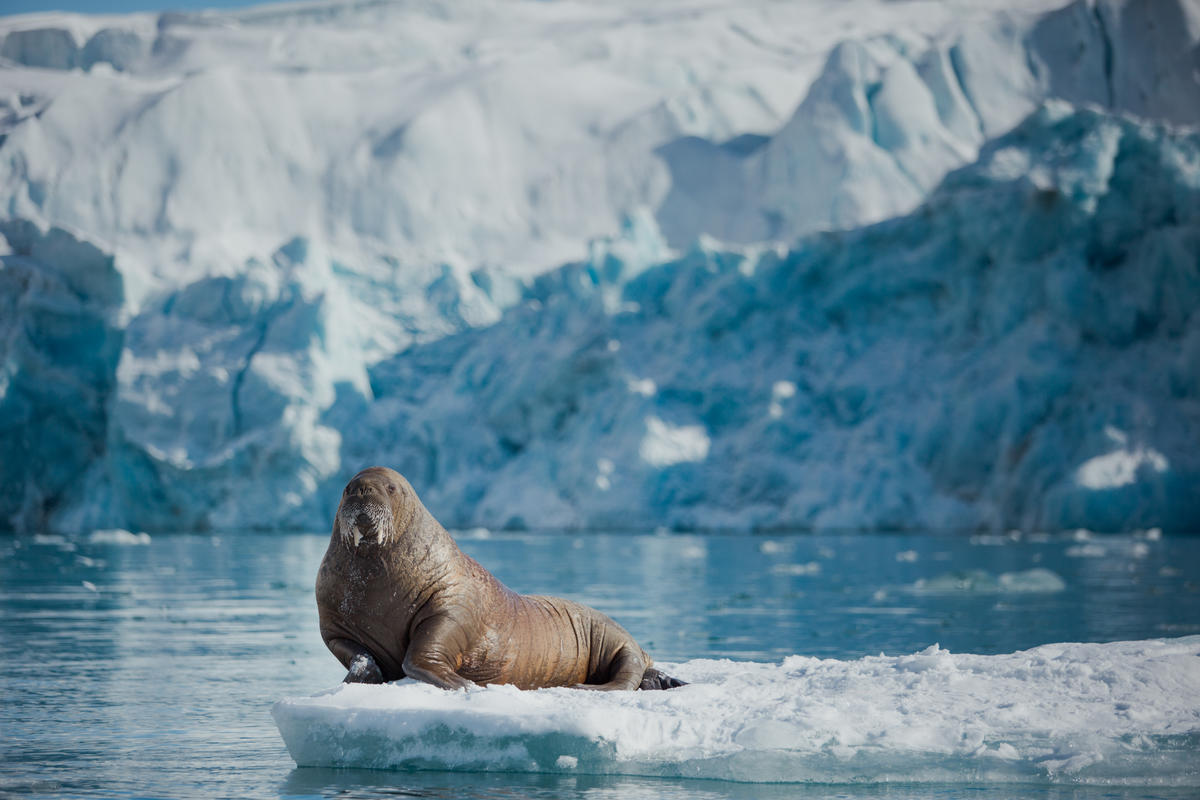
The ice is disappearing, BUT a movement is emerging
Today, scientists sounded another alarm on the impacts of the climate breakdown: the Arctic sea ice minimum has reached its 2nd lowest level since measurements began.
-
Arctic in decline: sea ice minimum reaches second lowest extent on record
According to the National Snow and Ice Data Centre, the 2020 Arctic sea ice minimum extent was likely reached on 15 September at 3.74 million square kilometers.
-
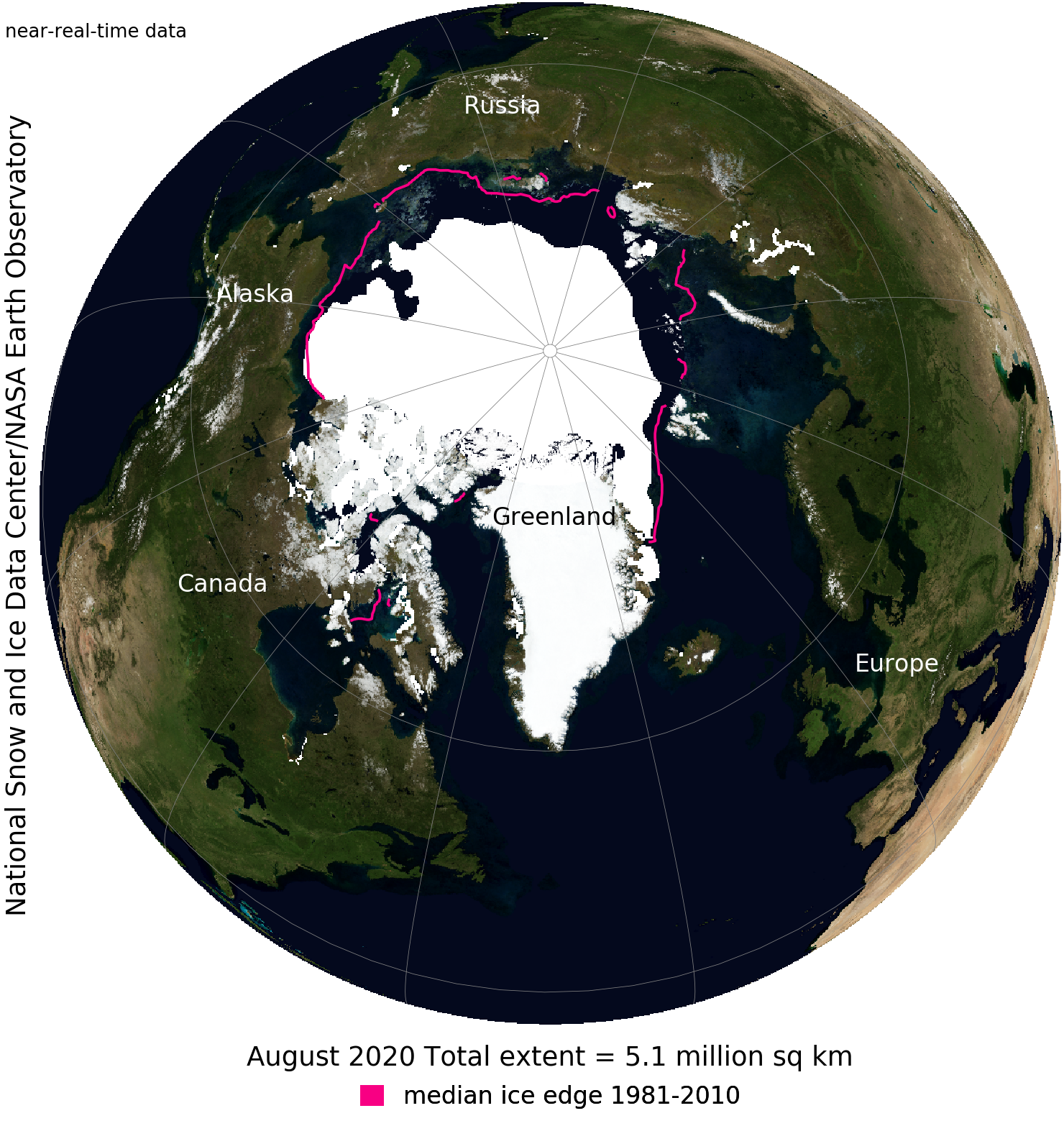
We are going to the Arctic
The warming Arctic is one of our key global indicators of climate breakdown. So we’re heading there to document and bear witness to the yearly sea ice minimum, have you…
-

WHY YOU HAVE TO SAY #GNLNonMerci BEFORE SEPTEMBER 21 !
GNL Québec is the largest fossil fuel project in recent Quebec history. It is a fight the size of the one we led against the Energy East pipeline.
-

Oil industry leveraging pandemic to pressure government for climate-wrecking favours in Newfoundland offshore
We’re five months into the pandemic and so far we’ve seen lots of examples of polluting industries trying to use the crisis to pressure governments for more subsidies, changes to…
-
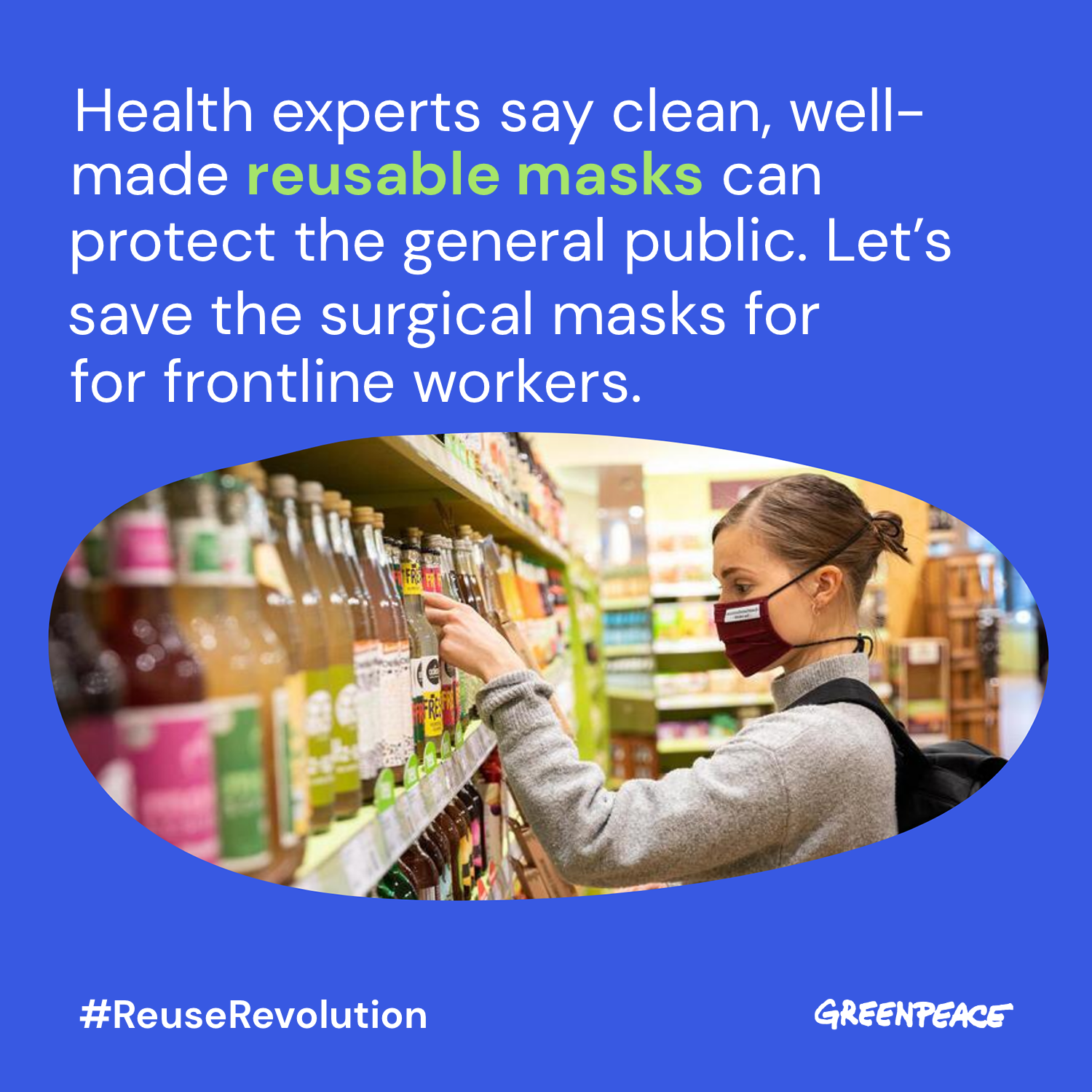
Health experts call for reusable PPE to protect people and planet
Health experts from around the world today endorsed the use of well-made reusable masks or gloves that are properly sanitized in order to protect the environment from pollution as well as our communities from the global COVID-19 pandemic.
-
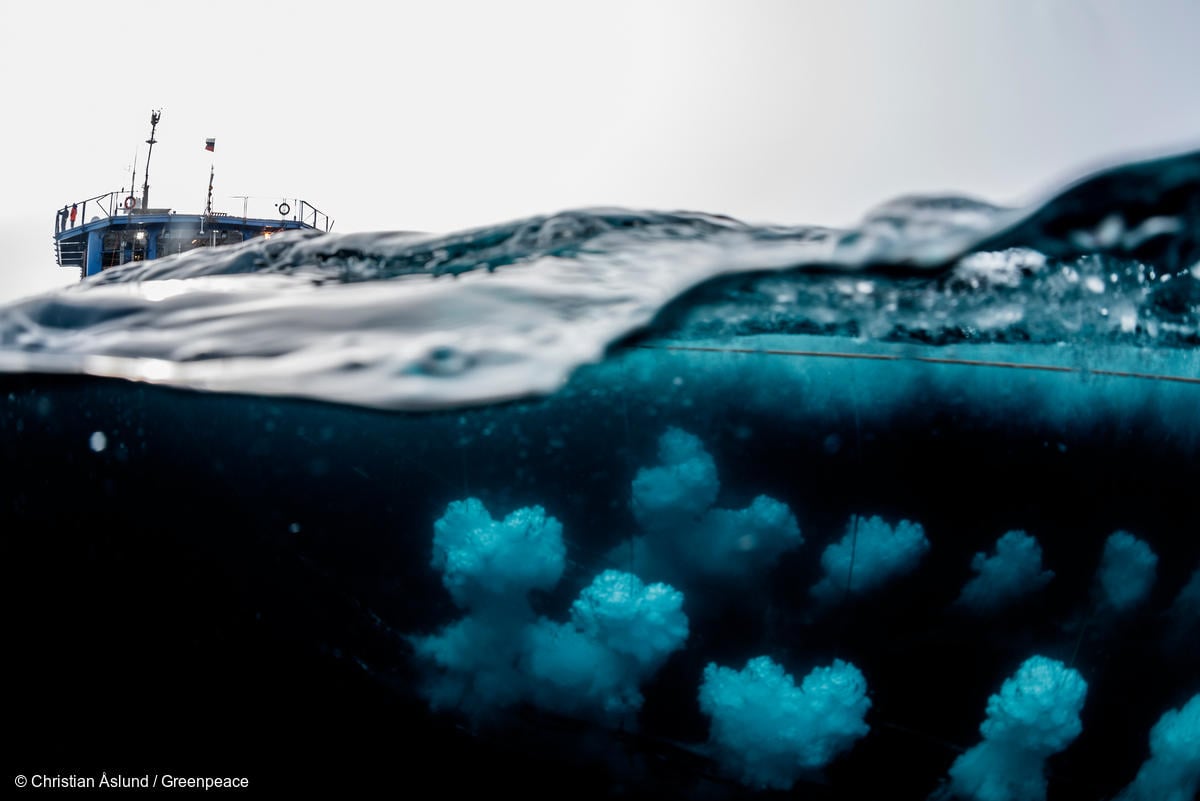
No drilling for oil in marine refuges
For over two years, Greenpeace has been campaigning for leaders to support the creation of an ambitious Global Oceans Treaty at the UN – one that would facilitate the protection…
-
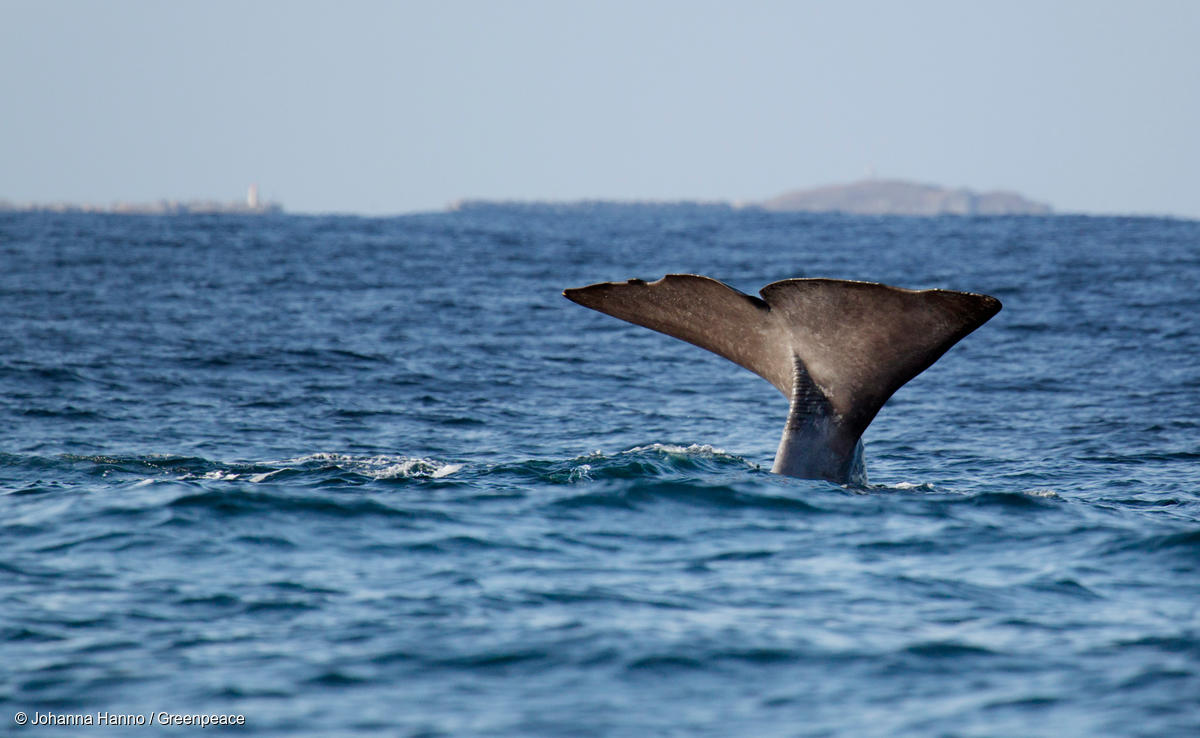
Greenpeace welcomes Canada’s membership in the Global Ocean Alliance, 30×30 pledge
In response to the announcement by the federal government that Canada will join the Global Ocean Alliance, a group of 21 other nations and counting calling for…
-
Despite COVID-19, Quebecers want government to do more and reject calls to abolish environmental regulations
A Léger poll, conducted from May 29th to June 2nd [1] and commissioned by the Communauté de pratique sur la communication climatique au Québec [2], shows that Quebecers prioritize social…
-
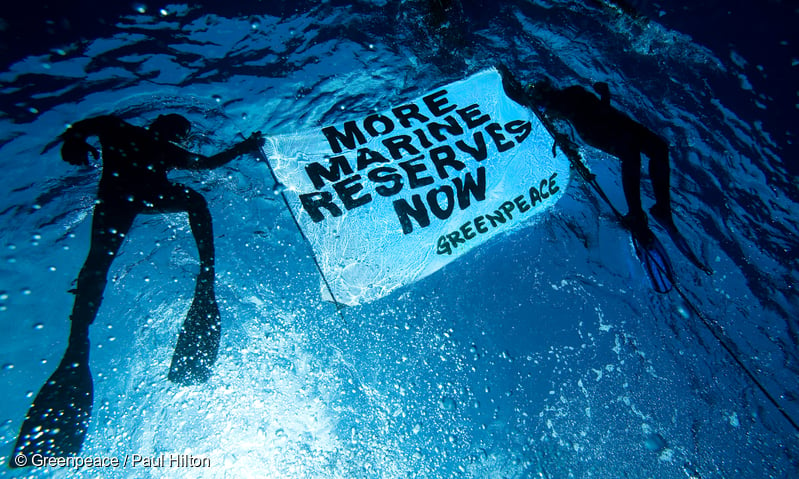
IGC4 postponement: Greenpeace’s response
The fourth and final round of negotiations towards a Global Ocean Treaty, due to take place later this month at the UN in New York has been postponed due to concerns around the novel coronavirus (COVID-19). Commenting, Dr Sandra Schoettner of Greenpeace’s Protect the Oceans campaign said:
-
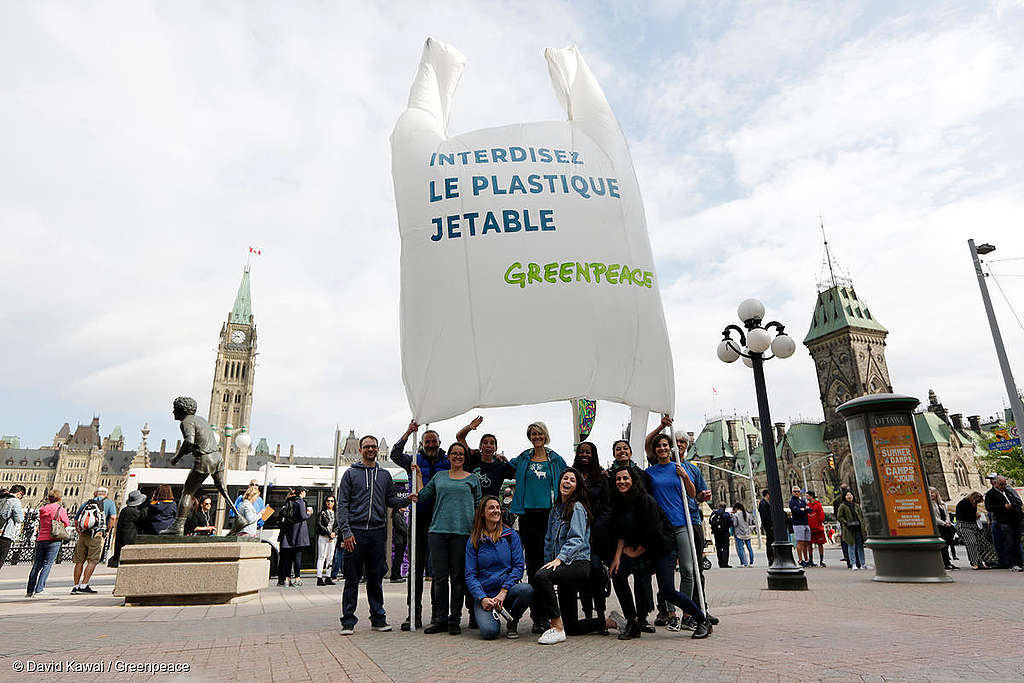
Next steps on plastic for Canada – from science to a strong single-use plastic ban
In 2019, with the federal election just around the corner, the Trudeau government made a promise to ban single-use plastics by 2021. An important, albeit overdue, step in that process has now been completed with the release of the Draft Science Assessment on Plastic Pollution. So what next? Now’s the moment for the feds to…
-
Next steps on plastic for Canada – from science to a strong single-use plastic ban
In 2019, with the federal election just around the corner, the Trudeau government made a promise to ban single-use plastics by 2021. An important, albeit overdue, step in that process has now been completed with the release of the Draft Science Assessment on Plastic Pollution. So what next? Now’s the moment for the feds to…
-

Tim Hortons makes changes to iconic Roll Up the Rim contest to incentivize reusables
Vancouver — In reaction to Tim Hortons’ announcement of the modernization of its iconic Roll Up the Rim to Win contest and its commitment to move toward reusables, Sarah King, Greenpeace Canada’s Head of Oceans & Plastics Campaign said:
-
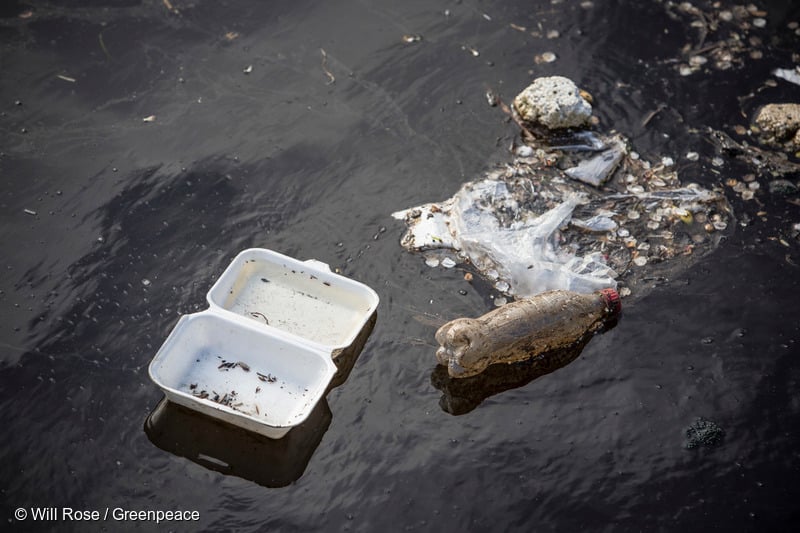
Reaction to Quebec’s declaration to reform solid waste management and expand the extended producer responsibility
Montréal – In reaction to Quebec’s declaration to reform solid waste management and expand the extended producer responsibility, Agnès Le Rouzic, Oceans and Plastics campaigner at Greenpeace Canada, said:
-
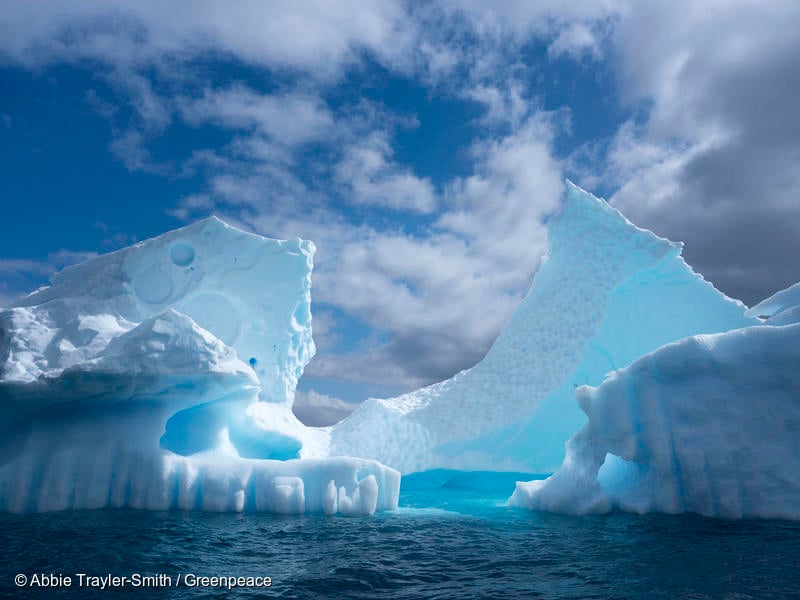
Reactive on hottest temperature recorded in Antarctica
In reaction to the hottest temperature recorded in Antarctica, Frida Bengtsson, currently leading a Greenpeace expedition to the Antarctic, said:
-
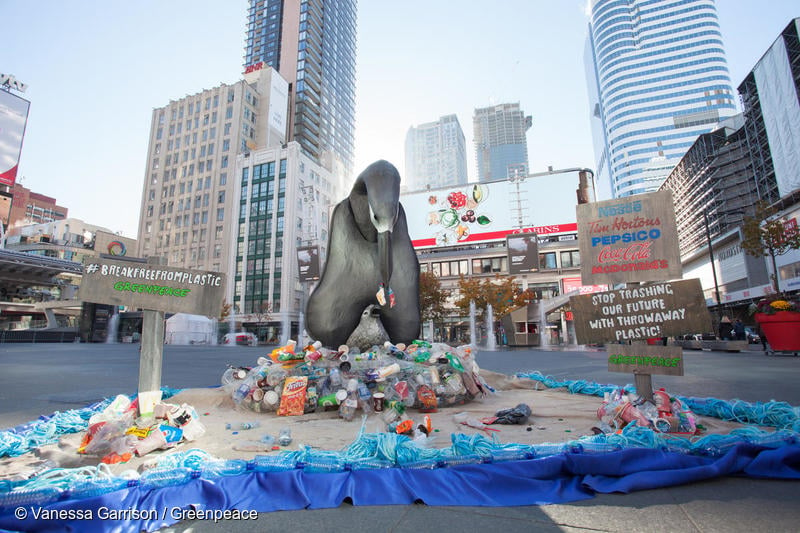
Reaction to the release of the federal Draft Science Assessment of Plastic Pollution
In reaction to the release of the federal Draft Science Assessment of Plastic Pollution supporting the need for a single-use plastics ban, Greenpeace Canada’s Head of Oceans and Plastics, Sarah King said:
-
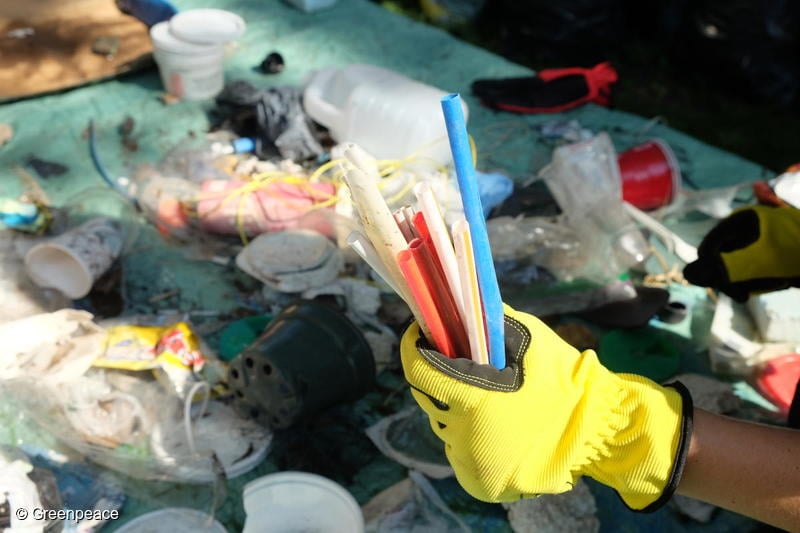
Imminent closure of four recycling centres in Quebec
Reacting to the announcement of the imminent closure of four recycling centres in Quebec, including Montréal’s two main sorting centres, Saint-Michel and Lachine, Greenpeace Canada’s Oceans and Plastics Campaigner, Agnès Le Rouzic said:
-

Starbucks sets ‘resource positive’ goal for coming decade
In response to today’s news, Sarah King Head of Oceans & Plastics at Greenpeace Canada said: “While it’s a welcome development that Starbucks is revisiting its sustainability strategy, the company still has a lot to figure out as to how to make it happen as quickly as possible. When it comes to the climate crisis,…
-
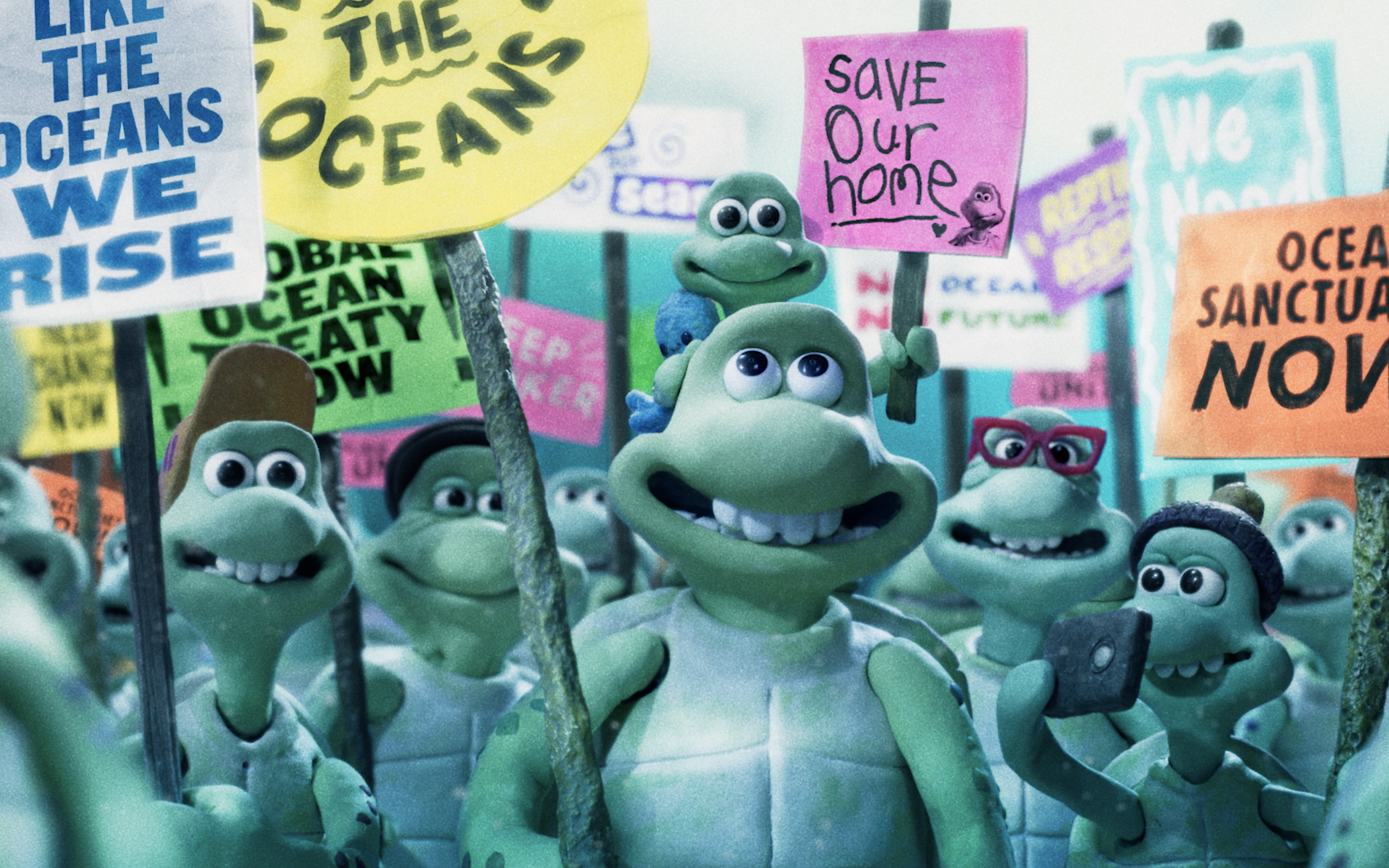
Oscar winners, Wallace and Gromit creators, and Greenpeace launch heartbreaking new animated film about the plight of the oceans
Oscar-winners Olivia Colman and Dame Helen Mirren, along with Game of Thrones’ Bella Ramsey and Stranger Things’ David Harbour, star in a new animation that highlights the plight of the oceans, released globally today by Aardman Animations and Greenpeace UK.
-
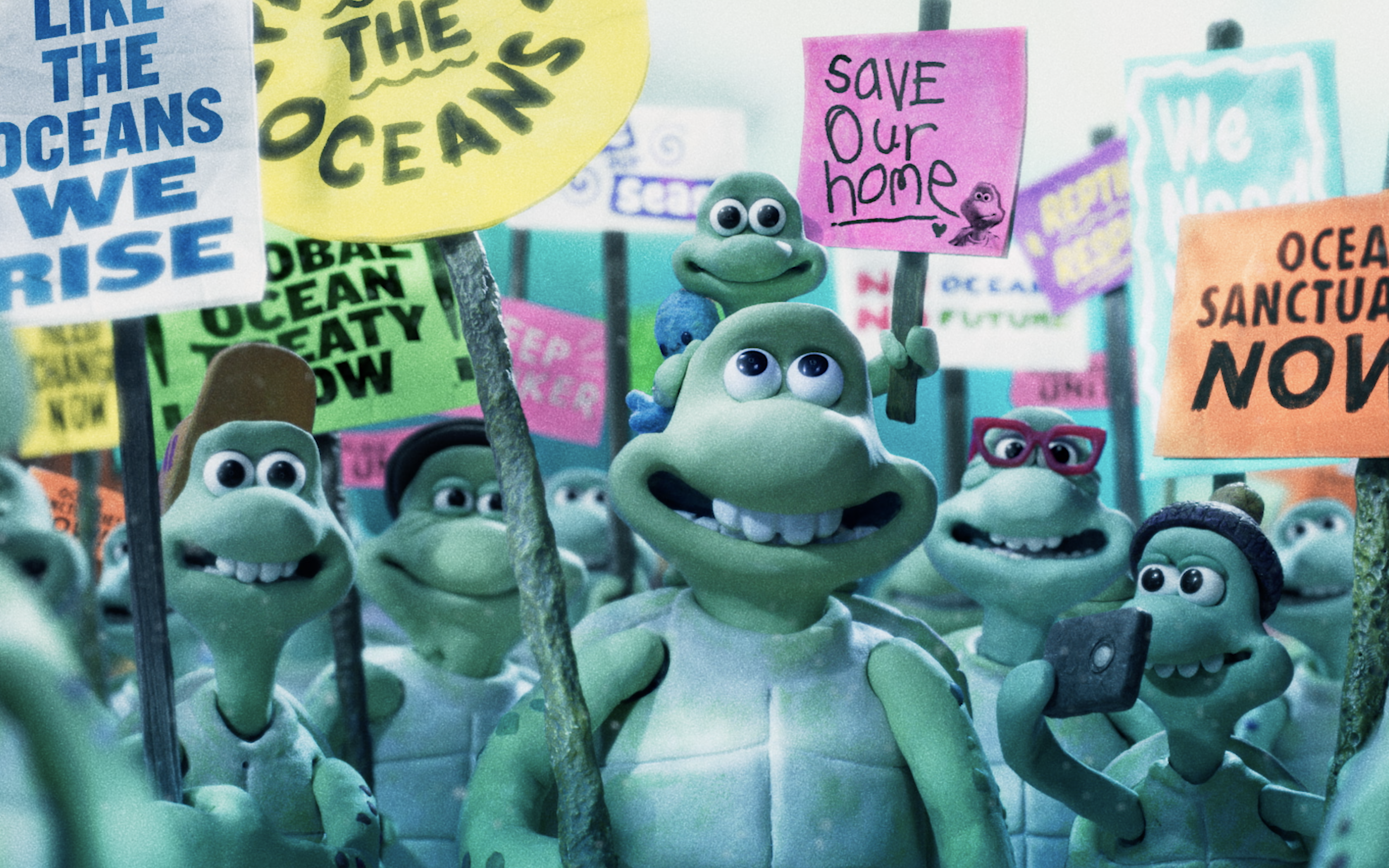
‘Turtle Journey’ shows us why we urgently need to protect the oceans
Climate breakdown, plastic, oil drilling and overfishing have driven our oceans to a breaking point, but it is a story that doesn’t get told often enough. Which is why we’ve…
-
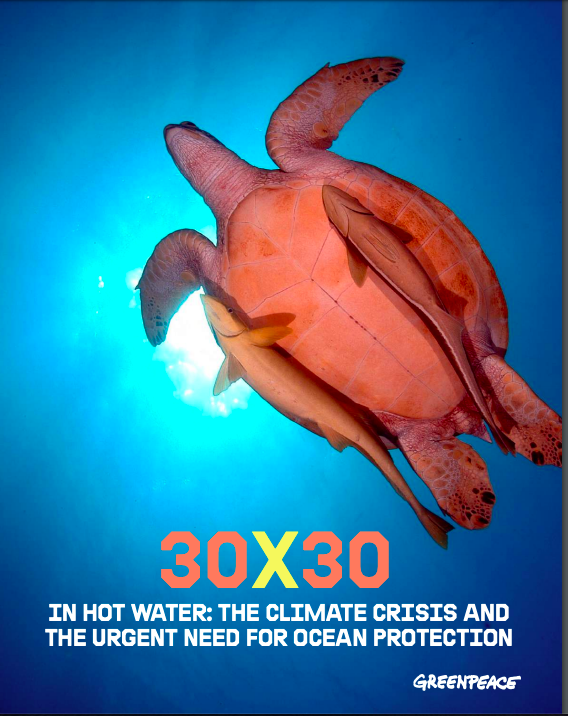
The climate crisis is an ocean crisis
*EMBARGOED UNTIL 8PM EST TUESDAY, DECEMBER 3* For immediate distribution December 4, 2019 Greenpeace report calls for urgent global political response to ocean breakdown Montreal – The impact of the…
-
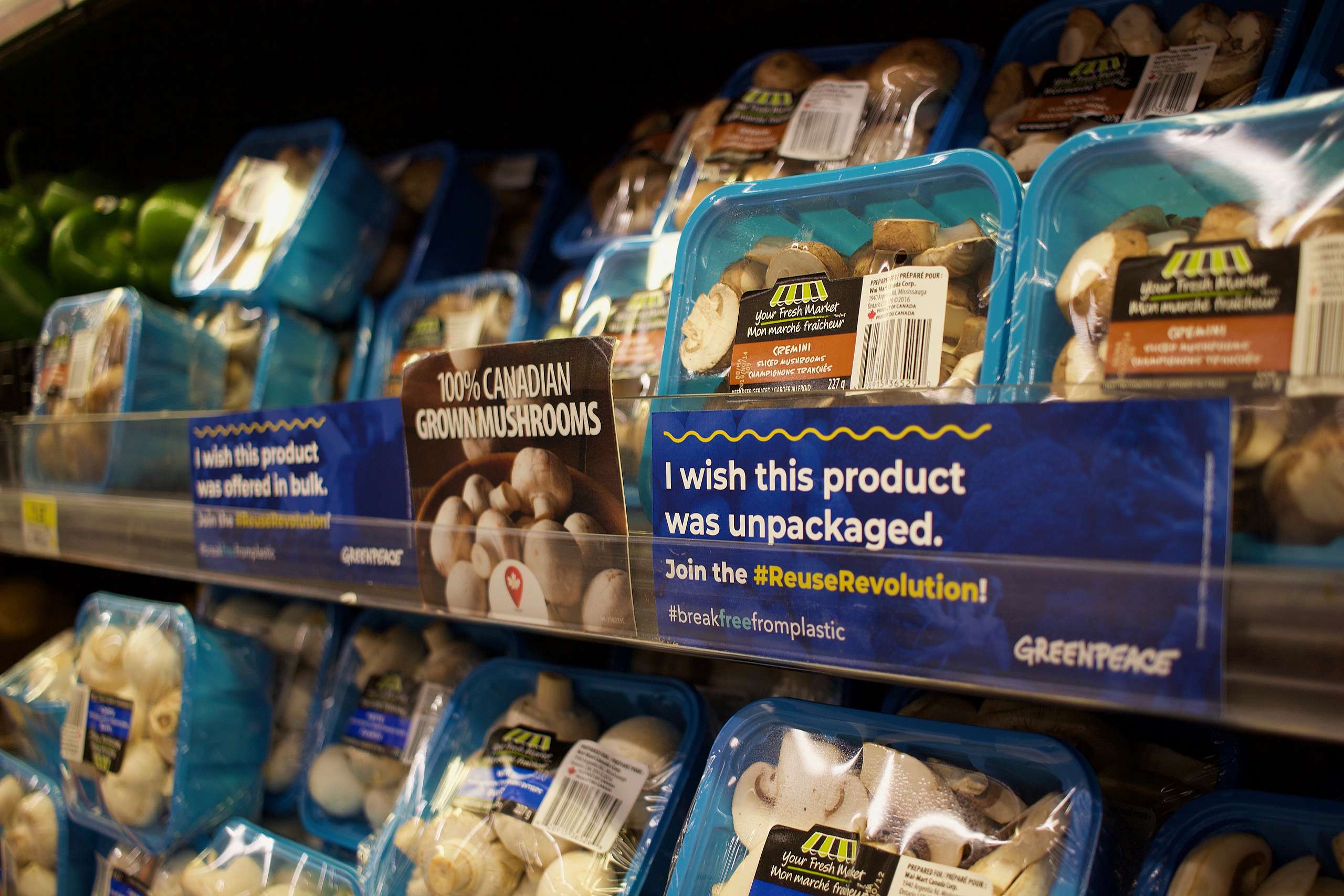
Are zero waste supermarkets possible? Yes!
There was a time not so long ago when it was still possible to do your grocery shopping without filling your garbage can or blue box with single-use plastic packaging.…
-
Attention: Canada’s Supermarket Chains – Will you join the Reuse Revolution?
Over 200,000 people have joined Greenpeace’s call for Canada’s big supermarket chains to start dealing with their massive plastic and packaging problem. Our petition numbers keep growing, while conversations online,…
-
Statement from Canada’s Leading National Environmental Groups on the election of a Liberal (minority) government
Canadians have sent a clear message with this election: they favour strong environmental protection and want the federal government to dramatically ramp up action to reverse species decline and tackle…
-

BREAKING: GREENPEACE SPAMS PM TRUDEAU WITH CLIMATE EMERGENCY ALERT
OTTAWA – Treating climate change like the emergency that Parliament said it is, Greenpeace Canada called on Canadians to spam the PM with a ‘climate emergency’ alert that asked him…
-
Why Single Use is Not the Future Option
Thanks to pressure from people all around the world, brands and retailers know they need to take responsibility for creating this global plastic waste and pollution epidemic. We are increasingly…
-
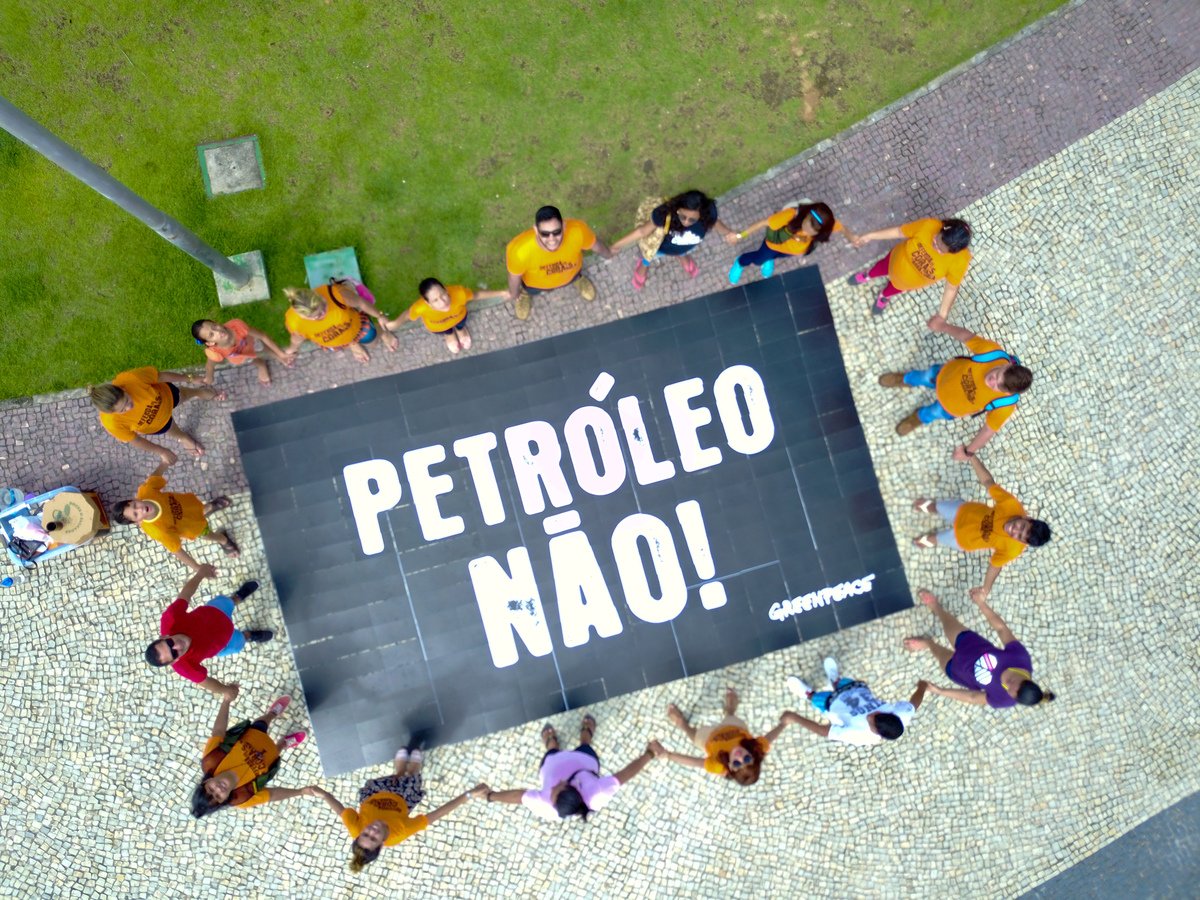
How (and where) Greenpeace is campaigning for a world beyond oil
Around the world, people are standing up against the fossil fuel industry and calling for big changes to solve the climate emergency. We urgently need more sustainable and equitable…
-
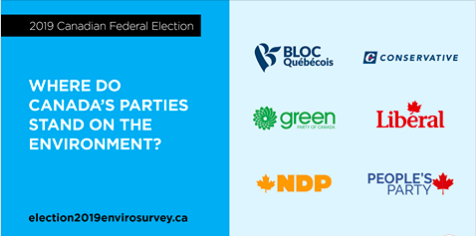
Leading National Environmental Organizations Release Responses from Federal Parties on 10 Environmental Priority Questions
Today, Canada’s leading environmental organizations released the answers to a Federal Party Survey on Environmental Platforms that address the climate change, biodiversity, toxics and waste crises harming our country. The survey was…
-
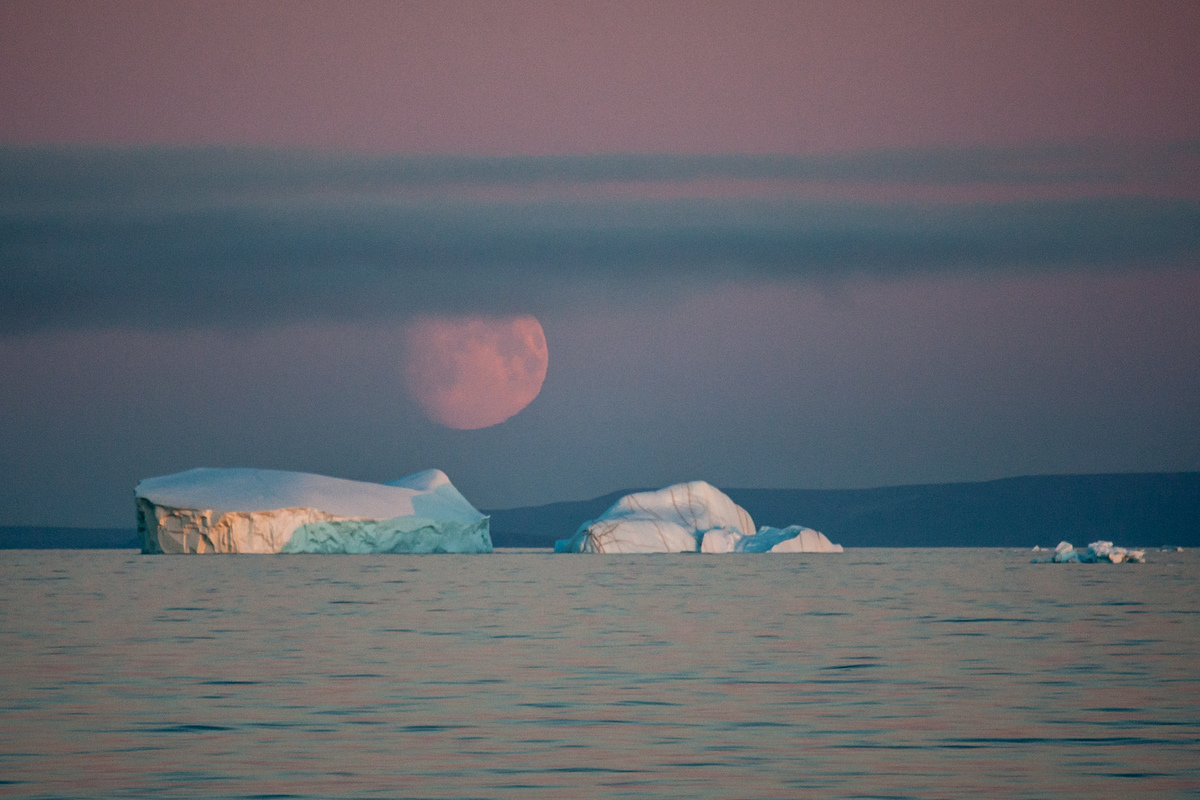
REACTION : Liberal Party’s election commitment to protect 25% of Canada’s oceans and lands by 2025
Vancouver – In response to the Liberal Party’s election commitment that they intend to protect 25% of Canada’s oceans and lands by 2025, Sarah King Greenpeace Canada’s Head of Oceans…
-
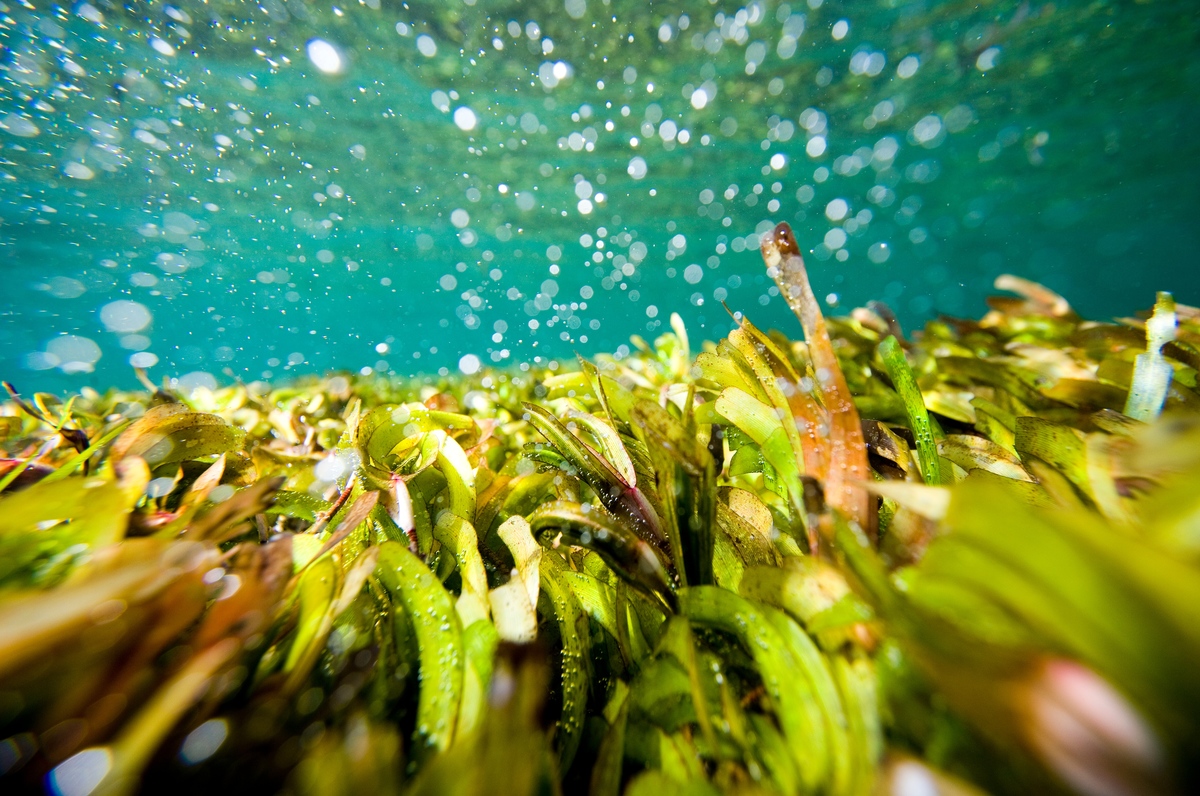
How thriving oceans can help to defend us against climate change
It’s rare for a day to pass without yet another apocalyptic warning about the future of Planet Earth. Today was no exception, with headlines stating that our oceans are in…
-
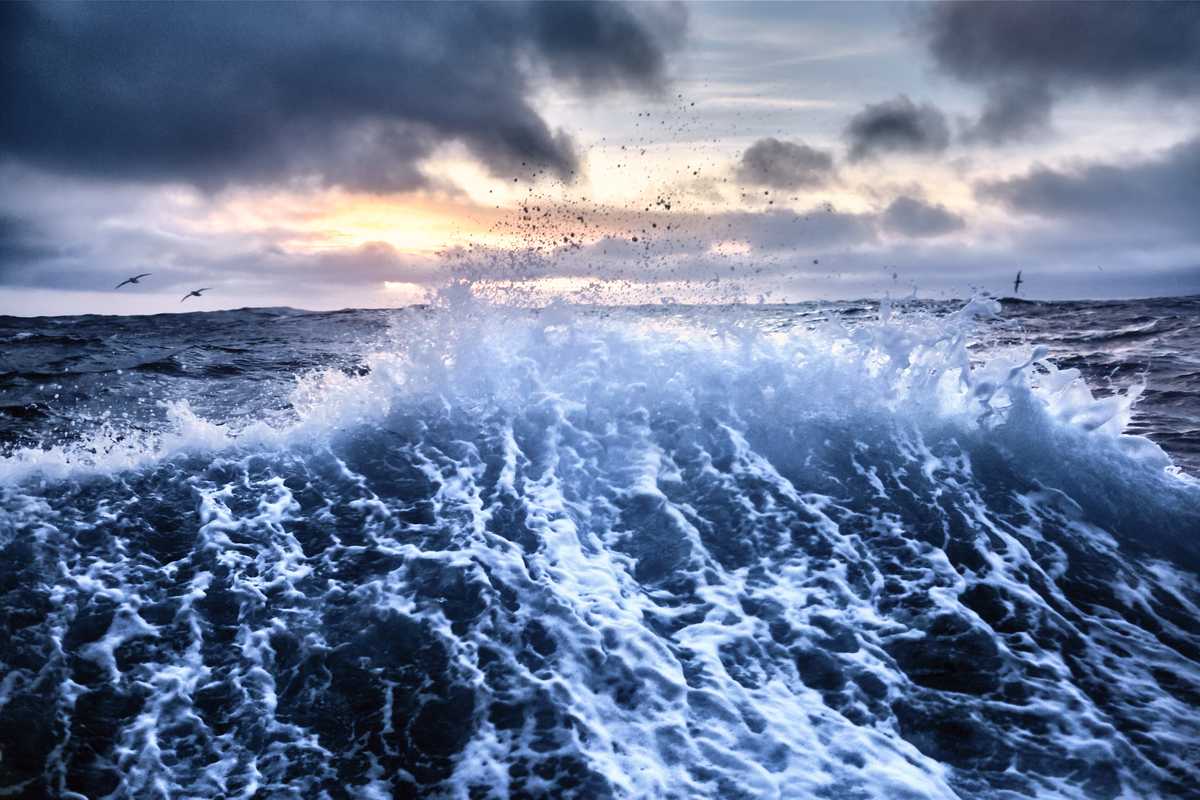
New IPCC report shows critical need for accelerated climate action and oceans protection
Canada – The launch of the Intergovernmental Panel on Climate Change (IPCC) special report on the Ocean and Cryosphere today, highlights the need for governments to urgently scale up and…
-
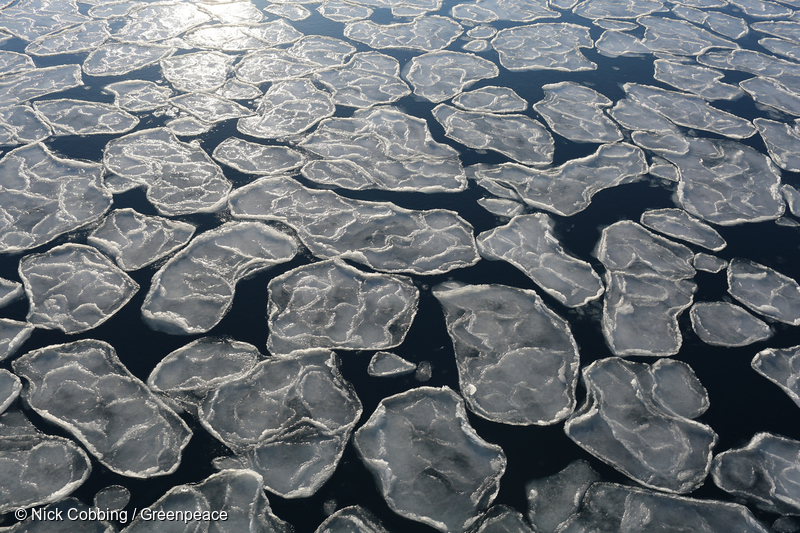
The climate crisis is an oceans crisis
Major IPCC report to highlight climate threats to the world’s oceans and frozen regions Monaco – A stark warning on the state of the world’s oceans and frozen areas is expected…
-
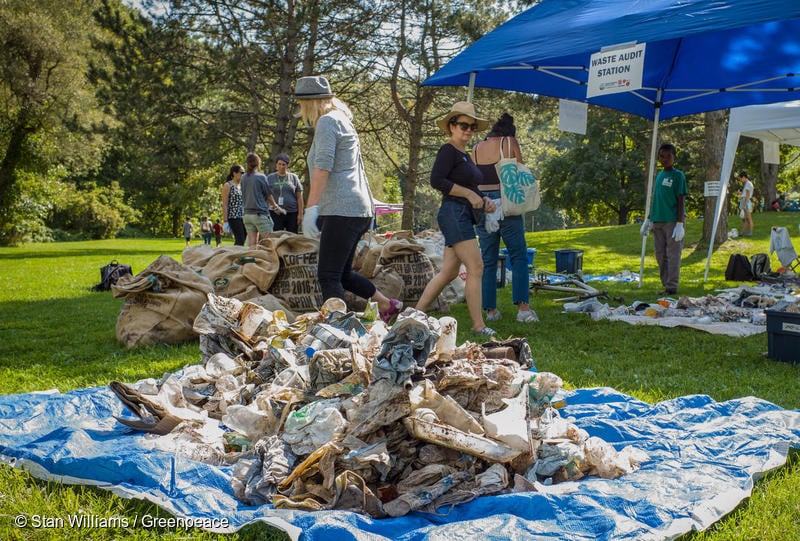
Join the global plastic pollution cleanup day and do a mini brand audit!
It’s Brand Audit time again and alongside our allies in the global Break Free From Plastic movement, we’re inviting folks to help gather data from across Canada and around the…
-
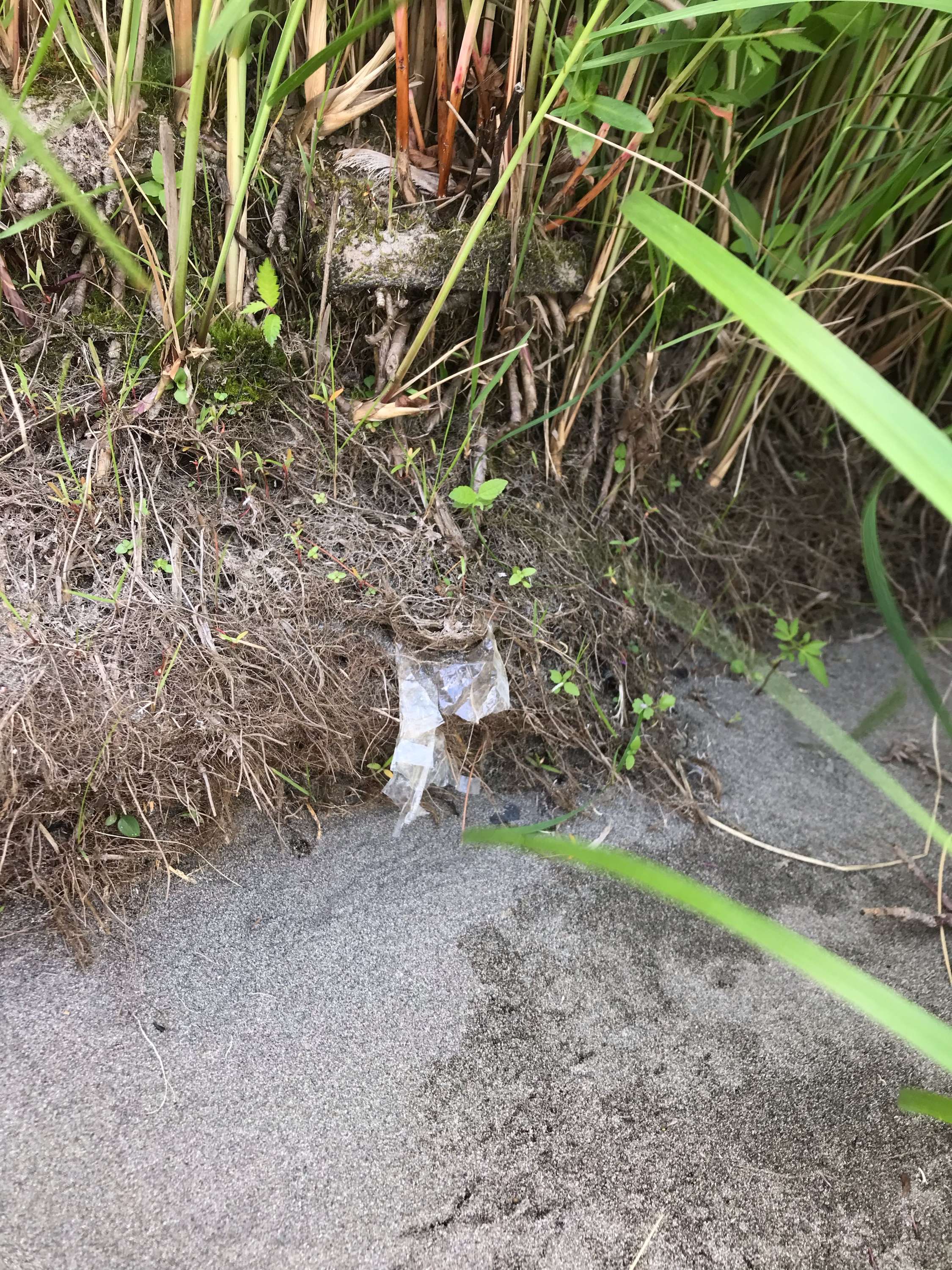
Avoiding the back to school/work plastic blues on your next shopping mission
How is it the end of (northern hemisphere) summer already?! I don’t know about you, but I am so not ready to give up patio lunches, say goodbye to the…
-
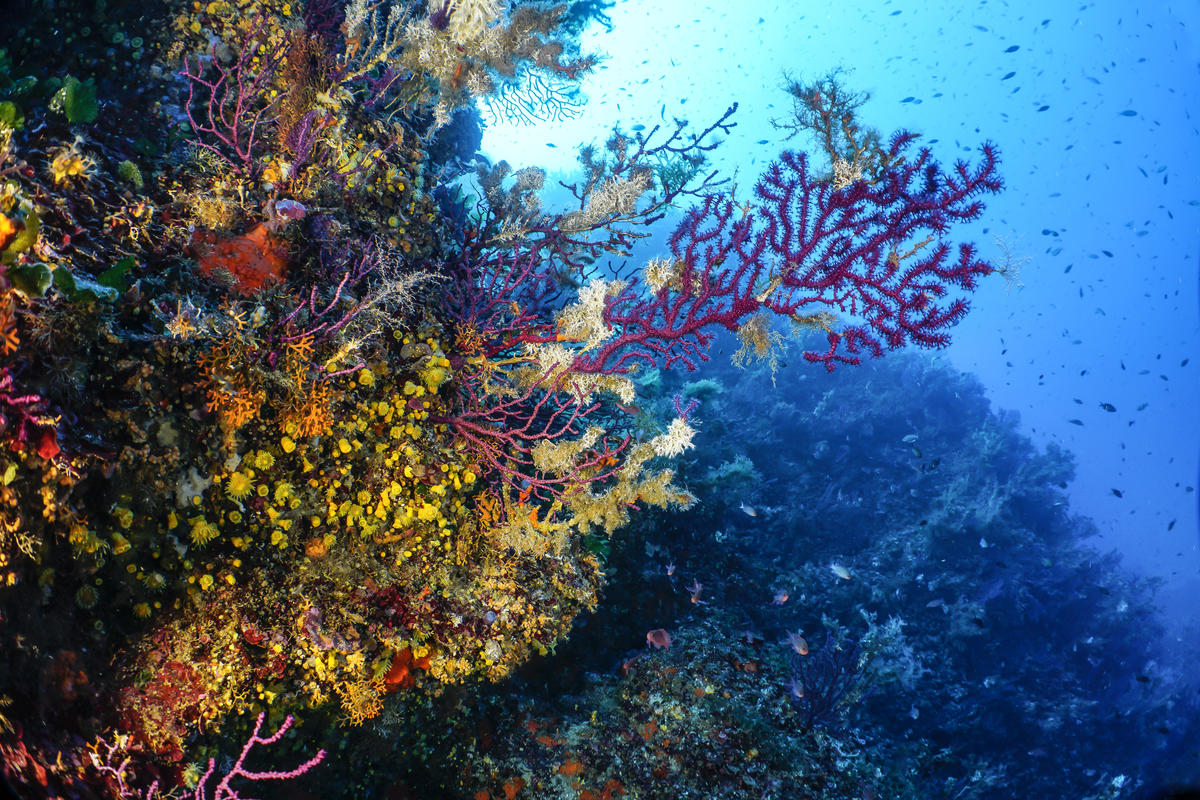
REACTION – Global Ocean Treaty negotiations at the UN
New York – Over 190 countries came together at the United Nations to negotiate a historic Global Ocean Treaty [1] that could help protect at least 30% of our seas…
-
REACTION: WHO’s report – research must go on
Montréal – In response to the WHO report into the effects of microplastics on human health, Greenpeace Canada Head of Oceans and Plastics campaign responded: “This WHO report clearly acknowledges…